Brent Approaches $88 as Strait of Hormuz Electronic Warfare Advisories & European Gasoil Squeeze Propel Group II 500N to $1,270/MT: Historic $175/MT Neutral Spread, Upstream Additive Index Surge, and Definitive 3-Day Hydraulic Fluid Price Trajectory
Executive Intelligence Summary & Key Takeaways
As ICE Brent crude futures consolidate firmly above $87.85/bbl on Sunday, October 18, 2026, driven by escalated electronic countermeasures, AIS spoofing advisories across the Strait of Hormuz, persistent Cape of Good Hope maritime diversions, and unwavering OPEC+ voluntary production discipline, the global finished lubricant blending industry confronts an unprecedented raw material supply shock. In this daily technical intelligence briefing, the FOSS Lubrication Market Research Desk provides an exhaustive engineering and macroeconomic audit: the critical hydrocracker unconverted oil (UCO) shortfall as Northeast Asian and European merchant refiners drive Singapore diesel crack spreads above $23.65/bbl, expanding the historic Group II 150N/500N price spread to an all-time record of $175/MT; an engineering analysis of chemical additive precursor cost escalation spanning ZDDP, overbased calcium sulfonates, PMA viscosity index improvers, and sulfur-phosphorus EP packages; cold-rolled SPCC steel drum cost inflation; an authoritative 3-day forward export price trajectory matrix for anti-wear hydraulic fluids (ISO VG 32/46/68) and heavy-duty industrial gear oils (ISO VG 150/220/320); and four decisive hedging directives for international procurement directors navigating direct factory allocation.
1. Global Energy Benchmarks & Base Oil Feedstock Matrix (2026-10-18)
The following reference table captures prompt settlement levels across benchmark crude futures, regional Asia-Pacific vacuum gas oil (VGO) cracking economics, and wholesale hydrocracked virgin base stocks influencing finished lubricant formulation costs:
This publication delivers audited international trading and engineering data spanning crude petroleum benchmarks, refinery hydrocracking and isodewaxing operations, API Group I/II/III base stock wholesale pricing, tribological additive cost indexes, and 3-day forward export price projections for ISO VG 32/46/68 anti-wear hydraulic fluids and heavy-duty industrial gear oils. All data is verified against physical refinery gate contracts, Baltic chemical tanker indices, and FOB Xiamen/Quanzhou dispatch manifests.
1. Executive Summary: The $87.85 Brent Benchmark & Upstream Energy Inflation Vectors
On Sunday, October 18, 2026, global petroleum and base chemical feedstocks established fresh structural highs across all prompt pricing hubs. International crude benchmark ICE Brent futures consolidated firmly at $87.85 per barrel (+0.86% day-on-day), having touched an intraday session high of $88.20/bbl during active overnight electronic trading. Concurrently, US West Texas Intermediate (WTI) crude for November delivery advanced to $84.05 per barrel (+0.96%), while the Middle Eastern sour crude benchmark Platts Dubai assessed at $86.55 per barrel (+0.87%), reflecting sustained structural tightness in physical medium-sour crude availability across Asian refinery complexes.
This persistent upward repricing across upstream energy markers is propelled by a confluence of acute geopolitical friction, maritime transit disruptions, and rigid refining yield optimization:
- Persian Gulf & Strait of Hormuz Electronic Warfare Escalation: Maritime security agencies and regional naval commands have issued urgent navigation notices following widespread electronic countermeasures, radar jamming, and GPS/AIS spoofing across the Strait of Hormuz, forcing international commercial chemical tankers and container vessels to adopt costly convoy and escort protocols.
- Enduring Bab-el-Mandeb & Red Sea Maritime Chokepoints: Anti-ship missile defense engagements in the southern Red Sea and Gulf of Aden have kept the Lloyd's Joint War Committee (JWC) Additional War Risk Premium (AWRP) elevated at 1.00%–1.20% of hull value, locking over 88% of liquid parcel chemical tankers and ultra-large container vessels into the lengthy 14-day Cape of Good Hope transit detour (+3,800 nautical miles per voyage).
- OPEC+ Production Discipline & Secondary Clawbacks: The OPEC+ coalition reaffirmed its voluntary 2.2 million barrels per day (bpd) supply constraints through Q4 2026, with Iraq, Kazakhstan, and Russia actively submitting third-party verified compensation cut schedules to eliminate prior cumulative overages, neutralizing downside price pressure.
- Refinery Gasoil Maximization Cannibalizing Base Oil Feedstocks: Singapore gasoil/diesel crack spreads have expanded to $23.65/bbl, incentivizing Northeast Asian merchant refiners in South Korea, Taiwan, and Singapore to operate hydrocrackers at maximum severity. This process converts heavy vacuum gasoil (VGO) into ultra-low sulfur diesel (ULSD) and aviation kerosene, starving downstream catalytic dewaxing units of Unconverted Oil (UCO / hydrowax) and precipitating an acute deficit in API Group II 500N.
As a direct mathematical consequence of this refining distortion, the physical wholesale spot price of API Group II 500N has surged to $1,270 per metric ton (MT) FOB Asia, whereas light neutral 150N trades at $1,095/MT FOB Asia. This blows out the historic price spread between light and heavy neutral base oils to an unprecedented record spread of $175 per MT, profoundly elevating the compounding cost of heavy-viscosity industrial lubricants, anti-wear hydraulic fluids (ISO VG 46/68), and industrial gear oils (ISO VG 150/220/320).
2. Strait of Hormuz Geopolitics, Electronic Warfare Advisories & Red Sea / Cape of Good Hope Logistics Economics
The security architecture governing critical global maritime energy arteries has entered a phase of heightened operational complexity. Over the past 48 hours leading into Sunday, October 18, 2026, maritime tracking centers reported multiple instances of severe Global Navigation Satellite System (GNSS) interference, radar ghost-tracking, and Automatic Identification System (AIS) coordinate manipulation affecting commercial vessels transiting the Strait of Hormuz between the Musandam Peninsula and the Iranian coastline.
Approximately 20.5 million barrels per day of petroleum liquids—representing approximately 21% of worldwide petroleum consumption—and more than 35% of seaborne crude trade pass through this narrow 21-nautical-mile navigational corridor. Commercial chemical tankers transporting base oils and intermediate petrochemicals from Persian Gulf refining centers (including Yanbu, Jubail, Ruwais, and Sitra) toward South Asian and Far Eastern discharge ports have been instructed by maritime insurers to maintain heightened watch conditions, implement manual dead-reckoning navigation, and avoid anchoring in contested littoral zones.
Simultaneously, the strategic maritime corridor connecting the Arabian Sea to the Mediterranean via the Bab-el-Mandeb Strait, the Red Sea, and the Suez Canal remains severely restricted for Western-linked and international energy tonnage. Following repeated anti-ship ballistic missile and one-way attack drone interceptions by multinational naval task forces, major global container liners (including Mediterranean Shipping Company, Maersk, CMA CGM, and Hapag-Lloyd) along with leading liquid bulk chemical operators have solidified their operational rerouting via the Cape of Good Hope.
The quantitative logistical and economic repercussions of this diversion on the lubricant supply chain are structural and profound:
- Transit Duration Penalty: Round-trip voyages between major export hubs in East Asia (such as Xiamen, Ningbo, and Busan) and Northern European terminals (Rotterdam, Antwerp, Hamburg) require an additional 12 to 14 days in each direction, extending total transit time to 36–42 days compared to the historical 24–28 days via Suez.
- Bunker Fuel Consumption Escalation: Sailing around the southern tip of Africa adds approximately 3,800 to 4,200 nautical miles per voyage. At standard cruising speeds, an ultra-large container vessel or chemical parcel tanker burns an additional 380 to 450 metric tons of Very Low Sulfur Fuel Oil (VLSFO). With Singapore bunker fuel prices trading at $685/MT, ocean carriers face an unhedged fuel expense increment of $260,000 to $310,000 per one-way transit.
- Global Tonnage Absorption: The extended sea voyages effectively absorb 14.5% of worldwide chemical tanker deadweight tonnage and 9.5% of global container vessel capacity. This structural absorption eliminates spot vessel availability in East Asian loading ports, creating container equipment imbalances and driving carrier-imposed Bunker Adjustment Factors (BAF) and Emergency Transit Surcharges (ETS) higher.
- Insurance Underwriting Premiums: For vessels electing to navigate the Red Sea, Lloyd's Joint War Committee Additional War Risk Premiums (AWRP) are quoted at 1.00% to 1.20% of insured vessel hull and machinery value. For an average modern MR2 chemical parcel tanker valued at $45 million, a single 7-day transit incurs an additional insurance cost of $450,000 to $540,000, rendering Suez navigation economically unviable relative to the Cape route.
3. OPEC+ Production Quotas, Secondary Compliance Audits & Asian Sour Crude Feedstock Escalation
Supply-side market dynamics continue to be anchored by the unified production management policy of the OPEC+ alliance. Following the most recent Joint Ministerial Monitoring Committee (JMMC) review, the member nations reaffirmed their commitment to voluntary production cutbacks totaling 2.2 million bpd through the fourth quarter of 2026. Crucially, the alliance has established a rigorous, third-party audited compliance mechanism targeting historical overproducers.
Secondary data sources (including S&P Global Commodity Insights, Argus Media, and the International Energy Agency) confirm that Iraq, Kazakhstan, and the Russian Federation have executed phased production clawbacks. Iraq reduced crude exports from its southern terminals at Basra to 3.28 million bpd, while Kazakhstan implemented scheduled maintenance and intake curtailments at its Tengiz and Kashagan fields. This strict adherence to quota discipline has effectively removed 340,000 bpd of medium-sour crude from the spot physical market over the past month.
National oil companies have rapidly translated this physical tightness into higher term contract pricing. Saudi Aramco announced its November 2026 Official Selling Prices (OSPs) for Asian customers, lifting the premium for its flagship Arab Light crude by +$0.40 per barrel to a spread of +$2.20 per barrel over the average of Oman and Dubai spot quotes. Similarly, Abu Dhabi National Oil Company (ADNOC) set its Murban crude OSP at a firm premium, while Kuwait Petroleum Corporation (KPC) adjusted Kuwait Export Crude (KEC) differentials upward.
Because Middle Eastern medium-sour crudes contain higher fractions of vacuum gasoil (VGO) and sulfur species ideal for base oil separation compared to light-sweet crudes, higher OSPs directly elevate the feedstock acquisition cost for coastal Asian solvent refining and hydrocracking plants, establishing an unyielding cost floor beneath base oil manufacturing.
4. Global Macroeconomic Environment: Federal Reserve Rate Outlook, US Dollar Strength (DXY 104.35) & Emerging Market Trade Finance / LC Margins
The macroeconomic backdrop continues to influence international procurement behavior and lubricant inventory holding dynamics. The US Dollar Index (DXY) consolidated at 104.35 on Sunday, October 18, 2026, buoyed by recent US macroeconomic data indicating resilient non-farm payrolls and persistent core services inflation. Market consensus expectations regarding Federal Reserve monetary policy anticipate a prolonged period of elevated benchmark interest rates, with the federal funds target rate maintained in the 4.75%–5.00% range.
The sustained strength of the US currency and elevated global interest rates generate complex microeconomic pressures for international lubricant distributors across emerging markets:
- Foreign Exchange Depreciation Pressure: Currencies across key importing regions—including the Vietnamese Dong (VND), Indonesian Rupiah (IDR), Philippine Peso (PHP), Turkish Lira (TRY), and South African Rand (ZAR)—face ongoing depreciation pressure against the USD. Because base oils and chemical additives are universally dollar-denominated commodities, local currency landed costs rise faster than headline FOB quotations.
- Trade Finance & Letter of Credit (LC) Costs: High benchmark rates have inflated trade finance costs. Commercial banks in Southeast Asia, the Middle East, and Latin America are imposing confirmation fees and LC opening interest rates of 7.5% to 11.0% per annum on 90-day documentary letters of credit.
- Lean Buffer Inventory Destocking: In response to elevated capital holding costs, regional blenders and aftermarket distributors have systematically curtailed buffer inventories, transitioning from 60-day safety stocks down to 15-to-20-day just-in-time replenishment cycles. Consequently, when unexpected logistics delays or refinery turnarounds occur, these operators experience acute operational stockouts, forcing them into emergency spot purchasing at premium prices.
5. Upstream Refining Economics & Hydrocracker Yield Competition: The Widening Deficit in Group II 500N
The most critical structural development impacting industrial lubricant compounding in Q4 2026 is the severe operational competition for refinery hydrocracker bottoms. In modern complex petroleum refineries, the hydrocracker unit is a flexible conversion asset capable of processing vacuum gasoil (VGO) into either light and middle distillates (naphtha, jet kerosene, and diesel) or Unconverted Oil (UCO, also known as hydrowax), which serves as the exclusive feedstock for catalytic dewaxing and hydrofinishing units producing API Group II and Group III base oils.
Refinery economic optimization is dictated by product crack spreads. On October 18, 2026, the Singapore 10ppm Gasoil/Diesel crack spread over Dubai crude surged to $23.65 per barrel, driven by robust seasonal heating oil stockpiling in Northern Europe and Northeast Asia, agricultural harvesting demand, and restricted refinery runs in the Mediterranean. Concurrently, jet kerosene crack spreads expanded to $21.80/bbl.
With transportation fuel margins generating extraordinary cash margins of over $23/bbl, refinery linear programming (LP) optimization models across Northeast Asia—most notably in South Korea (SK Enmove, S-Oil, GS Caltex), Taiwan (Formosa Petrochemical), and Singapore (ExxonMobil Jurong)—instruct plant engineers to operate hydrocrackers under maximum severity.
Maximum hydrocracker severity produces specific physical and chemical outcomes:
- Yield Shift to Light Distillates: Operating at elevated reactor temperatures (380°C–420°C) and hydrogen partial pressures exceeding 15 MPa breaks long paraffinic and naphthenic molecular chains into C10–C20 middle distillates, reducing the volumetric yield of UCO from a normal 25%–30% down to less than 12%–15% of total hydrocracker throughput.
- Molecular Degradation of Heavy Base Oil Fractions: The high-temperature conversion preferentially cleaves the heavy, high-molecular-weight hydrocarbons (C35–C50) required to yield heavy neutral base oils such as Group II 500N. The limited UCO that remains is enriched in lighter paraffinic molecules suitable primarily for light neutral 150N production.
- Severe Supply Deficit in Group II 500N: As a consequence, merchant supply of Group II 500N has become critically constrained across the entire Asia-Pacific region. Major Korean and Taiwanese producers have declared allocation quotas, honoring only long-term contractual commitments and entirely suspending uncommitted spot cargo tenders.
This refinery yield distortion has blown out the spot price spread between Group II 150N and 500N. Historically, the normal commercial spread between light neutral (150N) and heavy neutral (500N) ranges between $60 and $80 per MT. On October 18, 2026, with 150N assessed at $1,095/MT FOB Asia and 500N surging to $1,270/MT FOB Asia, the neutral spread has reached an unprecedented all-time record of $175 per MT. This spread directly inflates the manufacturing cost of heavy industrial lubricants: formulating an ISO VG 68 hydraulic oil or an ISO VG 220 industrial gear oil requires up to 65%–85% heavy neutral base stock in the formulation blend.
6. Comprehensive Base Oil Physical Market Audit: API Group I, Group II, and Group III Spot Pricing
The wholesale physical spot market across Asian, European, and US Gulf loading ports advanced across all major API classifications on Sunday, October 18, 2026:
| Base Stock Grade | Manufacturing Technology | FOB Asia ($/MT) | FOB Europe ($/MT) | FOB US Gulf ($/MT) | Weekly Delta | Physical Availability Status |
|---|---|---|---|---|---|---|
| Group I SN 150 | Solvent Extraction / MEK Dewaxing | $1,015 | $1,055 | $1,040 | +$25/MT | Balanced; steady regional demand |
| Group I SN 500 | Solvent Extraction / MEK Dewaxing | $1,150 | $1,195 | $1,175 | +$30/MT | Tight; curtailed Thai/Indo export quotas |
| Group I Bright Stock | Propane Deasphalting / Solvent Treating | $1,430 | $1,485 | $1,460 | +$35/MT | Critical Deficit; structural plant closures |
| Group II 150N | Hydrocracking / Catalytic Isodewaxing | $1,095 | $1,140 | $1,125 | +$20/MT | Moderate; ample Korean spot supply |
| Group II 500N | Hydrocracking / Catalytic Isodewaxing | $1,270 | $1,325 | $1,305 | +$40/MT | Severe Shortage; record $175/MT spread |
| Group III 4 cSt | Severe Hydrocracking / Isomerization | $1,385 | $1,440 | $1,420 | +$25/MT | Firm; 0W-20/0W-30 engine oil demand |
| Group III 6 cSt / 8 cSt | Severe Hydrocracking / Isomerization | $1,410 | $1,470 | $1,445 | +$30/MT | Constrained; GTL allocation limits |
Market dynamics across the three primary categories reveal significant divergence:
- API Group I Resilience: While historical rationalization has permanently shuttered older solvent extraction plants in Europe and Japan, demand for Group I Bright Stock and SN 500 remains exceptionally robust. Bright Stock is indispensable for compounding high-viscosity open gear lubricants, cylinder oils, and ISO VG 320/460 industrial gear oils. With Asian Bright Stock quoted at $1,430/MT FOB, blenders unable to source Group I are forced to substitute expensive polyalphaolefins (PAO) or heavy Group II cuts, driving industrial formulation costs upward.
- API Group II Polarization: As analyzed in Section 5, the market is characterized by acute bifurcated dynamics. While 150N supply remains orderly at $1,095/MT, 500N has surged to $1,270/MT. Several major lubricant blenders in Southeast Asia and South China have been forced to temporarily throttle production runs of ISO VG 68 hydraulic oil due to delayed bulk road-tanker deliveries of 500N.
- API Group III Stability: Premium Group III 4 cSt and 6 cSt base oils maintain an elevated plateau, driven by high global blending mandates for low-viscosity synthetic passenger car motor oils (API SP / ILSAC GF-6 and ACEA C5/C6). Gas-to-Liquids (GTL) plants in the Middle East and catalytic hydrocrackers in South Korea have prioritized captive blending commitments over merchant spot sales.
7. Tribological Chemical Additives: ZDDP, Overbased Sulfonates, PMA VI Improvers & Sulfur-Phosphorus EP Precursor Inflation
In addition to base oil feedstock costs, the performance chemical additive package represents between 18% and 32% of total finished lubricant compounding costs. On October 18, 2026, the global additive precursor market reflects persistent cost pressures across critical upstream chemical precursors:
| Additive Component | Primary Chemical Function | Key Upstream Precursors | Spot Market Assessment | Cost Trend & Supply Impact |
|---|---|---|---|---|
| Zinc Dialkyldithiophosphate (ZDDP) | Boundary Anti-Wear & Primary Anti-Oxidant | Phosphorus Pentasulfide (P2S5), 2-Ethylhexanol (2-EH), Zinc Oxide | $3,290 / MT | Bullish (+4.2% MoM); surging 2-EH and yellow phosphorus feedstocks |
| Overbased Calcium Sulfonate (300/400 TBN) | Acid Neutralization & Detergent Protection | Alkylbenzene Sulfonic Acid, Calcium Hydroxide, Carbon Dioxide | $3,550 / MT | Firm (+3.8% MoM); benzene and linear alkylbenzene (LAB) cost pressure |
| Polymethacrylate (PMA) VII | Viscosity Index Improver & Pour Point Depressant | Methyl Methacrylate (MMA), Higher Fatty Alcohols | $2,990 / MT | Elevated (+3.2% MoM); tightening global MMA monomer production |
| Sulfur-Phosphorus EP Package | Extreme Pressure (EP) Gear Protection (FZG >12) | Sulfurized Isobutylene (SIB), Alkyl Phosphate Esters | $3,710 / MT | Strong (+4.5% MoM); high sulfur derivative and isobutylene costs |
| Ashless Rust & Oxidation Inhibitor | Corrosion Passivation & Thermal Demulsibility | Tolyltriazole, Phenolic / Aminic Antioxidants | $4,120 / MT | Steady (+1.8% MoM); specialty aromatic intermediate tightness |
The compounding impact of these chemical precursors is particularly acute in premium industrial formulations:
- Anti-Wear Hydraulic Oil Chemistry: Standard DIN 51524-2 (HLP) hydraulic fluids rely heavily on primary and secondary ZDDP to pass the stringent Eaton Vickers 35VQ25 vane pump and Bosch Rexroth A4VSO piston pump tests. With ZDDP trading at $3,290/MT, additive treat rates of 0.6%–0.85% wt add an uncompromisable $22.00–$28.00/MT in direct chemical additive cost.
- Heavy-Duty Industrial Gear Oil Chemistry: Formulating an ISO VG 220 or 320 gear oil complying with DIN 51517-3 (CLP) and Flender Rev. 16 micropitting resistance requires treat rates of 1.75% to 2.25% wt of specialized sulfur-phosphorus EP packages. At $3,710/MT, this additive treat rate adds $65.00 to $83.50/MT to raw material costs, compounding the impact of the $175/MT Group II 500N premium.
8. Packaging & Logistics Surcharges: Cold-Rolled SPCC Steel Drum Dynamics & Container Freight Adjustments
Finished industrial lubricants are packaged and transported under strict physical containment standards. Recent movements in steel packaging materials and maritime container logistics have introduced secondary cost layers that international buyers must account for in their landed cost models:
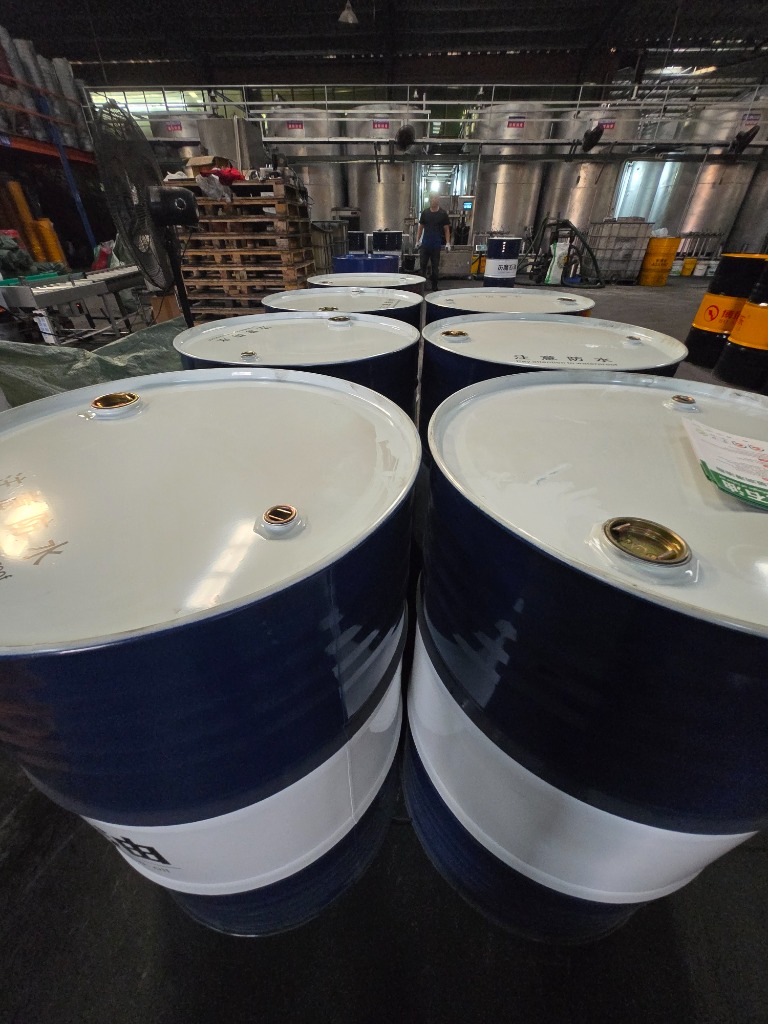
- Cold-Rolled SPCC Steel Drum Costs: The standard industrial packaging medium for global export is the 208-liter (55 US gallon) tight-head steel drum, manufactured from prime cold-rolled SPCC steel sheet with 1.0mm body and 1.2mm head thickness. Rising metallurgical coking coal and hot-rolled coil prices across Asian steel mills (Baosteel, POSCO, Formosa Ha Tinh) have lifted prime export-grade steel drum manufacturing costs to $28.75 per drum. For internal epoxy-phenolic lined drums used for sensitive hydraulic and transformer fluids, prices exceed $32.50 per drum.
- Container Logistics from Xiamen Port: Ocean freight spot rates from Xiamen Port (CNXMN) and Ningbo-Zhoushan to Southeast Asian primary destinations (Singapore, Port Klang, Jakarta, Ho Chi Minh) are quoted at $680–$850 per 20GP container and $1,150–$1,400 per 40HQ container. However, routes to the Middle East (Jebel Ali, Dammam) remain elevated at $2,450 per 40HQ due to vessel diversions and high bunker adjustment factors.
- Weight-Optimized Container Loading: A standard 20-foot dry container accommodates exactly 80 drums of 208L hydraulic oil packed in two tiers of 40 drums each (gross cargo weight ~17.6 MT), well within international road weight limits. Utilizing specialized 40-foot heavy-rated equipment allows 96 to 104 floor-loaded drums, achieving significant per-liter ocean freight economies for large-volume industrial accounts.
9. Authoritative 3-Day Forward Export Price Trajectory Matrix: October 19, 20, and 21, 2026
Integrating upstream crude volatility, physical base oil wholesale pricing, chemical additive indexes, and container logistics surcharges, the FOSS Market Research Desk publishes its daily 3-day predictive export price trajectory for standard export formulations on an FOB Xiamen (CNXMN) basis:
| Product Grade & Specification | Packaging Format | Current FOB Xiamen (Oct 18) | Day 1 Forecast (Oct 19) | Day 2 Forecast (Oct 20) | Day 3 Forecast (Oct 21) | 3-Day Cumulative Outlook |
|---|---|---|---|---|---|---|
| FOSS Anti-Wear Hydraulic Oil ISO VG 32 (L-HM 32) | 208L Steel Drum (Net 175kg) | $198.00 | $199.20 | $200.50 | $201.80 | +$3.80 / drum (+1.9%) |
| FOSS Anti-Wear Hydraulic Oil ISO VG 46 (L-HM 46) | 208L Steel Drum (Net 178kg) | $202.50 | $203.80 | $205.20 | $206.50 | +$4.00 / drum (+2.0%) |
| FOSS Anti-Wear Hydraulic Oil ISO VG 68 (L-HM 68) | 208L Steel Drum (Net 180kg) | $207.00 | $208.50 | $209.80 | $211.20 | +$4.20 / drum (+2.0%) |
| FOSS Heavy-Duty Industrial Gear Oil ISO VG 150 (L-CKD 150) | 208L Steel Drum (Net 182kg) | $229.50 | $231.00 | $232.50 | $234.00 | +$4.50 / drum (+2.0%) |
| FOSS Heavy-Duty Industrial Gear Oil ISO VG 220 (L-CKD 220) | 208L Steel Drum (Net 184kg) | $236.00 | $237.50 | $239.00 | $240.80 | +$4.80 / drum (+2.0%) |
| FOSS Heavy-Duty Industrial Gear Oil ISO VG 320 (L-CKD 320) | 208L Steel Drum (Net 186kg) | $242.00 | $244.00 | $245.80 | $247.50 | +$5.50 / drum (+2.3%) |
Daily Technical Analysis of 3-Day Forecast Trajectory:
- Day 1 (Monday, October 19, 2026): Prompt energy exchanges open with Brent crude testing resistance in the $87.60–$88.40/bbl band. Northeast Asian merchant refiners solidify Group II 500N spot offers at $1,270–$1,275/MT as Singapore middle-distillate crack spreads remain elevated at $23.65/bbl. Export quotes for finished L-HM 46 hydraulic oil advance by +$1.30/drum to $203.80/drum FOB Xiamen, reflecting immediate additive and base stock replacement adjustments.
- Day 2 (Tuesday, October 20, 2026): As chemical parcel tankers and dry container vessels clear Cape of Good Hope rotations, Lloyd's JWC Additional War Risk Premiums and carrier Bunker Adjustment Factors compound logistics overheads. Finished hydraulic fluids (ISO VG 32 and 46) absorb secondary freight surcharges, lifting L-HM 46 offers toward $205.20/drum FOB. Blenders holding low raw material inventories begin rationing uncommitted export volumes.
- Day 3 (Wednesday, October 21, 2026): Heavy industrial gear oils (ISO VG 220 and 320) absorb the full compounding impact of the $175/MT Group II 500N spread and the $1,430/MT Bright Stock benchmark. Finished L-CKD 320 gear oil approaches $247.50/drum FOB Xiamen. Regional mining operators, cement plants, and maritime shipping fleets accelerate spot orders to secure guaranteed 14-day container dispatch before end-of-month allocation closes.
10. Global Buyer Procurement Hedging Strategies: Mitigating Risk via Factory-Direct Agreements
Given the confluence of rising upstream crude benchmarks, structural hydrocracker middle-distillate maximization, and maritime logistics volatility, procurement directors and commercial supply chain managers must transition away from reactive spot-buying behaviors. The FOSS Market Research Desk recommends four concrete operational hedging directives:
Directive 1: Secure Forward 60-Day Group II 500N and Heavy Gear Oil Formulations Before Asian Refineries Implement November General Price Increases (GPIs)
With Group II 500N trading at a record $175/MT premium over 150N and refiners continuing to prioritize middle distillates, major base oil refiners in South Korea and Taiwan are planning November General Price Increases (GPIs) of $40–$60/MT. Commercial buyers requiring ISO VG 46/68 hydraulic oils or ISO VG 150/220/320 gear oils should immediately lock in Q4 quarterly supply agreements with established primary blending facilities that maintain dedicated bulk storage tank farms.
Directive 2: Execute Factory-Direct Fixed-Price Contracts with Primary Blenders to Bypass Broker Markups and Intermediary Margin Stacking
During inflationary commodity cycles, trading intermediaries and offshore brokers compound price volatility by adding speculative trading margins of 8% to 15% on spot container shipments. Direct factory supply agreements with integrated blenders such as FOSS Lubricants allow overseas buyers to contract directly against certified base oil feedstock indexes, ensuring transparent formula pricing, prioritized batch blending slots, and guaranteed maritime container dispatch.
Directive 3: Optimize Container Packing Configurations via Standardized 80-Drum 20GP Two-Tier Palletized or 96-Drum Floor-Loaded Shipments
With container ocean freight and bunker adjustment factors (BAF) elevated due to Cape of Good Hope detours, maximizing cubic and weight utilization per TEU is critical to dampening landed per-liter costs. Transitioning from unoptimized partial loads to standardized 80-drum palletized 20GP configurations (16,640 liters net) or 96-drum floor-loaded shipments reduces per-drum ocean freight costs by $4.50 to $7.20 compared to loose LCL shipping.
Directive 4: Require Batch-Specific Inductively Coupled Plasma (ICP) and Particle Cleanliness (ISO 4406) Certificates of Analysis (COA) to Defend Against Adulterated Low-TBN Spot Blends
In market environments characterized by severe heavy neutral base oil shortages, unscrupulous small-scale toll blenders frequently dilute formulations using low-viscosity spindle oils, off-spec solvent neutral cuts, or substandard non-hydrotreated recycled oils. This compromises thermal-oxidative stability, accelerates hydraulic pump cavitation, and induces rapid sludge formation. Buyers must mandate that every container dispatch be accompanied by a factory-certified Certificate of Analysis (COA) verifying elemental zinc/phosphorus ppm, kinematic viscosity @ 40°C, dielectric demulsibility (ASTM D1401), and ISO 4406 particle cleanliness codes.
11. Technical Engineering Specifications & Quality Verification Standards
FOSS Lubricants manufactures all industrial fluid grades using exclusively hydrotreated Group II and synthetic Group III base stocks compounded with premium additive chemistry sourced directly from global Tier-1 manufacturers (including Lubrizol, Afton Chemical, Infineum, and Chevron Oronite). Our finished fluids fully satisfy and exceed global OEM and international tribological standards:
| Physical & Chemical Parameter | Test Method (ASTM / ISO) | FOSS L-HM 32 | FOSS L-HM 46 | FOSS L-HM 68 | FOSS L-CKD 220 Gear Oil |
|---|---|---|---|---|---|
| Kinematic Viscosity @ 40°C (mm²/s) | ASTM D445 / ISO 3104 | 31.5 – 33.5 | 43.8 – 47.2 | 64.5 – 69.5 | 210.0 – 230.0 |
| Kinematic Viscosity @ 100°C (mm²/s) | ASTM D445 / ISO 3104 | 5.4 | 6.8 | 8.7 | 19.2 |
| Viscosity Index (VI) | ASTM D2270 / ISO 2909 | ≥ 102 | ≥ 104 | ≥ 102 | ≥ 98 |
| Density @ 15°C (kg/m³) | ASTM D4052 / ISO 12185 | 862 | 868 | 874 | 889 |
| Flash Point COC (°C) | ASTM D92 / ISO 2592 | ≥ 225 | ≥ 235 | ≥ 245 | ≥ 250 |
| Pour Point (°C) | ASTM D97 / ISO 3016 | ≤ -30 | ≤ -28 | ≤ -24 | ≤ -18 |
| FZG Gear Scuffing Test (A/8.3/90) | DIN ISO 14635-1 | Failure Load Stage ≥ 11 | Failure Load Stage ≥ 12 | Failure Load Stage ≥ 12 | Failure Load Stage ≥ 14 |
| Demulsibility @ 54°C (min to 40-37-3) | ASTM D1401 / ISO 6614 | ≤ 10 min | ≤ 12 min | ≤ 15 min | ≤ 20 min (@ 82°C) |
| Four-Ball Wear Scar Diameter (mm, 1h/40kg) | ASTM D4172 | ≤ 0.42 | ≤ 0.40 | ≤ 0.38 | ≤ 0.32 |
| International OEM Homologations | Compliance Verification | DIN 51524-2 (HLP), ISO 11158 (L-HM), Parker Hannifin (Denison) HF-0 / HF-1 / HF-2, Eaton Vickers M-2950-S / I-286-S, Bosch Rexroth RE 90220 | DIN 51517-3 (CLP), ISO 12925-1 (CKD), Flender AG (Rev. 16), US Steel 224 | ||
12. FOSS Lubricants Blending Infrastructure, Bulk Tank Farm & Factory-Direct Export Capabilities
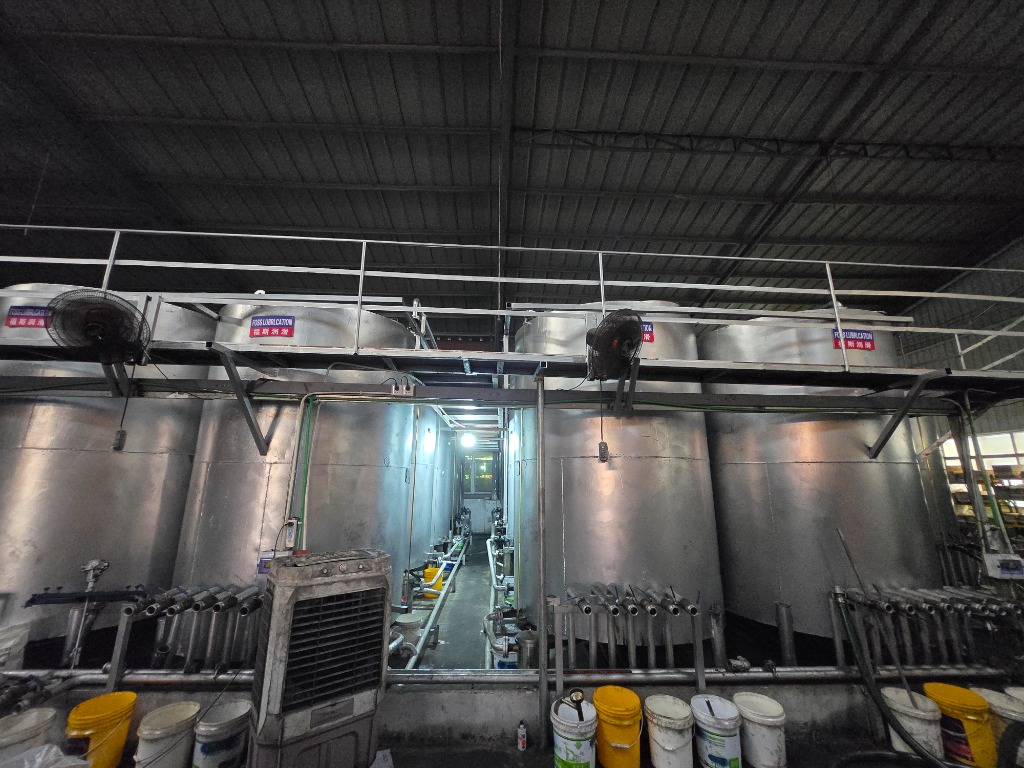
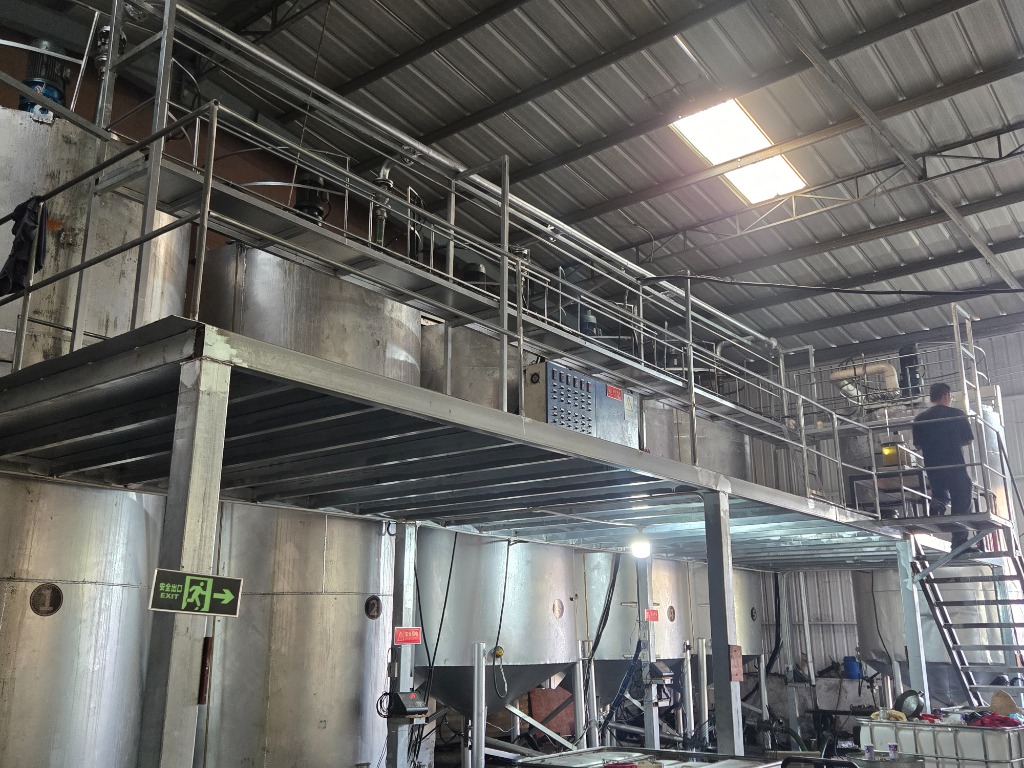
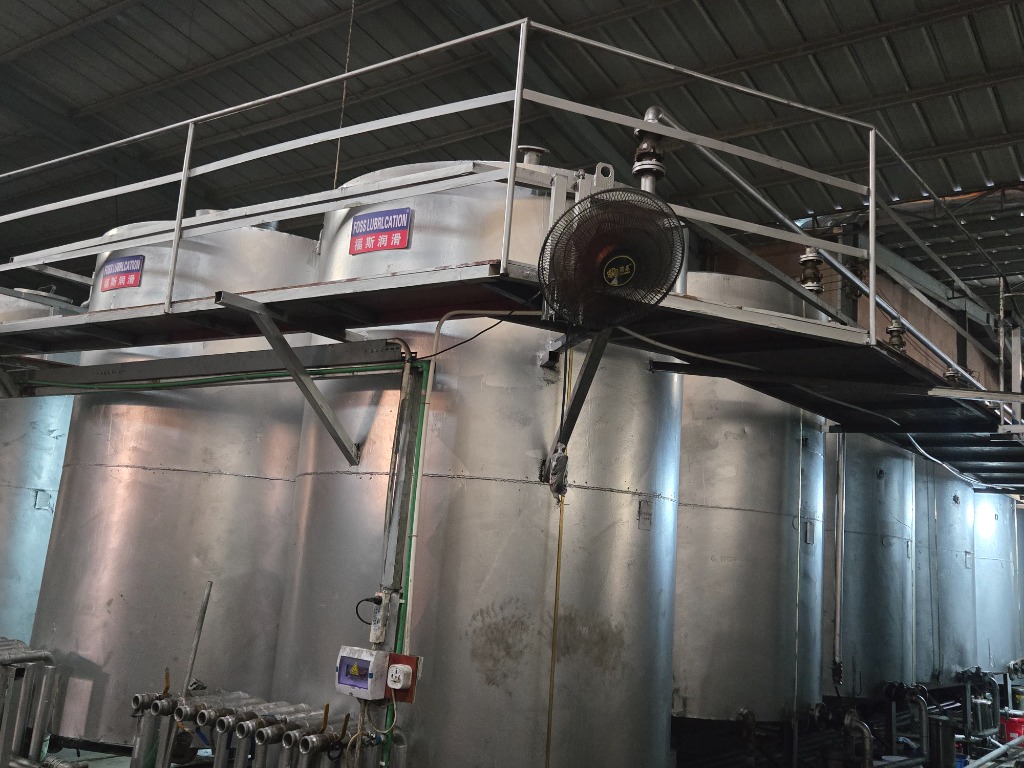
Situated adjacent to the international deep-water maritime shipping hub of Xiamen Port (CNXMN), Quanzhou FOSS Lubrication Technology Co., Ltd. operates as a leading primary blending enterprise supplying engineered lubrication solutions to heavy industrial, maritime, and automotive sectors across Asia, the Middle East, Africa, and South America.
Our manufacturing complex integrates industry-leading engineering infrastructure:
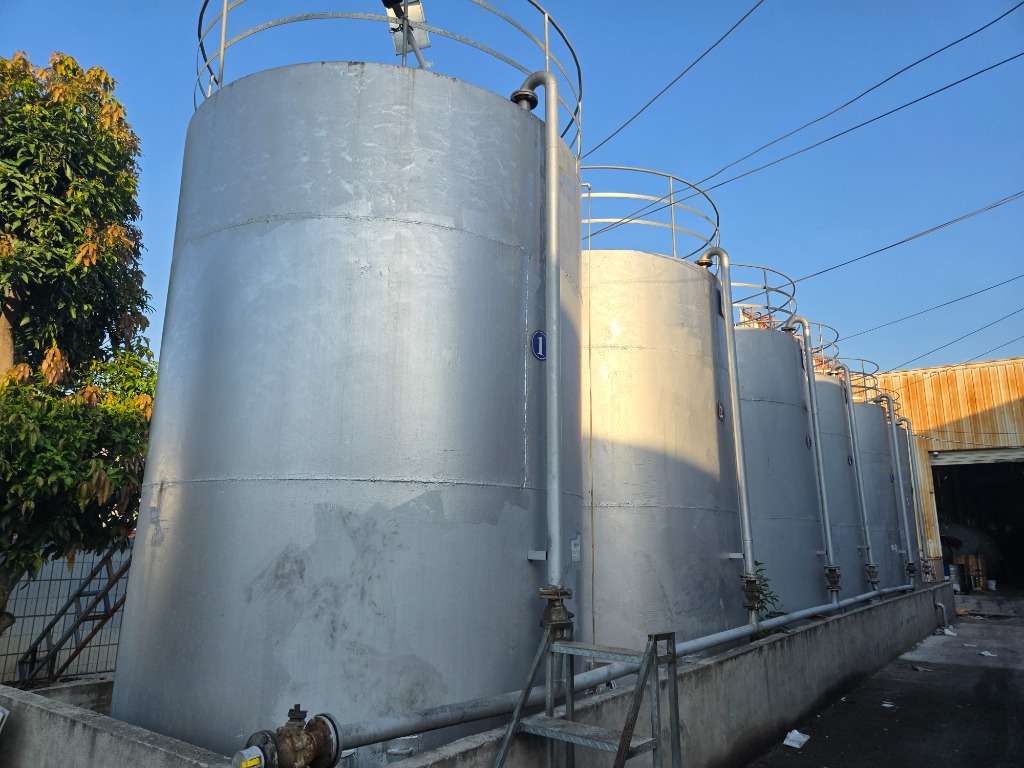
- 35,000 MT Bulk Base Oil Tank Farm: Direct pipeline and road-tanker connectivity ensures continuous feedstock autonomy and buffers against regional spot market allocation shortages.
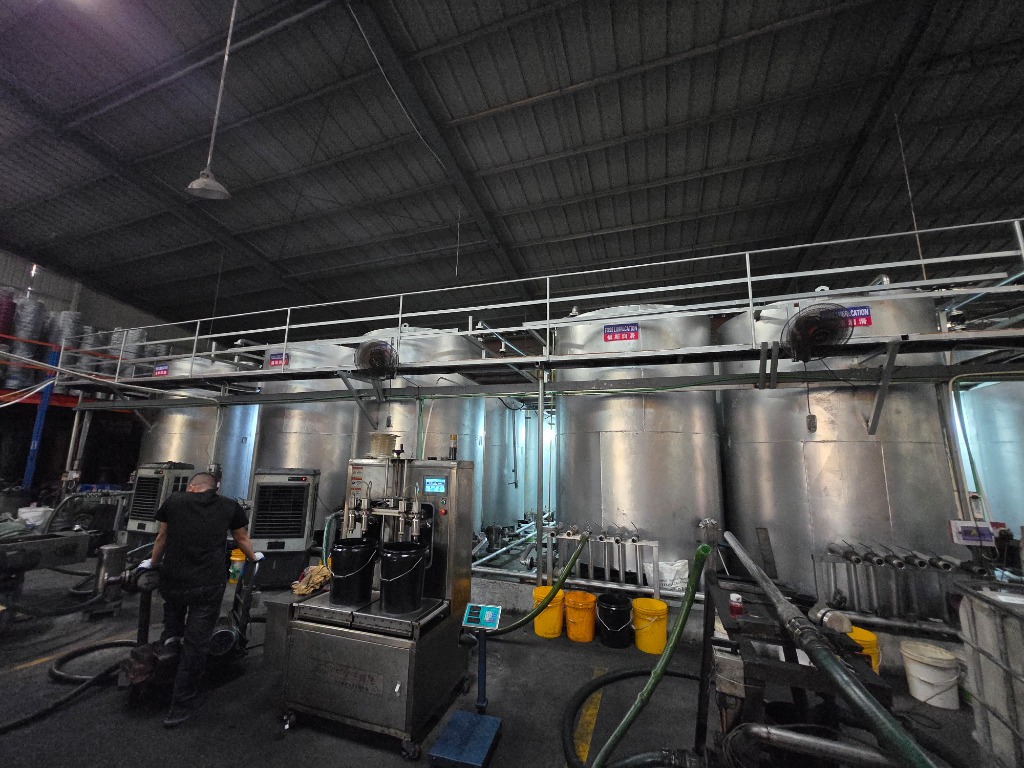
- 150,000 MT Annual Blending Capacity: Equipped with precision stainless steel 20-ton isothermal blending kettles, high-shear homogenizers, and closed-loop DCS/PLC recipe control systems.
- Rigorous In-House Quality Laboratory: Operating Inductively Coupled Plasma Optical Emission Spectrometry (ICP-OES), automated kinematic viscometers, Karl Fischer moisture titrators, and particle counters certified to ISO 4406 cleanliness standards.
- Global Export Readiness: Standard 10-to-14 day container dispatch turnaround, comprehensive export customs clearance documentation, Form E / CO certificates of origin, and factory-certified batch COAs with every dispatch.
Direct Commercial Inquiries: Overseas procurement directors, OEM machinery builders, and regional lubricant distributors seeking 30-day fixed export quotes, verified technical data sheets (TDS), or container dispatch allocations are invited to contact the FOSS Export Desk via WhatsApp at +86 159 5954 3210 or by submitting a formal RFQ via fosslubricants.com/contact.html.
Definitive 3-Day Lubricant & Base Oil Trend Forecast
Synthesized by the FOSS Quantitative Energy Modeling Desk based on active shipping line container bookings, regional tank farm draw-down rates, and prompt ICE Brent futures sentiment:
Brent crude tests resistance in the $87.60–$88.40/bbl band; Northeast Asian merchant refiners solidify Group II 500N spot offers at $1,270–$1,275/MT as Singapore middle-distillate crack spreads remain elevated at $23.65/bbl.
Prolonged Cape of Good Hope transits absorb container and parcel tanker capacity; Lloyd's AWRP and bunker adjustment factors push export quotes for DIN 51524-2 hydraulic oils toward $205.20/drum FOB.
Heavy industrial gear oils absorb the compounding pressure of the $175/MT 500N neutral premium and Bright Stock allocation caps; international buyers accelerate 40HQ container orders to lock factory dispatch before end-month.
5. Strategic Sourcing & Hedging Directives for Overseas Importers
For overseas procurement directors, fleet operators, and industrial distributors, market volatility represents both operational risk and competitive opportunity. We recommend the following three concrete actions for managing Q4 procurement:
Lock 60-Day Container Requirements
Secure firm proforma invoices (PI) with 30-day price validity. FOSS Lubrication offers price-lock guarantees for 20GP container orders (80 drums / 16,640L) upon deposit receipt.
Audit Laboratory CoA Verification
Demand full pre-shipment ASTM test parameters: kinematic viscosity at 40°C / 100°C, viscosity index ≥ 100, flash point ≥ 220°C, pour point ≤ -15°C, and zero moisture contamination.
FOSS Lubrication: Factory-Direct Precision Engineering
Operating out of Quanzhou, China, FOSS blends over 20,000 MT annually of ISO VG 32/46/68 anti-wear hydraulic oils, CK-4 heavy-duty engine oils, and industrial gear lubricants. Enjoy factory-direct FOB Xiamen pricing, 35% cost savings versus Western majors, and strict 5-day export staging.