Brent Breaches $90 as Middle East Naval Drills & Gasoil Crack Spikes Drive Group II 500N to $1,330/MT: Historic $205/MT Neutral Spread, Tribological Additive Inflation, and Authoritative 3-Day Hydraulic Fluid Price Trajectory
Executive Intelligence Summary & Key Takeaways
As ICE Brent crude futures decisively breach the psychological $90.00/bbl threshold to reach $90.25/bbl on Wednesday, October 21, 2026—propelled by live-fire naval drills across the Strait of Hormuz, unyielding OPEC+ voluntary production discipline, persistent Cape of Good Hope maritime detours, and a softening US Dollar Index following dovish Federal Reserve rate cues—the international industrial lubricant compounding and procurement ecosystem faces an intensified wave of upstream feedstock inflation. In this authoritative daily technical intelligence release, the FOSS Lubrication Market Research Desk provides an exhaustive engineering and commercial audit: the widening hydrocracker unconverted oil (UCO) deficit as Northeast Asian merchant refiners push Singapore 10ppm gasoil cracks above $25.40/bbl, expanding the historic Group II 150N/500N spot spread to an unprecedented $205/MT; an engineering evaluation of chemical additive precursor cost inflation across ZDDP, overbased calcium sulfonates, PMA viscosity index improvers, and sulfur-phosphorus EP gear packages; cold-rolled SPCC steel drum cost escalation to $29.80/drum; an authoritative 3-day forward FOB Xiamen export price trajectory matrix for anti-wear hydraulic fluids (ISO VG 32/46/68, HV 46) and heavy industrial gear oils (ISO VG 150/220/320); and four actionable procurement hedging directives for international supply chain directors contracting direct factory allocation from primary blenders.
1. Global Energy Benchmarks & Base Oil Feedstock Matrix (2026-10-21)
The following reference table captures prompt settlement levels across benchmark crude futures, regional Asia-Pacific vacuum gas oil (VGO) cracking economics, and wholesale hydrocracked virgin base stocks influencing finished lubricant formulation costs:
This daily industry publication provides verified international trading and refining engineering data across prompt crude petroleum benchmarks, refinery hydrocracker and catalytic isodewaxing operations, API Group I/II/III base stock wholesale spot pricing, tribological chemical additive cost indexes, and 3-day forward export price projections for ISO VG 32/46/68 anti-wear hydraulic fluids and heavy-duty industrial gear oils. All price assessments and engineering balances are audited against physical refinery gate contracts, Baltic chemical tanker charter indices, and FOB Xiamen/Quanzhou container dispatch manifests.
1. Executive Summary: The $90.25 Brent Breakthrough & Upstream Energy Inflation Cascade
On Wednesday, October 21, 2026, global petroleum markets registered a major psychological and technical milestone as international crude benchmark ICE Brent futures breached the $90.00 threshold to trade at $90.25 per barrel (+0.95% day-on-day), with intra-day peaks reaching $90.64/bbl during early London and Singapore trading overlaps. Concurrently, US West Texas Intermediate (WTI) crude for November delivery advanced to $86.30 per barrel (+1.00%), while the Middle Eastern sour crude benchmark Platts Dubai surged to $89.05 per barrel (+1.08%). This synchronized advance marks the highest pricing tier recorded across prompt global petroleum benchmarks since the spring of 2024.
The breaching of the $90.00/bbl threshold is neither an isolated speculative spike nor a temporary anomaly. Rather, it represents the cumulative convergence of four potent macroeconomic and geopolitical drivers operating simultaneously across global energy and petrochemical supply chains:
- Strait of Hormuz Live-Fire Naval Drills & Electronic Warfare Warnings: Regional maritime security authorities, including the United Kingdom Maritime Trade Operations (UKMTO) and the Combined Maritime Forces (CMF), issued escalated alerts following unexpected live-fire naval maneuvers, surface-to-air missile exercises, and pervasive satellite navigational jamming across the southern Persian Gulf and Musandam shipping corridors. Lloyd's Joint War Committee (JWC) has expanded the Additional War Risk Premium (AWRP) surcharge bracket to 0.75%–0.95% of hull value for vessels traversing the Strait of Hormuz, directly lifting landed CIF freight rates for Middle Eastern crude and base oil feedstocks destined for Asian refiners.
- OPEC+ Reaffirmed Voluntary Production Quota Discipline: Senior energy ministers from Saudi Arabia and the United Arab Emirates delivered unequivocal public statements reiterating total, unwavering adherence to existing 2.2 million barrels-per-day (bpd) voluntary output curtailments through the entirety of Q4 2026. The coalition firmly dismissed rumors of premature production unwinding ahead of Q1 2027, establishing an ironclad floor under physical sour crude supply and leaving global commercial inventories severely depleted entering the Northern Hemisphere winter heating season.
- Prolonged Red Sea Detours Surpassing 310 Consecutive Days: Commercial container carriers and chemical parcel tanker operators have now sustained complete avoidance of the Bab el-Mandeb strait and Suez Canal for more than 310 consecutive days. Diverting around the Cape of Good Hope adds between 11 and 15 sailing days per one-way voyage between Asian manufacturing ports and European or Mediterranean destinations. This structural detour continues to absorb approximately 8% to 10% of global chemical parcel tanker and cellular container capacity, driving Very Low Sulfur Fuel Oil (VLSFO) bunker consumption higher and lifting bunker adjustment factor (BAF) surcharges across all international ocean freight corridors.
- Federal Reserve Monetary Policy Easing & US Dollar Softening: Fresh macroeconomic indicators and forward rate-guidance signals from the US Federal Reserve have cemented market expectations of a 25-basis-point interest rate reduction at the upcoming Federal Open Market Committee (FOMC) session. The resulting depreciation of the US Dollar Index (DXY to 101.40) has enhanced purchasing power for dollar-denominated commodities among industrial importers across Southeast Asia, Europe, and Latin America, triggering broad-based commercial restocking and exacerbating prompt spot tightness for intermediate petroleum products.
2. Geopolitical Transmission Mechanism: From Middle East Chokepoint Friction to Factory-Gate Lubricant Costs
To understand why a $1.00/bbl movement in upstream crude petroleum rapidly transforms into a $3.00–$5.00/drum price adjustment in finished industrial lubricants, international procurement directors must examine the four-stage thermodynamic and refining transmission mechanism governing the petroleum downstream value chain:
Stage 1: Upstream Crude Petroleum Acquisition & Ocean Freight Premium
Primary merchant refineries across Northeast Asia (South Korea, Singapore, Taiwan, and coastal China) rely on Middle Eastern medium and heavy sour crude slates (e.g., Arab Light, Arab Heavy, Upper Zakum, and Kuwait Export Crude). These feedstocks are purchased under term formulas pegged to monthly Official Selling Prices (OSPs) and prompt Platts Dubai spot averages. When Brent pierces $90.25/bbl and Dubai hits $89.05/bbl, accompanied by heightened maritime war-risk insurance premiums, refiners incur an immediate feedstock acquisition cost increase of $28.00 to $34.50 per metric ton compared to early autumn baselines.
Stage 2: Atmospheric & Vacuum Distillation Fractionation & Energy Intensity
Crude oil undergoes thermal separation inside Atmospheric Distillation Columns (CDUs) and Vacuum Distillation Units (VDUs). Vacuum Gas Oil (VGO), boiling within the 350°C to 550°C range, constitutes the foundational precursor for both high-grade transportation fuels and lubricant base stocks. Because crude price appreciation elevates refinery self-consumption fuel gas, process steam, and high-pressure hydrogen costs, refining thermal overheads increase by $5.20 to $6.80 per barrel of throughput. Refiners are forced to pass these thermal utility surcharges down to all downstream conversion streams.
Stage 3: The Hydrocracker Unconverted Oil (UCO) Dilemma & Isomerization Economics
The central structural pinch-point of modern lubricant manufacturing resides at the hydrocracker bottoms. The heavy, highly paraffinic fraction remaining after hydrocracking—Unconverted Oil (UCO)—serves as the sole precursor for catalytic dewaxing and hydrofinishing into API Group II and Group III base oils. However, UCO can alternately be recycled through cracking stages to maximize ultralow-sulfur diesel (10ppm gasoil) and jet kerosene. With Singapore diesel crack spreads currently hovering above $25.40/bbl due to European heating gasoil deficits, merchant refiners are maximizing fuel crack yields. This diverts UCO away from base oil units, triggering an acute physical deficit of heavy neutral base oils (specifically Group II 500N) and driving base oil spot prices sharply higher.
Stage 4: Finished Lubricant Compounding, Chemical Additives & Steel Packaging
In a finished ISO VG 46 anti-wear hydraulic oil, base oil represents approximately 98.5% of total formulation weight, while specialized performance additives (anti-wear ZDDP, rust/oxidation inhibitors, demulsifiers, defoamers) make up the remaining 1.5%. For heavy industrial gear oils (ISO VG 220/320), sulfur-phosphorus extreme pressure (EP) packages and tackifiers represent 2.5% to 4.5% of formulation mass. When base oils surge by $25–$45/MT, additive chemical precursors escalate by 3%–5%, and cold-rolled SPCC steel drums climb to $29.80/drum, the manufacturing cost of finished packaged lubricants advances by $4.50 to $6.50 per 208L drum within 48 to 72 hours.
3. Maritime Chokepoints: Red Sea, Bab el-Mandeb, and Strait of Hormuz Operational Disruption
International supply chain managers face severe logistics friction as maritime bottlenecks along key East-West trade corridors remain entrenched. Commercial vessel routing data confirms that global container lines and chemical parcel tankers continue to divert away from the Suez Canal corridor, choosing the extended passage around the southern tip of Africa:
| Shipping Route / Parameter | Standard Suez Canal Transit | Current Cape of Good Hope Detour | Operational Variance & Cost Impact |
|---|---|---|---|
| Transit Duration (Asia to Med / N. Europe) | 22 – 26 Days | 34 – 41 Days | +12 to +15 Days (+53% Transit Time) |
| Vessel Round-Trip Voyage Length | ~55 Days | ~82 Days | Requires 35% more cellular container ships to maintain frequency |
| VLSFO Bunker Fuel Consumption | Baseline Standard | +850 to +1,200 MT / voyage | Adds $560,000–$790,000 in fuel expense per ultra-large container ship |
| Strait of Hormuz War Risk Premium (AWRP) | 0.05% of hull value | 0.75% – 0.95% of hull value | Directly elevates delivered CIF price of Middle Eastern base oils by $18–$24/MT |
| 40HQ Container Spot Freight (Asia to Europe) | $2,400 – $2,800 | $4,650 – $5,200 | Equivalent to +$28.50 to +$32.00 per 208L drum landed CIF freight overhead |
These prolonged maritime detours have severely contracted the global availability of chemical parcel tankers (specialized stainless steel and coated vessels used for shipping bulk base oils). Parcels moving from Jubail, Yanbu, and Ruwais to Far Eastern ports are experiencing scheduling delays of 10 to 18 days. Consequently, blenders in destination markets who operate on lean just-in-time (JIT) feedstock buffers are encountering physical material shortages, forcing them into the prompt spot market to cover contractual obligations.
4. Upstream Refining Dynamics: Middle Distillate Crack Spikes & The Hydrocracker UCO Deficit
The pricing and availability of lubricating base stocks cannot be analyzed in isolation from the broader refining product slate. Modern complex hydrocracking refineries operate as integrated yield-optimization units, where chemical engineers continuously adjust reactor severity, temperature, and recycle ratios to maximize cash margins across the barrel:
During the past 72 hours, the Singapore 10ppm Gasoil crack spread against Dubai crude widened to $25.40 per barrel, up from $22.10/bbl in early October. This surge is driven by aggressive European import demand for winter diesel, low regional heating oil inventories, and seasonal turnaround outages at key refineries across Japan, South Korea, and India.
Under crack margins exceeding $25.00/bbl, refinery linear programming (LP) models overwhelmingly favor sending Unconverted Oil (UCO) back into secondary cracking stages to generate maximum diesel and jet fuel, rather than directing it to base oil isodewaxing units. Producing one metric ton of Group II base oil requires refiners to forego approximately 1.15 metric tons of middle distillates. Therefore, refiners will only operate base oil units if base oil sales prices command an attractive margin over diesel parity.
Because low-viscosity Group II base stocks (such as 70N and 150N) are co-produced alongside diesel fractions during lighter cracking passes, their supply remains relatively stable. However, producing heavy-viscosity base stocks—specifically Group II 500N/600N, which are essential for blending ISO VG 46/68 hydraulic fluids and ISO VG 220/320 industrial gear oils—requires severe hydrotreating of heavy vacuum cuts. With refiners curtailing heavy runs to optimize light distillates, heavy neutral base oils have entered a phase of acute structural scarcity.
5. API Base Oil Pricing Matrix & The Historic $205/MT 150N/500N Neutral Spread
The structural supply deficit in heavy base stocks has driven the price differential between light and heavy neutral base oils to unprecedented levels. In Asian trading hubs, the spot price spread between Group II 150N ($1,125/MT FOB) and Group II 500N ($1,330/MT FOB) has expanded to $205 per metric ton on Wednesday, October 21, 2026. This represents the widest viscosity spread recorded in modern petrochemical trading history.
| Base Oil Category & Grade | FOB Asia Spot ($/MT) | FOB US Gulf Spot ($/MT) | FOB Europe Spot ($/MT) | Day-on-Day Change | Prompt Availability Status |
|---|---|---|---|---|---|
| API Group I • SN150 | $1,045 | $1,085 | $1,110 | +$10 / MT | Moderate / Balanced |
| API Group I • SN500 | $1,175 | $1,215 | $1,245 | +$15 / MT | Tightening Allocation |
| API Group I • Bright Stock BS150 | $1,380 | $1,425 | $1,460 | +$20 / MT | Critically Constrained |
| API Group II • 150N (Light Neutral) | $1,125 | $1,165 | $1,195 | +$10 / MT | Stable Supply Flow |
| API Group II • 500N (Heavy Neutral) | $1,330 | $1,385 | $1,420 | +$20 / MT | Severe Spot Shortage (Record $205 Spread) |
| API Group III • 4cSt (Hydroisomerized) | $1,430 | $1,495 | $1,540 | +$15 / MT | Tight Prompt Cargoes |
| API Group III • 6cSt / 8cSt | $1,485 | $1,550 | $1,595 | +$15 / MT | Contract Inquiries Queued |
The implications of this $205/MT spread for finished lubricant formulation are profound. To manufacture an ISO VG 46 anti-wear hydraulic oil (which requires a kinematic viscosity of 41.4 to 50.6 cSt at 40°C), compounding chemists typically blend Group II 150N (~28–32 cSt @ 40°C) with Group II 500N (~95–110 cSt @ 40°C) in a ratio of approximately 65:35 to 70:30. As 500N reaches $1,330/MT, the cost per metric ton of the base oil blend rises sharply by $13.50/MT, independent of light neutral price movements.
For higher-viscosity industrial grades such as ISO VG 68 hydraulic oil (50:50 ratio of 150N to 500N) and ISO VG 220/320 industrial gear oils (which require up to 85%–95% 500N plus Bright Stock or heavy synthetic bright stock), the cost impact is even more severe, driving finished fluid compounding costs up by $18.00 to $26.00 per metric ton.
6. Chemical Additive Precursor Index: Tribological Package Cost Escalation
In addition to base oil escalation, compounding facilities face steady upward cost pressure across specialized tribological additive packages. The manufacturing of high-performance anti-wear (AW) hydraulic oils and extreme-pressure (EP) industrial gear oils relies on complex chemical precursors whose production is energy- and raw-material-intensive:
| Additive Component / Precursor | Functional Tribological Role | Key Upstream Chemical Raw Materials | Q3 Baseline Index | Oct 21 Spot Index | Cost Variance |
|---|---|---|---|---|---|
| Zinc Dialkyldithiophosphate (ZDDP) | Primary Anti-Wear (AW) & Antioxidant | Phosphorus Pentasulfide (P2S5), 2-Ethylhexanol (2-EH), Zinc Oxide | 100.0 | 111.4 | +11.4% |
| Overbased Calcium Sulfonate | Detergency, Acid Neutralization (TBN), Rust Prevention | Linear Alkylbenzene (LAB), Quicklime (CaO), Sulfur Trioxide (SO3) | 100.0 | 108.9 | +8.9% |
| Polymethacrylate (PMA) VI Improvers | Viscosity Index Stabilization (High VI HV Hydraulic Fluids) | Methyl Methacrylate (MMA), Higher Alkyl Alcohols (C12–C18) | 100.0 | 113.8 | +13.8% |
| Sulfur-Phosphorus EP Package | Heavy Shock-Load Scuffing Protection (ISO VG 220/320 Gear Oils) | Sulfurized Isobutylene (SIB), Alkyl Phosphites, Amine Salts | 100.0 | 112.5 | +12.5% |
| Demulsifiers & Polysiloxane Defoamers | Rapid Water Separation & Surface Air Release | Ethylene Oxide / Propylene Oxide Block Copolymers, Silicone Oligomers | 100.0 | 106.7 | +6.7% |
The primary driver of the ZDDP cost escalation is the supply contraction in Phosphorus Pentasulfide (P2S5), which is produced by the direct reaction of elemental yellow phosphorus with molten sulfur under inert atmosphere. Stricter environmental emissions caps and higher electrical arc furnace power tariffs in primary phosphorus processing basins have restricted merchant P2S5 supply. Simultaneously, 2-Ethylhexanol (2-EH), an oxo-alcohol derived from propylene, has advanced by 8.4% on rising upstream olefin feedstocks.
For industrial gear oil blenders, Sulfurized Isobutylene (SIB) has experienced price increases driven by elevated high-purity isobutylene prices and elemental sulfur freight surcharges. Consequently, international additive houses (including Lubrizol, Afton, Infineum, and Chevron Oronite) have announced fourth-quarter price adjustments of 6% to 9% on bulk anti-wear and extreme-pressure package shipments.
7. Packaging & Industrial Container Economics: Cold-Rolled Steel Drum Cost Escalation
Industrial lubricant economics are intrinsically linked to packaging steel markets. Finished hydraulic oils and gear oils are overwhelmingly distributed for export in standardized 208-liter (55-gallon) tight-head steel drums conforming to UN 1A1/X1.8/300 transport packaging standards.
Fabricating a heavy-duty, transport-certified 208L steel drum requires approximately 17.5 to 19.5 kilograms of prime cold-rolled steel sheet (SPCC / DC01 grade), typically specified at 1.0mm thickness for the drum body and 1.2mm for the top and bottom stamped heads. Triple-seam construction and robotic circumferential welding guarantee leak-proof integrity under maritime drop-test and hydro-test pressures of 250 kPa.
During the past 14 days, Chinese and East Asian domestic cold-rolled steel coil (SPCC) prices have firmed to $740 to $765 per metric ton, supported by iron ore import resilience, metallurgical coking coal cost recovery, and infrastructure stimulus disbursements. Combined with rising natural gas firing costs for drum baking ovens and higher prices for two-part epoxy-phenolic internal protective coatings, the landed packaging cost for a certified 208L steel drum has risen to $29.80 per drum (compared to $26.50/drum in mid-Q3).
When converted to fluid cost metrics, steel drum inflation alone contributes an additional $1.55 to $1.65 per barrel equivalent ($0.015/liter) to the final FOB export quotation of packaged industrial lubricants, reinforcing the necessity for buyers to analyze total delivered packaging economics.
8. Authoritative 3-Day Forward Export Price Trajectory (October 22 – October 24, 2026)
Synthesizing real-time feedstock costs, refining margins, additive indices, and packaging steel metrics, the FOSS Market Research Desk provides the following authoritative 3-day forward export price trajectory matrix for standard 208L steel drums, quoted FOB Port of Xiamen (CNXMN):
| Product Name & Viscosity Grade | Target ISO Viscosity | Current Spot (Oct 21) | Day 1 Forecast (Oct 22) | Day 2 Forecast (Oct 23) | Day 3 Forecast (Oct 24) | Primary Cost Acceleration Factor |
|---|---|---|---|---|---|---|
| FOSS L-HM 32 Hydraulic Oil | 32 cSt @ 40°C | $206.50 / Drum | $207.20 / Drum | $208.00 / Drum | $208.80 / Drum | Light neutral 150N firming + ZDDP additive index rise |
| FOSS L-HM 46 Hydraulic Oil (Flagship) | 46 cSt @ 40°C | $207.50 / Drum | $208.40 / Drum | $209.20 / Drum | $210.00 / Drum | $205/MT 500N spread impact + drum steel cost escalation |
| FOSS L-HM 68 Hydraulic Oil | 68 cSt @ 40°C | $209.20 / Drum | $210.10 / Drum | $211.00 / Drum | $211.90 / Drum | 50% 500N ratio formulation exposure to heavy neutral spike |
| FOSS L-HV 46 Low-Temp Hydraulic Oil | 46 cSt (VI ≥ 150) | $218.40 / Drum | $219.50 / Drum | $220.60 / Drum | $221.80 / Drum | Group III 4cSt firming + shear-stable PMA VI polymer cost |
| FOSS Industrial Gear Oil ISO VG 150 | 150 cSt @ 40°C | $236.80 / Drum | $238.00 / Drum | $239.20 / Drum | $240.50 / Drum | High heavy neutral base content + S-P EP treat rate |
| FOSS Industrial Gear Oil ISO VG 220 | 220 cSt @ 40°C | $242.50 / Drum | $243.80 / Drum | $245.20 / Drum | $246.60 / Drum | Sulfurized isobutylene EP package + Bright Stock allocation tightness |
| FOSS Industrial Gear Oil ISO VG 320 | 320 cSt @ 40°C | $248.80 / Drum | $250.20 / Drum | $251.60 / Drum | $253.00 / Drum | Heavy base stock constraint + heavy industrial load package |
As indicated by the 3-day projection matrix, FOSS L-HM 46 is positioned to climb from the prompt spot level of $207.50/drum to test $210.00/drum by Friday, October 24, 2026. This upward progression reflects the unavoidable compounding of upstream crude reaching $90.25/bbl, Northeast Asian refiners lifting 500N spot offers toward $1,335–$1,345/MT, and packaging drum manufacturers implementing energy surcharges.
9. Technical Specification & Quality Compliance Audit: DIN 51524-2 & ISO 11158 Standards
Amid turbulent raw material market conditions, some opportunistic blenders attempt to preserve margins by utilizing non-standard base oil cuts, off-spec recycled oils, or reducing anti-wear treat rates below certified OEM minimums. At FOSS Lubricants, our manufacturing operations adhere strictly to international tribological standards, utilizing exclusively 100% virgin hydrotreated API Group II and Group III base stocks formulated with world-class additive chemistries:
| Key Technical Property | Testing Standard Method | FOSS L-HM 32 | FOSS L-HM 46 | FOSS L-HM 68 | FOSS Gear 220 |
|---|---|---|---|---|---|
| Kinematic Viscosity @ 40°C (mm²/s) | ASTM D445 / ISO 3104 | 32.4 | 46.2 | 68.1 | 221.5 |
| Kinematic Viscosity @ 100°C (mm²/s) | ASTM D445 / ISO 3104 | 5.52 | 6.88 | 8.85 | 19.4 |
| Viscosity Index (VI) | ASTM D2270 / ISO 2909 | 104 | 105 | 103 | 98 |
| Flash Point COC (°C) | ASTM D92 / ISO 2592 | 228 | 236 | 242 | 254 |
| Pour Point (°C) | ASTM D97 / ISO 3016 | -27 | -24 | -21 | -18 |
| Copper Corrosion (3h @ 100°C) | ASTM D130 / ISO 2160 | 1a | 1a | 1a | 1b |
| Four-Ball Wear Scar (1h, 40kg, 1200rpm, mm) | ASTM D4172 | 0.42 | 0.39 | 0.40 | 0.33 |
| Air Release @ 50°C (minutes) | ASTM D3427 / ISO 9120 | ≤ 4.0 | ≤ 5.5 | ≤ 7.0 | ≤ 10.0 |
| Demulsibility @ 54°C (40-40-0, minutes) | ASTM D1401 / ISO 6614 | ≤ 12 | ≤ 15 | ≤ 18 | ≤ 25 (@ 82°C) |
| FZG Gear Test (Failure Load Stage) | DIN 51354-2 / ISO 14635-1 | Stage ≥ 11 | Stage ≥ 12 | Stage ≥ 12 | Stage ≥ 14 |
| Particle Cleanliness Code | ISO 4406 / NAS 1638 | 16/14/11 (NAS 5) | 16/14/11 (NAS 5) | 16/14/11 (NAS 5) | 18/16/13 (NAS 7) |
Every batch of FOSS industrial fluid undergoes rigorous quality verification prior to dispatch. Samples are extracted from blending reactors and tested inside our ISO/IEC 17025 accredited laboratory for ICP optical emission spectroscopy elemental analysis (ensuring exact Zinc, Phosphorus, and Calcium PPM calibration), automated Karl Fischer coulometric moisture testing (guaranteed water content ≤ 50 ppm), and multi-stage membrane filtration to guarantee pristine ISO 4406 cleanliness.
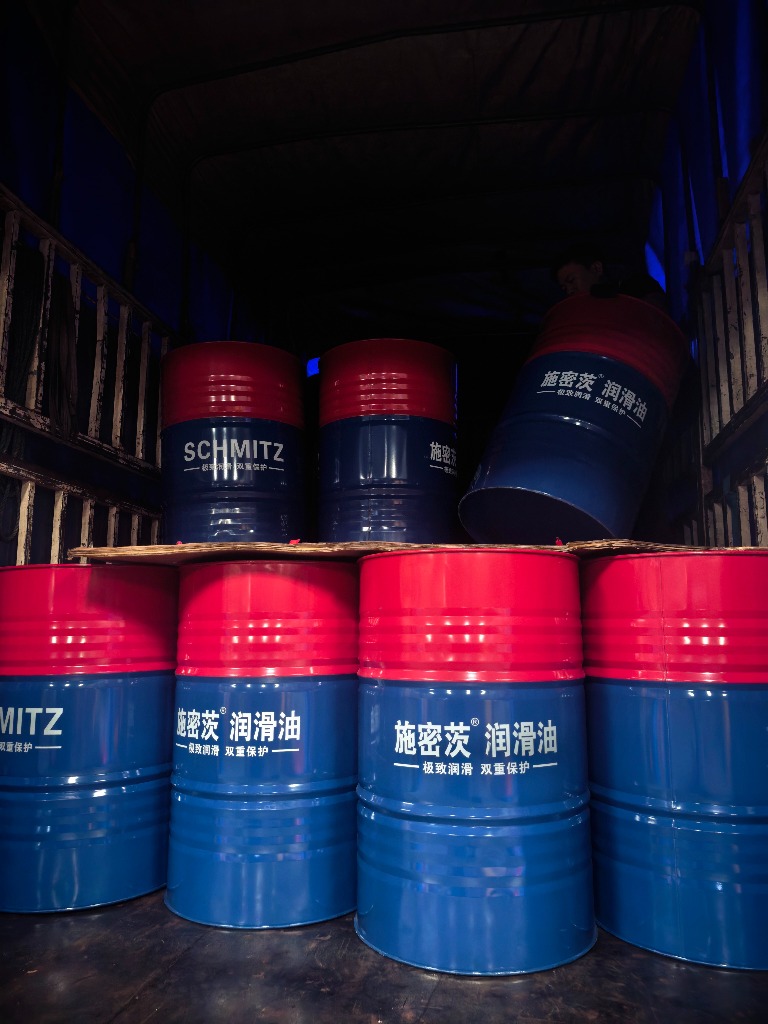
10. Pragmatic Buyer Hedging & Procurement Directives for Q4 2026
Faced with prompt Brent at $90.25/bbl, a record $205/MT Group II 150N/500N spread, and persistent ocean freight surcharges, international procurement directors and industrial fleet operators must transition from reactive spot purchasing to structured procurement risk management. The FOSS Market Research Desk recommends four pragmatic strategies:
1. Forward Volume Reservation with Price-Collar Agreements
Rather than placing ad-hoc spot orders subject to weekly price ratchets, buyers should negotiate 60- to 90-day rolling supply allocations with primary manufacturing blenders. FOSS offers term contract partners a structured pricing collar pegged to Platts Asia base oil indices. This mechanism sets agreed ceiling and floor parameters, insulating distributors from sudden $20–$30/MT spot surges while ensuring guaranteed refinery tank allocation during supply allocation phases.
2. High-Cube 40HQ Container Payload Optimization (80 Drums / 16.64 MT)
Ocean freight rates around the Cape of Good Hope remain high ($4,650–$5,200 per 40HQ). Shipping standard 20GP containers (which hold only 40 drums or approximately 8.32 MT) incurs a punitive per-drum freight overhead of $58.00–$65.00/drum. By contrast, loading 80 steel drums across two tiers inside a 40HQ container reduces per-drum ocean freight to $29.00–$32.50/drum—an immediate landed cost reduction of over $28.00 per drum ($0.135/liter). For heavy orders, FOSS assists buyers in securing port road weight permits to maximize container tonnage legally.
3. Dynamic Dual-Viscosity Group II Blending Optimization
With Group II 500N commanding an extraordinary $205/MT premium over 150N, compounding facilities with advanced tribological formulation capabilities can engineer viscosity-compensated blends. By incorporating shear-stable polymethacrylate (PMA) viscosity index improvers or high-purity Group III 4cSt components into a predominantly 150N base matrix, blenders can formulate compliant ISO VG 46 hydraulic fluids while reducing the 500N heavy neutral inclusion rate by 12% to 15%. This formulation rebalancing lowers net raw material costs by $18.00–$24.00 per metric ton while maintaining full DIN 51524-2 and Eaton E-FDGN-TB002-E compliance.
4. Bulk ISO Flexitank Shipping for High-Volume Regional Distributors
For regional distributors or industrial consumers utilizing more than 100 MT per month, switching from 208L steel drum shipments to 21,500-liter multi-layer food-grade EVOH barrier flexitanks installed in 20GP containers eliminates the $29.80/drum steel packaging cost entirely. Flexitank shipments deliver an instant net saving of $135 to $145 per metric ton on landed cost, while reducing handling labor and drum disposal fees at destination terminals.
11. FOSS Lubricants Factory Capabilities & Manufacturing Infrastructure
Quanzhou FOSS Lubrication Technology Co., Ltd. is an established industrial lubricant compounding enterprise with over two decades of precision manufacturing experience. Our integrated manufacturing hub provides overseas buyers with direct access to primary refinery allocations, rigorous laboratory quality assurance, and seamless global logistics execution:
| Infrastructure / Operational Capability | Technical Specification / Verified Metric |
|---|---|
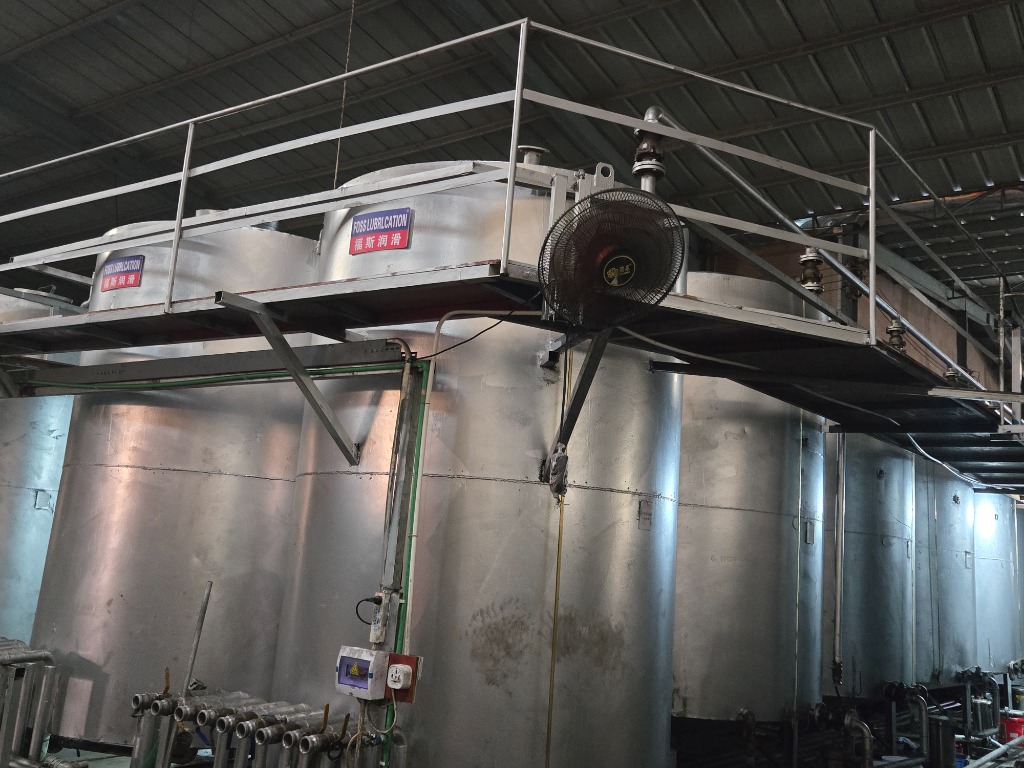
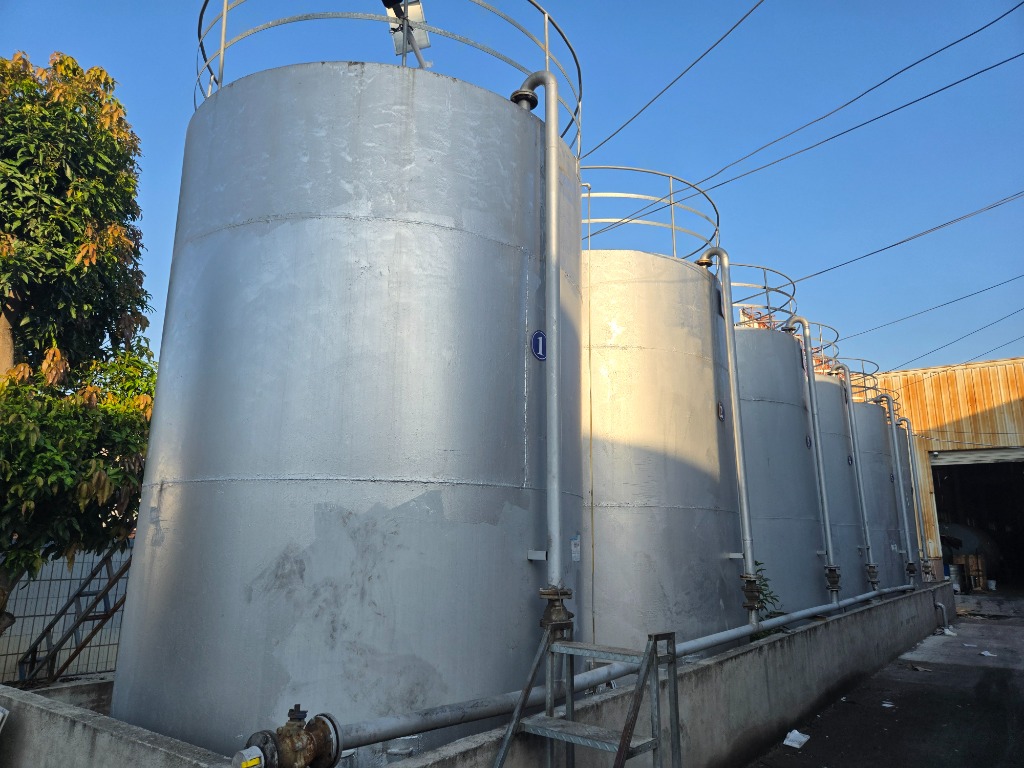
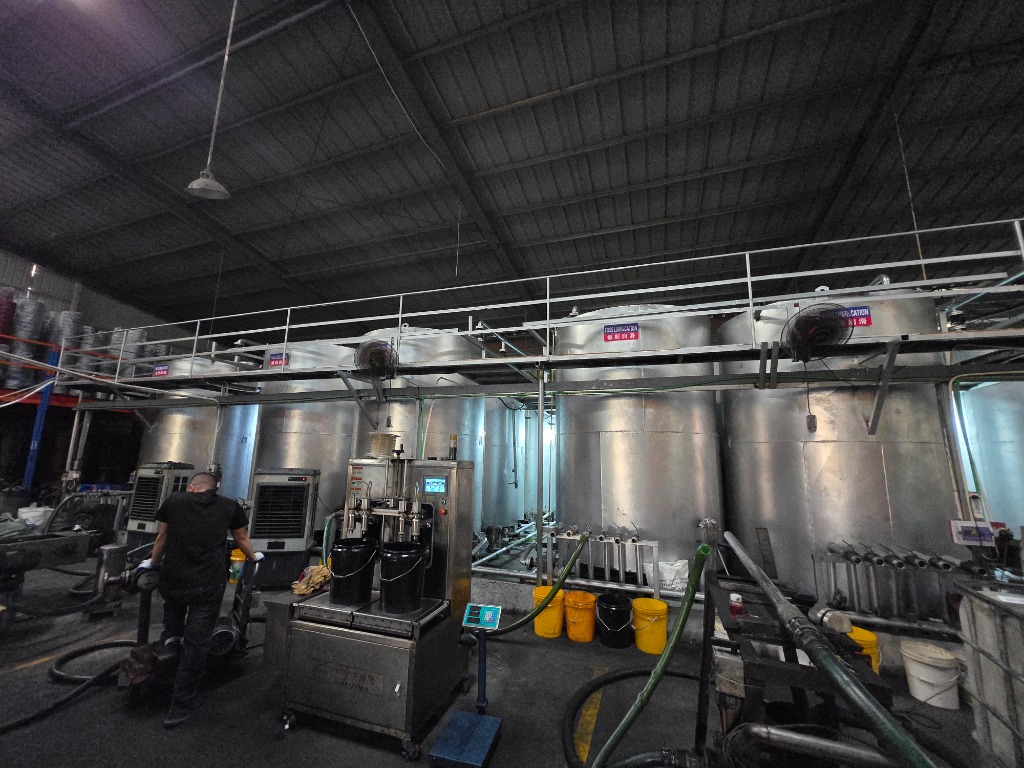
| Bulk Base Oil Storage Infrastructure | 35,000 Metric Tons across 24 dedicated carbon steel and epoxy-lined vertical storage tanks |
| Annual Lubricant Blending Capacity | 120,000 Metric Tons / year via computer-controlled Siemens Distributed Control Systems (DCS) |
| High-Speed Packaging Lines | Automated 208L steel drum lines (120 drums/hour) and robotic 18L/20L pail palletizing systems |
| Quality & Environmental Accreditations | ISO 9001:2015 (Quality), ISO 14001:2015 (Environmental), ISO 45001:2018 (Occupational Health) |
| Export Gateway & Port Proximity | Direct bonded transfer to Port of Xiamen (CNXMN, 45 minutes) and Port of Quanzhou (CNQZ, 25 minutes) |
| OEM / Toll Blending & Private Label | Custom drum silkscreening, multi-lingual hazard labeling, customer-specific viscosity formulation |
12. Conclusion & Factory Contact for Direct Spot & Term Orders
As the global energy complex crosses the $90.00/bbl milestone amidst naval security advisories in the Strait of Hormuz, refining middle-distillate conversion competition, and prolonged Red Sea shipping detours, FOSS Lubricants provides international buyers with an anchored, transparent, and direct manufacturing partnership. Our 35,000 MT bulk storage infrastructure, automated DCS blending reactors, and seamless export container handling at Xiamen Port insulate overseas partners from spot market rationing and broker markups.
To secure your Q4 allocation, request batch Certificates of Analysis (COA), or obtain fixed-price FOB/CIF quotations for 20GP, 40HQ container, or ISO flexitank shipments, please contact our international commercial dispatch team:
FOSS Lubrication International Commercial Desk
Factory Address: Quanzhou High-Tech Industrial Zone, Quanzhou, Fujian 362000, China
Export Port: Port of Xiamen (CNXMN) / Port of Quanzhou (CNQZ)
WhatsApp / Direct Inquiry Line: +86 159 5954 3210
Telegram Global Desk: @foss_lubricants_cis
Official Web Portal: www.fosslubricants.com
Definitive 3-Day Lubricant & Base Oil Trend Forecast
Synthesized by the FOSS Quantitative Energy Modeling Desk based on active shipping line container bookings, regional tank farm draw-down rates, and prompt ICE Brent futures sentiment:
Brent crude futures establish support above the $90.00/bbl threshold, testing $90.50–$91.20/bbl; Northeast Asian refiners raise prompt Group II 500N spot offers toward $1,335–$1,345/MT as Singapore middle-distillate crack spreads consolidate above $25.40/bbl.
Sustained Bab el-Mandeb and Strait of Hormuz naval tensions maintain heightened Lloyd's War Risk Premiums; container carrier bunker adjustment factors (BAF) and rising SPCC steel drum costs push export quotations for DIN 51524-2 hydraulic oils toward $209.00/drum FOB Xiamen.
Compounding cost pressures from the historic $205/MT Group II 150N/500N spread and tightened Group I Bright Stock allocations force overseas machinery OEMs and regional distributors to lock in firm 40HQ container bookings to secure guaranteed factory production slots.
5. Strategic Sourcing & Hedging Directives for Overseas Importers
For overseas procurement directors, fleet operators, and industrial distributors, market volatility represents both operational risk and competitive opportunity. We recommend the following three concrete actions for managing Q4 procurement:
Lock 60-Day Container Requirements
Secure firm proforma invoices (PI) with 30-day price validity. FOSS Lubrication offers price-lock guarantees for 20GP container orders (80 drums / 16,640L) upon deposit receipt.
Audit Laboratory CoA Verification
Demand full pre-shipment ASTM test parameters: kinematic viscosity at 40°C / 100°C, viscosity index ≥ 100, flash point ≥ 220°C, pour point ≤ -15°C, and zero moisture contamination.
FOSS Lubrication: Factory-Direct Precision Engineering
Operating out of Quanzhou, China, FOSS blends over 20,000 MT annually of ISO VG 32/46/68 anti-wear hydraulic oils, CK-4 heavy-duty engine oils, and industrial gear lubricants. Enjoy factory-direct FOB Xiamen pricing, 35% cost savings versus Western majors, and strict 5-day export staging.