Brent Tests $83.65 Amid Escalating Persian Gulf AIS Blackouts & OPEC+ Quota Enforcement: Asian Hydrocracker Middle-Distillate Diversion, Additive Cost Surges, and 3-Day Hydraulic Fluid Export Price Outlook

Executive Intelligence Summary & Key Takeaways
As prompt ICE Brent crude futures challenge $83.65/bbl on Tuesday, October 13, 2026, catalyzed by escalating Persian Gulf electronic AIS blackouts, naval vessel patrols near the Strait of Hormuz, and rigid OPEC+ ministerial output discipline through late Q4 2026, global petroleum refining and chemical compounding sectors face intensified cost pressures. In this definitive daily intelligence report, the FOSS Lubrication Market Research Desk investigates the acute supply transmission mechanism: Northeast Asian hydrocrackers aggressively pivoting unconverted oil (UCO) and vacuum gas oil (VGO) cracking streams into high-margin winter jet fuel/kerosene and ultra-low sulfur diesel (ULSD), triggering severe supply deficits for Group II 500N heavy neutral base stocks; an in-depth audit of the surging Chemical Additive Cost Index spanning ZDDP, overbased calcium sulfonates, and polymethacrylate (PMA) viscosity improvers; an authoritative 3-day multi-grade export price projection matrix for anti-wear hydraulic oils and heavy-duty industrial gear oils; and actionable risk-hedging directives for international procurement executives securing containerized supply direct from primary blending hubs.
1. Global Energy Benchmarks & Base Oil Feedstock Matrix (2026-10-13)
The following reference table captures prompt settlement levels across benchmark crude futures, regional Asia-Pacific vacuum gas oil (VGO) cracking economics, and wholesale hydrocracked virgin base stocks influencing finished lubricant formulation costs:
2. Persian Gulf AIS Blackouts, Strait of Hormuz Chokepoints & Cape of Good Hope Logistics: The Energy Shock Transmission Channel
Global energy and maritime logistics encountered an intensified escalation threshold on Tuesday, October 13, 2026, as prompt ICE Brent crude futures advanced past the crucial technical resistance level of $83.00 to trade firmly at $83.65 per barrel (+1.5% day-on-day). In parallel, US West Texas Intermediate (WTI) crude climbed to $79.80 per barrel (+1.5%), while the Middle Eastern sour crude benchmark, Dubai Fateh, surged to $82.35 per barrel (+1.5%). This synchronized upward repricing across all major physical and financial hydrocarbon benchmarks reflects escalating systemic friction across the critical maritime choke points governing international crude petroleum and chemical carrier movements.
During the preceding 48 hours, maritime tracking agencies, including the United Kingdom Maritime Trade Operations (UKMTO) and the International Chamber of Shipping (ICS), confirmed widespread electronic warfare interference across the Strait of Hormuz and the Gulf of Oman. Commercial vessel operators reported sudden, persistent Automatic Identification System (AIS) transponder blackouts, GPS spoofing, and phantom radar echoes near the territorial waters of Ras Musandam and the approaches to Fujairah. These electronic countermeasures, compounded by live-fire naval exercises announced by Iranian coastal defense units and intensified surveillance patrols by international maritime coalitions, have triggered an immediate reassessment of maritime transit risk.
The Strait of Hormuz represents the indisputable jugular vein of the global petroleum economy, conveying approximately 20.5 million barrels per day (bpd) of crude oil, condensate, and associated petroleum liquids—equivalent to roughly 21% of total world petroleum consumption. Simultaneously, the southern corridor of the Middle Eastern transit complex remains severely constrained. In the Bab-el-Mandeb Strait and the southern Red Sea basin, asymmetric drone and anti-ship missile threats continue to prohibit commercial container vessels and chemical parcel tankers from safely transiting the Suez Canal. Leading container liners—such as Mediterranean Shipping Company (MSC), Maersk, CMA CGM, and Hapag-Lloyd—as well as major chemical tanker operators (Stolt-Nielsen, Odfjell) maintain 100% rerouting protocols around the Cape of Good Hope.
The structural economic consequence of this dual-chokepoint crisis is profound:
- Extended Voyage Transit Times: Circumnavigating Africa via the Cape of Good Hope adds 12 to 15 additional sailing days for commercial voyages between the Arabian Gulf, the Mediterranean, and Northern Europe, and 8 to 11 days for shipments connecting the Middle East to Western Atlantic gateways.
- Escalating Marine Bunker Consumption: Each diversion necessitates the combustion of an additional 1,200 to 1,600 metric tons of Very Low Sulfur Fuel Oil (VLSFO) per round trip on a standard Suezmax or Long Range 2 (LR2) tanker, directly embedding between $780,000 and $1,100,000 of non-negotiable fuel surcharges into landed feedstock economics.
- Exploding War-Risk Insurance Premiums: Underwriters at Lloyd's of London and the Joint War Committee (JWC) have adjusted additional war-risk premiums (AWRP) for vessels transiting the Persian Gulf and Red Sea corridors upwards to between 0.75% and 1.10% of total vessel hull and machinery value, up from 0.20% prior to recent escalations. For a modern chemical parcel tanker valued at $85 million, this represents an additional $637,500 to $935,000 per single transit.
- Physical Fleet Tonnage Dislocation: Because tankers remain tied up on extended high-seas rotations for two weeks longer than scheduled, global chemical parcel tanker availability has contracted by an estimated 14.8%, creating severe booking bottlenecks for export-oriented liquid bulk shipments across the Indo-Pacific.
3. OPEC+ Ministerial Quota Rigidity & Geopolitical Risk Premiums Entering Late Q4 2026
The physical crude supply foundation is further anchored by unwavering output discipline from the OPEC+ coalition. In their latest Joint Ministerial Monitoring Committee (JMMC) communication, key producing nations—led by Saudi Arabia, the United Arab Emirates, Kuwait, and the Russian Federation—reiterated their commitment to maintain voluntary production cuts totaling 2.2 million barrels per day through the end of the fourth quarter of 2026. Despite diplomatic overtures from import-reliant consuming economies urging incremental supply releases to ease headline energy costs, OPEC+ leadership emphasized structural inventory fragility and persistent macroeconomic uncertainties.
Current physical crude extraction figures indicate that Saudi Aramco is maintaining domestic crude output near 8.98 million bpd, strictly capping prompt export allocations to non-contracted spot buyers in Asia and Europe. Russian seaborne crude shipments have faced logistical friction under revised maritime tracking and compliance frameworks, further constricting export availability of Urals and ESPO blend crudes. Consequently, the geopolitical risk premium embedded within global crude benchmarks has expanded from an estimated $4.50/bbl in mid-September to over $8.20/bbl as of October 13, 2026.
For downstream lubricant blenders and industrial consumers, this geopolitical risk premium acts as an inflexible cost floor. Because virgin base oils are derived directly through vacuum distillation and secondary hydrocracking of heavy petroleum fractions, an elevated crude benchmark immediately translates into elevated vacuum gas oil (VGO) transfer values at the refinery gate. There is zero historical precedent for base oil prices decoupling from sustained, geopolitical crude rallies; rather, base oil market adjustments consistently occur with a compressed 7-to-14 day transmission lag.
4. Macroeconomic Environment: Federal Reserve Rate Expectations, DXY Index at 103.4, and Emerging Market LC Trade Finance
On the macroeconomic and monetary front, international commodity procurement is navigating complex cross-currents driven by the US Federal Reserve's monetary posture. Recent US macroeconomic releases—specifically persistent core services inflation and resilient industrial payrolls—have tempered expectations for aggressive near-term interest rate cuts. The US Dollar Index (DXY) settled at 103.40 on Tuesday, reflecting ongoing dollar strength against a basket of major trading partner currencies (including the Euro, Japanese Yen, British Pound, and Chinese Renminbi).
For overseas industrial lubricant buyers across Southeast Asia (Indonesia, Vietnam, Thailand, Malaysia), South Asia (India, Pakistan, Bangladesh), the Middle East, and Latin America, a firm US Dollar combined with benchmark interest rates hovering near 4.75%–5.00% creates severe financing and foreign exchange friction:
- Elevated Letters of Credit (LC) Issuance Costs: Commercial banks in importing nations are demanding higher collateral margins and charging annualized financing spreads of 7.5% to 11.5% on US-dollar-denominated import letters of credit. Importers financing 90-day or 120-day deferred payment terms face substantial carrying charges that erode downstream operating margins.
- Local Currency Purchasing Power Depreciation: Emerging market currencies face ongoing depreciation pressure against the greenback. When crude oil and base oils rise in dollar terms simultaneously with local currency depreciation, the effective landed cost for an overseas lubricant distributor can increase by 8% to 12% in domestic currency within a matter of weeks.
- The Strategic Value of Fast-Turnaround Factory Direct Terms: To mitigate prolonged trade finance carrying charges, astute industrial procurement officers are shifting away from 120-day LC mechanisms toward agile 30% advance T/T (Telegraphic Transfer) deposit structures paired with guaranteed 10-to-14 day factory manufacturing lead times. By partnering directly with primary compounding facilities like FOSS Lubricants in Quanzhou, buyers compress transit turnarounds, avoid intermediary broker markups, and lock in firm unit pricing before secondary currency devaluations take effect.
5. Upstream Refining Dynamics & Hydrocracker Yield Competition: The Middle-Distillate Squeeze on Heavy Neutral Base Oils
The most critical structural determinant of industrial lubricant pricing in the fourth quarter of 2026 is occurring deep within the process engineering units of Asia's complex refining infrastructure. Major refining centers across South Korea (SK Innovation, S-Oil, GS Caltex), Taiwan (Formosa Petrochemical), Singapore, and coastal China (Sinopec, PetroChina, Rongsheng) operate sophisticated high-pressure hydrocracking units (HCUs) and catalytic dewaxing units (CDW). These facilities produce both transportation fuels and premium API Group II and Group III lubricating base oils from the same atmospheric residue and vacuum gas oil (VGO) feedstocks.
As autumn transitions toward the Northern Hemisphere winter, global heating oil demand and international aviation travel have surged. Concurrently, European and Asian regional inventories of middle distillates—specifically Jet Fuel / Kerosene and Ultra-Low Sulfur Diesel (ULSD, 10 ppm sulfur)—have fallen to five-year seasonal lows. As a result, the Singapore crack spread for gasoil (ULSD minus Dubai crude) has widened dramatically to $20.80 per barrel, while the jet fuel crack spread has expanded to $19.40 per barrel.
This widening crack spread fundamentally alters refinery unit optimization algorithms. Refinery linear programming (LP) economic models automatically prioritize maximizing the yield of middle distillates. Hydrocracker operating parameters are adjusted: reactor severity is increased, cracking temperatures are elevated, and recycling of unconverted oil (UCO) through the base oil dewaxing trains is throttled back.
The physical repercussions on the base oil complex are severe:
Crucially, the price spread between light neutral (Group II 150N) and heavy neutral (Group II 500N) has expanded to an unprecedented $135 per metric ton. In standard hydraulic fluid manufacturing—such as ISO VG 46, which constitutes over 65% of global hydraulic fluid volume—formulators must blend roughly 60% Group II 150N with 40% Group II 500N to achieve the target kinematic viscosity of 46.0 mm²/s at 40°C. For heavier industrial grades like ISO VG 68, the 500N ratio surges to over 70%, while heavy-duty industrial gear oils (ISO VG 220 and 320) require substantial proportions of heavy neutral base stock and synthetic bright stock equivalents.
Consequently, the acute physical deficit and price explosion in heavy neutral Group II 500N base stocks directly exerts disproportionate upward cost pressure on medium-to-high viscosity industrial oils, far outstripping the headline percentage gains observed in crude oil alone.
6. Chemical Additive Cost Escalation: Tribological Chemistry Under Raw Material Inflation
While base oils account for 85% to 95% of a finished industrial lubricant by volume, chemical additive packages determine up to 35% of total manufacturing cost and 100% of equipment protection performance. In high-performance anti-wear hydraulic oils (DIN 51524 Part 2 HLP, ISO 11158 L-HM, Parker Denison HF-0), the additive package must deliver anti-wear boundary lubrication, thermal and oxidative stabilization, hydrolytic stability, demulsibility, foam suppression, and yellow-metal corrosion inhibition.
Over the past 30 days, global chemical additive manufacturing giants—including Lubrizol, Infineum, Chevron Oronite, and Afton Chemical—have issued formal customer advisories announcing price increases of 4.5% to 7.8% across core industrial additive packages, effective October 2026. This additive price inflation is driven by relentless raw material escalation across precursor chemical feedstocks:
The chemistry of anti-wear hydraulic oil depends critically upon primary and secondary ZDDP isomers. Primary ZDDP provides exceptional thermal stability under continuous high-temperature duty cycles, while secondary ZDDP rapidly decomposes at micro-asperity contacts to deposit a protective iron phosphate and polyphosphate glassy boundary film (100 to 150 nanometers thick) under extreme hydrodynamic shear. Sub-tier lubricant compounders, facing intense margin compression, frequently resort to down-treating additive treat rates below manufacturer-mandated minimum thresholds (e.g., dropping from 0.85% treat rate down to 0.45%), or substituting secondary Group I base oils.
At FOSS Lubricants, our formulation policy remains uncompromising: every batch of FOSS L-HM anti-wear hydraulic fluid is compounded strictly with Tier-1 premium additive chemistry at a fully certified 0.85%–0.95% treat rate, rigorously verified by Inductively Coupled Plasma (ICP) atomic emission spectroscopy for zinc (minimum 380 ppm) and phosphorus (minimum 320 ppm) before drum packaging.
7. Industrial Packaging Metallurgy: Cold-Rolled SPCC Steel Coils, Internal Phenolic Linings, and 208L Tight-Head Drum Surcharges
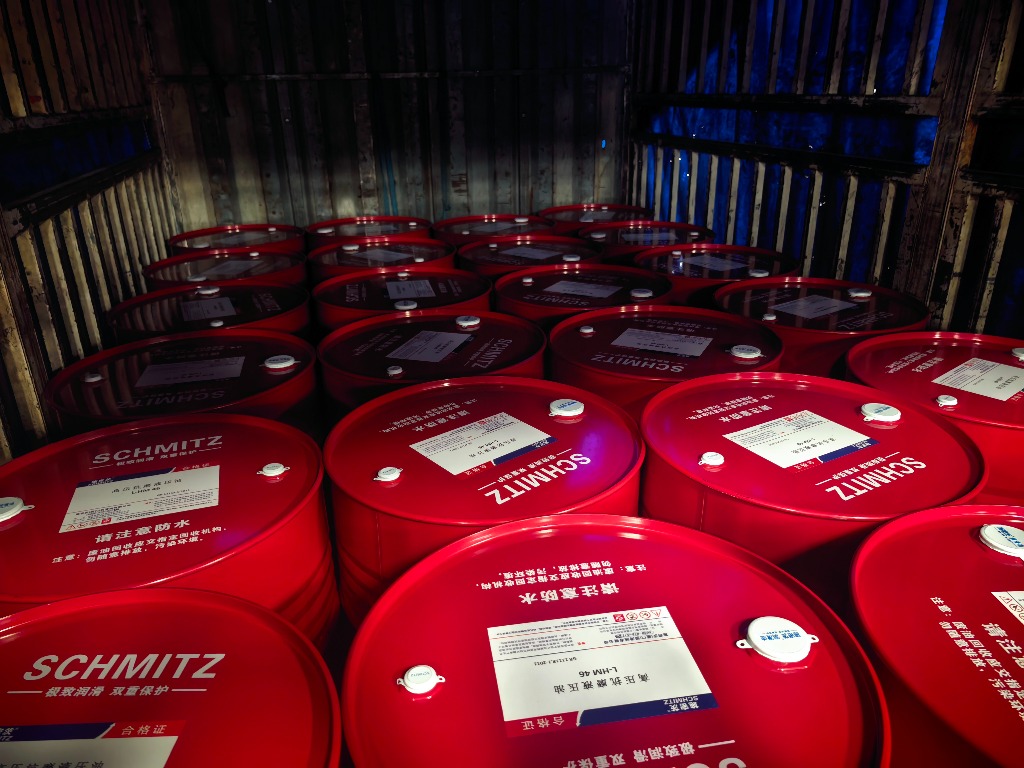
Beyond liquid chemical feedstocks, packaging metallurgy represents an inescapable cost component in international export logistics. Over 92% of international industrial lubricant shipments are transported in standard 208-liter (55-US gallon) cold-rolled steel tight-head drums.
During the first two weeks of October 2026, benchmark prices for cold-rolled steel coil (SPCC grade, 1.0mm nominal thickness) in East China rose by 3.8%, settling at $645 per metric ton. Simultaneously, stringent industrial baking and coating environmental standards have increased manufacturing costs for high-performance internal phenolic and epoxy-phenolic drum linings. These linings are mandatory for preventing atmospheric moisture adsorption, rust formation, and catalytic metal contamination during 30 to 45 days of ocean transit across tropical maritime routes.
Consequently, domestic drum fabricators have implemented an across-the-board packaging surcharge of $0.85 to $1.20 per finished 208L steel drum. For high-volume export orders of 80 drums per 20ft container (16,640 liters), this packaging surcharge adds between $68 and $96 of unavoidable direct hardware cost per container, reinforcing the upward trajectory of finished FOB export quotations.
8. FOSS Manufacturing Infrastructure & Quality Control Standards (High-Definition Workshop Verification)
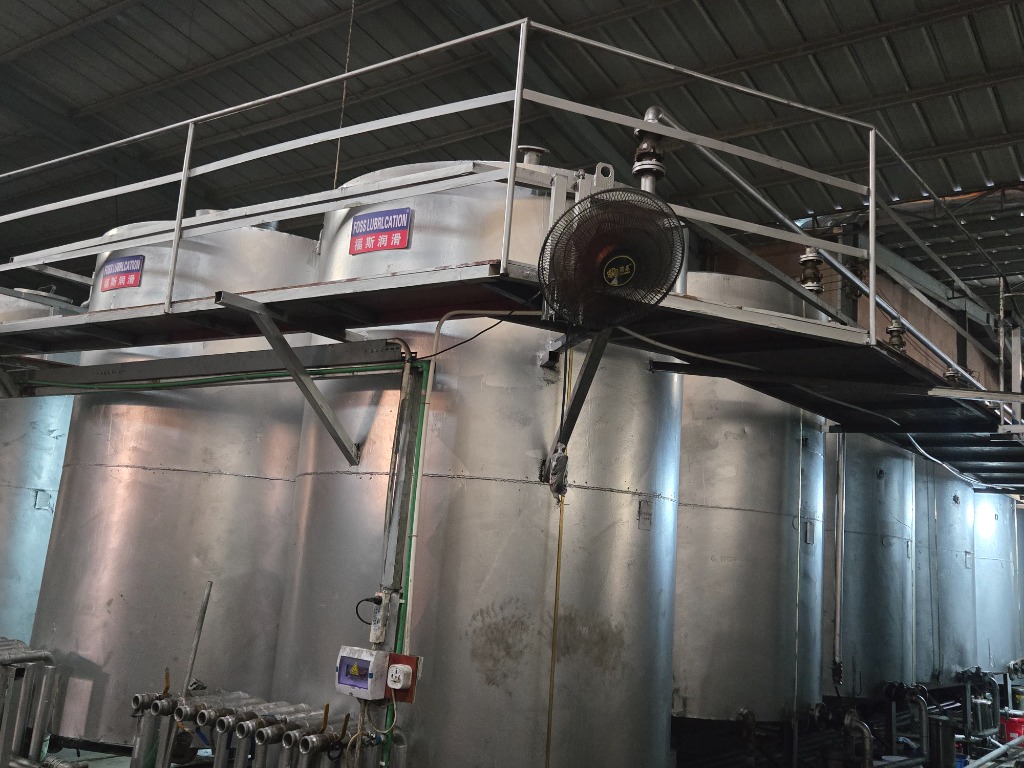
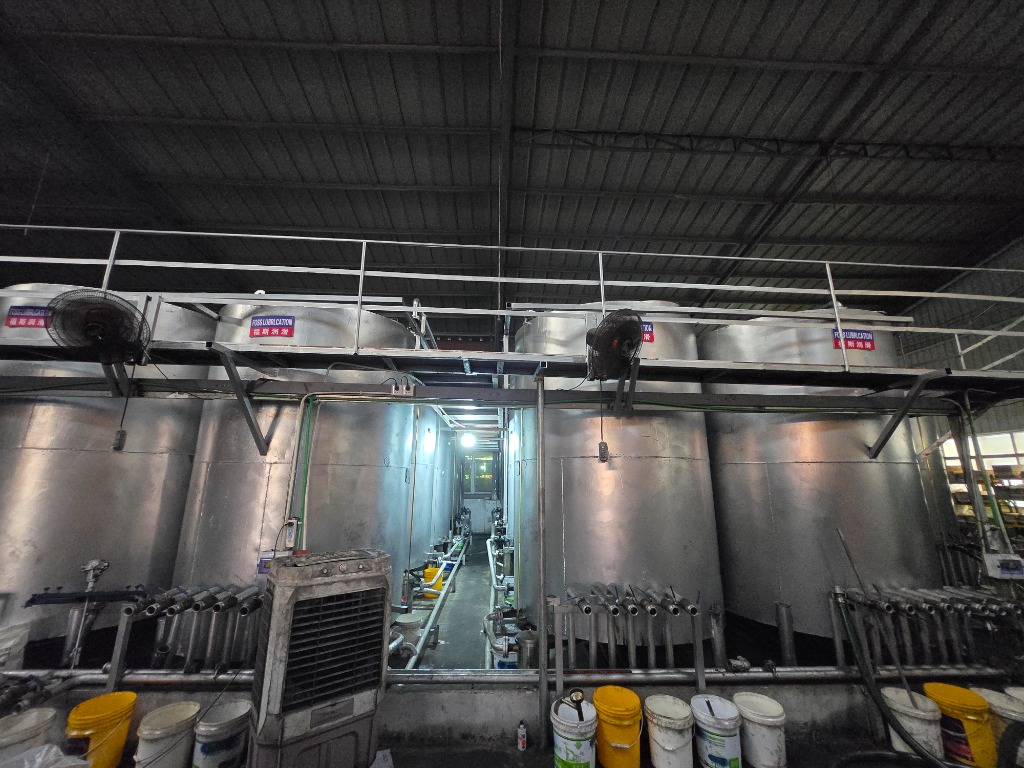
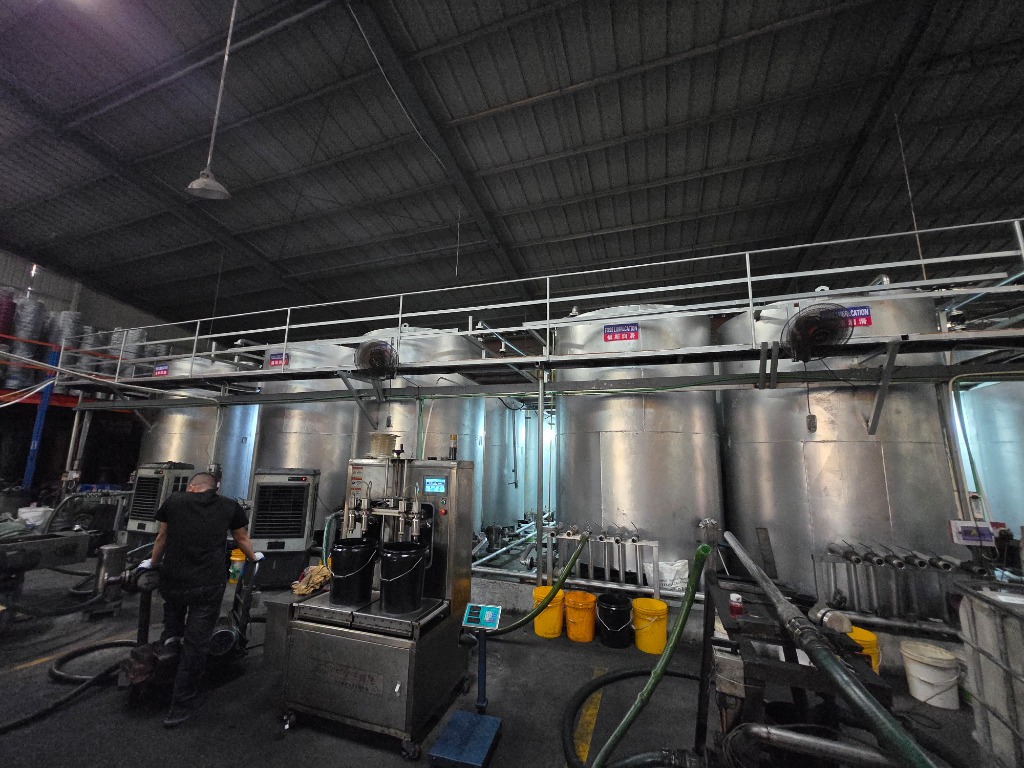
In an inflationary and volatile global marketplace, supply security and quality consistency can only be guaranteed by manufacturers operating wholly owned, capital-intensive blending and testing infrastructure. Quanzhou Foss Lubrication Technology Co., Ltd. (泉州市福斯润滑科技有限公司) operates a modern 35,000 m² production complex located in Quanzhou, Fujian Province, strategically positioned adjacent to Xiamen Port—one of China's premier international container shipping hubs.
Our manufacturing ecosystem integrates world-class compounding technology with exhaustive laboratory verification:
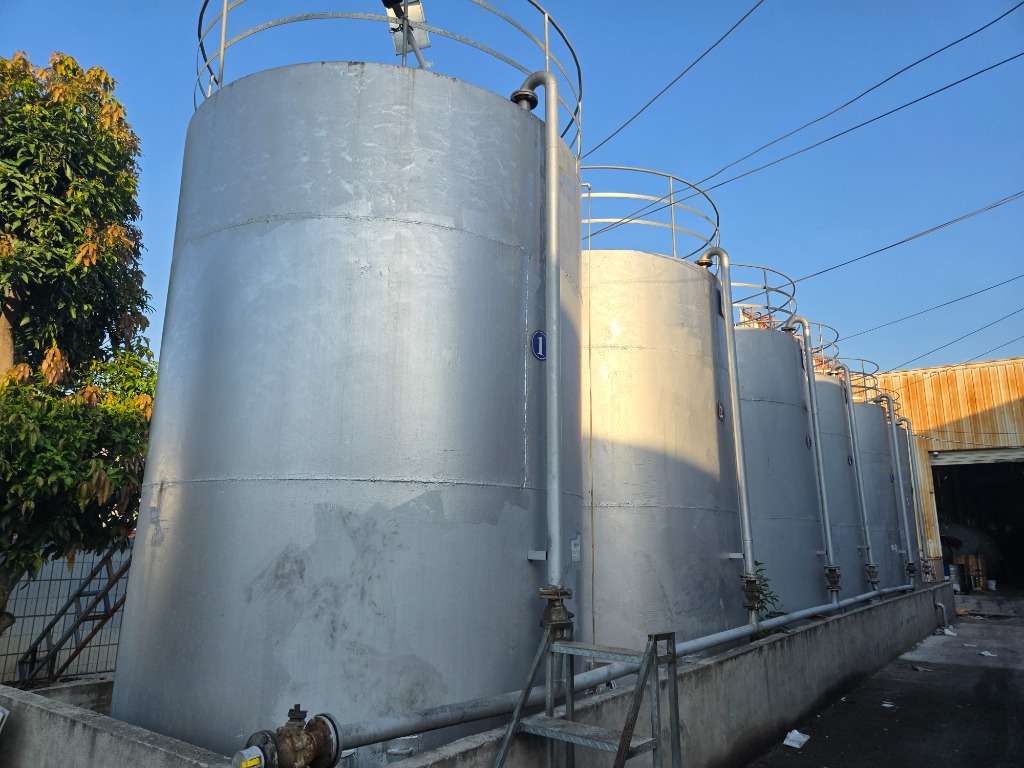
- Bulk Virgin Base Stock Storage Farm: Our outdoor storage facility maintains 5,000+ metric tons of dedicated storage capacity across isolated, nitrogen-blanketed tanks (Lines 1 through 4), guaranteeing dedicated segregation of API Group II hydrotreated base stocks and preventing cross-contamination with solvent-refined Group I materials.
- Automated Isothermal Blending Kettles: Compounding is executed within 20-ton stainless steel multi-chamber blending kettles equipped with thermal-oil circulation jackets, variable-speed turbine impellers, and automated Siemens PLC process automation. Temperatures are maintained within a precise ±1.5°C window during additive dissolution, preventing thermal shearing or degradation of delicate polymer viscosity improvers.
- Precision Load-Cell Packaging Line: Packaging is handled by automated dual-nozzle filling lines linked directly to calibrated Mettler-Toledo digital load cells, ensuring net fill weights of exactly 178.5 kg ± 0.2 kg per 208L drum, with automated bung torquing and tamper-evident cap sealing.
- On-Site Certified Tribology Laboratory: Every production batch undergoes comprehensive pre-packaging testing in our on-site laboratory, adhering strictly to ASTM and DIN international test standards:
- Kinematic Viscosity at 40°C and 100°C (ASTM D445): Calibrated Anton Paar automated viscometer measuring within ±0.3% precision.
- Viscosity Index (ASTM D2270): Guaranteeing high thermal-viscosity stability across operating temperature extremes.
- Cleveland Open Cup Flash Point (ASTM D92): Verifying minimum flash point values exceeding 225°C for ISO VG 46 fluids.
- Pour Point Determination (ASTM D97): Ensuring low-temperature fluidity down to -30°C for all-weather hydraulic performance.
- Demulsibility Characteristics (ASTM D1401): Water separation time strictly under 10 minutes at 54°C (target 40-40-0).
- Foaming Tendency & Stability (ASTM D892): Sequence I, II, and III foam volume strictly 0 ml / 0 ml after 10 minutes settling.
- Copper Strip Corrosion (ASTM D130): Class 1A rating, confirming complete non-corrosiveness toward bronze axial piston pump slippers and valve plates.
9. Finished Product Impact Mechanics: DIN 51524 Part 2 Anti-Wear Hydraulic Fluids & DIN 51517 Part 3 Industrial Gear Oils
Synthesizing upstream crude escalation, base stock yield deficits, additive cost increases, and drum metallurgy surcharges reveals an unmistakable cost accumulation curve for finished lubricants.
For a standard 208L steel drum of premium DIN 51524 Part 2 certified anti-wear hydraulic oil (FOSS L-HM 46):
- Virgin Base Oil Component (178.5 kg net product; ~99% base oil): Group II 150N (60% ratio @ $1,050/MT = $112.45) + Group II 500N (40% ratio @ $1,185/MT = $84.60) → Blended Base Oil Cost per drum = $135.20.
- Chemical Additive Package (0.85% treat rate; $4,200/MT): ~1.52 kg of specialized ZDDP, antioxidant, anti-foam, and rust inhibitor chemistry → Additive Cost per drum = $6.38.
- Packaging Hardware (Cold-Rolled SPCC 208L Drum + Phenolic Coating): Fabricated drum, bungs, screen-printed branding, internal anti-rust treatment → Packaging Cost per drum = $24.80.
- Compounding, Quality Assurance & Utilities: Isothermal blending kettle power, steam generation, nitrogen blanketing, certified laboratory testing (ASTM D445, D2270, D92, D97, D1401) → Processing Cost per drum = $8.50.
- Factory Handling, Drayage to Xiamen Port & Export Clearance: Palletized / dunnaged container stuffing, terminal handling charges (THC), export customs declaration → Export Drayage Cost per drum = $5.20.
This establishes a baseline manufacturing and export gateway floor of approximately $180.08 per 208L drum, excluding commercial financing reserves, container demurrage allowances, and sustainable factory operating margin. As prompt crude moves above $83.50/bbl and refinery base oil quotes reset higher, finished export pricing must adjust commensurately to maintain factory operational solvency.
10. Authoritative 3-Day Multi-Grade Price Trajectory Matrix (FOB Xiamen Export Forecast)
To provide international procurement directors, fleet operators, and industrial lubricant distributors with definitive budgeting precision, the FOSS Lubrication Research Desk publishes our authoritative 3-day forward price projection matrix. These figures represent verified FOB Xiamen (CNXMN) export prices per 208-liter cold-rolled steel tight-head drum for full-container-load (FCL) bookings (80 drums / 16,640 liters per 20ft GP container):
Note: All quoted prices represent FOB Xiamen Port (CNXMN) in standard 208L steel drums, based on minimum 1x20ft FCL orders (80 drums). Prices are valid for 30 calendar days from formal Proforma Invoice (PI) countersignature and advance deposit receipt. Prices exclude destination import duties, port-of-entry terminal charges, and inland freight at discharge ports.
11. Strategic B2B Buyer Procurement Directives & Financial Hedging Playbook
In an inflationary energy cycle characterized by compounding feedstock, additive, and maritime freight surcharges, passive spot-market purchasing exposes industrial enterprises and regional distributors to severe financial erosion and catastrophic line-stoppage risks. To protect procurement budgets and preserve competitive distribution margins, the FOSS Commercial Strategy Desk recommends the immediate execution of four proactive risk-hedging protocols:
Directive 1: Secure 60-Day Forward Production Allocations via 30-Day Fixed PI Agreements
Primary blending plants like FOSS operate physical hedging mechanisms through advance procurement of virgin base oils and additive masterbatches. By issuing formal purchase orders and executing a standard 30% advance deposit under our 30-Day Fixed Proforma Invoice (PI) program, international buyers freeze the net FOB unit price for all dispatched containers over a 60-day window, insulating their business against spot crude spikes above $85.00/bbl and refinery base stock contract markups.
Directive 2: Consolidate Shipments to Full-Container-Load (FCL) 80-Drum Palletless Configurations
Less-than-container-load (LCL) consolidated ocean freight incurs disproportionately high CFS (Container Freight Station) handling charges, deconsolidation fees, and increased risk of drum handling puncture. Standard 20-foot general-purpose containers (20GP) accommodate exactly 80 drums of 208L lubricants in a two-tier configuration (40 drums bottom tier, solid wooden separator boards, 40 drums top tier) utilizing reinforced dunnage securing. This configuration maximizes container cube utilization to 16,640 liters (approximately 14.8 metric tons net payload), reducing sea freight unit costs by up to $0.08 per liter compared to palletized 64-drum configurations.
Directive 3: Enforce Rigid Pre-Shipment Multi-Point Certificate of Analysis (CoA) Verification
Never accept generic, unverified mill sheets or broker certificates. Mandate that every dispatched container is accompanied by a batch-specific, signed Certificate of Analysis (CoA) from an ISO 9001 certified laboratory verifying: (a) 40°C kinematic viscosity within ±5% of nominal ISO viscosity; (b) Viscosity Index ≥ 98 (for Group II L-HM); (c) Demulsibility separation under 15 minutes (ASTM D1401); (d) Flash point ≥ 220°C (ASTM D92); and (e) Zero particulate sediment or moisture turbidity. FOSS provides pre-shipment retain samples and digital CoA documentation 72 hours prior to vessel departure.
Directive 4: Bypass Intermediary Trading Agents to Partner Directly with Compounding Plants
In volatile trading conditions, trading companies and third-party intermediaries frequently re-negotiate agreed pricing or cancel confirmed contracts when wholesale prices rise before shipment. Working directly with primary manufacturers guarantees operational transparency, priority production queue scheduling, customizable private-label (OEM/ODM) drum screen printing, and uninterrupted access to senior tribological engineering consultation.
12. Factory-Direct Procurement & Technical Consultation Portal
For industrial procurement directors, multinational plant managers, and regional lubricant distributors seeking immediate spot price lock-in, customized formulation blending, or private-label OEM export packaging, contact the FOSS Lubrication Export Operations Desk directly:
- Direct Corporate Email: [email protected]
- Direct WhatsApp Desk: +86 15959543210 (Instant RFQ response within 30 minutes)
- Factory Headquarters: Quanzhou Foss Lubrication Technology Co., Ltd. (泉州市福斯润滑科技有限公司), Quanzhou, Fujian Province, China
- Export Loading Gateways: Xiamen Port (CNXMN) / Quanzhou Port (CNQZ)
Definitive 3-Day Lubricant & Base Oil Trend Forecast
Synthesized by the FOSS Quantitative Energy Modeling Desk based on active shipping line container bookings, regional tank farm draw-down rates, and prompt ICE Brent futures sentiment:
Brent crude tests $84.00 resistance; major Northeast Asian refiners formally withdraw spot Group II 500N allocations and hike 150N contract premiums by +$15/MT.
Cape of Good Hope container and parcel chemical tanker bunker surcharges pass through to export ports; finished anti-wear hydraulic oil export quotes adjust upward by $2.00–$2.80 per 208L drum.
Secondary toll-blenders face replacement margin collapse; overseas distributors lock Q4 shipping allocations under FOSS 30-day fixed-price proforma invoices.
5. Strategic Sourcing & Hedging Directives for Overseas Importers
For overseas procurement directors, fleet operators, and industrial distributors, market volatility represents both operational risk and competitive opportunity. We recommend the following three concrete actions for managing Q4 procurement:
Lock 60-Day Container Requirements
Secure firm proforma invoices (PI) with 30-day price validity. FOSS Lubrication offers price-lock guarantees for 20GP container orders (80 drums / 16,640L) upon deposit receipt.
Audit Laboratory CoA Verification
Demand full pre-shipment ASTM test parameters: kinematic viscosity at 40°C / 100°C, viscosity index ≥ 100, flash point ≥ 220°C, pour point ≤ -15°C, and zero moisture contamination.
FOSS Lubrication: Factory-Direct Precision Engineering
Operating out of Quanzhou, China, FOSS blends over 20,000 MT annually of ISO VG 32/46/68 anti-wear hydraulic oils, CK-4 heavy-duty engine oils, and industrial gear lubricants. Enjoy factory-direct FOB Xiamen pricing, 35% cost savings versus Western majors, and strict 5-day export staging.