

Metal Cutting Fluid Concentration & Refractometer Guide
Comprehensive engineering protocol for calibrating handheld optical refractometers, calculating true emulsion concentration via fluid refractive index multipliers, controlling pH buffers between 8.8 and 9.2, and preventing microbial spoilage.
Tribological Standard Definition & Engineering Direct Answer
Maintaining precise concentration of water-miscible metal cutting fluids is critical to machining accuracy, tool life, and worker safety. Operating below recommended concentration (e.g. < 4.0%) causes built-up edge on cutting inserts, severe machine tool bedway corrosion (failing ASTM D4627 cast iron chip testing), and rapid anaerobic bacterial contamination. Operating at excessive concentration (> 10.0%) causes foaming under high pressure, sticky workpiece residue, skin dermatitis, and excessive concentrate consumption. An optical Brix refractometer is the primary daily monitoring tool; however, refractometers measure total dissolved light refraction, not oil percentage directly. Every metalworking fluid possesses a specific Refractive Multiplier (Refractometer Factor). True concentration is calculated as: True Concentration (%) = Brix Reading (°) × Refractometer Multiplier. For FOSS Biostable Semi-Synthetic Coolant, the factory-certified multiplier is 1.10 (a Brix reading of 5.0° corresponds to 5.0 × 1.10 = 5.5% true concentration). Daily monitoring must pair refractometer readings with calibrated digital pH testing (target pH 8.8 to 9.2 per ASTM E70) and regular tramp oil skimming. Water quality must be maintained between 50 and 300 ppm CaCO3 hardness to prevent emulsion splitting. Supplied in UN 208L steel drums and 1,000L IBC totes.
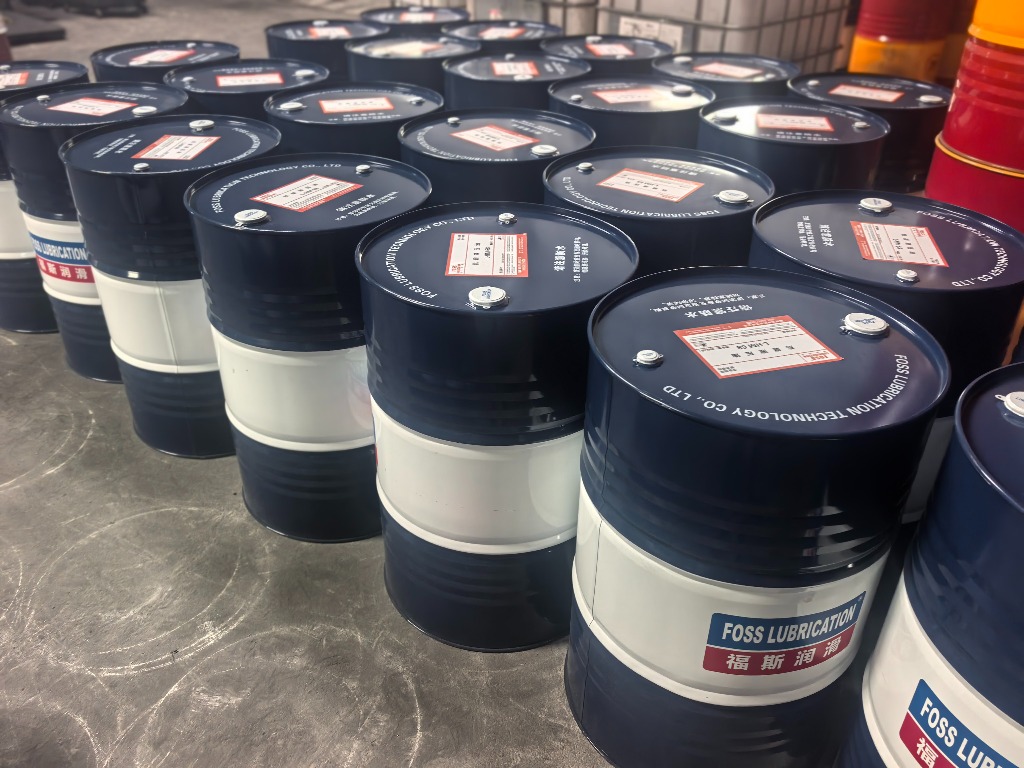
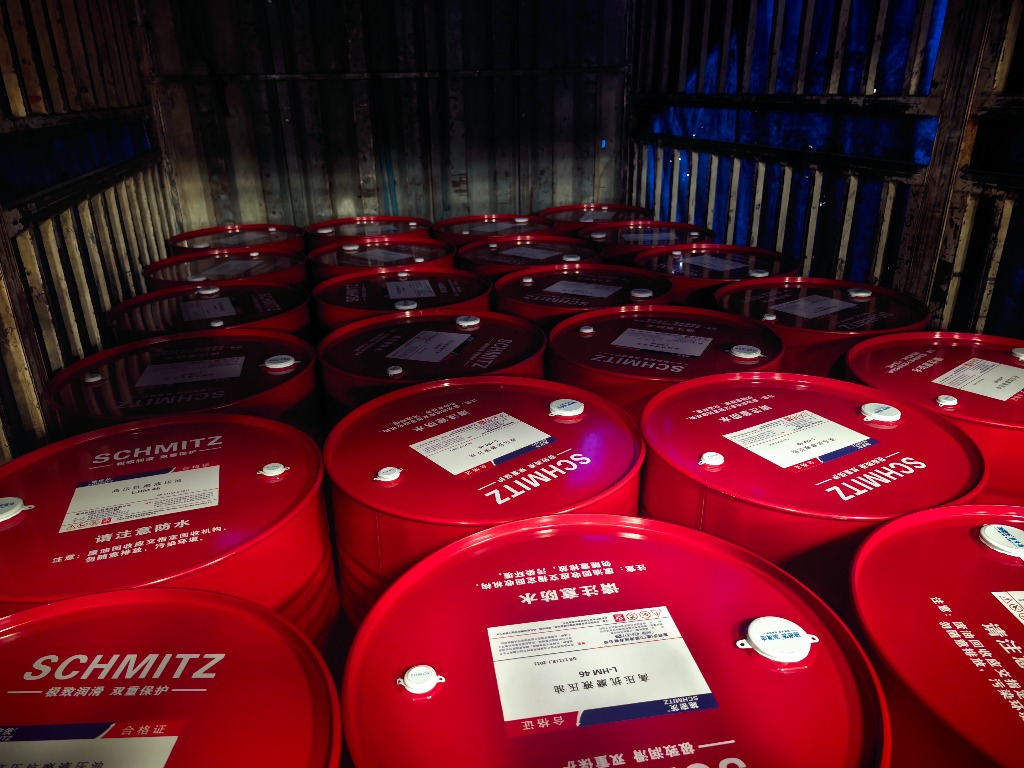
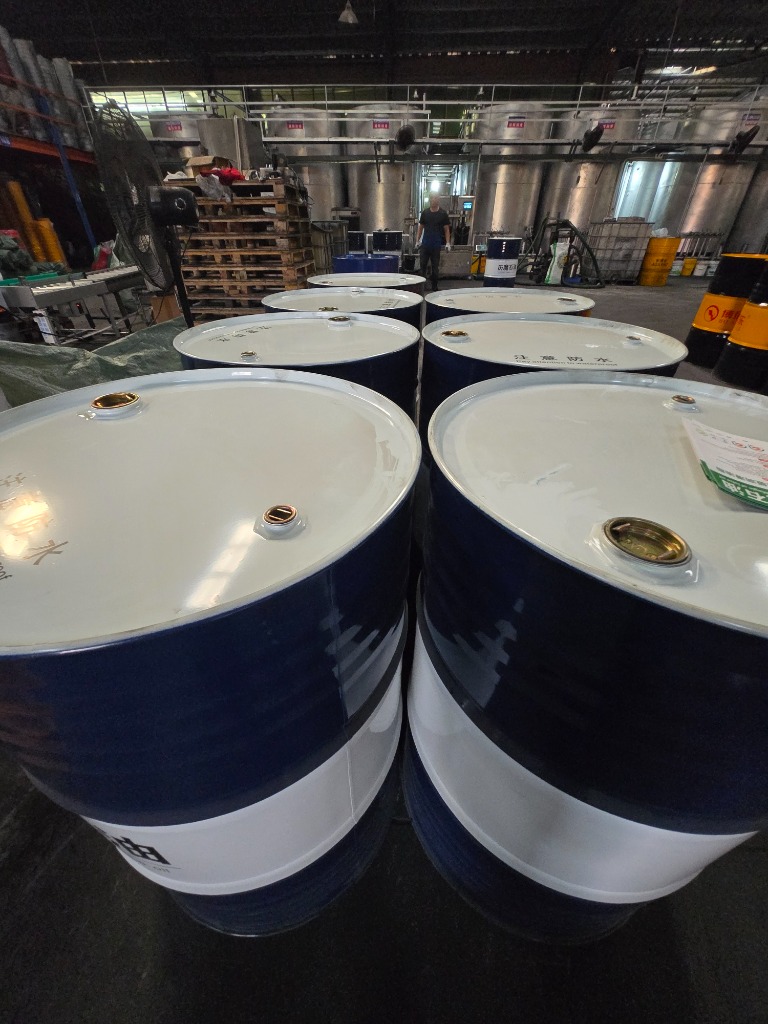
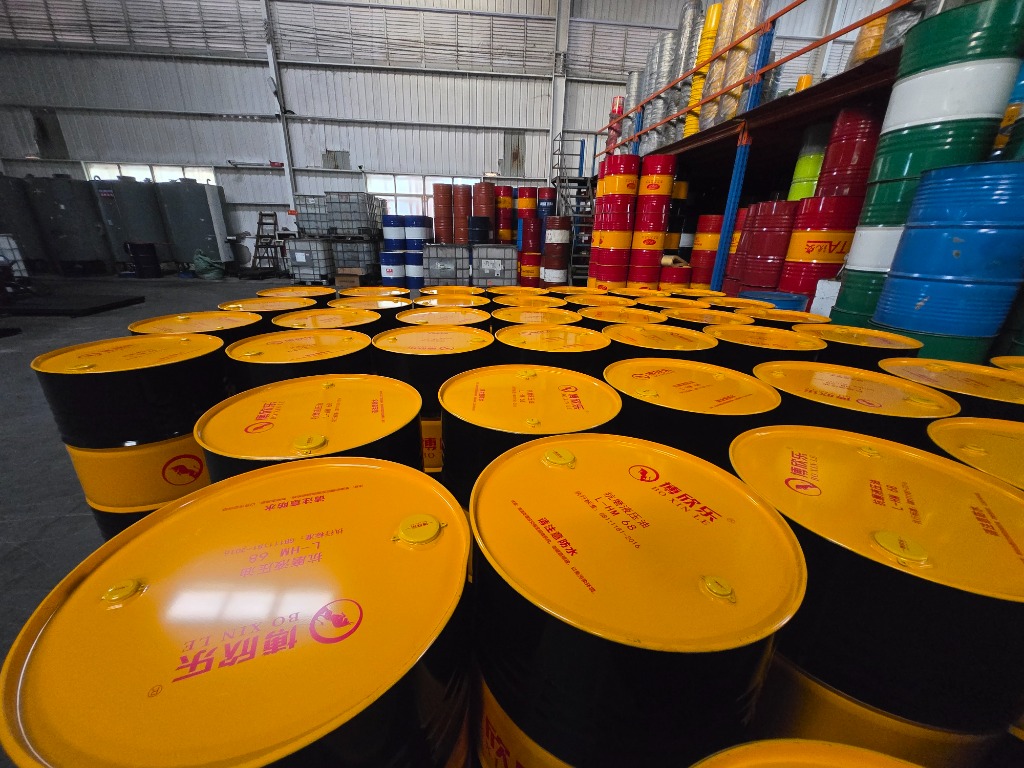
Verified 208L Steel Drum Staging & Container Loading Bay
Photographic evidence from our Quanzhou plant floor and export container stuffing bay. Every batch is blended via automated mass-flow metering, sealed with waterproof tamper-evident bungs, and labeled with full batch test certificates.
Machining Operation Target Concentration & Refractometer Matrix
Every batch blended at our Quanzhou plant is certified against international testing standards before filling into UN 208L steel drums.
| Metalworking Operation | Material Workpiece | Recommended True Concentration | Target Brix Reading (Factor 1.10) | Primary Tribological Function |
|---|---|---|---|---|
| Surface & Cylindrical Grinding | Carbon Steels, Tool Steels | 3.0% - 4.5% | 2.7° - 4.1° Brix | Maximum cooling, rapid chip flushing, wheel self-cleaning |
| General CNC Milling & Turning | Cast Iron, Structural Steels | 5.0% - 7.0% | 4.5° - 6.4° Brix | Balanced cooling and boundary hydrodynamic lubrication |
| High-Speed Aerospace Milling | 6061 / 7075 Aluminum Alloys | 6.0% - 8.0% | 5.5° - 7.3° Brix | Prevents built-up edge (BUE), provides mirror surface finish |
| Deep Hole Drilling & Heavy Tapping | 304 / 316 Stainless, Titanium | 8.0% - 11.0% | 7.3° - 10.0° Brix | Extreme-pressure boundary film prevents tool tap seizure |
Coolant Sump Maintenance & Problem Diagnosis
Engineered specifically for high-stress industrial machinery, minimizing friction coefficients and extending component service life.
Zero-Setting Refractometer Calibration
Clean the prism with distilled water and adjust the calibration screw until the boundary line rests exactly on the 0.0 Brix line.
Tramp Slideway Oil Compensation
Floating tramp oil creates a blurry reading line; skim tramp oil or filter the sample drop through tissue paper before testing.
Daily Digital pH Verification
A drop below pH 8.5 indicates bacterial colonization or acidic fluid dilution; immediately adjust with fresh top-up emulsion.
Hardness Water Conditioning
Keep makeup water hardness between 50 and 300 ppm CaCO3; utilize reverse osmosis (RO) blending if municipal water exceeds 400 ppm.
Laboratory Quality Assurance & Field Testing Standards
Strict five-stage quality checkpoint from raw base oil tank unloading to finished drum sealing.
Cast Iron Chip Rust Test (ASTM D4627)
Concentration validated to provide zero corrosion spots on cast iron filings at 4.0% concentration.
Digital Refractive Index Verification
High-precision laboratory refractometer certifies the exact 1.10 multiplier on every production batch.
Antimicrobial Challenge Test (ASTM D3946)
Confirms zero bacterial growth in sump water even during extended holiday machine shutdowns.
24-Month Sealed Retention Archive
Archived 1L production samples stored with complete QA lot traceability.
Export Packaging, Palletization & Container Loadability
Supplied in standard UN 1A1 cold-rolled steel 208L drums (80 drums per 20GP container = 16,640 liters) and 1,000L IBC totes.
Frequently Asked Technical & Procurement Questions
Clarifications on viscosity grades, synthetic formulations, oil drain intervals, and container freight.
Why does a refractometer reading become blurry or indistinct?
Why should top-up fluid always be added as pre-mixed emulsion rather than pure water?
What is the consequence of letting coolant pH drop below 8.5?
Request Direct Factory Quotation & Technical Dossier
Receive competitive FOB Xiamen / CIF port container pricing, batch Certificate of Analysis (CoA), and sample dispatch confirmation.