

Industrial Hydraulic Oil Viscosity Selection & Engineering Guide
Comprehensive engineering methodology for calculating optimal kinematic viscosity, avoiding pump cavitation at sub-zero startup, and preventing volumetric slippage at peak continuous operating temperatures using ASTM D341 viscosity-temperature charting.
Tribological Standard Definition & Engineering Direct Answer
Selecting the correct hydraulic oil viscosity grade (ISO VG 32, 46, 68, or 100) directly dictates pump mechanical efficiency, volumetric leakage, thermal dissipation, and system component lifespan. Hydraulic pump manufacturers (Bosch Rexroth, Parker Hannifin, Danfoss, Eaton Vickers) specify an optimal operating kinematic viscosity window of 16 to 36 mm²/s, with an absolute minimum permissible viscosity of 10 mm²/s under peak temperature and a maximum cold startup viscosity of 800 to 1,600 mm²/s to avoid cavitation. ISO VG 32 is engineered for cold climates (-10°C to +20°C ambient) and high-speed indoor servo machinery; ISO VG 46 is the global industrial standard balancing wear protection and pump efficiency for ambient operating ranges between +10°C and +35°C (sump temperature 45°C to 65°C); ISO VG 68 is required for tropical climates (+30°C to +50°C ambient) and continuous heavy press operations where reservoir temperatures exceed 70°C; and ISO VG 100 is selected for low-speed high-load outdoor winches and marine deck hydraulics. Utilizing the ASTM D341 Walther equation, maintaining viscosity index VI >= 100 (for standard L-HM) or VI >= 150 (for wide-temp L-HV) guarantees pump protection across wide temperature differentials. Available in export UN 208L steel drums and 1,000L IBC totes.
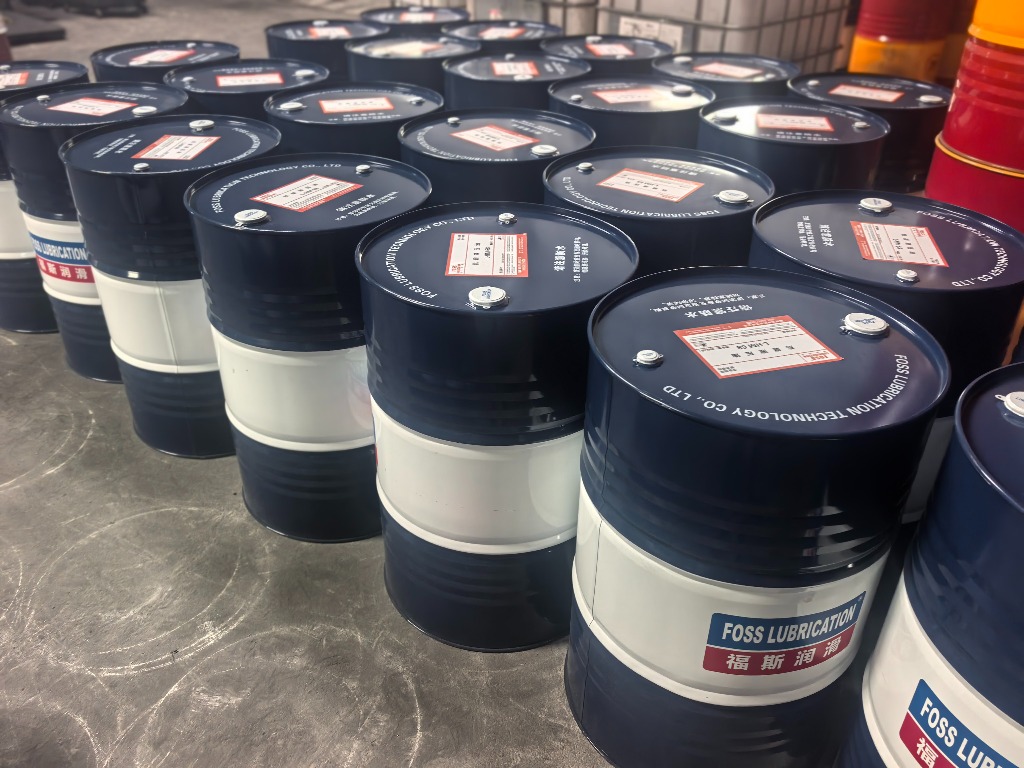
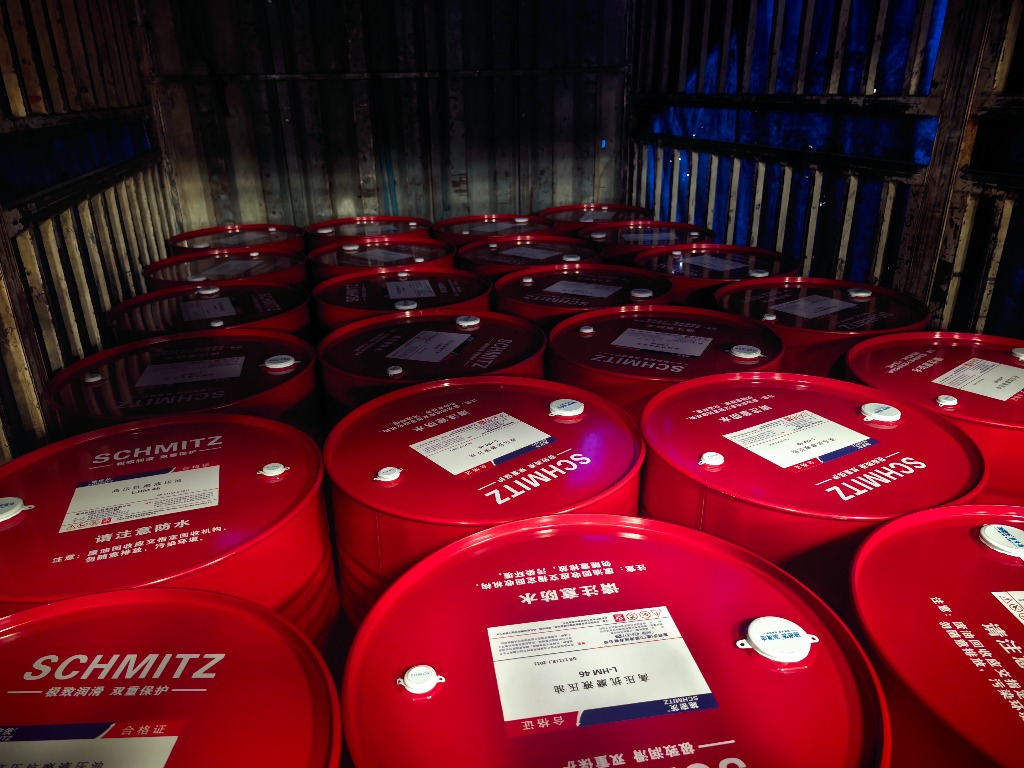
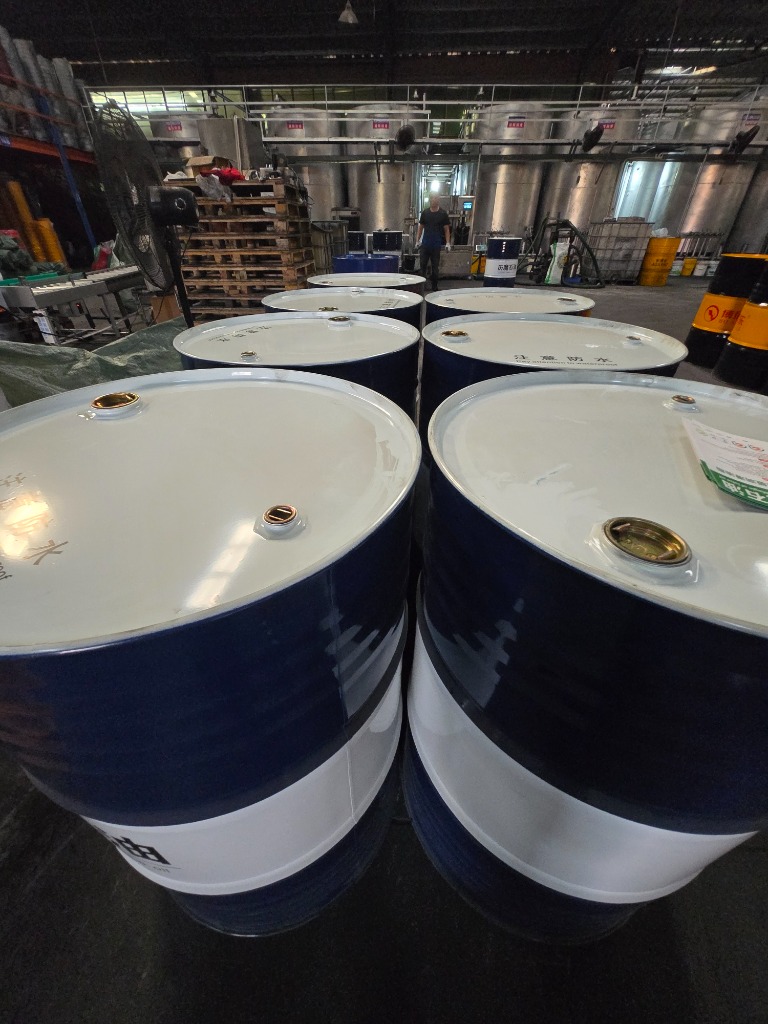
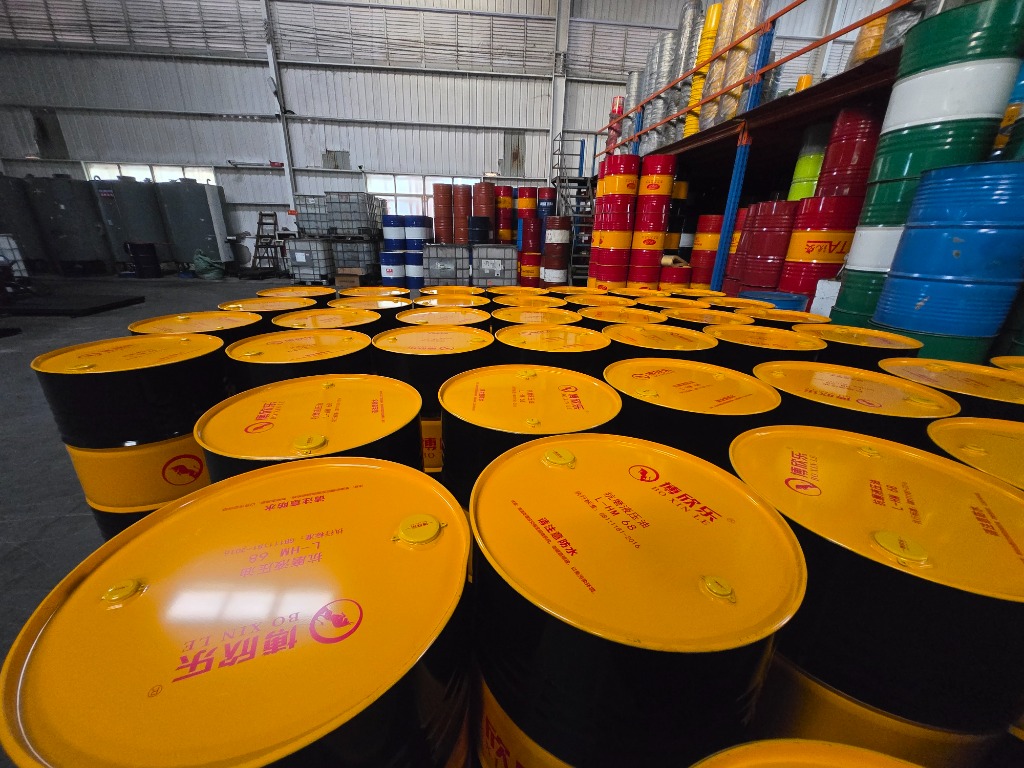
Verified 208L Steel Drum Staging & Container Loading Bay
Photographic evidence from our Quanzhou plant floor and export container stuffing bay. Every batch is blended via automated mass-flow metering, sealed with waterproof tamper-evident bungs, and labeled with full batch test certificates.
Hydraulic Oil ISO Viscosity Grade Selection & Operating Limits
Every batch blended at our Quanzhou plant is certified against international testing standards before filling into UN 208L steel drums.
| Viscosity Grade (ISO 3448) | Kinematic Viscosity @ 40°C | Kinematic Viscosity @ 100°C | Ambient Temperature Range | Optimal Sump Temperature Window | Primary Pump Applications |
|---|---|---|---|---|---|
| ISO VG 32 | 28.8 - 35.2 mm²/s | 5.4 mm²/s typical | -10°C to +20°C (Cold/Indoor) | 40°C to 55°C | CNC machine tool clamps, indoor servo valves |
| ISO VG 46 | 41.4 - 50.6 mm²/s | 6.8 mm²/s typical | +10°C to +35°C (Temperate) | 50°C to 65°C | Injection molding, stamping presses, industrial standard |
| ISO VG 68 | 61.2 - 74.8 mm²/s | 8.7 mm²/s typical | +25°C to +50°C (Tropical) | 60°C to 80°C | Outdoor construction, mobile excavators, forging presses |
| ISO VG 100 | 90.0 - 110.0 mm²/s | 11.4 mm²/s typical | +35°C to +55°C (Extreme) | 70°C to 90°C | Heavy marine deck machinery, slow low-shear winches |
Engineering Viscosity Calculation & Pump Requirements
Engineered specifically for high-stress industrial machinery, minimizing friction coefficients and extending component service life.
Axial Piston Pumps (Swashplate / Bent Axis)
Requires optimal viscosity between 16 and 36 mm²/s to maintain piston shoe hydrodynamic lift without barrel lift-off.
Vane Pumps (Fixed & Variable Displacement)
Demands minimum 25 mm²/s at operating temperature to prevent vane tip scuffing and cam ring chatter.
Internal & External Gear Pumps
Tolerates wider viscosity ranges (10 to 300 mm²/s) but requires VG 68 under high pressure to prevent tooth meshing slip.
Servo Proportional Directional Valves
Requires ultra-clean VG 32 or VG 46 with high demulsibility and anti-varnish chemistry to prevent spool sticking.
Quality Verification & Viscosity Lab Testing Standards
Strict five-stage quality checkpoint from raw base oil tank unloading to finished drum sealing.
Kinematic Viscosity Calibration (ASTM D445)
Calibrated capillary viscometer tubes verify exact centistoke (mm²/s) ratings at 40°C and 100°C.
Viscosity Index Calculation (ASTM D2270)
Mathematical determination of viscosity change rate across thermal ranges.
Cold Cranking & Brookfield Pumpability
ASTM D2983 verifies maximum viscosity stays under 1,600 mPa.s at cold start threshold.
24-Month Sealed Retention Archive
Retained 1L production samples stored with complete CoA certificates for audit trail.
Export Packaging, Palletization & Container Loadability
Supplied in standard UN 1A1 cold-rolled steel 208L drums (80 drums per 20GP container = 16,640 liters) and 1,000L IBC totes.
Frequently Asked Technical & Procurement Questions
Clarifications on viscosity grades, synthetic formulations, oil drain intervals, and container freight.
What happens if I use hydraulic oil that is too thin (too low viscosity)?
What happens if I use hydraulic oil that is too thick (too high viscosity)?
When should an operator upgrade from standard L-HM to wide-temperature L-HV hydraulic oil?
Request Direct Factory Quotation & Technical Dossier
Receive competitive FOB Xiamen / CIF port container pricing, batch Certificate of Analysis (CoA), and sample dispatch confirmation.