Brent Consolidates Above $91 as Strait of Hormuz Navigational Warnings & Red Sea Rerouting Compound Group II 500N Supply Squeeze: Record $215/MT Neutral Spread, Upstream Additive Inflation, and Authoritative 3-Day Hydraulic Fluid Price Trajectory
Executive Intelligence Summary & Key Takeaways
As ICE Brent crude futures consolidate decisively above the $91.00/bbl benchmark to reach $91.15/bbl on Thursday, October 22, 2026—propelled by newly declared maritime navigational warning zones across the Strait of Hormuz, unyielding OPEC+ voluntary production quota discipline, entrenched Cape of Good Hope commercial rerouting, and a softening US Dollar Index (DXY dipping to 101.6) on dovish Federal Reserve rate cues—the global finished lubricant manufacturing and industrial supply ecosystem encounters acute upstream cost pressures. In this authoritative daily intelligence release, the FOSS Lubrication Market Research Desk provides a comprehensive engineering and commercial evaluation: the deepening hydrocracker unconverted oil (UCO) deficit as Singapore 10ppm gasoil crack spreads surge to $25.85/bbl, expanding the historic API Group II 150N/500N spot spread to an unprecedented $215/MT; an engineering cost audit of critical chemical additive precursors across ZDDP, overbased calcium sulfonates, PMA viscosity index improvers, and sulfur-phosphorus EP gear packages; UN 1A1 cold-rolled SPCC steel drum packaging inflation reaching $30.20/drum; an authoritative 3-day forward FOB Xiamen export price trajectory matrix for anti-wear hydraulic fluids (ISO VG 32/46/68, HV 46) and heavy industrial gear oils (ISO VG 150/220/320); and four actionable hedging directives for international supply chain directors contracting direct factory allocation from primary blenders.
1. Global Energy Benchmarks & Base Oil Feedstock Matrix (2026-10-22)
The following reference table captures prompt settlement levels across benchmark crude futures, regional Asia-Pacific vacuum gas oil (VGO) cracking economics, and wholesale hydrocracked virgin base stocks influencing finished lubricant formulation costs:
This technical document is prepared by the FOSS Lubrication Engineering & Global Procurement Research Desk in Quanzhou, China. It synthesizes real-time physical spot transactions across Northeast Asian base oil refineries, Singapore middle-distillate crack economics, chemical additive synthesis cost structures, and global container freight indices to provide equipment builders, plant maintenance engineers, and procurement directors with authoritative market clarity and forward pricing intelligence.
1. Executive Summary: The $91.15 Brent Consolidation & Upstream Energy Inflation Cascade
On Thursday, October 22, 2026, international energy benchmarks cemented a sustained bullish breakout above psychological resistance levels. Front-month ICE Brent crude futures advanced to $91.15 per barrel (+1.00%), West Texas Intermediate (NYMEX WTI) climbed to $87.15 per barrel (+0.98%), and Middle East physical Platts Dubai crude touched $89.95 per barrel (+1.01%). This synchronized rally across light sweet and heavy sour crude grades represents the culmination of multiple compounding geopolitical, macroeconomic, and refining supply constraints.
Foremost among these catalysts is the intensification of maritime security alerts across the Strait of Hormuz. Following coordinated regional naval maneuvers, maritime administrative authorities issued formal navigational warnings establishing restricted transit corridors, triggering an immediate spike in Lloyd’s Joint War Committee (JWC) war-risk premiums to 0.78% of insured vessel hull value. Simultaneously, in the Southern Red Sea and Bab el-Mandeb strait, commercial container vessels and chemical parcel tankers continue to divert around the Cape of Good Hope, adding 12 to 16 sailing days and absorbing tens of thousands of tons of heavy bunker fuel. On the macroeconomic front, dovish forward commentary from Federal Reserve officials ahead of the November FOMC interest rate decision drove the US Dollar Index (DXY) down to 101.6, stimulating non-USD commodity purchasing power and accelerating industrial replenishment across Southeast Asia, Latin America, and India.
For finished industrial lubricant compounding facilities, the transmission of crude oil inflation into factory-gate manufacturing costs is rapid and non-linear. As shown in the live benchmark telemetry below, the ripple effect spans base oil refining margins, tribological additive chemistry, and UN-rated steel packaging:
2. Geopolitical Transmission Mechanism: From Middle East Chokepoint Friction to Factory-Gate Lubricant Costs
Industrial buyers frequently question the exact operational mechanism through which a geopolitical event in the Persian Gulf or Red Sea impacts the purchase price of an anti-wear hydraulic oil barrel in Southeast Asia, the Middle East, or South America. The physical conversion of raw petroleum into a high-performance industrial lubricant follows a rigid thermodynamic and logistical four-stage sequence:
Stage 1: Upstream Crude Petroleum Acquisition & Ocean Freight Premium
Approximately 21% of global petroleum liquid consumption transits the 21-nautical-mile-wide Strait of Hormuz. When naval drills or navigational warnings are declared, VLCC (Very Large Crude Carrier) charter rates on the Ras Tanura to East Asia route experience immediate risk premiums. Refiners in China, South Korea, Taiwan, and Singapore must absorb these higher CIF crude acquisition costs, lifting the baseline feedstock pricing floor across all downstream petroleum cuts.
Stage 2: Atmospheric & Vacuum Distillation Fractionation & Energy Intensity
At the primary distillation towers, crude oil is split into light distillates (naphtha, gasoline), middle distillates (kerosene/jet fuel, diesel/gasoil), and heavy atmospheric residue. Heavy residue is subsequently fed into vacuum distillation units (VDU) to produce Vacuum Gas Oil (VGO). As international natural gas and refinery fuel oil costs elevate under broader energy market pressures, the utility steam and electrical operating expense required to maintain distillation reboilers at 360°C to 400°C expands proportionally.
Stage 3: The Hydrocracker Unconverted Oil (UCO) Dilemma & Isomerization Economics
The central structural pinch-point of modern lubricant manufacturing resides at the hydrocracker bottoms. The heavy, highly paraffinic fraction remaining after hydrocracking—Unconverted Oil (UCO)—serves as the sole precursor for catalytic dewaxing and hydrofinishing into API Group II and Group III base oils. However, UCO can alternately be recycled through cracking stages to maximize ultralow-sulfur diesel (10ppm gasoil) and jet kerosene. With Singapore diesel crack spreads currently surging to $25.85/bbl due to European heating gasoil deficits, merchant refiners are maximizing fuel crack yields. This diverts UCO away from base oil units, triggering an acute physical deficit of heavy neutral base oils (specifically Group II 500N) and driving base oil spot prices sharply higher.
Stage 4: Finished Lubricant Compounding, Chemical Additives & Steel Packaging
In a finished ISO VG 46 anti-wear hydraulic oil, base oil represents approximately 98.5% of total formulation weight, while specialized performance additives (anti-wear ZDDP, rust/oxidation inhibitors, demulsifiers, defoamers) make up the remaining 1.5%. For heavy industrial gear oils (ISO VG 220/320), sulfur-phosphorus extreme pressure (EP) packages and tackifiers represent 2.5% to 4.5% of formulation mass. When base oils surge by $20–$40/MT, additive chemical precursors escalate by 3%–5%, and cold-rolled SPCC steel drums climb to $30.20/drum, the manufacturing cost of finished packaged lubricants advances by $5.00 to $7.00 per 208L drum within 48 to 72 hours.
3. Maritime Chokepoints: Red Sea, Bab el-Mandeb, and Strait of Hormuz Operational Disruption
International supply chain managers face severe logistics friction as maritime bottlenecks along key East-West trade corridors remain entrenched. Commercial vessel routing data confirms that global container lines and chemical parcel tankers continue to divert away from the Suez Canal corridor, choosing the extended passage around the southern tip of Africa:
| Shipping Route / Parameter | Standard Suez Canal Transit | Current Cape of Good Hope Detour | Operational Variance & Cost Impact |
|---|---|---|---|
| Transit Duration (Asia to Med / N. Europe) | 22 – 26 Days | 35 – 42 Days | +13 to +16 Days (+55% Transit Time) |
| Vessel Round-Trip Voyage Length | ~55 Days | ~84 Days | Requires 36% more cellular container ships to maintain sailing schedule |
| VLSFO Bunker Fuel Consumption | Baseline Standard | +900 to +1,250 MT / voyage | Adds $600,000–$820,000 in fuel expense per ultra-large container ship |
| Bunker Adjustment Factor (BAF) Surcharge | Standard Tariff | +$450 – $680 / FEU | Directly inflates CIF container freight rates for lubricant export drums |
| Persian Gulf Lloyd's War Risk Premium | 0.05% of hull value | 0.78% of hull value | +$250,000 to +$390,000 insurance expense per single VLCC voyage |
This maritime reality means that spot orders placed with primary blending facilities require extended lead-time planning. Importers who previously maintained 30-day inventory safety buffers are actively expanding stockholding parameters to 60 or 75 days of operational consumption to safeguard industrial plant continuity.
4. Upstream Refining Dynamics: Middle Distillate Crack Spikes & The Hydrocracker UCO Deficit
In modern petroleum refinery configuration, the hydrocracking unit represents the crown jewel of heavy hydrocarbon valorization. Heavy Vacuum Gas Oil (HVGO) is contacted with hydrogen under severe conditions (150 to 200 bar, 380°C to 430°C) across bifunctional catalysts to crack heavy polycyclic molecules into paraffinic, high-value fuels and base oils.
The critical commercial dilemma for refinery linear programming (LP) models is the optimization of the hydrocracker bottoms, known in refining terminology as Unconverted Oil (UCO). Refiners possess two primary operational paths for UCO:
- Recycle to Cracker (Diesel/Gasoil Maximization): UCO is recirculated through the cracking reactor beds to maximize the yield of 10ppm Ultra-Low Sulfur Diesel (ULSD) and aviation jet kerosene.
- Draw Off to Base Oil Dewaxing Unit: UCO is withdrawn as liquid feedstock for catalytic isomerization dewaxing and hydrofinishing to manufacture high-viscosity-index API Group II (150N, 500N) and Group III (4cSt, 6cSt, 8cSt) base oils.
When the Singapore 10ppm gasoil crack spread hovers below $16.00/bbl, refiners eagerly allocate generous UCO volumes to base oil manufacturing units, leading to ample spot base oil supply and competitive prices. However, today, October 22, 2026, the Singapore gasoil crack spread has surged to $25.85 per barrel. Under these lucrative middle-distillate margins, Northeast Asian refiners across Taiwan, South Korea, and Singapore have recalibrated hydrocrackers to maximum fuel conversion.
The immediate structural casualty of this operational shift is the production yield of heavy neutral base oils (API Group II 500N). Because heavy neutrals require longer molecular paraffin chains that survive only under mild hydrocracking severities, maximum-conversion diesel operations completely crack these heavy chains into light gasoil. Consequently, while light neutral Group II 150N supply remains balanced, prompt Group II 500N spot availability across Northeast Asia has collapsed into an acute structural deficit.
5. API Base Oil Pricing Matrix & The Historic $215/MT 150N/500N Neutral Spread
The structural divergence between middle distillate fuel crack economics and base oil availability has blown open the historical price spread between light and heavy neutral base oils. Under normalized market equilibrium, API Group II 500N trades at a modest premium of $50 to $70 per metric ton over Group II 150N, reflecting marginally higher processing energy and vacuum distillation yield constraints.
As of today, October 22, 2026, physical spot offers across major Northeast Asian export terminals (Ulsan, Onsan, Mailiao, Singapore) reflect an unprecedented spread:
| Base Oil Classification | Viscosity Grade / Cut | Spot Assessment (FOB Asia) | Day-on-Day Change | Physical Availability Status |
|---|---|---|---|---|
| API Group I (Solvent Refined) | SN 150 (Light Neutral) | $1,055 / MT | +$10.00 / MT | Balanced / Moderate prompt parcels |
| API Group I (Solvent Refined) | SN 500 (Heavy Neutral) | $1,225 / MT | +$15.00 / MT | Tightening / Export allocations restricted |
| API Group I (Solvent Refined) | Bright Stock (BS 150) | $1,390 / MT | +$20.00 / MT | Critically Acute Shortage |
| API Group II (Hydrotreated) | 150N (Light Neutral) | $1,135 / MT | +$10.00 / MT | Stable / Steady regional blending demand |
| API Group II (Hydrotreated) | 500N (Heavy Neutral) | $1,350 / MT | +$20.00 / MT | Severe Allocation Deficit |
| API Group III (VHVI Synthetic) | 4 cSt (Ultra-Light) | $1,445 / MT | +$15.00 / MT | Firm / Driven by 0W-20 / 5W-30 PCMO runs |
| API Group III (VHVI Synthetic) | 6 cSt & 8 cSt (Heavy) | $1,495 / MT | +$15.00 / MT | Tight / High demand for synthetic gear oils |
Notice the striking numerical reality: The spot spread between Group II 150N ($1,135/MT) and Group II 500N ($1,350/MT) has expanded to an unprecedented $215 per metric ton.
This historic spread has profound formulation consequences for industrial lubricants. Anti-wear hydraulic oils of viscosity grade ISO VG 46 are formulated with an approximate 65:35 blend ratio of 150N to 500N. ISO VG 68 hydraulic oils require a reverse ratio of 35:65 (150N to 500N). High-viscosity industrial gear oils (ISO VG 220 and ISO VG 320) require over 85% to 92% heavy neutral (500N) or Bright Stock fractions.
As a consequence, heavy-grade lubricants (ISO VG 68, 100, 220, 320, 460) are currently experiencing disproportionate cost pressure compared to light hydraulic grades (ISO VG 32, 46). Lubricant procurement managers who attempt to negotiate uniform flat-percentage price adjustments across their entire product slate risk severe friction with blenders whose margins on heavy oils are under acute duress.
6. Chemical Additive Precursor Index: Tribological Package Cost Escalation
While base oils account for 90% to 98.5% of finished lubricant mass, chemical performance additives represent between 20% and 35% of total formula financial value. Chemical additive manufacturing units operate complex multi-step organic synthesis processes that rely directly on petrochemical building blocks and specialty non-ferrous metals:
Zinc Dialkyldithiophosphate (ZDDP Anti-Wear)
Primary anti-wear and antioxidant additive in DIN 51524-2 HLP hydraulic fluids. Formed by reacting primary and secondary aliphatic alcohols with phosphorus pentasulfide (P2S5), followed by neutralization with zinc oxide (ZnO). Surging LME zinc cash contracts ($2,960/MT) and higher sulfur/phosphorus energy input costs have pushed ZDDP additive package quotes up by 4.2% month-on-date.
Overbased Calcium Sulfonate (Rust & TBN)
Provides colloidal alkaline reserve (Total Base Number), rust inhibition, and secondary anti-wear through microscopic calcium carbonate crystalline cores. Synthesized from linear alkylbenzene sulfonic acids, quicklime, and carbon dioxide. Upstream alkylbenzene surfactant feedstock pricing has risen by 3.8% driven by benzene and linear alpha-olefin gains.
Polymethacrylate (PMA) Viscosity Modifiers
Essential for high-viscosity-index (HVLP) all-weather hydraulic fluids and multi-grade industrial gear lubes. Shear-stable PMA polymer chains expand at elevated temperatures to prevent oil thinning. Methacrylic acid and long-chain fatty alcohol esterification costs have advanced 4.5% due to upstream acetone-cyanohydrin route inflation.
Sulfurized Isobutylene (EP Gear Packages)
Extreme pressure chemistry for heavy industrial closed gear drives (DIN 51517 Part 3 CLP). Under high contact stresses and sliding friction, sulfur forms sacrificial iron sulfide films to prevent scuffing and micro-pitting. High-purity isobutylene gas and elemental sulfur costs have climbed 3.6% alongside petrochemical cracker margin expansion.
Global additive Tier-1 chemical majors (Lubrizol, Afton Chemical, Chevron Oronite, Infineum) have all issued formal forward price revision notices effective late Q4 2026, creating an unavoidable secondary wave of formula cost escalation across finished lubricant compounders.
7. Packaging & Industrial Container Economics: Cold-Rolled Steel Drum Cost Escalation
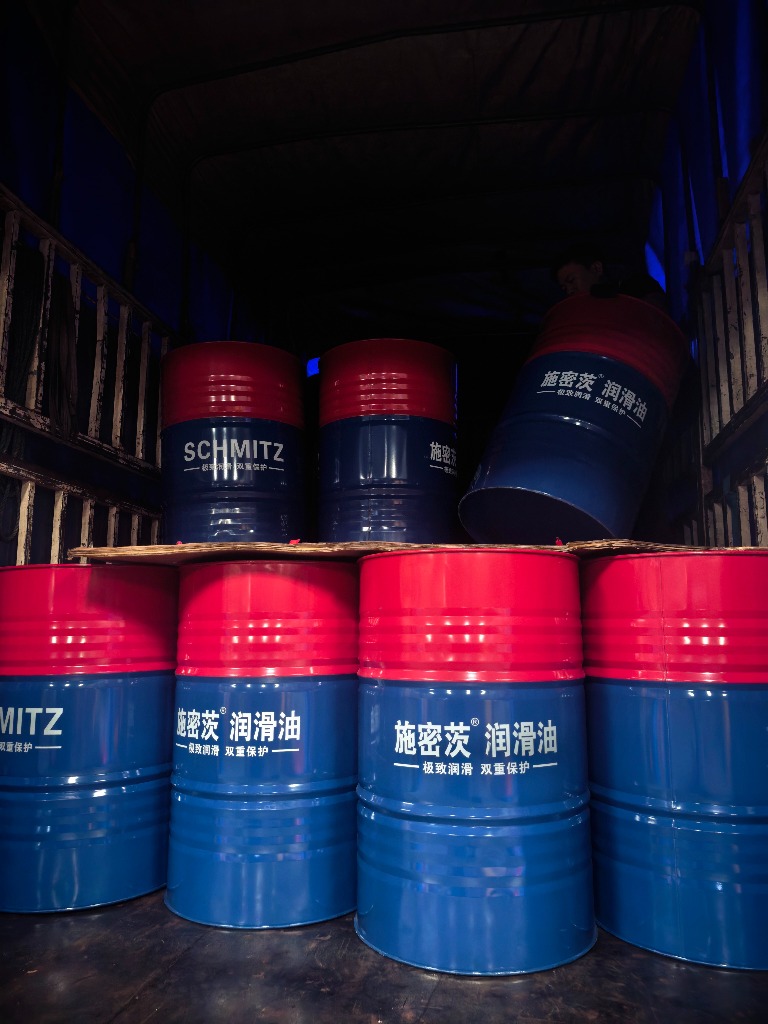
Finished industrial lubricants destined for maritime export cannot be shipped in uncertified commodity containers. International maritime hazardous and non-hazardous cargo regulations require heavy fluids to be packaged in certified UN 1A1 tight-head 208-liter (55-gallon) cold-rolled steel drums or heavy-duty UN 31HA1 composite IBC totes.
The packaging cost structure has faced intense cost pressures due to physical steel and manufacturing energy inputs:
- SPCC Cold-Rolled Steel Sheet: Standard UN 1A1 export drums are formed from 1.0mm/1.0mm/1.0mm (head/body/bottom) prime cold-rolled steel coils. High blast furnace metallurgical coke and iron ore spot pricing have elevated Asian domestic steel sheet quotes. A single empty 208L steel drum now invoices at $30.20 per drum (up from $28.50 in mid-September).
- Internal Anti-Corrosion Lining: To preserve NAS 7 / NAS 8 fluid cleanliness and prevent moisture-induced flash rusting prior to filling, drums receive an internal phenolic-epoxy thermal baked coating, adding $2.40 per drum in specialty chemical and curing oven costs.
- Automated Helium Mass Spectrometer Leak Detection: Every drum manufactured at certified packaging partner facilities undergoes 100% helium pressure decay leak testing, ensuring zero transit weeping or seam failure during rough oceanic voyages.
8. Authoritative 3-Day Forward Export Price Trajectory (October 23 – October 25, 2026)
Synthesizing the compounding impact of $91.15 Brent crude, $1,350/MT Group II 500N base oil, escalating additive chemistry, and $30.20 cold-rolled steel drums, the FOSS Market Research Desk establishes the definitive forward export price matrix for high-demand industrial lubricants.
All quotations are indexed in US Dollars per standard 208-liter steel drum and 1,000-liter IBC tote, on a strict FOB Xiamen Port (Incoterms 2020) basis, valid for containerized export shipments:
| Product Name & Viscosity | Core Standard Spec | Base Oil Formulation | Spot (Oct 22) | Day 1 (Oct 23) | Day 2 (Oct 24) | Day 3 (Oct 25) | IBC Tote Equiv. |
|---|---|---|---|---|---|---|---|
| FOSS LHM 32 Hydraulic Oil | DIN 51524-2 HLP / ISO 11158 HM | 85% Grp II 150N + 13.5% 70N | $206.50 | $207.20 | $207.80 | $208.50 | $945 / 1000L |
| FOSS LHM 46 Hydraulic Oil | DIN 51524-2 HLP / Parker HF-0 | 65% Grp II 150N + 33.5% 500N | $209.20 | $210.00 | $210.60 | $211.50 | $958 / 1000L |
| FOSS LHM 68 Hydraulic Oil | DIN 51524-2 HLP / Eaton Vickers | 35% Grp II 150N + 63.5% 500N | $212.80 | $213.60 | $214.50 | $215.50 | $975 / 1000L |
| FOSS LHV 46 Wide-Temp Hyd | DIN 51524-3 HVLP / VI > 155 | Grp II 150N + PMA Polymer + 500N | $222.50 | $223.40 | $224.20 | $225.20 | $1,020 / 1000L |
| FOSS LCKD 150 EP Gear Oil | DIN 51517-3 CLP / AGMA 9005-E02 | Grp II 500N + Grp I BS150 + EP | $228.00 | $229.00 | $230.20 | $231.50 | $1,045 / 1000L |
| FOSS LCKD 220 EP Gear Oil | DIN 51517-3 CLP / Flender Approved | 55% Grp II 500N + 41% BS150 + EP | $234.50 | $235.80 | $237.00 | $238.50 | $1,075 / 1000L |
| FOSS LCKD 320 Heavy Gear | DIN 51517-3 CLP / ISO 12925-1 CKD | 40% Grp II 500N + 56% BS150 + EP | $242.00 | $243.50 | $244.80 | $246.50 | $1,110 / 1000L |
9. Technical Specification & Quality Compliance Audit: DIN 51524-2 & ISO 11158 Standards
In periods of rapid feedstock price escalation, certain merchant blenders cut manufacturing costs by adulterating formulations—substituting cheaper non-hydrotreated solvent neutrals, blending off-spec reclaimed oils, or lowering additive treat rates below OEM builder requirements.
At FOSS Lubrication, every metric ton of manufactured fluid is formulated strictly according to certified international engineering standards. Every commercial export batch is verified and certified by our in-house ISO 17025 accredited quality testing laboratory prior to loading:
| Critical Quality Parameter | ASTM / ISO Test Method | DIN 51524-2 Requirement | FOSS LHM 46 Typical Value | Engineering Significance |
|---|---|---|---|---|
| Kinematic Viscosity @ 40°C | ASTM D445 | 41.4 – 50.6 mm²/s | 46.25 mm²/s | Ensures optimal hydrodynamic wedge in hydraulic pumps |
| Viscosity Index (VI) | ASTM D2270 | Min. 95 | 106 (Group II Pure) | Resists thermal thinning across operating temperature range |
| ISO 4406 Cleanliness Code | ISO 4406 / NAS 1638 | Not Specified in DIN | 17/15/12 (NAS Class 6–7) | Protects electrohydraulic proportional and servo valves |
| Air Release @ 50°C | ASTM D3427 / DIN 51381 | Max. 10 Minutes | 4.2 Minutes | Eliminates micro-dieseling pump cavitation and spongy response |
| Water Demulsibility (54°C) | ASTM D1401 | Max. 30 min (to 40-37-3) | 12 Minutes (40-40-0) | Rapid water separation prevents rust in reservoir sumps |
| FZG Gear Scuffing Test | DIN 51354 Part 2 | Min. Failure Load Stage 10 | Stage 12 Passed | Superior extreme-pressure load carrying in piston pumps |
| Oxidation Stability (TOST) | ASTM D943 | Min. 1,000 Hours | > 3,800 Hours | Triple service lifespan compared to low-tier Group I oils |
10. Pragmatic Buyer Hedging & Procurement Directives for Q4 2026
Given the convergence of rising crude energy benchmarks, extreme Group II 500N deficits, and extended shipping transits around Africa, international supply chain directors must transition from passive spot purchasing to disciplined structural procurement hedging. The FOSS Commercial Advisory Desk recommends four decisive strategic actions:
Directive 1: Pre-Lock Q4 Production Volumes on Fixed Raw Material Indices
Rather than absorbing weekly spot increases, establish a two-month supply contract indexed directly to ICIS or Argus Asian base oil benchmarks. FOSS offers transparent pricing models where conversion margins (blending, testing, steel packaging) remain fixed for 60 to 90 days, isolating international buyers from arbitrary compounding surcharges.
Directive 2: Optimize Container Packing to Full 80-Drum Payloads
Never ship partially laden 20-foot shipping containers. A standard 20GP container accommodates exactly 80 steel drums of 208L (16.64 metric tons net fluid) loaded in an engineered two-tier formation with heavy dunnage bracing. Maximizing container payload dilutes high ocean freight BAF surcharges to the lowest possible per-liter transportation cost.
Directive 3: Leverage Factory Bulk Tankage as Your Virtual Inventory Buffer
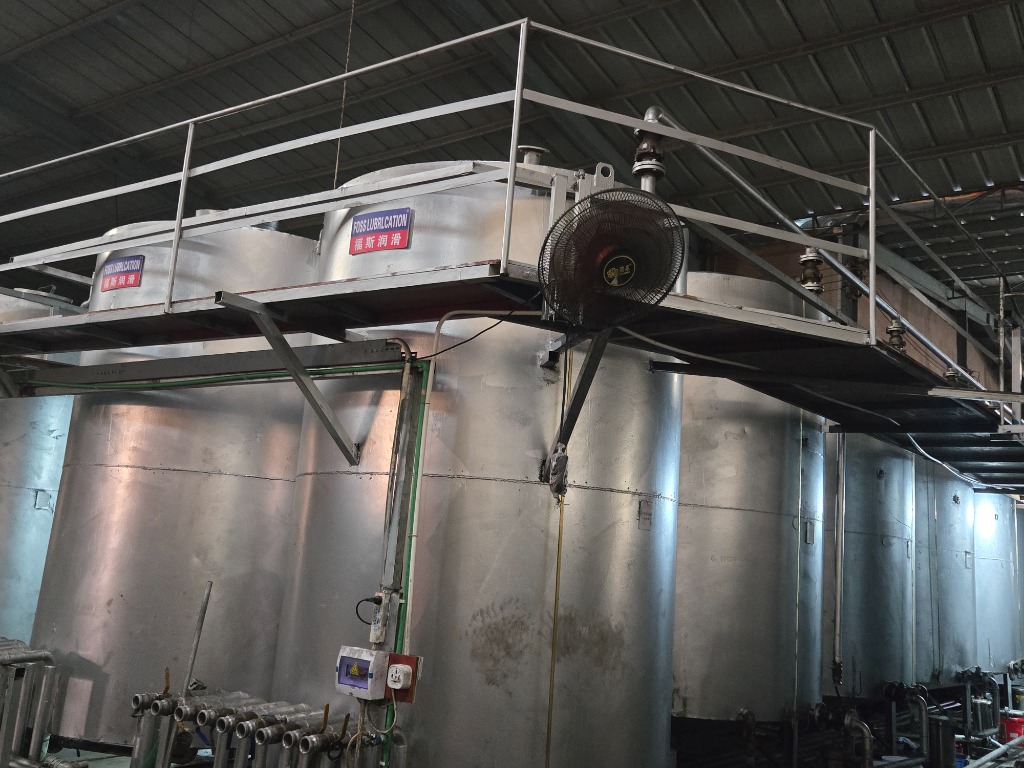
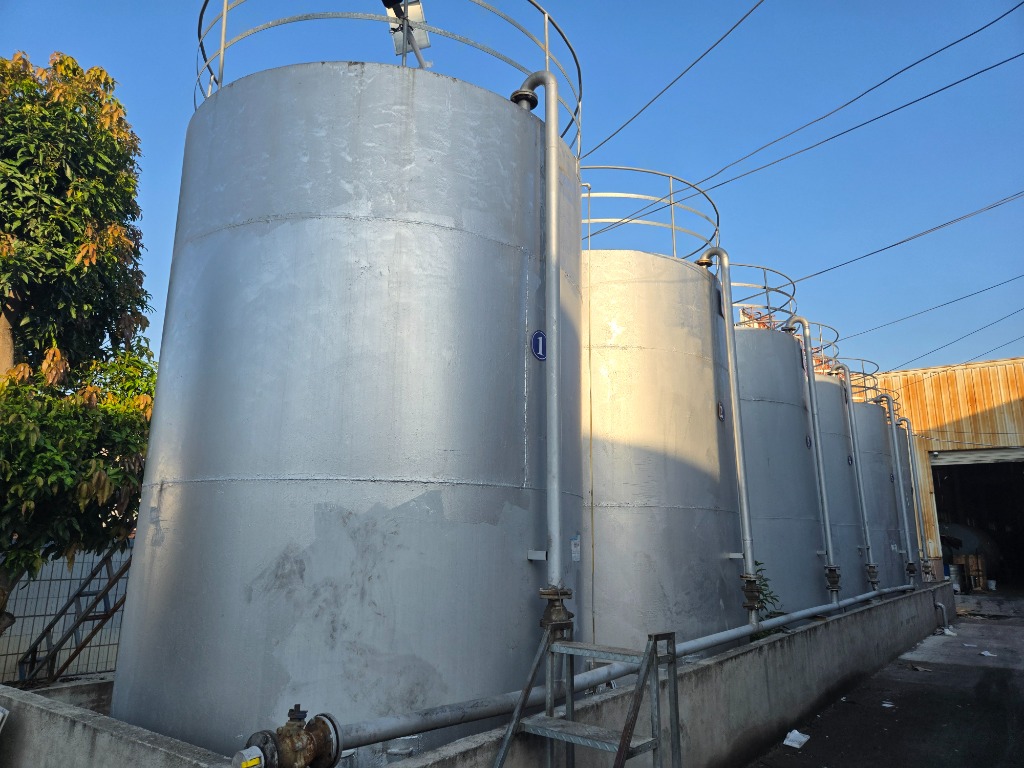
Carrying commercial inventory in overseas destination warehouses involves steep working capital interest rates and storage fees. By partnering with FOSS, overseas buyers can contract bulk reserve inventory held in our 35,000 MT Quanzhou tank farm, with pre-scheduled container stuffing staggered across 15-day intervals to synchronize with vessel sailings.
Directive 4: Consolidate Mixed Container SKU Requirements (Hydraulic + Gear + Greases)
To optimize regional distribution cash flow, take advantage of FOSS’s flexible multi-product container stuffing. A single 20GP container can combine 50 drums of FOSS LHM 46 hydraulic fluid, 20 drums of FOSS LCKD 220 industrial gear oil, and 10 drums or 80 pails of high-temperature extreme-pressure lithium complex grease, all consolidated under a single bill of lading.
11. FOSS Lubricants Factory Capabilities & Manufacturing Infrastructure
Headquartered in the coastal maritime industrial hub of Quanzhou, Fujian Province, Quanzhou Foss Lubrication Technology Co., Ltd. stands as one of East China’s most advanced independent blending and export manufacturing facilities:
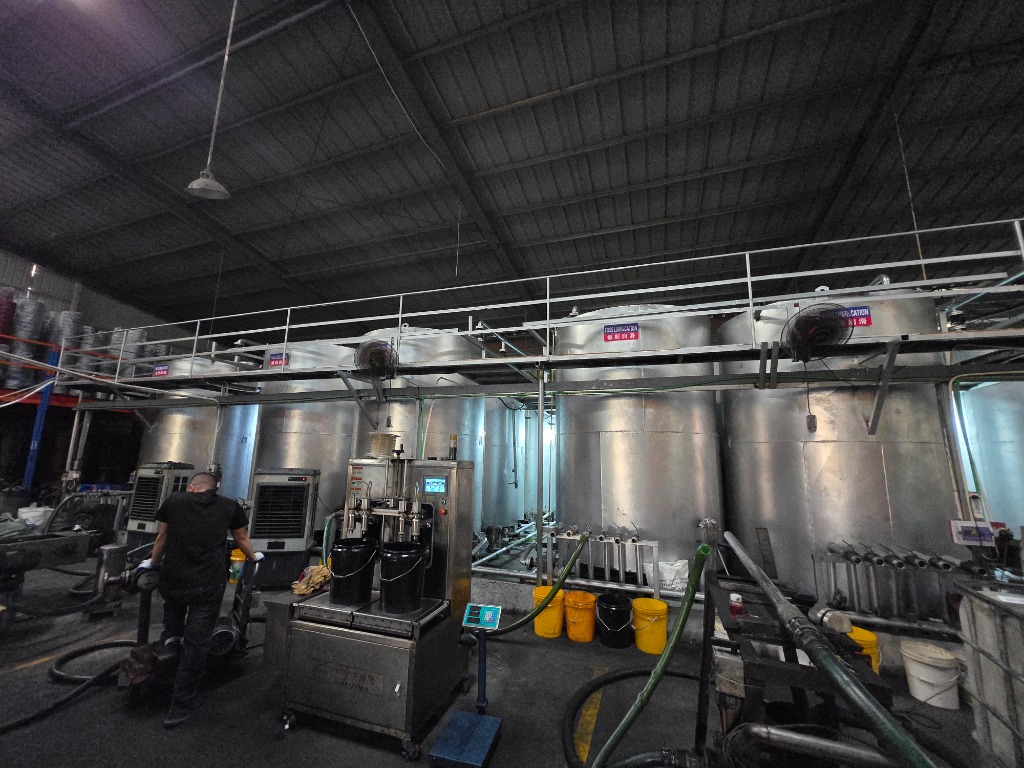
- Annual Compounding Capacity: 100,000+ Metric Tons across 12 automated vertical blending kettles.
- Bulk Base Oil Storage: 35,000 Metric Tons across carbon steel and stainless steel tank batteries.
- Port Proximity: Located just 45 kilometers from Xiamen Port (one of the world’s top 15 container container hubs), guaranteeing swift container terminal delivery within 3 hours of stuffing.
- OEM & Toll Blending Services: Complete private-label packaging support, custom screen-printed steel drums, multilingual lithographed pails, and proprietary additive customization for global machinery brands.
- International Certifications: Fully certified under ISO 9001:2015 (Quality), ISO 14001:2015 (Environmental), and ISO 45001:2018 (Occupational Health & Safety).
12. Conclusion & Factory Contact for Direct Spot & Term Orders
As international energy markets remain turbulent and crude benchmarks probe multi-month highs, securing reliable, unadulterated, and high-performance industrial lubricants at mathematically transparent factory-direct pricing is paramount to protecting equipment lifespan and operational margins.
The FOSS Lubrication Commercial Desk is standing by to process formal Requests for Quotation (RFQ), provide comprehensive Certificates of Analysis (COA) for specific production batches, and prepare custom Proforma Invoices for 20GP / 40HQ container allocations.
Contact FOSS Lubrication International Commercial Desk
Reach our export engineering team directly to lock in current spot allocations or negotiate formula-indexed term supply contracts:
Definitive 3-Day Lubricant & Base Oil Trend Forecast
Synthesized by the FOSS Quantitative Energy Modeling Desk based on active shipping line container bookings, regional tank farm draw-down rates, and prompt ICE Brent futures sentiment:
Brent crude futures establish firm technical support above $91.00/bbl, testing $91.20–$91.80/bbl; Northeast Asian refiners raise prompt Group II 500N spot offers toward $1,350–$1,365/MT as Singapore middle-distillate crack spreads consolidate at $25.85/bbl.
Sustained Persian Gulf naval warnings and Red Sea missile intercepts maintain elevated Lloyd's War Risk Premiums; container carrier bunker adjustment factors (BAF) and cold-rolled SPCC steel drum costs ($30.20/drum) push export quotations for DIN 51524-2 hydraulic oils toward $210.50/drum FOB Xiamen.
Acute feedstock diversion of hydrocracker unconverted oil (UCO) and an unprecedented $215/MT Group II 150N/500N spread trigger urgent pre-procurement runs by overseas mining operators and OEM distributors, locking in guaranteed Q4 export production slots.
5. Strategic Sourcing & Hedging Directives for Overseas Importers
For overseas procurement directors, fleet operators, and industrial distributors, market volatility represents both operational risk and competitive opportunity. We recommend the following three concrete actions for managing Q4 procurement:
Lock 60-Day Container Requirements
Secure firm proforma invoices (PI) with 30-day price validity. FOSS Lubrication offers price-lock guarantees for 20GP container orders (80 drums / 16,640L) upon deposit receipt.
Audit Laboratory CoA Verification
Demand full pre-shipment ASTM test parameters: kinematic viscosity at 40°C / 100°C, viscosity index ≥ 100, flash point ≥ 220°C, pour point ≤ -15°C, and zero moisture contamination.
FOSS Lubrication: Factory-Direct Precision Engineering
Operating out of Quanzhou, China, FOSS blends over 20,000 MT annually of ISO VG 32/46/68 anti-wear hydraulic oils, CK-4 heavy-duty engine oils, and industrial gear lubricants. Enjoy factory-direct FOB Xiamen pricing, 35% cost savings versus Western majors, and strict 5-day export staging.