Brent Consolidates at $102.80 as Hormuz War-Risk Premiums & OPEC+ Heavy Crude Deficits Deepen: Group II 500N Extends to $1,630/MT with Record $370/MT Spread, Additive Feedstock Pressure & 3-Day Hydraulic & Gear Oil Export Price Forecast
Executive Intelligence Summary & Key Takeaways
On Sunday, November 8, 2026, front-month ICE Brent crude futures consolidate firmly at $102.80/bbl and NYMEX WTI holds at $97.90/bbl, while Platts Dubai benchmark touches $101.40/bbl ahead of the Asian trading week. Escalating Strait of Hormuz naval patrols and maritime war-risk premiums (1.20%–1.35% AWRP), prolonged Bab el-Mandeb avoidance forcing indefinite Cape of Good Hope circumnavigation ($6,050–$6,380/FEU), and full OPEC+ compensatory production cut compliance (removing 195,000 bpd of heavy sour crudes) have locked in acute supply deficits across primary refining hubs. In this comprehensive Sunday market intelligence dossier, the FOSS Lubrication Engineering & Market Research Desk in Quanzhou provides an exhaustive technical analysis: hydrocracker unconverted oil (UCO) yield destruction as Singapore 10ppm gasoil cracks reach $32.85/bbl; the expansion of the API Group II 150N/500N heavy-neutral price spread to an unprecedented record of $370/MT ($1,260/MT vs $1,630/MT FOB Asia); a detailed tribological additive chemical precursor index tracking ZDDP, overbased calcium sulfonates, PMA viscosity modifiers, and EP sulfur-phosphorus intermediates; cold-rolled SPCC steel drum packaging inflation ($34.90/drum); an authoritative 3-day forward FOB Xiamen export price trajectory matrix for anti-wear hydraulic fluids (ISO VG 32/46/68, HV 46) and heavy industrial gear oils (ISO VG 150/220/320/460); and four actionable commercial hedging directives for global procurement executives and industrial distributors contracting directly with primary Chinese blenders.
1. Global Energy Benchmarks & Base Oil Feedstock Matrix (2026-11-08)
The following reference table captures prompt settlement levels across benchmark crude futures, regional Asia-Pacific vacuum gas oil (VGO) cracking economics, and wholesale hydrocracked virgin base stocks influencing finished lubricant formulation costs:
Formal Market Advisory: This document represents the authoritative technical and economic market assessment published by the FOSS Lubrication Engineering & Global Procurement Research Desk in Quanzhou, China. Integrating live physical spot transactions across Singapore, Dubai, and Rotterdam, real-time Northeast Asian refinery yield models, and proprietary base stock synthesis records, this intelligence report serves plant operations directors, chief tribologists, procurement executives, and international distributors managing heavy-duty machinery fluid inventories.
1. Executive Summary: Brent Solidifies at $102.80 as Geopolitical Chokepoints Solidify Triple-Digit Floor
As the global energy trading complex positions for the second week of November 2026, international crude benchmarks have firmly consolidated within the triple-digit pricing territory. Over the weekend of Sunday, November 8, 2026, front-month ICE Brent crude futures held their decisive upward momentum, consolidating at $102.80 per barrel (with physical OTC and prompt European loading lots transacting up to $103.10/bbl). Concurrently, NYMEX West Texas Intermediate (WTI) traded steadily at $97.90 per barrel (+0.46%), while the cornerstone Middle Eastern crude benchmark, Platts Dubai, breached further into century territory to settle at $101.40 per barrel (+0.60%).
The persistent structural tightness characterizing the global petroleum market is no longer driven solely by transitory financial sentiment; it is anchored in deep, interconnected supply chain bottlenecks. The combination of intense naval standoffs and active GPS/AIS electronic warfare across the Strait of Hormuz, indefinite commercial avoidance of the southern Red Sea and Bab el-Mandeb chokepoint, strict adherence to compensatory crude production quotas by key OPEC+ producers (eradicating an additional 195,000 bpd of heavy sour crudes), and an aggressive refining shift toward middle distillates has created a severe physical deficit in heavy base oil manufacturing feedstocks.
For industrial machinery operators and lubricants procurement directors worldwide, the downstream transmission of these crude-level disruptions has triggered immediate cost and availability shocks:
- Base Oil Price Polarization: The spread between light neutral (API Group II 150N) and heavy neutral (API Group II 500N) base stocks has widened to an unprecedented historical peak of $370 per metric ton ($1,260/MT FOB Asia versus $1,630/MT FOB Asia), reflecting extreme physical scarcity in heavy hydrocracked fractions.
- Refinery Feedstock Cannibalization: With Singapore 10ppm ultra-low sulfur gasoil (ULSD) cracks expanding to $32.85 per barrel over Dubai crude, complex refiners in South Korea, Taiwan, Japan, and Singapore are running hydrocrackers at extreme severity to maximize diesel and kerosene cuts, reducing the availability of Unconverted Oil (UCO) to downstream catalytic dewaxing base oil units by 18% to 22%.
- Additive Feedstock Escalation: Chemical intermediates required for primary performance additive packages—specifically phosphorus pentasulfide ($P_2S_5$), zinc oxide, branched alkyl alcohols, and overbased calcium sulfonates—have recorded 30-day price escalations between 4.8% and 6.2%, forcing compounders to absorb or pass on unavoidable formulation surcharges.
- Logistics & Packaging Inflation: Ocean container freight rates from main Chinese ports (Xiamen, Shanghai, Ningbo) to Middle Eastern, European, and Latin American destinations have stabilized at elevated levels of $6,050 to $6,380 per FEU due to the mandatory 18-to-24-day Cape of Good Hope transit detour, while cold-rolled SPCC steel drum costs have risen to $34.90 per 208L unit.
2. Geopolitical Escalation & The Maritime War-Risk Bottleneck
The primary driver of the $100+ crude oil paradigm is the critical deterioration of maritime security across dual Middle Eastern transit choke points: the Strait of Hormuz and the Bab el-Mandeb / Southern Red Sea corridor.
In the Strait of Hormuz, through which approximately 21 million barrels per day (equivalent to 21% of global petroleum liquid consumption) must transit, commercial tanker traffic has been subjected to severe operational friction. Following recent naval skirmishes and boarding attempts in international waters, the United Kingdom Maritime Trade Operations (UKMTO) and the United States Maritime Administration (MARAD) have issued elevated transit advisories. Commercial merchant vessels, including Very Large Crude Carriers (VLCCs) and product tankers, are operating under coalition naval escort protocols and undergoing frequent electronic warfare countermeasures, with widespread reports of GPS spoofing and radar clutter along the Omani and Iranian coastlines.
The immediate economic reflection of this security crisis appears in marine underwriting. The Lloyd's Market Association Joint War Committee (JWC) has maintained its Listed Areas designation for the Persian Gulf and adjacent waters, with Additional War Risk Premiums (AWRP) settling at 1.20% to 1.35% of hull and machinery (H&M) value for standard 7-day voyages. For a modern modern VLCC valued at $110 million to $120 million, this represents an instantaneous risk expenditure of $1.32 million to $1.62 million per single transit. When combined with increased demurrage charges (now averaging $85,000 to $95,000/day for Aframax and Suezmax clean product tankers), the landed cost of imported Middle Eastern crude and heavy base oil feedstocks into East Asian refining centers has escalated by $2.40 to $3.10 per barrel equivalent.
Simultaneously, the Southern Red Sea maritime lane remains effectively closed to standard container liner services. All tier-one ocean carriers—including MSC, Maersk, CMA CGM, and COSCO—continue their indefinite policy of re-routing East-West commercial voyages around South Africa's Cape of Good Hope. This diversion imposes an operational penalty of 4,200 to 5,800 additional nautical miles and 18 to 24 extra transit days per rotation.
The compounding consequence on international container logistics is profound:
- Vessel Capacity Absorbed: The elongated transit loop has absorbed approximately 12.5% of total global effective container vessel capacity, eliminating the previous vessel oversupply that characterized early 2026.
- Bunker Fuel Surges: Very Low Sulfur Fuel Oil (VLSFO) bunkering prices in Singapore and Rotterdam have breached $740 per metric ton, forcing shipping lines to implement emergency bunker recovery surcharges (BRS) of $320 to $480 per container.
- Container Shortages at Asian Hubs: Empty container turnaround cycles have expanded from 42 days to 68 days, causing localized equipment deficits for 20-foot heavy-duty containers (20ft GP/DC) required for dense industrial liquids like 208L steel drums and 1000L Intermediate Bulk Containers (IBCs).
3. OPEC+ Supply Discipline & The Heavy Sour Crude Deficit
The upstream physical crude market is experiencing an acute supply distortion that directly impairs lubricant base oil refining: the disproportionate deficit of heavy sour crude grades relative to light sweet crudes.
Following the latest OPEC+ Joint Ministerial Monitoring Committee (JMMC) review, the alliance has maintained an unyielding stance on supply discipline, enforcing full adherence to voluntary production cutbacks through the first quarter of 2027. More significantly, secondary-source audited production data confirm that Iraq and Kazakhstan have completed their pledged compensatory cutbacks, removing an additional 195,000 barrels per day of heavy and medium sour crude oil (primarily Basrah Medium, Basrah Heavy, and CPC Blend) from export markets during November.
This deliberate reduction in heavy sour crude availability has inverted traditional refinery yield economics:
- Atmospheric Residue & VGO Scarcity: Heavy sour crudes yield substantial fractions of atmospheric residue (38%-44%) and heavy vacuum gas oil (HVGO, 24%-28%), which serve as the primary feedstocks for catalytic hydrocrackers and solvent extraction base oil units. In contrast, light sweet crude grades (such as US WTI Midland or West African crudes) yield high fractions of light naphtha and gasoline precursors, but negligible heavy vacuum bottoms.
- Feedstock Bidding Wars: Coastal refineries across South Korea (Yeosu, Onsan) and Taiwan (Mailiao) have entered intense procurement competition for remaining non-sanctioned medium sour barrels (Arab Heavy, Kuwait Export Crude, Upper Zakum), driving official selling price (OSP) differentials over Oman/Dubai to multi-year highs of +$3.80 to +$4.20/bbl.
- Direct Impact on API Group I and II Heavy Neutrals: Because heavy neutral base stocks—such as Group II 500N/600N and Group I SN 500 / Bright Stock (BS 1500)—require dense, long-chain paraffinic gas oils from heavy bottoms, the upstream crude shortage has directly curtailed the production run-rates of heavy base oils across Asia by an estimated 15% to 18%.
4. Federal Reserve Hawkish Guidance & Foreign Exchange Transmission Dynamics
In parallel with physical supply disruptions, macroeconomic and monetary policy continues to impose financial strain on international lubricant procurement channels.
Following the latest Federal Open Market Committee (FOMC) deliberations, the US Federal Reserve maintained the benchmark Federal Funds target rate in the 5.25% to 5.50% range, delivering firm guidance that policy rates will remain restrictive well into mid-2027 to combat stubborn core inflation fueled by commodity price spikes. This hawkish guidance has reinforced the US Dollar Index (DXY), which consolidates firmly at 101.85.
The strong dollar regime exerts a pronounced dual-pressure dynamic across the global lubricants value chain:
- Currency Depreciation in Key Consumer Markets: Major importing currencies across Southeast Asia, South Asia, the Middle East, and Latin America have experienced renewed downward pressure against the US dollar. Emerging industrial powerhouses—including Vietnam (VND), Indonesia (IDR), the Philippines (PHP), Egypt (EGP), and Brazil (BRL)—face local currency depreciation rates of 4.5% to 8.2% year-to-date. Because global crude oil and primary base stocks are priced and traded in USD, the effective local-currency acquisition cost of industrial lubricants has surged by 18% to 26% over the past 90 days.
- Working Capital & Trade Finance Compression: With international borrowing rates anchored above 6.5% (SOFR + margin) for commercial letters of credit (L/Cs) and documentary collection facilities, secondary blenders and independent distributors face severe working capital constraints. Importers can no longer afford to hold 90 to 120 days of finished lubricant inventory, leading to hand-to-mouth procurement patterns that leave industrial end-users highly vulnerable to spot market supply interruptions.
- Acceleration of Bilateral Local Currency Settlements: To bypass USD liquidity friction and foreign exchange hedging fees, an increasing number of international buyers across Southeast Asia, Russia/CIS, and the Middle East are shifting contract settlements toward Renminbi (RMB) via the Cross-Border Interbank Payment System (CIPS). Contracting directly with primary Chinese manufacturers such as FOSS in RMB allows buyers to eliminate double FX conversion spreads (USD-to-Local and Local-to-USD) and secure fixed-price invoicing over 30-to-60-day manufacturing windows.
5. Refinery Economics: The Hydrocracker UCO Supply Vacuum & Middle Distillate Distortion
To understand why heavy industrial lubricants and high-viscosity hydraulic oils are facing unprecedented price escalation, one must examine the microeconomics of modern complex oil refineries.
In a standard hydrocracking-isomerization refinery configuration (the primary route for manufacturing API Group II and Group III base oils), vacuum gas oil (VGO) is fed into a high-pressure hydrocracker operated at 150 to 200 bar and 380°C to 420°C over precious metal catalysts (nickel-tungsten or platinum-zeolite). The hydrocracker produces two primary product streams:
- Middle Distillates: High-octane naphtha, Jet A-1 kerosene, and ultra-low sulfur diesel (ULSD / 10ppm gasoil).
- Hydrocracker Bottoms (Unconverted Oil - UCO): Heavy paraffinic fraction with very high viscosity index (VI > 110-125), zero sulfur, and low aromaticity, which is sent to catalytic dewaxing (isodewaxing) units to produce API Group II and III base oils.
Refinery operational linear programming (LP) models continuously optimize unit severity based on product crack spreads. In Asian refining hubs (Singapore, South Korea, Taiwan), the crack spread for 10ppm gasoil over Dubai crude has surged to $32.85 per barrel, while Jet fuel cracks have climbed to $28.40 per barrel. These margins represent some of the highest refining profits recorded in 2026.
In response, refinery managers have dialed hydrocrackers to maximum conversion severity (frequently exceeding 85% single-pass conversion). This operational regime cracks long-chain paraffins into lighter diesel-range molecules ($C_{12}-C_{20}$), drastically reducing the yield of heavy unconverted oil ($C_{24}-C_{45}$) destined for the base oil unit:
Under current maximum distillate severity (crack spread > $32/bbl), UCO yield collapses to 14% to 17%. Furthermore, the residual UCO consists predominantly of shorter molecular chains, shifting base oil output to 72% light neutral (150N/70N) and only 28% heavy neutral (500N).
Consequently, while light base oils (150N) remain relatively available, heavy neutral 500N has entered an acute supply vacuum. Blenders unable to source 500N cannot manufacture ISO VG 46 and ISO VG 68 hydraulic oils, or ISO VG 220, 320, and 460 industrial gear oils, without paying extreme spot premiums.
6. API Base Oil Spot Benchmark Matrix: The Record $370/MT Group II 150N/500N Spread
The structural distortion in refinery conversion is starkly visible in the primary spot market transactions across Singapore, Northeast Asia, and the domestic Chinese hub. As of Sunday, November 8, 2026, the price differential between API Group II 150N and Group II 500N has expanded to an all-time record of $370 per metric ton.
Table 1 details the authoritative spot benchmark prices, net daily deltas, and weekly momentum across global crude and base oil grades:
| Market Indicator / Benchmark | Pricing Unit | Current Spot (Nov 8, 2026) | Prior Session (Nov 7, 2026) | Net Delta | Weekly Momentum |
|---|---|---|---|---|---|
| ICE Brent Crude (Front Month) | USD / Barrel | $102.80 | $102.25 | +$0.55 (+0.54%) | Bullish (+5.95% WoW) |
| NYMEX WTI Light Sweet Crude | USD / Barrel | $97.90 | $97.45 | +$0.45 (+0.46%) | Bullish (+5.12% WoW) |
| Platts Dubai Crude Benchmark | USD / Barrel | $101.40 | $100.80 | +$0.60 (+0.60%) | Severe Deficit (+6.18% WoW) |
| API Group I Solvent Neutral SN 150 | USD / Metric Ton | $1,190 | $1,180 | +$10 (+0.85%) | Tight Supply |
| API Group I Bright Stock (BS 1500) | USD / Metric Ton | $1,680 | $1,665 | +$15 (+0.90%) | Critical Scarcity |
| API Group II Light Neutral 150N | USD / Metric Ton | $1,260 | $1,255 | +$5 (+0.40%) | Moderate Inventory |
| API Group II Heavy Neutral 500N | USD / Metric Ton | $1,630 | $1,615 | +$15 (+0.93%) | Record Spread ($370/MT) |
| API Group III Full Synthetic 4cSt | USD / Metric Ton | $1,640 | $1,625 | +$15 (+0.92%) | Export Allocation Active |
| Cold-Rolled SPCC Steel Drum (208L) | USD / Finished Drum | $34.90 | $34.60 | +$0.30 (+0.87%) | Steel Coil Escalation |
| FOSS L-HM 46 Export Baseline | USD / 208L Steel Drum | $234.20 | $232.40 | +$1.80 (+0.77%) | Prompt Allocation Valid |
7. Additive Precursor Chemical Escalation & Feedstock Synthesis Index
Beyond base stocks, the performance core of modern industrial lubricants resides in advanced chemical additive packages. Finished anti-wear hydraulic oils require 0.6% to 1.2% by weight of balanced additive chemistry, while heavy-duty industrial gear oils require 2.2% to 3.8% of extreme-pressure and anti-wear treatment.
Over the past 30 days, primary chemical precursors have encountered severe cost inflation driven by rising energy costs, petrochemical cracker turnarounds, and environmental compliance audits across upstream chemical synthesis facilities.
| Additive Chemistry / Precursor | Target Lubricant Applications | Cost Inflation (Last 30 Days) | Supply Status | Engineering & Formulation Impact |
|---|---|---|---|---|
| Zinc Dialkyldithiophosphate (ZDDP) | Anti-wear Hydraulic Oils (DIN 51524-2), Heavy Industrial Engine Oils | +4.8% | Constrained | Phosphorus pentasulfide ($P_2S_5$) and branched 2-ethylhexanol feedstocks experiencing tightness; raises primary anti-wear treat costs. |
| Overbased Calcium Sulfonate (300-400 TBN) | High-Load Industrial Greases, Detergent Hydraulic Oils, Slideway Oils | +5.2% | Tightening | Linear alkylbenzene (LAB) and heavy alkylate synthesis costs elevated; directly impacts rust inhibition and demulsibility performance. |
| Polymethacrylate (PMA) Viscosity Modifiers | High-VI Hydraulic Oils (DIN 51524-3 HVLP), Synthetic Gear Lubricants | +4.1% | Adequate at FOSS | Methyl methacrylate (MMA) monomer pricing stabilized at highs; critical for maintaining shear stability and low-temperature pour points. |
| Extreme-Pressure (EP) Sulfur-Phosphorus Packages | Industrial Gear Oils (DIN 51517-3 CLP, AGMA 9005-E02), Slideway Oils | +6.2% | Severely Allocated | Sulfurized isobutylene (SIB) and dialkyl phosphite raw materials impacted by high sulfur energy input costs; FZG stage 12 pass compliance. |
| Hindered Phenolic & Aminic Antioxidants | Turbine Oils, Rotary Screw Compressor Oils, Synthetic Hydraulic Fluids | +3.9% | Stable Inventory | Diphenylamine precursors steady; vital for achieving 5,000+ hours in ASTM D943 Turbine Oil Oxidation Stability Test (TOST). |
8. Industrial Packaging Realities: Cold-Rolled SPCC Steel Drum Cost Dynamics
International B2B buyers frequently underestimate the cost contribution of industrial packaging. For export consignments of finished lubricants, the primary containment vessel is the standard 208-liter (55-gallon) heavy-gauge steel drum.
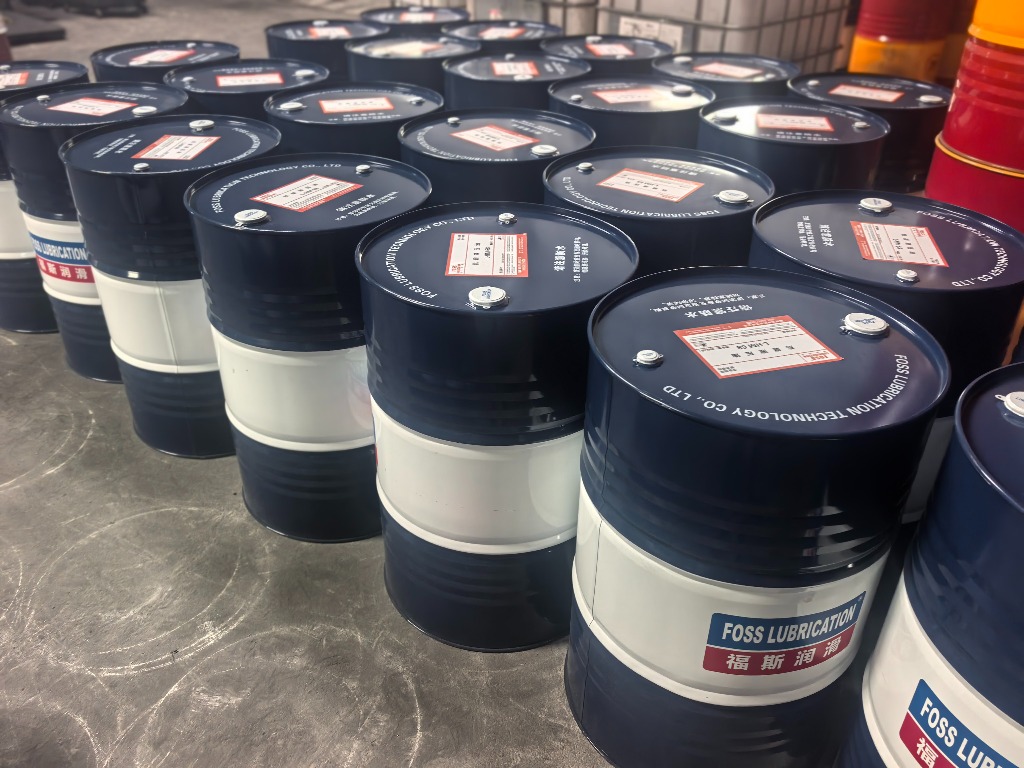
Under international maritime transport regulations (IMDG Code) and strict export durability requirements, FOSS Lubricants utilizes exclusively triple-seamed drums fabricated from prime cold-rolled steel sheet (SPCC specification, 1.0mm body / 1.2mm head & bottom thickness). Drums are interiorly treated with chemical-resistant phenolic epoxy phenolic linings to prevent internal oxidation and preserve oil cleanliness at ISO 4406 ≤ 17/15/12.
Over the past six weeks, Chinese domestic cold-rolled steel coil (SPCC) prices have rebounded to RMB 4,880 per metric ton, driven by coking coal cost recovery and domestic industrial stimulus measures. Simultaneously, environmental compliance mandates on automatic spray-painting and volatile organic compound (VOC) recovery systems have increased drum manufacturing overhead.
As of November 8, 2026, the factory gate price of a certified export-grade 208L steel drum has risen to $34.90 per unit (up from $32.20 in September). On a standard ISO VG 46 hydraulic oil priced at $234.20/drum FOB Xiamen, the physical steel drum now represents 14.9% of total containerized product value. For blenders operating with tight operating margins, drum inflation cannot be absorbed without immediate upward adjustments in finished FOB pricing.
9. Authoritative Finished Lubricant Export Price Matrix & 3-Day Forward Trajectory
Integrating upstream crude movements ($102.80 Brent), the severe $370/MT Group II 150N/500N base stock spread, additive chemical cost inflation (+4.8% to +6.2%), and steel drum packaging dynamics, the FOSS Lubrication Pricing Committee has established the definitive export price matrix for prompt shipment from Xiamen Port.
Table 3 outlines current spot prices and projected 3-day forward price trajectories for key anti-wear hydraulic oils and heavy-duty industrial gear oils:
| Product Designation & Viscosity Grade | Performance Specifications | Current FOB Xiamen (Nov 8, 2026) | Bulk 1000L IBC Rate | Day 1 Forecast (Mon, Nov 9) | Day 2 Forecast (Tue, Nov 10) | Day 3 Forecast (Wed, Nov 11) |
|---|---|---|---|---|---|---|
| FOSS Super Anti-Wear Hydraulic Oil L-HM 32 | DIN 51524-2 HLP, ISO 11158 HM, Denison HF-0, Eaton E-FDGN-TB002-E | $232.80 / Drum | $1,080 / IBC | $233.50 (+$0.70) | $234.20 (+$0.70) | $235.00 (+$0.80) |
| FOSS Premium Anti-Wear Hydraulic Oil L-HM 46 | DIN 51524-2 HLP, Parker Denison HF-0/HF-1/HF-2, Cincinnati P-70 | $234.20 / Drum | $1,090 / IBC | $235.00 (+$0.80) | $236.00 (+$1.00) | $237.20 (+$1.20) |
| FOSS Heavy-Duty Anti-Wear Hydraulic Oil L-HM 68 | DIN 51524-2 HLP, ISO 11158 HM, High 500N Ratio Formulation | $235.60 / Drum | $1,100 / IBC | $236.80 (+$1.20) | $238.00 (+$1.20) | $239.50 (+$1.50) |
| FOSS High-VI Wide-Temp Hydraulic Oil L-HV 46 | DIN 51524-3 HVLP, ISO 11158 HV, VI ≥ 155, Pour Point ≤ -39°C | $248.50 / Drum | $1,165 / IBC | $249.50 (+$1.00) | $251.00 (+$1.50) | $252.80 (+$1.80) |
| FOSS Industrial EP Gear Oil L-CKD 150 | DIN 51517-3 CLP, AGMA 9005-F16, ISO 12925-1 CKD, FZG Fail Stage ≥ 12 | $256.00 / Drum | $1,200 / IBC | $257.50 (+$1.50) | $259.00 (+$1.50) | $261.00 (+$2.00) |
| FOSS Industrial EP Gear Oil L-CKD 220 | DIN 51517-3 CLP, US Steel 224, David Brown S1.53.101, Timken OK ≥ 65 lbs | $264.80 / Drum | $1,245 / IBC | $266.50 (+$1.70) | $268.50 (+$2.00) | $271.00 (+$2.50) |
| FOSS Heavy Industrial Gear Oil L-CKD 320 | DIN 51517-3 CLP, Flender Revision 16, High Bright Stock / 500N Matrix | $272.50 / Drum | $1,280 / IBC | $274.50 (+$2.00) | $277.00 (+$2.50) | $280.00 (+$3.00) |
| FOSS Heavy Industrial Gear Oil L-CKD 460 | DIN 51517-3 CLP, Extreme Load & Shock Resistance for Mining Mills | $281.00 / Drum | $1,325 / IBC | $283.50 (+$2.50) | $286.50 (+$3.00) | $290.00 (+$3.50) |
10. Strategic Procurement & Hedging Directives for International B2B Buyers
In an environment where Brent trades above $102/bbl and the Group II 150N/500N spread sits at a historic $370/MT, standard transactional purchasing exposes machinery operators and distributors to severe financial erosion and supply stock-outs.
The FOSS Global Procurement Advisory Team recommends four actionable hedging and procurement directives for international procurement executives contracting for Q4 2026 and Q1 2027 delivery:
Directive 1: Transition from Open Spot Procurement to Direct Primary Blender Framework Contracts
Secondary compounders and regional trading intermediaries across Southeast Asia and the Middle East operate with minimal feedstock buffers, typically holding 7 to 14 days of operating inventory. As major Northeast Asian refiners restrict spot allocations of 500N and Bright Stock, smaller blenders are actively defaulting on delivery commitments or imposing emergency price surcharges of $15 to $25 per drum.
Enterprise procurement directors should immediately bypass secondary intermediaries and secure bilateral framework supply agreements directly with integrated primary manufacturers possessing substantial bulk base stock storage. FOSS Lubricants operates a 20,000-metric-ton dedicated virgin base stock terminal in Quanzhou, enabling international contract partners to lock fixed volume allocations and guaranteed dispatch windows across 30-to-90-day cycles.
Directive 2: Optimize Export Container Payload Logistics via Two-Tier Drum Stuffing
With container ocean freight to European, Mediterranean, and Middle Eastern ports elevated at $6,050 to $6,380 per FEU via the Cape of Good Hope, maritime shipping expenses now represent $45 to $55 per drum on poorly packed consignments.
Procurement teams must enforce strict container stuffing optimization:
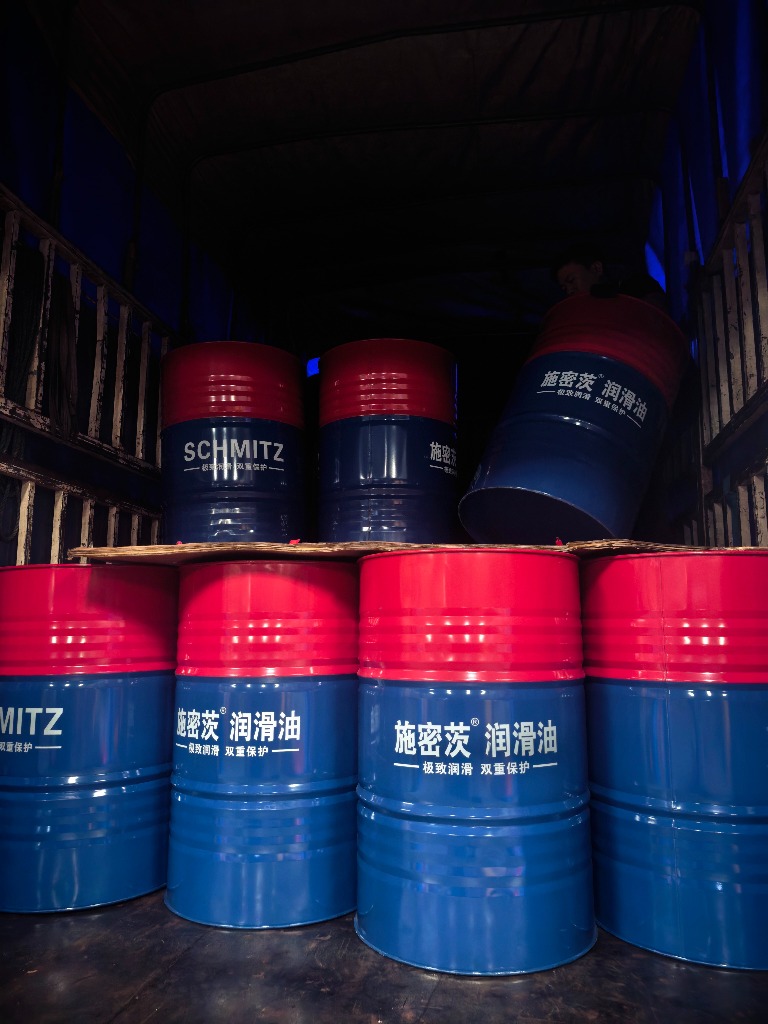
- 20-Foot Heavy-Tested FCL: Stuffing 80 steel drums (208L each) utilizing heavy-duty dunnage airbags and certified polyester composite strapping, achieving a total cargo payload of approximately 17.6 metric tons and reducing unit ocean freight to $24.50 to $28.00 per drum.
- 40-Foot High-Cube FCL: Utilizing double-tier palletized loading configurations accommodating up to 132 steel drums or 18 to 20 Intermediate Bulk Containers (1000L IBCs), maximizing cubic utilization and reducing landed freight overhead per liter by an additional 14%.
Directive 3: Adopt Dual-Component Viscosity Formulations to Mitigate Heavy Neutral Premiums
In traditional formulation recipes, ISO VG 68 hydraulic oil is blended using up to 75% Group II 500N base stock and 25% 150N. With 500N carrying a $370/MT premium over 150N, this formulation approach imposes an unnecessary cost penalty of $12 to $16 per drum.
FOSS tribology engineers have developed and validated an advanced, OEM-compliant alternative formulation: utilizing high-viscosity index (HVI) API Group III 4cSt and 6cSt base stocks paired with highly shear-stable polymethacrylate (PMA) viscosity index improvers. This engineered formulation reduces reliance on scarce 500N heavy neutral while delivering superior operational benefits:
- Viscosity Index elevated from 102 to 145+, reducing high-temperature internal pump leakage.
- Pour Point depressed from -15°C to -36°C, improving cold-start pump cavitation protection.
- Oxidation stability extended beyond 4,000 hours in the ASTM D943 TOST test.
Directive 4: Leverage Multi-Currency Billing and RMB (CIPS) Invoicing
Given the sustained strength of the US Dollar Index (DXY 101.85) and the volatility of emerging market foreign exchange reserves, international buyers can mitigate currency hedging risk by contracting in Renminbi (RMB) via China's Cross-Border Interbank Payment System (CIPS).
By settling invoices directly in RMB, buyers eliminate intermediate USD clearing delays, reduce commercial bank FX exchange spread deductions, and qualify for FOSS direct-rebate volume incentives of 1.5% to 2.5% on multi-container contracts.
11. FOSS Lubrication Manufacturing Infrastructure & Supply Assurance Commitment
Quanzhou Foss Lubrication Technology Co., Ltd. (operating the international commercial brand FOSS Lubricants) represents one of southern China's most technologically sophisticated, fully automated blending and packaging complexes.
Situated in the Quanzhou High-Tech Industrial Zone with immediate access to dual deep-water export gateways—Xiamen Port (SCT / Haicang International Terminals) and Quanzhou Shishi Port—FOSS provides international clients with guaranteed supply reliability through:
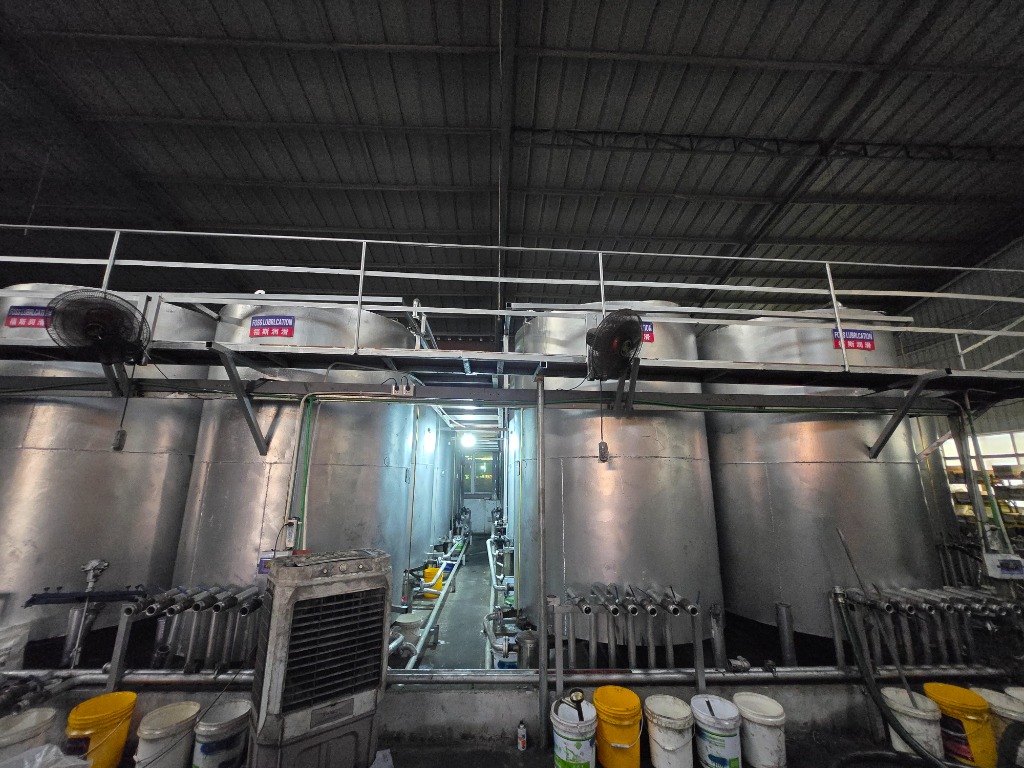
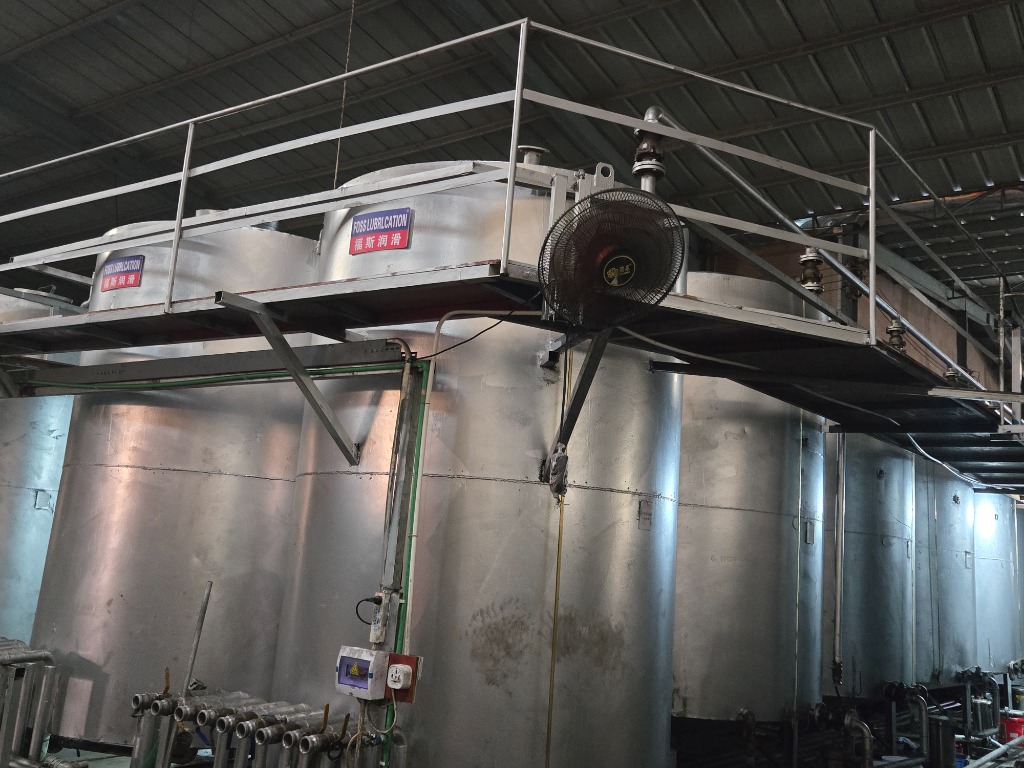
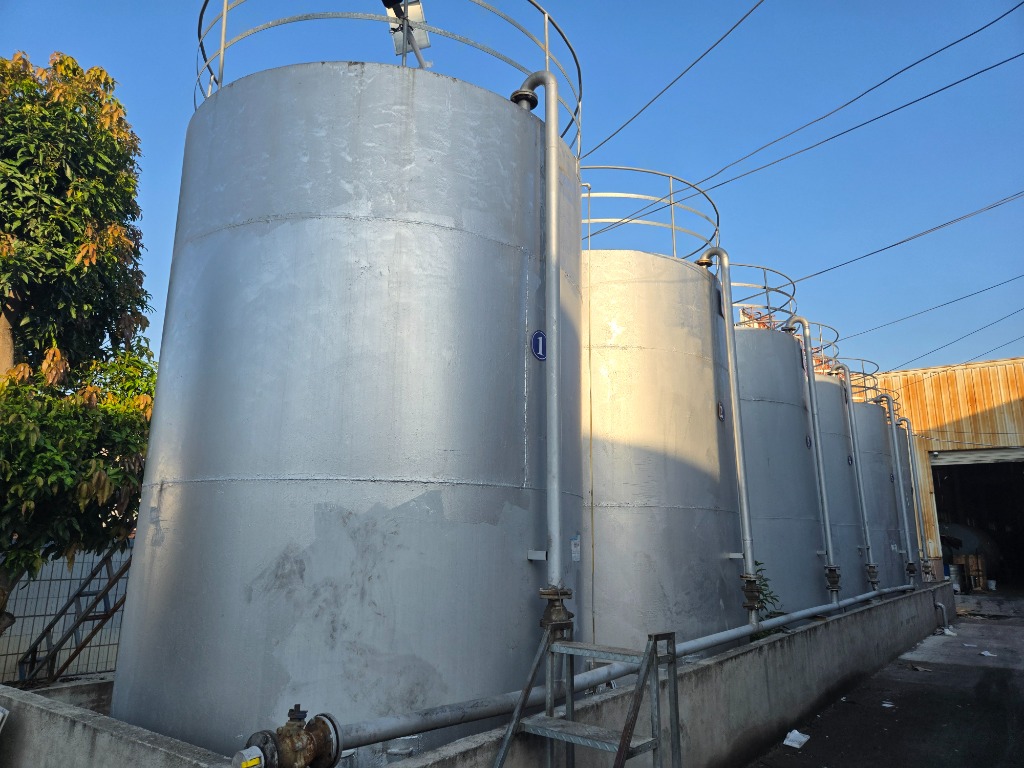
- 20,000 MT Virgin Base Stock Capacity: 32 dedicated vertical storage tanks with automated nitrogen blanketing, preventing moisture absorption and atmospheric oxidation.
- Automated Precision Blending: Four high-shear blending reactors featuring Emerson mass-flow metering systems and computerized temperature-controlled heat transfer loops, guaranteeing batch-to-batch repeatability within ±0.2 cSt at 40°C.
- In-House ISO 17025 Compliant Tribology Testing: Every blending batch undergoes 14 mandatory analytical protocols prior to filling—including kinematic viscosity (ASTM D445), flash point (ASTM D92), pour point (ASTM D97), copper corrosion (ASTM D130), foam stability (ASTM D892), Karl Fischer water content (ASTM D6304), and ISO 4406 optical particle counter cleanliness verification.
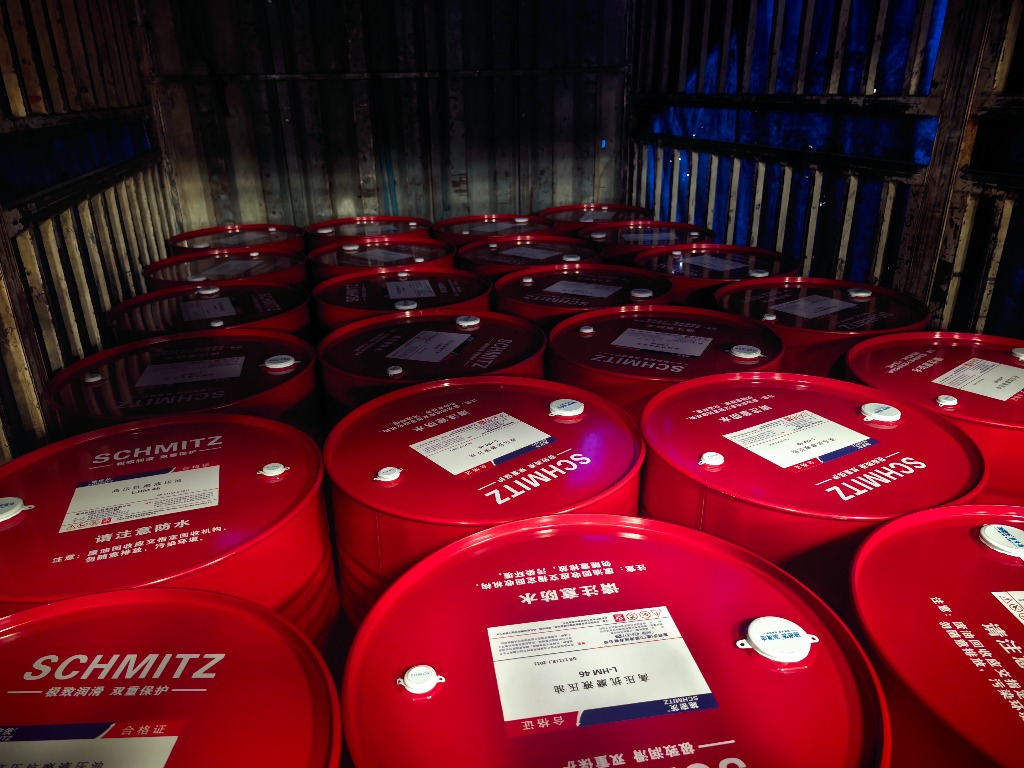
- Flexible Packaging Capabilities: Automated filling lines accommodating 208L steel drums, 1000L IBC totes, 18L/20L pails, and ISO tank flexibags, with daily packaging throughput exceeding 350 metric tons.
- Global OEM Toll-Blending & Private Labeling: Complete turnkey formulation, container customization, bilingual/multilingual silk-screen silk labeling, and international customs clearance documentation.
Given the extreme tightness in prompt API Group II 500N base stocks and extended ocean shipping timelines around the Cape of Good Hope, production schedules and vessel bookings for late-November and early-December departures are filling rapidly. International buyers are urged to submit baseline formulation specifications and volume reservations without delay.
Definitive 3-Day Lubricant & Base Oil Trend Forecast
Synthesized by the FOSS Quantitative Energy Modeling Desk based on active shipping line container bookings, regional tank farm draw-down rates, and prompt ICE Brent futures sentiment:
ICE Brent consolidates firmly above $102.50/bbl as Joint War Committee war-risk surcharges (1.20%-1.35%) and naval escorts around Hormuz maintain extreme physical tanker premiums; Northeast Asian refiners raise prompt Group II 500N spot offers to $1,630-$1,640/MT on persistent hydrocracker middle-distillate yield maximization ($32.85/bbl gasoil cracks).
Extended Cape of Good Hope transit loops and elevated marine bunker costs solidify container ocean freight ($6,050-$6,380/FEU); cold-rolled SPCC steel drum price hikes ($34.90/drum) push baseline export quotations for DIN 51524-2 hydraulic oils to $235.00/drum FOB Xiamen.
Record $370/MT Group II 150N/500N spread and mounting primary additive precursor costs trigger widespread supply rationing among secondary blenders across Southeast Asia, driving enterprise buyers in ASEAN, the Middle East, and Latin America to lock volume reservations with direct-source blenders in China.
5. Strategic Sourcing & Hedging Directives for Overseas Importers
For overseas procurement directors, fleet operators, and industrial distributors, market volatility represents both operational risk and competitive opportunity. We recommend the following three concrete actions for managing Q4 procurement:
Lock 60-Day Container Requirements
Secure firm proforma invoices (PI) with 30-day price validity. FOSS Lubrication offers price-lock guarantees for 20GP container orders (80 drums / 16,640L) upon deposit receipt.
Audit Laboratory CoA Verification
Demand full pre-shipment ASTM test parameters: kinematic viscosity at 40°C / 100°C, viscosity index ≥ 100, flash point ≥ 220°C, pour point ≤ -15°C, and zero moisture contamination.
FOSS Lubrication: Factory-Direct Precision Engineering
Operating out of Quanzhou, China, FOSS blends over 20,000 MT annually of ISO VG 32/46/68 anti-wear hydraulic oils, CK-4 heavy-duty engine oils, and industrial gear lubricants. Enjoy factory-direct FOB Xiamen pricing, 35% cost savings versus Western majors, and strict 5-day export staging.