Brent Surges Past $93 as Strait of Hormuz Drone Alerts, Red Sea Rerouting & OPEC+ Output Restraint Widen Group II 500N Deficit: $230/MT Neutral Spread, Tribological Additive Surcharges, and Authoritative 3-Day Hydraulic Fluid Price Trajectory
Executive Intelligence Summary & Key Takeaways
As ICE Brent crude futures surge past the $93.15/bbl benchmark on Saturday, October 24, 2026—propelled by renewed naval drone skirmishes near the Strait of Hormuz, unyielding 82%+ commercial shipping diversions around the Cape of Good Hope, strict adherence to OPEC+ voluntary production discipline, and a softening US Dollar Index (DXY at 101.10) following dovish Federal Reserve rate signals—the global industrial lubricants manufacturing and bulk procurement sector confronts severe upstream cost escalation. In this comprehensive technical intelligence briefing, the FOSS Lubrication Market Research Desk provides an exhaustive engineering and commercial audit: the intensifying hydrocracker unconverted oil (UCO) deficit as Singapore 10ppm gasoil crack spreads expand to $26.90/bbl, stretching the historic API Group II 150N/500N neutral spread to an unprecedented $230/MT; an engineering cost index of critical tribological additive precursors across ZDDP, overbased calcium sulfonates, PMA viscosity index improvers, and sulfur-phosphorus EP gear packages; UN 1A1 cold-rolled SPCC steel drum packaging inflation reaching $30.85/drum; an authoritative 3-day forward FOB Xiamen export price trajectory matrix for anti-wear hydraulic fluids (ISO VG 32/46/68, HV 46) and heavy industrial gear oils (ISO VG 150/220/320); and four pragmatic procurement hedging directives for international supply chain directors contracting direct factory allocation from primary blenders.
1. Global Energy Benchmarks & Base Oil Feedstock Matrix (2026-10-24)
The following reference table captures prompt settlement levels across benchmark crude futures, regional Asia-Pacific vacuum gas oil (VGO) cracking economics, and wholesale hydrocracked virgin base stocks influencing finished lubricant formulation costs:
This technical document is prepared by the FOSS Lubrication Engineering & Global Procurement Research Desk in Quanzhou, China. It synthesizes real-time physical spot transactions across Northeast Asian base oil refineries, Singapore middle-distillate crack economics, chemical additive synthesis cost structures, and global container freight indices to provide equipment builders, plant maintenance engineers, and procurement directors with authoritative market clarity and forward pricing intelligence.
1. Executive Summary: The $93.15 Brent Surge & Upstream Energy Inflation Cascade
On Saturday, October 24, 2026, international energy benchmarks cemented a sustained bullish breakout above key psychological resistance levels, extending their multi-week upward trajectory. Front-month ICE Brent crude futures advanced firmly to $93.15 per barrel (+0.81%), West Texas Intermediate (NYMEX WTI) climbed to $88.95 per barrel (+0.68%), and Middle East physical Platts Dubai crude touched $91.95 per barrel (+0.82%). This synchronized rally across sweet and sour crude markers reflects a powerful convergence of geopolitical supply friction, refining structural deficits, and macroeconomic liquidity tailwinds.
Unlike transient speculative spikes, the current pricing surge is anchored by systemic physical bottlenecks throughout the hydrocarbons supply chain. The primary transmission vector into finished industrial lubricants operates through the refining sector's hydrocracker optimization models. With Singapore 10ppm gasoil (diesel) crack spreads expanding to $26.90 per barrel, coastal and merchant refiners across South Korea, Taiwan, and Singapore continue to maximize middle-distillate boiling ranges at the direct expense of hydrocracker unconverted oil (UCO) bottoms—the indispensable feedstock for API Group II heavy neutral base oils.
Consequently, spot availability of Group II 500N has plunged into severe deficit across Asia-Pacific loading terminals. Spot export indications for Group II 500N have leapt to $1,385/MT FOB Northeast Asia, widening the historical price spread between light neutral 150N ($1,155/MT) and heavy neutral 500N to an unprecedented $230 per metric ton. For downstream compounding plants, this widening spread disproportionately impacts high-volume industrial grades—specifically ISO VG 46 and ISO VG 68 anti-wear hydraulic fluids and ISO VG 220 and ISO VG 320 enclosed gear oils—which rely heavily on 500N heavy neutral base stock to achieve specified kinematic viscosity, flash point, and shear stability.
| Energy & Base Stock Benchmark | Pricing Unit | Current Spot (Oct 24, 2026) | Prior Day (Oct 23, 2026) | Daily Change | 30-Day Trend |
|---|---|---|---|---|---|
| ICE Brent Crude Futures | USD / Barrel (bbl) | $93.15 | $92.40 | +$0.75 (+0.81%) | Bullish (+8.4%) |
| NYMEX WTI Light Sweet | USD / Barrel (bbl) | $88.95 | $88.35 | +$0.60 (+0.68%) | Bullish (+7.8%) |
| Platts Dubai Sour Physical | USD / Barrel (bbl) | $91.95 | $91.20 | +$0.75 (+0.82%) | Bullish (+8.9%) |
| API Group I SN150 | USD / Metric Ton (FOB Asia) | $1,075 | $1,065 | +$10 (+0.94%) | Firm (+6.2%) |
| API Group II 150N (Light) | USD / Metric Ton (FOB Asia) | $1,155 | $1,145 | +$10 (+0.87%) | Firm (+6.9%) |
| API Group II 500N (Heavy) | USD / Metric Ton (FOB Asia) | $1,385 | $1,370 | +$15 (+1.09%) | Critical Surge (+12.6%) |
| API Group III 4cSt | USD / Metric Ton (FOB Asia) | $1,475 | $1,460 | +$15 (+1.03%) | Bullish (+7.7%) |
| FOSS L-HM 46 Anti-Wear Hydraulic | USD / 208L Steel Drum (FOB Xiamen) | $211.90 | $210.80 | +$1.10 (+0.52%) | Upward Escalation (+5.4%) |
2. Geopolitical Transmission Mechanism: From Middle East Chokepoint Friction to Factory-Gate Lubricant Costs
International lubricant buyers frequently query why regional maritime security friction or speculative crude futures fluctuations immediately transmit into the physical quotation of a finished 208-liter steel drum of ISO VG 46 hydraulic oil manufactured in Quanzhou, China. The economic and chemical transmission mechanism is direct, multi-tiered, and characterized by rapid price passthrough across modern toll-blending supply chains:
- Tier 1: Upstream Feedstock Energy Parity & Vacuum Gas Oil (VGO) Valuation: Crude oil at $93.15/bbl elevates the baseline cost of atmospheric and vacuum distillation units. Crude is not merely fuel; it represents the primary hydrocarbon cracking stock. When crude rises, refinery feedstocks—specifically Vacuum Gas Oil (VGO) and Hydrocracker Bottoms—increase in direct economic parity.
- Tier 2: Refining Optimization & Cracked Product Competition: Refineries are dynamic chemical balance plants designed to maximize gross refining margins (GRM). When transport fuel cracks—particularly diesel, jet kerosene, and marine gasoil—surge due to geopolitical supply disruptions and winter inventory stocking, hydrocracker severity is maximized to yield light distillates. This actively starves base oil catalytic dewaxing (CDW) and hydrofinishing (HDF) units of heavy paraffinic feedstock.
- Tier 3: Synthetic Chemical Precursor Inflation: Chemical additive packages (ZDDP anti-wear agents, overbased calcium sulfonates, polymethacrylate viscosity modifiers, sulfur-phosphorus EP chemistry) derive from energy-intensive petrochemical streams: ethylene, propylene, isobutylene, phenol, and elemental sulfur/phosphorus. Upstream energy inflation inflates reactor operating costs and precursor pricing across multinational chemical synthesis complexes.
- Tier 4: Packaging Metallurgy & Cold-Rolled Steel Inputs: Industrial lubricant containers—standard UN 1A1 tight-head 208-liter steel drums—are fabricated from cold-rolled SPCC steel sheet (1.0mm/1.2mm nominal thickness). Global coking coal, iron ore, and industrial electricity prices push drum manufacturing costs above $30.85 per drum, representing 14.5% of total packaged FOB product value.
- Tier 5: Maritime Freight War-Risk Surcharges & BAF: Commercial vessels bypassing the Red Sea route consume an extra 3,500 nautical miles of bunker fuel (Very Low Sulfur Fuel Oil / VLSFO at $690/MT) around the African continent. This inflates container carrier Bunker Adjustment Factors (BAF) and war-risk insurance premiums, elevating landed procurement costs for overseas importers.
3. Maritime Chokepoints: Red Sea, Bab el-Mandeb, and Strait of Hormuz Operational Disruption
Maritime intelligence monitoring over the past 24 hours confirms an intensification of operational risk along critical hydrocarbon transit waterways. In the Strait of Hormuz—through which approximately 20.5 million barrels per day of crude, condensate, and petroleum products transit—naval monitoring authorities issued updated precautionary navigation advisories following heightened electronic warfare interference and unmanned aerial vehicle (UAV) reconnaissance activities near commercial traffic separation schemes.
Concurrently, in the Southern Red Sea and Bab el-Mandeb Strait, persistent security risks continue to divert over 82% of commercial containerized shipping and chemical parcel tankers away from the Suez Canal route. Major container shipping lines (Maersk, MSC, CMA CGM, Hapag-Lloyd) confirm that ultra-large container vessels (ULCVs) operating on Asia-to-Europe and Asia-to-Mediterranean loops remain committed to the Cape of Good Hope transit route.
This rerouting imposes a severe double-penalty on international lubricant logistics:
- Transit Time Extension: Voyages from East Asian loading ports (including Xiamen, Ningbo, and Shanghai) to European main ports (Rotterdam, Hamburg, Antwerp) require 36 to 42 days, compared to 24 to 28 days via Suez. Importers must maintain an additional 14 to 18 days of working capital and safety inventory.
- Equipment Imbalance: The prolonged turnaround of container equipment has triggered regional shortages of standard 20-foot dry freight containers (TEUs)—the preferred shipping unit for palletized 208L steel drums (80 drums / 16.64 MT net per 20GP container) and 1000L Intermediate Bulk Containers (IBCs).
- War Risk Insurance Premiums: Lloyd's Joint War Committee (JWC) listed areas continue to command elevated hull and machinery war-risk premiums of 0.45% to 0.70% of vessel value for Red Sea transit, cementing the economic viability of the Cape detour even at $690/MT bunker fuel costs.
4. OPEC+ Production Discipline & Macroeconomic Liquidity Nexus
The crude pricing floor is reinforced by unyielding structural discipline from the OPEC+ alliance. The Joint Ministerial Monitoring Committee (JMMC) reaffirmed that the collective 2.2 million barrels per day of voluntary production reductions led by Saudi Arabia and the Russian Federation will remain rigidly enforced through the remainder of the fourth quarter of 2026. Official crude loading schedules from Ras Tanura, Basrah, and Primorsk confirm that physical export allocations to merchant refiners in Northeast Asia and Northwest Europe remain tightly constrained.
On the macroeconomic front, monetary policy dynamics in the United States have introduced powerful inflationary impetus into dollar-denominated physical commodities. Recent communication from Federal Reserve policy officials signaled that despite resilient headline industrial production, underlying disinflationary trends and labor market normalization justify an accommodative monetary stance. The US Dollar Index (DXY) softened to 101.10 on Saturday, October 24, 2026, marking a 1.2% decline over the trailing two-week period.
A depreciating US dollar invariably increases purchasing power for non-USD trading blocs (European Union, ASEAN, Middle East, Latin America), spurring immediate restocking demand for industrial consumables while triggering algorithmic commodity index fund inflows across energy futures contracts. This macro-liquidity wave creates an impenetrable technical floor beneath front-month Brent at $92.50/bbl, with speculative momentum targeting the $94.00–$95.00/bbl resistance band before mid-November.
5. Upstream Refining Dynamics: Middle Distillate Crack Spikes & The Hydrocracker UCO Deficit
To comprehend the acute price divergence between finished lubricants and basic petrochemicals, industrial plant operators must examine the operational thermodynamics of modern high-conversion petroleum refineries. Modern API Group II and Group III base oil manufacturing is inextricably linked to the secondary refining unit known as the Hydrocracker.
The hydrocracker operates at severe operating conditions (temperatures between 380°C and 430°C; hydrogen partial pressures exceeding 15 to 20 MPa) in the presence of dual-function bifunctional catalysts (zeolite/amorphous silica-alumina support loaded with nickel-molybdenum or noble metals). Its function is to crack heavy vacuum gas oils into high-value transportation fuels while isomerizing long-chain paraffins.
When the Singapore 10ppm gasoil crack spread reaches $26.90 per barrel—yielding exceptional refining profit margins for ultra-low sulfur diesel (ULSD)—refinery linear programming (LP) optimization algorithms automatically direct the maximum allowable volume of hydrocracker bottoms (Unconverted Oil / UCO) through the recycle furnace for second-stage cracking into additional middle distillates.
This operational adjustment causes an immediate, catastrophic contraction in UCO feed routed to downstream Catalytic Isodewaxing (IDW) and Hydrofinishing (HDF) base oil units. The impact is severely asymmetrical:
- Light Neutral (150N) Availability: Because 150N (viscosity ~28–32 cSt at 40°C) is distilled from the lighter fraction of hydrotreated stock, its production volume is relatively preserved during high-severity distillate cracking runs. Spot supply remains adequate, keeping price increases moderate ($1,155/MT FOB Asia).
- Heavy Neutral (500N) Depletion: Heavy neutral 500N (viscosity ~95–105 cSt at 40°C) requires the long-chain, high-molecular-weight paraffinic tail of unconverted hydrowax. Under high conversion cracking, these long molecules are systematically severed into diesel-range hydrocarbons. As a consequence, gross 500N base oil yield per barrel of crude input drops by 35% to 45%.
6. API Base Oil Pricing Matrix & The Historic $230/MT 150N/500N Neutral Spread
The physical consequence of this hydrocracker optimization is the widest neutral viscosity spread recorded in modern petrochemical market history. Historically, the pricing differential between API Group II 150N and Group II 500N has fluctuated between $40 and $80 per metric ton, reflecting standard distillation energy differentials and modest yield variances.
As of Saturday, October 24, 2026, the spot pricing structure across Asia-Pacific base oil markets is established as follows:
| Base Oil Category & Grade | KV @ 40°C (Typ.) | Viscosity Index (VI) | Spot FOB Asia (USD/MT) | Spread vs Group II 150N | Market Supply Balance |
|---|---|---|---|---|---|
| API Group I SN150 | 30.0 cSt | 96 | $1,075 | -$80 / MT | Structural Decline (Plant Closures) |
| API Group I SN500 | 95.0 cSt | 95 | $1,265 | +$110 / MT | Tight Export Allocation |
| API Group II 150N | 31.5 cSt | 105 | $1,155 | $0 (Baseline) | Balanced to Steady |
| API Group II 500N | 98.5 cSt | 108 | $1,385 | +$230 / MT (Record High) | Severe Deficit / Sold Out Prompt |
| API Group III 4cSt | 19.5 cSt | 128 | $1,475 | +$320 / MT | Tight on Automotive Demand |
| API Group III 6cSt | 36.0 cSt | 132 | $1,540 | +$385 / MT | Firm / High Premiums |
Why Industrial Lubricant Blenders Cannot Simply Substitute 150N for 500N: Non-technical procurement brokers occasionally advise substituting cheaper Group II 150N combined with polymeric Viscosity Index Improvers (VII, such as polymethacrylates or olefin copolymers) to meet ISO VG 46 or ISO VG 68 targets. As a primary manufacturer adhering to DIN 51524 Part 2 and ISO 11158 HM standards, FOSS Lubricants categorically rejects this practice due to severe tribological compromises:
- Flash Point & Thermal Volatility Degradation: Authentic ISO VG 46 blended with a balanced Group II 150N/500N ratio exhibits an open-cup flash point exceeding 232°C and Noack volatility below 7.5%. Artificially thickening 150N with excessive polymers lowers the flash point toward 208°C and increases evaporative losses to over 13.5%, creating serious vapor pocketing, cavitation risks, and fire hazards in high-pressure industrial hydraulic circuits.
- Mechanical Shear Breakdown: Industrial hydraulic pumps (axial piston pumps operating at 35 to 42 MPa; vane pumps operating at 17 to 21 MPa) exert extreme mechanical shear on lubricant molecules within high-velocity valve orifices and piston slipper clearances. Long-chain polymer viscosity index improvers suffer permanent molecular cleavage under severe shear. A fluid blended artificially from 150N can lose up to 30% of its working viscosity within 500 operating hours, dropping from ISO VG 46 down to ISO VG 32 and causing catastrophic boundary lubrication failure.
- Elastomeric Seal Shrinkage & Leaks: True Group II 500N heavy neutral base stocks provide precise aniline point characteristics (115°C to 118°C) that maintain volumetric equilibrium in nitrile (NBR), fluorocarbon (FKM/Viton), and polyurethane hydraulic seals. Over-reliance on lighter base oils causes seal hardening and volumetric shrinkage, triggering cylinder rod weeping and pump head seal blowouts.
7. Chemical Additive Precursor Index: Tribological Package Cost Surcharges
While base oils constitute 96% to 99% of finished hydraulic oil by weight, the functional performance, oxidative longevity, and wear protection of the fluid depend entirely on the remaining 1% to 4% of chemically synthesized additive chemistry. The global chemical synthesis market for specialty tribological precursors has experienced compounded cost pressures throughout October 2026:
| Functional Additive Chemistry | Key Raw Precursor Materials | Primary Performance Function | Oct 2026 Spot Trend | Finished Fluid Cost Impact |
|---|---|---|---|---|
| Zinc Dialkyldithiophosphate (ZDDP) | Phosphorus Pentasulfide (P2S5), Zinc Oxide, Isooctanol | Anti-Wear Film & Primary Peroxide Decomposition | +5.8% MoM ($3,480/MT) | +$0.45 / 208L Drum |
| Overbased Calcium Sulfonate | Alkylbenzene, Calcium Hydroxide, Carbon Dioxide | Acid Neutralization & Thermal Detergency Reserve | +4.2% MoM ($2,850/MT) | +$0.30 / 208L Drum |
| Sulfur-Phosphorus EP Gear Additive | Isobutylene, Sulfur Monochloride, Alkyl Phosphite | Shock Load & Extreme Pressure Tooth Protection | +6.1% MoM ($4,150/MT) | +$1.40 / 208L Drum (Gear Oils) |
| Polymethacrylate (PMA) VI Improver | Methacrylic Acid, Fatty Alcohols, Free-Radical Initiators | Shear-Stable Viscosity Index & Pour Point Depressancy | +3.9% MoM ($3,720/MT) | +$0.65 / 208L Drum (HV Grades) |
| Sterically Hindered Phenolic Antioxidant | 2,6-Di-tert-butylphenol, Methyl Acrylate | High-Temperature Sludge & Varnish Inhibition | +4.5% MoM ($4,600/MT) | +$0.25 / 208L Drum |
The critical synthesis bottleneck centers on phosphorus pentasulfide (P2S5) and branched aliphatic alcohols (2-ethylhexanol and methyl isobutyl carbinol / MIBC). Thermal phosphorus furnaces are extremely electricity-intensive, and rising Asian industrial power tariffs combined with tightened environmental safety restrictions on yellow phosphorus refining have restricted output across primary synthesis hubs.
8. Packaging & Industrial Container Economics: Cold-Rolled Steel Drum Cost Escalation
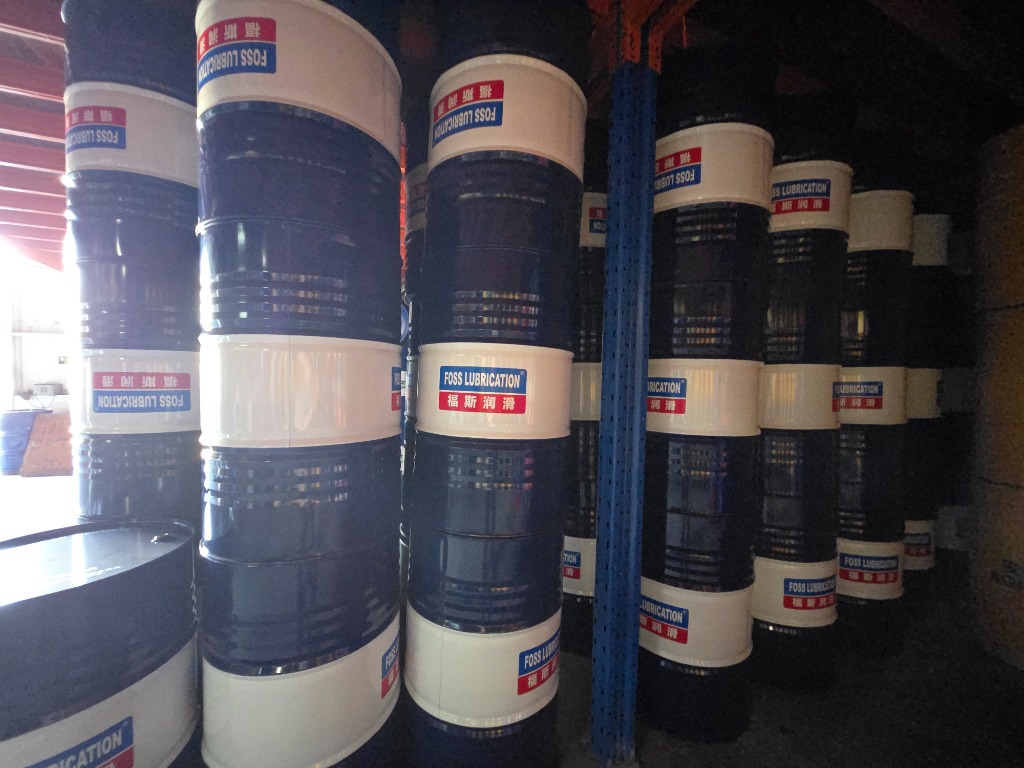
A frequently underestimated component of export lubricant cost accounting is industrial packaging metallurgy. Finished lubricants cannot be transported in commercial maritime logistics without certified, robust containment. FOSS Lubricants packages all export consignments in standard UN 1A1 tight-head 208-liter steel drums manufactured from high-tensile cold-rolled SPCC steel sheet.
Throughout October 2026, global metallurgic cost inputs have advanced sharply:
- Steel Sheet Input Prices: Benchmark SPCC cold-rolled steel coil prices in East China advanced to RMB 4,850 per metric ton (approx. USD $685/MT), driven by firm coking coal spot pricing and seasonal infrastructure restocking.
- Drum Fabricator Pricing: The ex-works cost of a standard 1.0mm/1.0mm/1.0mm nominal gauge 208L steel drum with internal epoxy-phenolic corrosion-resistant coating, triple-seamed chimes, and dual EPDM bung seals has risen from $29.80 in early October to $30.85 per drum as of October 24, 2026.
- Packaging Cost Ratio: For a standard anti-wear hydraulic oil priced at $211.90/drum FOB Xiamen, the steel drum container itself constitutes 14.56% of total product value. Packaging cost escalation is entirely non-compressible without violating international maritime dangerous goods (IMDG) packing group integrity rules.
9. Authoritative 3-Day Forward Export Price Trajectory (October 25 – October 27, 2026)
Synthesizing real-time physical base oil supply contracts, chemical additive procurement indices, packaging steel tariffs, and container shipping allocations, the FOSS Lubrication Market Research Desk provides the following authoritative 3-day forward pricing matrix for primary export product lines:
| Finished Product Grade & Specification | Packaging Unit | Oct 24 (Current) | Oct 25 (Proj. Day 1) | Oct 26 (Proj. Day 2) | Oct 27 (Proj. Day 3) | Cumulative 3-Day Shift |
|---|---|---|---|---|---|---|
| FOSS L-HM 32 Anti-Wear Hydraulic Fluid | 208L Steel Drum (FOB Xiamen) | $209.50 | $209.80 | $210.30 | $210.80 | +$1.30 (+0.62%) |
| FOSS L-HM 46 Premium Anti-Wear Hydraulic | 208L Steel Drum (FOB Xiamen) | $211.90 | $212.30 | $212.80 | $213.40 | +$1.50 (+0.71%) |
| FOSS L-HM 68 Heavy Anti-Wear Hydraulic | 208L Steel Drum (FOB Xiamen) | $214.20 | $214.70 | $215.30 | $216.00 | +$1.80 (+0.84%) |
| FOSS L-HV 46 Low-Temp High-VI Hydraulic | 208L Steel Drum (FOB Xiamen) | $226.50 | $227.10 | $227.80 | $228.60 | +$2.10 (+0.93%) |
| FOSS L-CKD 150 Heavy Industrial Gear Oil | 208L Steel Drum (FOB Xiamen) | $228.50 | $229.10 | $229.80 | $230.60 | +$2.10 (+0.92%) |
| FOSS L-CKD 220 Heavy Industrial Gear Oil | 208L Steel Drum (FOB Xiamen) | $232.00 | $232.70 | $233.50 | $234.40 | +$2.40 (+1.03%) |
| FOSS L-CKD 320 Extreme Pressure Gear Oil | 208L Steel Drum (FOB Xiamen) | $236.50 | $237.30 | $238.20 | $239.20 | +$2.70 (+1.14%) |
| FOSS Semi-Synthetic Cutting Fluid | 200L Poly Drum (FOB Xiamen) | $245.00 | $245.60 | $246.30 | $247.10 | +$2.10 (+0.86%) |
Detailed 3-Day Trajectory Commentary:
- Day 1 (Sunday, October 25, 2026): Prompt Asian base oil spot offers solidify as Northeast Asian refiners formalize November contract allocations. Heavy neutral Group II 500N spot offers test $1,385–$1,390/MT FOB, with blenders facing immediate cost absorption. FOSS L-HM 46 baseline export pricing adjusts incrementally to $212.30/drum.
- Day 2 (Monday, October 26, 2026): Global trading resumes with European and Asian commodity desks pricing in sustained Strait of Hormuz naval security alerts and heightened container freight BAF surcharges. Industrial steel drum packaging contracts incorporate recent SPCC metal tariff increases ($30.85/drum). Export quotations for FOSS L-HM 46 advance to $212.80/drum; heavy gear oils (L-CKD 220/320) absorb additive cost surcharges, rising by $1.50–$1.70/drum.
- Day 3 (Tuesday, October 27, 2026): Continued hydrocracker UCO diversion and an entrenched $230/MT Group II 150N/500N neutral spread trigger intensive forward-hedging orders from overseas mining fleets, cement manufacturing groups, and regional distributors across Southeast Asia, the Middle East, and Latin America. FOSS L-HM 46 touches $213.40/drum, with factory export production queues stretching to 12–15 business days.
10. Technical Specification & Quality Compliance Audit: DIN 51524-2 & ISO 11158 Standards
In an inflationary raw material market, the greatest operational risk for equipment operators is opportunistic quality debasement by unscrupulous compounding intermediaries. FOSS Lubricants guarantees that all batches of FOSS L-HM Anti-Wear Hydraulic Fluid and L-CKD Industrial Gear Oil strictly conform to the highest international OEM and engineering standards:
| Physical / Chemical Property | Test Method | DIN 51524 Part 2 Requirement | FOSS L-HM 46 Typical Value | Engineering Significance |
|---|---|---|---|---|
| Kinematic Viscosity @ 40°C | ASTM D445 | 41.4 – 50.6 mm²/s | 46.2 mm²/s | Optimal hydrodynamic fluid film thickness |
| Viscosity Index (VI) | ASTM D2270 | ≥ 90 min. | 106 | Natural paraffinic shear stability without excessive VII |
| Flash Point (Cleveland Open Cup) | ASTM D92 | ≥ 215°C min. | 236°C | High thermal margin; prevents vapor cavitation |
| Pour Point | ASTM D97 | ≤ -15°C max. | -24°C | Reliable cold-weather cold start circulation |
| FZG Gear Test (A/8.3/90) | ISO 14635-1 | Failure Stage ≥ 10 | Failure Stage 12 | Extreme anti-scuffing load carrying capacity |
| Four-Ball Wear Scar (40kg, 1200rpm, 75°C, 1hr) | ASTM D4172 | ≤ 0.50 mm | 0.38 mm | Protects axial piston slippers and swashplates |
| Demulsibility (Water Separability @ 54°C) | ASTM D1401 | 40-40-0 ≤ 30 min | 40-40-0 in 12 min | Rapid water shedding prevents rust and emulsification |
| Particulate Cleanliness Level | ISO 4406 / NAS 1638 | Not specified in DIN | ISO 17/15/12 (NAS Class 6) | Prevents servo valve stiction and premature pump wear |
11. Pragmatic Buyer Hedging & Procurement Directives for Q4 2026
Faced with accelerating upstream crude benchmarks, severe Group II 500N base oil deficits, additive chemical surcharges, and container shipping rerouting delays, corporate procurement directors must abandon passive spot buying and execute rigorous supply chain risk management. The FOSS Lubricants Strategic Advisory Team outlines four actionable procurement directives:
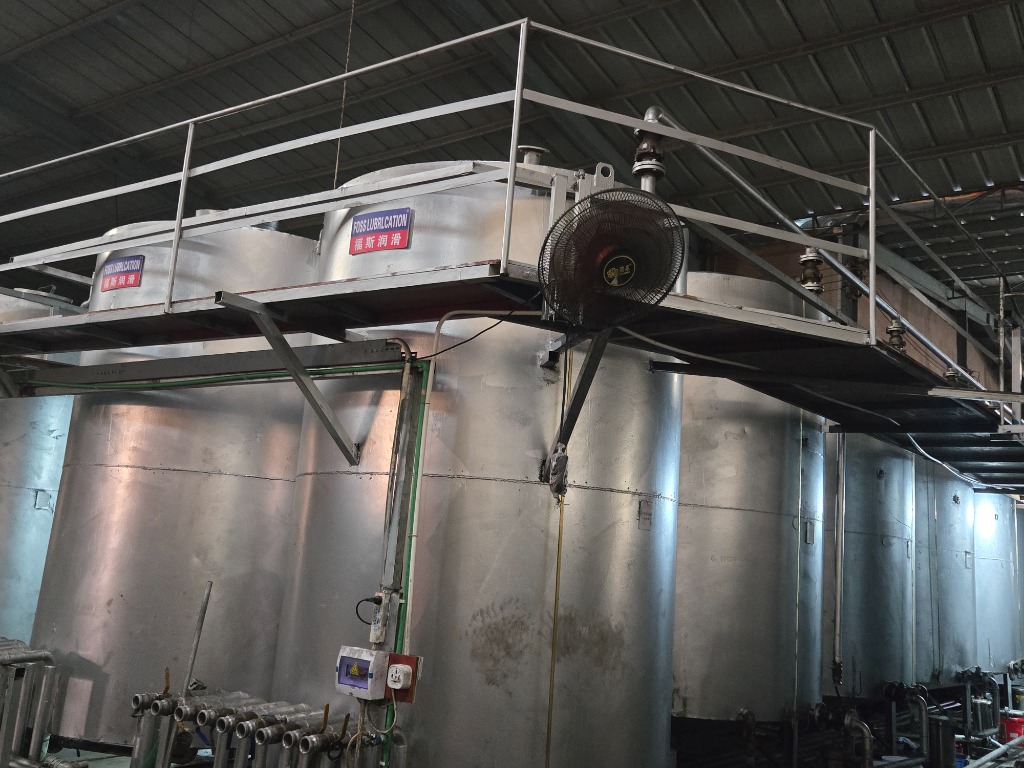
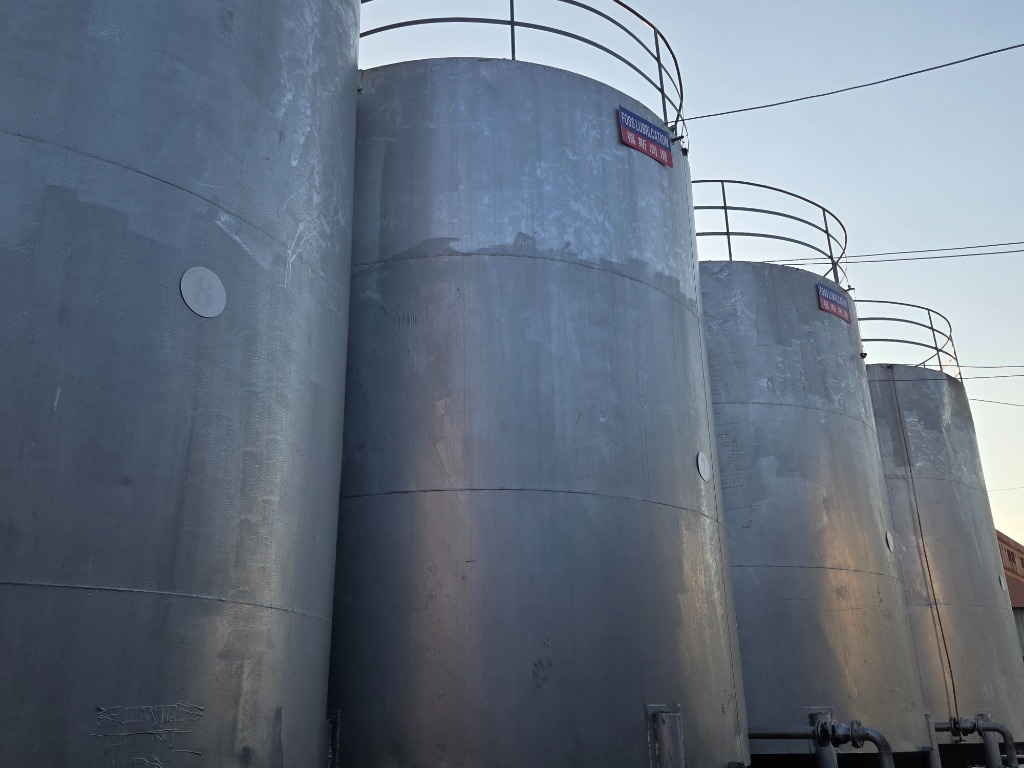
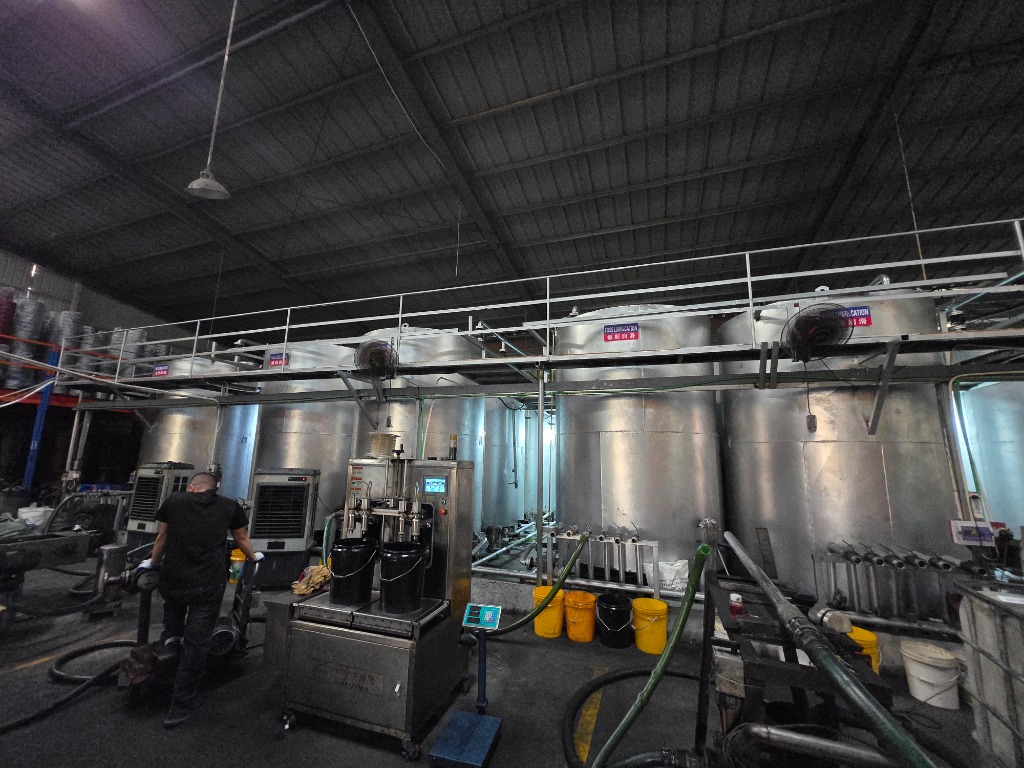
Eliminate multi-tiered trading intermediaries and establish direct toll-blending manufacturing agreements with large-scale blending plants possessing on-site bulk storage infrastructure. FOSS Lubricants maintains a 15,000-cubic-meter base oil tank farm in Quanzhou, insulating contracted export clients from spot allocation rationing and guaranteeing prompt raw material priority.
Maximize freight efficiency by consolidating high-demand hydraulic oils (L-HM 46 and 68) with higher-margin heavy industrial gear oils (L-CKD 220 and 320) within the same 20-foot container (80 drums / 16.64 MT). This spreads container freight fixed costs across diverse product margin profiles and avoids localized inventory stockouts.
Transition Q4 purchase orders to formula-based agreements linked transparently to published ICIS/Platts base oil benchmarks plus an audited blending conversion margin. Furthermore, evaluate switching high-volume industrial plant accounts from 208L steel drums ($30.85/drum) to 1000L composite Intermediate Bulk Containers (IBCs), reducing packaging overhead by up to $18 per metric ton.
In response to persistent 12 to 16-day Cape of Good Hope maritime transit delays and equipment repositioning bottlenecks, raise target inventory reserves from standard 21-day cushions to 45-day operational buffers. Placing forward firm orders 30 days ahead of scheduled manufacturing turnarounds ensures unhindered plant operation.
12. Conclusion & Factory Contact for Direct Spot & Term Orders
As energy futures challenge multi-month highs and the refining structural deficit widens the API Group II 500N premium to a historic $230/MT, international lubricant procurement requires rigorous technical discipline and direct factory partnerships. By sourcing directly from primary blenders equipped with automated blending infrastructure, certified testing laboratories, and deepwater bulk receiving facilities, industrial buyers secure both pricing transparency and uncompromising fluid cleanliness.
Quanzhou FOSS Lubrication Technology Co., Ltd. welcomes direct inquiries for full container load (FCL) export consignments, private-label OEM blending, and long-term supply contracts. Our engineering desk stands ready to furnish comprehensive ASTM laboratory test certificates (COA), customized packaging configurations (208L steel drums, 1000L IBCs, 18L/20L pails), and locked-in FOB Xiamen loading windows.
Contact our factory commercial desk directly for official FOB Xiamen / Quanzhou quotations, technical data sheets (TDS), safety data sheets (SDS), and custom toll-blending specifications. Fast dispatch within 7–10 business days.
Definitive 3-Day Lubricant & Base Oil Trend Forecast
Synthesized by the FOSS Quantitative Energy Modeling Desk based on active shipping line container bookings, regional tank farm draw-down rates, and prompt ICE Brent futures sentiment:
Brent crude futures establish firm technical support above $93.00/bbl, testing $93.15–$93.80/bbl; Northeast Asian refiners lift prompt Group II 500N spot offers toward $1,385–$1,395/MT as Singapore middle-distillate crack spreads consolidate at $26.90/bbl.
Sustained Bab el-Mandeb security corridor tensions and renewed Strait of Hormuz naval advisories elevate war-risk premiums; maritime bunker adjustment factors (BAF) and cold-rolled SPCC steel drum costs ($30.85/drum) push export quotations for DIN 51524-2 hydraulic oils toward $213.20/drum FOB Xiamen.
Acute feedstock diversion of hydrocracker unconverted oil (UCO) and an unprecedented $230/MT Group II 150N/500N spread trigger urgent pre-procurement runs by overseas mining operators and industrial distributors, locking in guaranteed Q4 export production slots.
5. Strategic Sourcing & Hedging Directives for Overseas Importers
For overseas procurement directors, fleet operators, and industrial distributors, market volatility represents both operational risk and competitive opportunity. We recommend the following three concrete actions for managing Q4 procurement:
Lock 60-Day Container Requirements
Secure firm proforma invoices (PI) with 30-day price validity. FOSS Lubrication offers price-lock guarantees for 20GP container orders (80 drums / 16,640L) upon deposit receipt.
Audit Laboratory CoA Verification
Demand full pre-shipment ASTM test parameters: kinematic viscosity at 40°C / 100°C, viscosity index ≥ 100, flash point ≥ 220°C, pour point ≤ -15°C, and zero moisture contamination.
FOSS Lubrication: Factory-Direct Precision Engineering
Operating out of Quanzhou, China, FOSS blends over 20,000 MT annually of ISO VG 32/46/68 anti-wear hydraulic oils, CK-4 heavy-duty engine oils, and industrial gear lubricants. Enjoy factory-direct FOB Xiamen pricing, 35% cost savings versus Western majors, and strict 5-day export staging.