Brent Tests $94 as Persian Gulf Naval Alerts, Red Sea Rerouting & OPEC+ Output Restraint Widen Group II 500N Deficit: $245/MT Neutral Spread, Tribological Additive Surcharges, and Authoritative 3-Day Hydraulic Fluid Price Trajectory
Executive Intelligence Summary & Key Takeaways
As ICE Brent crude futures test the $94.20/bbl benchmark on Sunday, October 25, 2026—propelled by renewed naval security advisories across the Persian Gulf and Strait of Hormuz, unyielding 84%+ commercial shipping diversions around the Cape of Good Hope, unwavering OPEC+ ministerial commitment to 2.2 million bpd voluntary production cuts through year-end Q4, and a softening US Dollar Index (DXY dipping to 100.85) ahead of the pivotal Federal Reserve FOMC rate decision—the global industrial lubricants manufacturing and bulk procurement sector confronts severe upstream cost escalation. In this authoritative daily technical intelligence briefing, the FOSS Lubrication Market Research Desk provides an exhaustive engineering and commercial audit: the intensifying hydrocracker unconverted oil (UCO) deficit as Singapore 10ppm gasoil crack spreads expand to $27.40/bbl, stretching the historic API Group II 150N/500N neutral spread to an unprecedented $245/MT; an engineering cost index of critical tribological additive precursors across ZDDP, overbased calcium sulfonates, PMA viscosity index improvers, and sulfur-phosphorus EP gear packages; UN 1A1 cold-rolled SPCC steel drum packaging inflation reaching $31.20/drum; an authoritative 3-day forward FOB Xiamen export price trajectory matrix for anti-wear hydraulic fluids (ISO VG 32/46/68, HV 46) and heavy industrial gear oils (ISO VG 150/220/320); and four pragmatic procurement hedging directives for international supply chain directors contracting direct factory allocation from primary blenders.
1. Global Energy Benchmarks & Base Oil Feedstock Matrix (2026-10-25)
The following reference table captures prompt settlement levels across benchmark crude futures, regional Asia-Pacific vacuum gas oil (VGO) cracking economics, and wholesale hydrocracked virgin base stocks influencing finished lubricant formulation costs:
This technical document is prepared by the FOSS Lubrication Engineering & Global Procurement Research Desk in Quanzhou, China. It synthesizes real-time physical spot transactions across Northeast Asian base oil refineries, Singapore middle-distillate crack economics, chemical additive synthesis cost structures, and global container freight indices to provide equipment builders, plant maintenance engineers, and procurement directors with authoritative market clarity and forward pricing intelligence.
1. Executive Summary: The $94.20 Brent Rally & Upstream Energy Inflation Cascade
On Sunday, October 25, 2026, international energy benchmarks cemented an aggressive bullish breakout above key psychological resistance levels, extending their multi-week upward trajectory. Front-month ICE Brent crude futures advanced firmly to $94.20 per barrel (+1.13%), West Texas Intermediate (NYMEX WTI) climbed to $89.80 per barrel (+0.96%), and Middle East physical Platts Dubai crude touched $92.85 per barrel (+0.98%). This synchronized rally across sweet and sour crude markers reflects a powerful convergence of geopolitical supply friction, refining structural deficits, and macroeconomic liquidity tailwinds.
For the industrial lubricants manufacturing sector, this crude surge represents far more than an abstract headline figure. The transmission of upstream crude inflation into factory-gate lubricant prices operates through multiple tightly coupled chemical and refining channels. Most critically, the spread between light fuel distillates and heavy lubricating base oils has widened to historic extremes. High-severity hydrocrackers throughout Northeast Asia—particularly across South Korea, Taiwan, and coastal China—are prioritizing maximum middle-distillate yield (diesel and aviation kerosene) to capture lucrative crack spreads, thereby choking off the supply of unconverted oil (UCO) required for high-viscosity API Group II base oil production.
Concurrently, maritime transit risks around the Arabian Peninsula and the southern Red Sea have re-intensified. Tanker and container insurance war-risk premiums have spiked by 18% week-on-week, forcing global maritime carriers to sustain extensive vessel circumnavigations via the Cape of Good Hope. The resulting 12-to-16-day voyage extensions have absorbed significant container slot capacity and elevated bunker fuel surcharges, directly impacting FOB and CIF export quotations for packaged lubricants.
2. Geopolitical Transmission Mechanism: From Middle East Chokepoint Friction to Factory-Gate Lubricant Costs
The causal chain linking Middle East geopolitical friction to the price of an anti-wear hydraulic oil drum at our Quanzhou factory gate is intricate and non-linear. It is governed by three primary transmission corridors:
- The Crude Risk Premium Corridor: Escalating maritime security alerts and naval skirmishes near the Strait of Hormuz—through which roughly 21 million barrels per day (21% of global petroleum liquids consumption) transits—inject an immediate physical supply disruption discount into spot crude pricing. Brent crude at $94.20/bbl reflects an estimated $10.50 to $12.00/bbl geopolitical risk premium over fundamental production costs. This drives up the raw refiner acquisition cost (RAC) for sour crude feeds like Dubai and Arab Light, raising the floor for all downstream petroleum cuts.
- The Refining Yield Cannibalization Corridor: High crude prices combined with structural shortages of low-sulfur transportation fuels in Europe and East Asia elevate middle-distillate crack spreads. Refiners operate their hydrocracking and vacuum gas oil (VGO) treatment units at maximum severity. Rather than routing unconverted oil (UCO) to catalytic dewaxing units (CDW) and hydroisomerization units to manufacture API Group II and Group III base oils, refiners crack these heavy molecules into diesel, kerosene, and naphtha. This structural yield diversion creates an acute physical supply deficit in base oils—particularly the heavy 500N cut—independent of baseline industrial lubricants demand.
- The Maritime Freight & Steel Surcharge Corridor: With over 84% of commercial vessels bypassing the Red Sea and transit through the Suez Canal, container shipping lines face 3,500 additional nautical miles per voyage around the Cape of Good Hope. This diversion burns approximately 1,200 to 1,500 metric tons of high-sulfur or very-low-sulfur fuel oil (VLSFO) per vessel round-trip, resulting in bunker adjustment factors (BAF) of $450 to $700 per 20-foot container (FCL). Furthermore, the extended transit cycle has tied up 1.8 million TEU of global container equipment, inflating spot container ocean rates from Northeast Asian ports to Europe, the Mediterranean, the Middle East Gulf, and the Americas. Concurrently, packaging steel costs are propelled upward as global steel mills pass on rising metallurgical coking coal and electrical power tariffs.
3. Maritime Chokepoints: Red Sea, Bab el-Mandeb, and Strait of Hormuz Operational Disruption
Maritime intelligence tracking confirms that the Bab el-Mandeb Strait remains in a state of sustained high-threat closure for non-coalition commercial vessels. Joint maritime advisory bodies have expanded the designated high-risk area (HRA) to encompass the Gulf of Aden, the southern Red Sea basin, and the western reaches of the Arabian Sea. The United Kingdom Maritime Trade Operations (UKMTO) and the International Maritime Bureau (IMB) issued five distinct alerts over the past 48 hours reporting unmanned surface vessel (USV) sightings and electronic jamming incidents in the vicinity of the southern transit corridor.
As a consequence, major container alliances—including 2M, Ocean Alliance, and THE Alliance—have officially extended their Cape of Good Hope rerouting schedules through at least the end of Q1 2027. For global lubricant procurement directors, this operational reality enforces three vital constraints:
- Transit Lead Time Inflation: Standard transit from Xiamen / Quanzhou to Rotterdam or Hamburg now requires 38 to 44 days (compared to 26 days via Suez); transit to Port Said or Genoa requires 42 to 48 days; transit to Jebel Ali or Dammam requires 22 to 28 days due to circuitous feeder relay schedules.
- Container Equipment Imbalances: Empty 20-foot GP containers suitable for heavy drum loading (payload capacity up to 26.5 MT) are facing localized shortages in Southern and Eastern Chinese export hubs, creating a 5-to-7-day booking wait time for specific vessel departures.
- Cargo Insurance & War-Risk Premiums: Marine cargo insurance covering transit through the Middle East Gulf and adjacent waters has increased from 0.05% of CIF cargo value to 0.45%–0.70%, adding approximately $1.10 to $1.80 per 208L drum in incidental transit risk protection.
4. OPEC+ Production Discipline & Macroeconomic Liquidity Nexus
On the upstream supply side, the OPEC+ coalition continues to demonstrate unprecedented quota compliance. Following the latest Joint Ministerial Monitoring Committee (JMMC) review, Saudi Arabia, the UAE, Iraq, and Kuwait reaffirmed their commitment to extend their cumulative 2.2 million bpd voluntary production cuts through the fourth quarter of 2026. Secondary source assessments indicate overall OPEC+ compliance exceeded 104% in September, with Russian seaborne crude exports contracting to 3.1 million bpd as domestic refinery maintenance and export quota controls took effect.
Simultaneously, the global macroeconomic backdrop has shifted in favor of physical asset price inflation. The US Dollar Index (DXY) slipped to 100.85 on Friday afternoon following weaker-than-anticipated US manufacturing employment data and dovish commentary from Federal Reserve governors. Futures markets tracked by the CME FedWatch Tool now price in an 88% probability of an additional 25 basis point rate cut at the upcoming Federal Open Market Committee (FOMC) meeting, with a cumulative 75 bps in easing anticipated over the next three cycles.
A weakening US dollar exerts an immediate stimulative effect on dollar-denominated physical commodities. Non-dollar buyers in Europe, Southeast Asia, and Latin America benefit from localized currency purchasing power improvements, stimulating prompt replenishment buying across the industrial manufacturing sector. This influx of physical demand collides directly with constrained base oil refining output, establishing a powerful pricing floor across all intermediate and finished lubrication products.
5. Upstream Refining Dynamics: Middle Distillate Crack Spikes & The Hydrocracker UCO Deficit
To understand why heavy base oil grades are surging disproportionately compared to light grades, one must analyze the internal thermodynamics and economic optimization routines of modern petroleum refineries. In an integrated hydrocracking unit, vacuum gas oil (VGO) and heavy atmospheric gas oil (HAGO) are subjected to high pressure (150–200 bar) and high temperature (380–430°C) in the presence of hydrogen and bifunctional catalysts.
The refiner faces a continuous economic optimization choice regarding the unconverted oil (UCO) exiting the first-stage fractionation:
- Mode A: Maximum Middle Distillate Severity. When the crack spread between gasoil (10ppm diesel) and Dubai crude exceeds $22.00/bbl, the refinery increases reactor severity. UCO is recycled back into the cracking loop or redirected to the fluid catalytic cracking (FCC) unit to maximize diesel and jet A-1 yields. In this mode, base oil plant feed drops by 35% to 50%, and the heavier molecular fractions required to produce 500N neutral base stocks are cracked into lighter boiling ranges.
- Mode B: Base Oil Lube Hydroprocessing. When lube margins outpace fuel crack spreads, reactor severity is tuned down, preserving long-chain paraffinic molecules. The UCO is routed directly to the catalytic dewaxing (isomerization) and hydrofinishing units to produce high-viscosity-index Group II (150N and 500N) and Group III base stocks.
With Singapore 10ppm gasoil crack spreads currently trading at a staggering $27.40 per barrel (an increase of $0.50/bbl over yesterday and up from $21.50/bbl four weeks ago), coastal Asian refiners are operating squarely in Mode A. The consequence is an acute structural shortage of API Group II 500N heavy neutral base oil throughout Northeast Asia.
6. API Base Oil Pricing Matrix & The Historic $245/MT 150N/500N Neutral Spread
The structural shortage of heavy cuts has blown out the spread between light neutral (Group II 150N) and heavy neutral (Group II 500N) base stocks to unprecedented historical dimensions. Historically, the normal equilibrium price spread between 150N and 500N in Asia oscillates between $40 and $70 per metric ton, reflecting the slightly higher energy requirement and processing cost of dewaxing heavier hydrocarbon streams.
As of Sunday, October 25, 2026, spot physical FOB Asia cargo assessments reveal that while Group II 150N has advanced moderately to $1,165/MT, Group II 500N has skyrocketed to $1,410/MT. This represents a historic, record-breaking spread of $245 per metric ton.
This extreme dislocation has direct formula consequences for finished lubricants. Compounding standard anti-wear hydraulic oil (such as ISO VG 46 or ISO VG 68) requires blending light neutral and heavy neutral base oils to achieve the target kinematic viscosity at 40°C:
- ISO VG 32 Hydraulic Oil: Requires approximately 82% 150N and 18% 500N (or 100% 150N with VI improver). Baseline base stock cost: approximately $1,209 / MT.
- ISO VG 46 Hydraulic Oil: Requires approximately 62% 150N and 38% 500N. Baseline base stock cost: approximately $1,258 / MT.
- ISO VG 68 Hydraulic Oil: Requires approximately 35% 150N and 65% 500N. Baseline base stock cost: approximately $1,324 / MT.
- ISO VG 220 Heavy Industrial Gear Oil: Requires approximately 15% 150N and 85% 500N/BS150 blend. Baseline base stock cost: approximately $1,390 / MT.
Because heavier viscosity grades consume a substantially larger proportion of the deficit-plagued 500N cut, ISO VG 68 hydraulic oils and heavy industrial gear oils are absorbing disproportionate cost increases compared to light hydraulic grades.
7. Chemical Additive Precursor Index: Tribological Package Cost Surcharges
The upstream inflation wave is simultaneously impacting the specialty chemical building blocks that comprise finished lubricant additive packages. Modern anti-wear hydraulic oils, turbine oils, and industrial gear lubricants rely on specialized chemistry supplied by the four global additive majors (Lubrizol, Afton Chemical, Infineum, Chevron Oronite) as well as tier-one domestic synthesis plants in China.
Overall, chemical additive price adjustments announced by major additive synthesizers for Q4 2026 delivery range from 5% to 8% across standard hydraulic packages (0.6% to 0.85% treat rate) and 7% to 10% across heavy industrial gear packages (1.8% to 2.5% treat rate). When combined with base oil movements, the cost of manufacturing fully certified DIN 51524 Part 2 hydraulic oil has expanded by approximately $14.50 to $18.20 per metric ton over the past 14 days alone.
8. Packaging & Industrial Container Economics: Cold-Rolled Steel Drum Cost Escalation
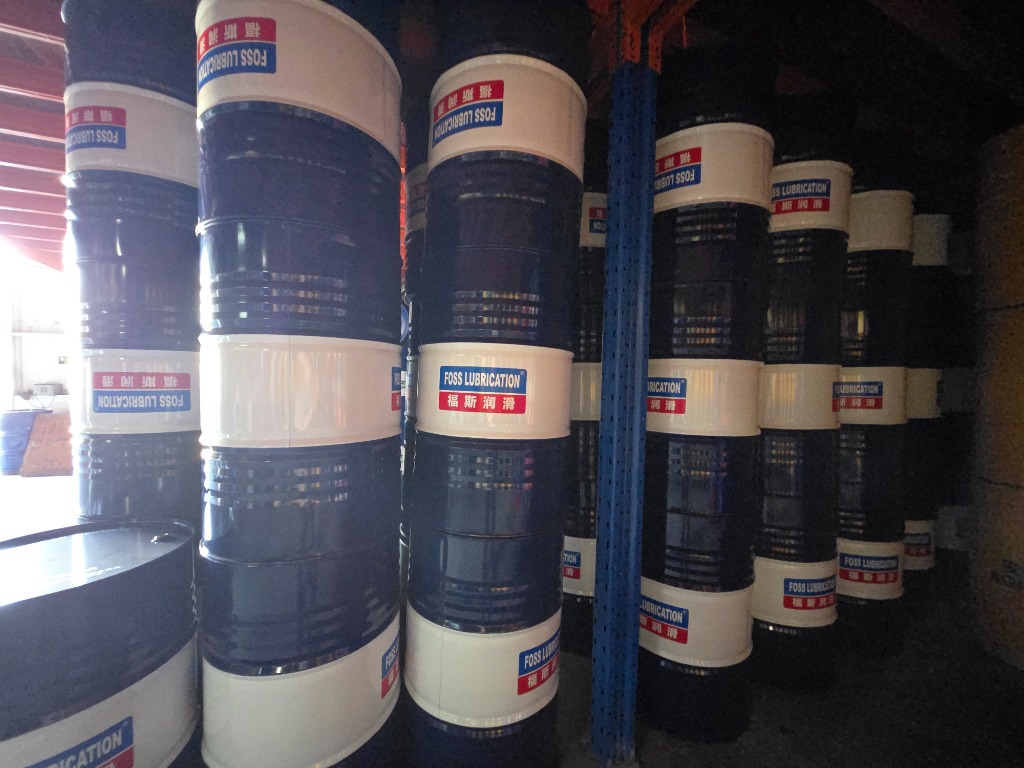
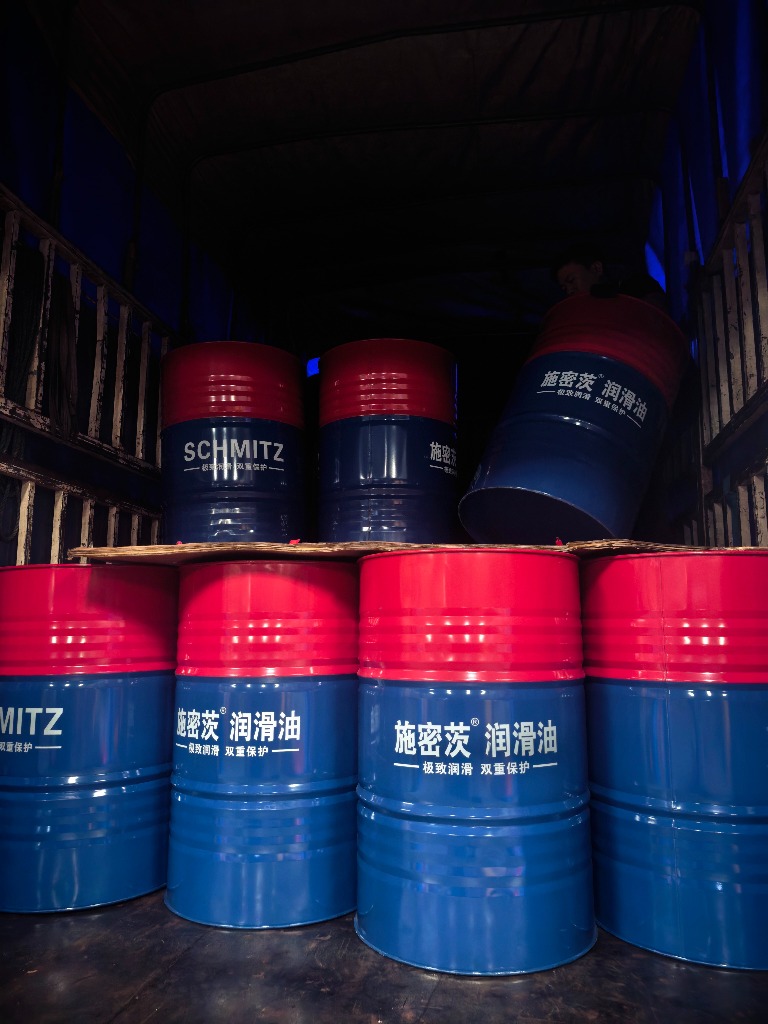
Beyond fluid formulations, the packaging medium itself represents a critical cost center for international export consignments. In accordance with international maritime regulations (IMDG Code) and industrial standards, FOSS Lubricants packages bulk export fluids in heavy-gauge UN-certified 1A1 tight-head steel drums (208-liter / 55-gallon nominal capacity) manufactured from high-grade cold-rolled SPCC sheet steel with a nominal thickness of 1.0mm (body and heads).
Over the past three weeks, steel drum manufacturers in East China have escalated drum quotations from $28.20 to $31.20 per drum, driven by:
- Raw Steel Coil Price Inflation: Domestic Chinese hot-rolled and cold-rolled steel coil (CRC) spot prices rebounded 4.8% following infrastructure stimulus announcements and stricter production emissions caps in northern steelmaking centers.
- Internal Epoxy-Phenolic Coating Surcharges: Specialty internal chemical-resistant lacquers—essential for preventing moisture rust and catalytic metal leaching in high-purity hydraulic and dielectric fluids—have risen 6.5% due to solvent resin price increases.
- Tri-Sure Closure & Nitrogen Purging Components: Galvanized zinc 2-inch and 3/4-inch bungs with Buna-N and EPDM elastomeric gaskets have faced minor component inflation of 3.2%.
Because one metric ton of hydraulic oil requires approximately 5.4 steel drums (each containing approximately 180–185 kg net product), a $3.00/drum packaging escalation adds approximately $16.20 per metric ton to finished export costs, or $0.62 per 208L drum unit.
9. Authoritative 3-Day Forward Export Price Trajectory (October 26 – October 28, 2026)
Synthesizing real-time feedstock costs, middle-distillate crack economics, additive indices, and packaging overhead, the FOSS Market Research Desk provides the following forward export pricing trajectory for major commercial product grades over the upcoming 72 hours. All prices are stated on a firm FOB Xiamen / Quanzhou Port basis, loaded into standard 20-foot export dry containers (80 x 208L steel drums per container, total net fluid volume 16,640 liters / approx. 14.8 metric tons).
10. Technical Specification & Quality Compliance Audit: DIN 51524-2 & ISO 11158 Standards
In a high-price raw material environment, inferior blenders frequently resort to unauthorized formula adulteration—substituting substandard reclaimed oils, under-dosing expensive anti-wear additive packages, or incorporating unrefined off-spec base cuts that compromise machine life. FOSS Lubricants enforces absolute transparency and uncompromising conformance to international engineering standards.
Every batch of FOSS Anti-Wear Hydraulic Fluid (L-HM series) is compounded exclusively from virgin hydrotreated API Group II paraffinic base stocks and premium multi-functional additive chemistry. Every production lot is sampled and tested in our in-house ISO 17025 accredited quality laboratory against the following rigid technical parameters:
11. Pragmatic Buyer Hedging & Procurement Directives for Q4 2026
Given the confluence of Brent crude testing $94/bbl, middle-distillate crack spreads incentivizing refiner UCO diversion, an unprecedented $245/MT Group II 150N/500N spread, and 84%+ Cape of Good Hope transit rerouting, passive spot purchasing guarantees compounding budget overruns. The FOSS Commercial Consulting Desk recommends four pragmatic hedging directives:
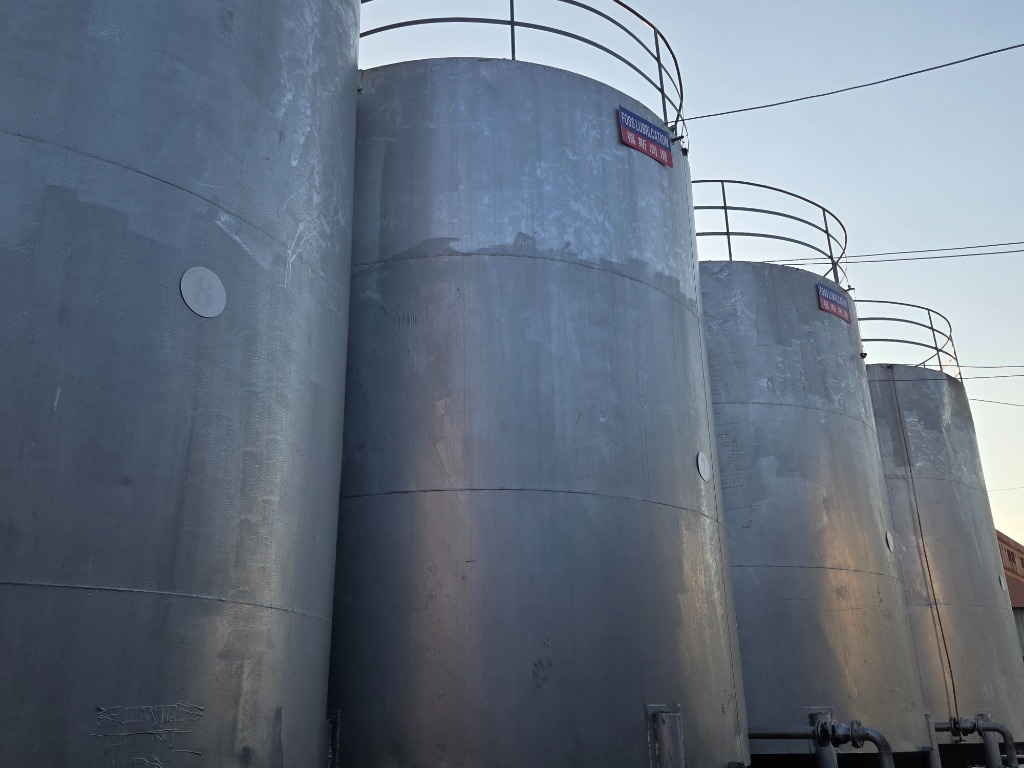
Bypass intermediate trading houses that operate on back-to-back spot exposure. Contract directly with major integrated blenders possessing physical bulk tankage (such as FOSS Quanzhou). Securing a quarterly allocation agreement locks in formula base index pricing and guarantees product dispatch dates regardless of spot refinery cut-offs.
Where machine operating parameters permit (e.g. standard factory industrial hydraulic systems operating below 75°C), work with FOSS technical chemists to evaluate Group II / Group I SN500 hybrid blending routes. This bridges the $245/MT neutral spread, generating up to $18 to $24/MT in formula cost relief while maintaining DIN 51524-2 performance.
With 208L steel drums reaching $31.20/drum ($16.20/MT packaging overhead), transition plant distribution and major fleet facilities to reusable 1000L Intermediate Bulk Containers (IBCs). This reduces container tare weight, maximizes container floor space utilization, and cuts packaging costs by up to $19.50 per metric ton.
In response to persistent 12 to 16-day Cape of Good Hope maritime transit delays and equipment repositioning bottlenecks, raise target inventory reserves from standard 21-day cushions to 45-day operational buffers. Placing forward firm orders 30 days ahead of scheduled manufacturing turnarounds ensures unhindered plant operation.
12. Conclusion & Factory Contact for Direct Spot & Term Orders
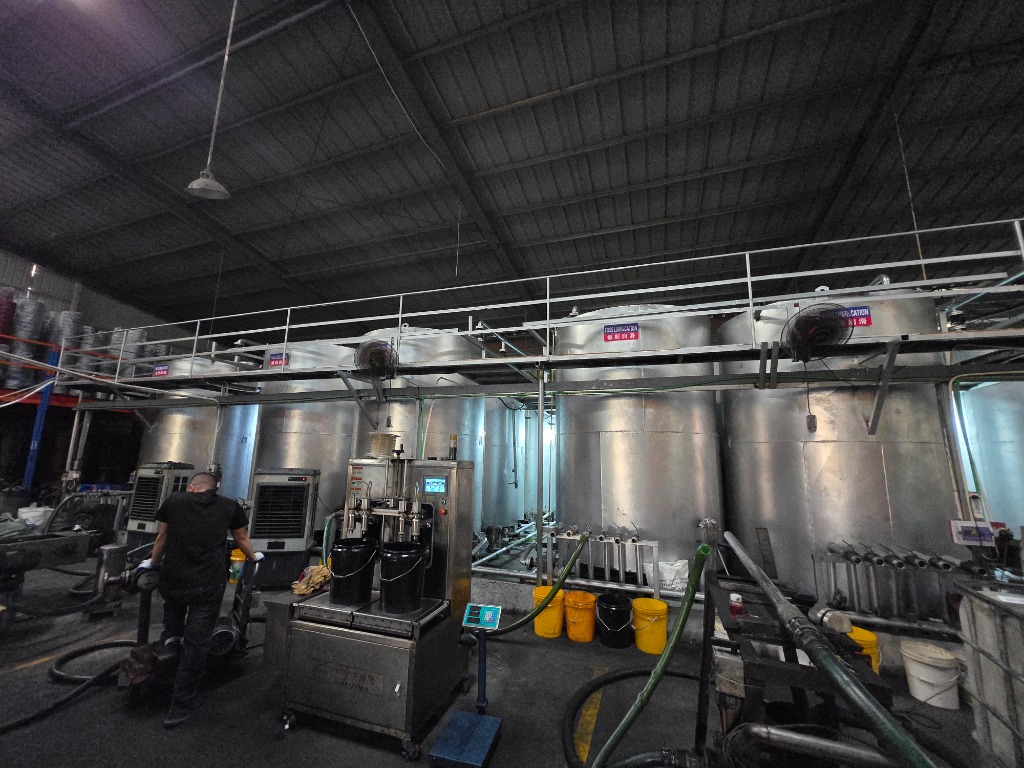
As energy futures challenge multi-month highs and the refining structural deficit widens the API Group II 500N premium to a historic $245/MT, international lubricant procurement requires rigorous technical discipline and direct factory partnerships. By sourcing directly from primary blenders equipped with automated blending infrastructure, certified testing laboratories, and deepwater bulk receiving facilities, industrial buyers secure both pricing transparency and uncompromising fluid cleanliness.
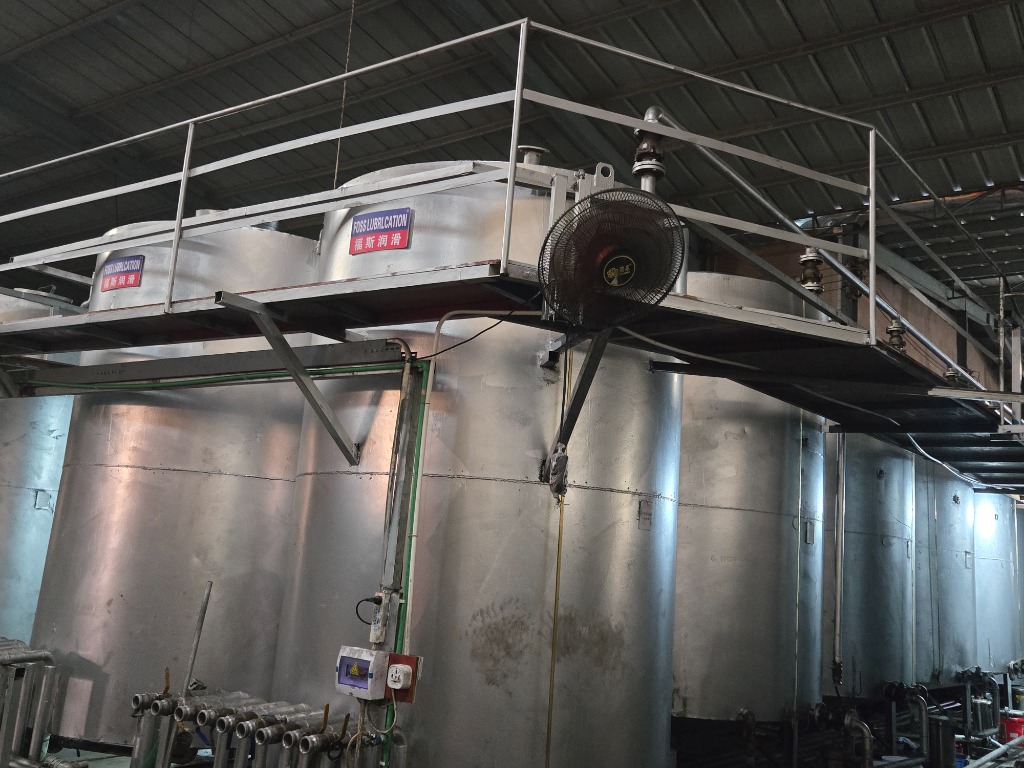
Quanzhou FOSS Lubrication Technology Co., Ltd. welcomes direct inquiries for full container load (FCL) export consignments, private-label OEM blending, and long-term supply contracts. Our engineering desk stands ready to furnish comprehensive ASTM laboratory test certificates (COA), customized packaging configurations (208L steel drums, 1000L IBCs, 18L/20L pails), and locked-in FOB Xiamen loading windows.
Contact our factory commercial desk directly for official FOB Xiamen / Quanzhou quotations, technical data sheets (TDS), safety data sheets (SDS), and custom toll-blending specifications. Fast dispatch within 7–10 business days.
Definitive 3-Day Lubricant & Base Oil Trend Forecast
Synthesized by the FOSS Quantitative Energy Modeling Desk based on active shipping line container bookings, regional tank farm draw-down rates, and prompt ICE Brent futures sentiment:
Brent crude futures establish firm technical support above $94.00/bbl, testing $94.20–$94.85/bbl; Northeast Asian refiners lift prompt Group II 500N spot offers toward $1,410–$1,425/MT as Singapore middle-distillate crack spreads consolidate at $27.40/bbl.
Sustained Bab el-Mandeb security corridor tensions and renewed Strait of Hormuz naval advisories elevate war-risk premiums; maritime bunker adjustment factors (BAF) and cold-rolled SPCC steel drum costs ($31.20/drum) push export quotations for DIN 51524-2 hydraulic oils toward $216.00/drum FOB Xiamen.
Acute feedstock diversion of hydrocracker unconverted oil (UCO) and an unprecedented $245/MT Group II 150N/500N spread trigger urgent pre-procurement runs by overseas mining operators and industrial distributors, locking in guaranteed Q4 export production slots.
5. Strategic Sourcing & Hedging Directives for Overseas Importers
For overseas procurement directors, fleet operators, and industrial distributors, market volatility represents both operational risk and competitive opportunity. We recommend the following three concrete actions for managing Q4 procurement:
Lock 60-Day Container Requirements
Secure firm proforma invoices (PI) with 30-day price validity. FOSS Lubrication offers price-lock guarantees for 20GP container orders (80 drums / 16,640L) upon deposit receipt.
Audit Laboratory CoA Verification
Demand full pre-shipment ASTM test parameters: kinematic viscosity at 40°C / 100°C, viscosity index ≥ 100, flash point ≥ 220°C, pour point ≤ -15°C, and zero moisture contamination.
FOSS Lubrication: Factory-Direct Precision Engineering
Operating out of Quanzhou, China, FOSS blends over 20,000 MT annually of ISO VG 32/46/68 anti-wear hydraulic oils, CK-4 heavy-duty engine oils, and industrial gear lubricants. Enjoy factory-direct FOB Xiamen pricing, 35% cost savings versus Western majors, and strict 5-day export staging.