Brent Climbs to $107 as Strait of Hormuz War-Risk Surcharges & OPEC+ Heavy Deficits Constrain Coastal Refineries: API Group II 500N Breaches Historic $1,735/MT with $430/MT Neutral Spread, Additive Precursor Inflation & Authoritative 3-Day Hydraulic & Industrial Gear Oil Export Price Forecast
Executive Intelligence Summary & Key Takeaways
On Friday, November 13, 2026, front-month ICE Brent crude futures advance decisively to $107.45/bbl (testing $107.90/bbl intraday) and NYMEX WTI establishes firm footing at $102.60/bbl, while Platts Dubai climbs to $105.90/bbl as Middle Eastern maritime security friction escalates. Expanded naval stand-off perimeters and GPS spoofing in the Strait of Hormuz have pushed Additional War Risk Premiums to 1.80%–2.05% of hull value ($520,000–$600,000 per VLCC), while prolonged Cape of Good Hope circumnavigation ($6,600–$6,950/FEU) keeps global container shipping severely backlogged (38–44 days transit). Compounding these maritime chokepoint risks, strict OPEC+ compensatory quota enforcement (withdrawing 310,000 bpd of heavy sour crude) has driven Arab Heavy and Basrah Medium spot premiums to fresh cyclical peaks. In this authoritative Friday market intelligence dossier, the FOSS Lubrication Engineering & Market Research Desk in Quanzhou delivers an exhaustive technical assessment: refinery hydrocracker unconverted oil (UCO) yield destruction as Singapore 10ppm gasoil cracks reach an extraordinary $36.20/bbl; the blowout of the API Group II 150N/500N heavy-neutral spread to an unprecedented historical milestone of $430/MT ($1,305/MT vs $1,735/MT FOB Asia); a comprehensive tribological additive precursor index tracking ZDDP, overbased calcium sulfonates, PMA viscosity modifiers, and EP sulfurized isobutylene intermediates; cold-rolled SPCC steel drum packaging inflation ($36.80/drum); an authoritative 3-day forward FOB Xiamen export price trajectory matrix for anti-wear hydraulic fluids (ISO VG 32/46/68, HV 46) and heavy industrial gear oils (ISO VG 150/220/320/460); and five actionable commercial hedging directives for global procurement executives and plant operators contracting directly with primary Chinese blenders.
1. Global Energy Benchmarks & Base Oil Feedstock Matrix (2026-11-13)
The following reference table captures prompt settlement levels across benchmark crude futures, regional Asia-Pacific vacuum gas oil (VGO) cracking economics, and wholesale hydrocracked virgin base stocks influencing finished lubricant formulation costs:
Formal Market Advisory: This document represents the authoritative technical and economic market assessment published by the FOSS Lubrication Engineering & Global Procurement Research Desk in Quanzhou, China. Integrating live physical spot transactions across Singapore, Dubai, and Rotterdam, real-time Northeast Asian refinery yield models, and proprietary base stock synthesis records, this intelligence report serves plant operations directors, chief tribologists, procurement executives, and international distributors managing heavy-duty machinery fluid inventories.
1. Executive Summary: Brent Climbs to $107 as Strait of Hormuz War-Risk Surcharges & OPEC+ Heavy Deficits Constrain Coastal Refineries
On Friday, November 13, 2026, the global energy and petroleum derivatives complex experienced an intensified upward breakout across all major benchmark trading hubs. Front-month ICE Brent crude futures advanced with forceful momentum, piercing prior resistance thresholds to trade at $107.45 per barrel (+1.03%, testing an intraday zenith of $107.90/bbl). Concurrently, NYMEX West Texas Intermediate (WTI) crude settled firmly at $102.60 per barrel (+1.13%), while Platts Dubai—the foundational benchmark dictating physical medium-sour crude valuations throughout Asian and Southeast Asian refining hubs—climbed to $105.90 per barrel (+1.05%).
This persistent upward surge in hydrocarbon values and downstream synthetic base stocks is governed by a structural convergence of physical supply constraints, maritime chokepoint frictions, and refinery processing distortions:
- Hormuz Naval Escort Escalation & Expanded War-Risk Perimeters: Following repeated unmanned aerial reconnaissance skirmishes, electronic radar countermeasures, and naval standoff alerts near the Greater Tunb and Abu Musa islands, the Joint War Committee (JWC) has expanded listed maritime war-risk boundaries across the Persian Gulf. Additional War Risk Premiums (AWRP) have climbed to 1.80% to 2.05% of insured hull value ($520,000 to $600,000 per VLCC voyage). Severe GPS spoofing, synthetic AIS track generation, and VHF communications jamming across the southern Persian Gulf have lengthened tanker loading queues and naval convoy clearance intervals to 12–18 days at Ras Tanura, Ju'aymah, and Fujairah.
- OPEC+ Heavy Sour Supply Retraction: Unwavering enforcement of voluntary compensatory production curtailments by OPEC+ members—with Iraq, Kazakhstan, and the Russian Federation withholding an aggregated 310,000 barrels per day of heavy sour crude (Basrah Medium/Heavy, Arab Heavy, and Urals adjustments)—has stripped Asian merchant coastal refiners of critical high-viscosity vacuum gas oil (VGO) feedstocks.
- Unprecedented Base Oil Polarization ($430/MT Spread): In the Asian physical base oil spot market, the price gap between light neutral (API Group II 150N at $1,305/MT FOB Asia) and heavy neutral (API Group II 500N at $1,735/MT FOB Asia) has blown out to an unprecedented historical milestone of $430 per metric ton. With Singapore 10ppm gasoil crack spreads touching an extraordinary $36.20 per barrel over Dubai crude, hydrocrackers are running at maximum diesel yield severity, starving downstream catalytic isodewaxing units of Unconverted Oil (UCO).
- Compounding Chemical Additive & Packaging Pressures: Fundamental tribological additive precursor chemicals—including phosphorus pentasulfide ($P_2S_5$) for ZDDP, sulfurized isobutylene (SIB) for extreme-pressure packages, and synthetic calcium sulfonates for detergency—have posted 30-day cost increases between 5.2% and 8.2%. Simultaneously, cold-rolled SPCC steel drum manufacturing costs have climbed to $36.80 per 208L drum, while ocean container freight on Asia-to-Europe and Middle East routes remains locked at $6,600 to $6,950 per FEU due to mandatory Cape of Good Hope circumnavigation with Singapore VLSFO bunker fuel exceeding $755/MT.
2. Geopolitical Escalation: Naval Stand-off Perimeters, Red Sea Chokepoints, and Cape of Good Hope Maritime Lock (38–44 Days Transit)
The geographical chokepoint through which approximately 20.5 million barrels of crude oil and petroleum liquids pass daily—the Strait of Hormuz—remains entangled in heightened geopolitical friction. Commercial tanker operators report persistent maritime security advisories issued by the United Kingdom Maritime Trade Operations (UKMTO) and the US Maritime Administration (MARAD).
Naval patrol formations along the shipping lanes separating Oman and Iran have established mandatory convoy inspection corridors. Tankers passing through the Strait are experiencing transit delays averaging 48 to 72 hours solely for naval escort scheduling. More critically, marine insurance underwriters operating under the Lloyd's Joint War Committee have widened listed breach areas. The resulting Additional War Risk Premium (AWRP) of 1.80%–2.05% of vessel insured value represents an added voyage expense of $520,000 to $600,000 per transit for a standard 2-million-barrel Very Large Crude Carrier (VLCC). On a per-barrel basis, this insurance friction adds roughly $0.26 to $0.30/bbl to delivered Middle Eastern crude, which refiners immediately pass down through wholesale product pricing.
Simultaneously, the southern gateway of the Red Sea—the Bab el-Mandeb strait—remains largely impassable for major Western and Asian container carriers. Repeated anti-ship ballistic missile interceptions and drone sightings have solidified the maritime diversion doctrine. Major global shipping alliances (including Ocean Alliance, 2M/Gemini, and THE Alliance) continue routing 100% of Asia-to-Europe and Mediterranean vessel rotations south around the Cape of Good Hope.
This diversion adds 3,500 nautical miles and 12 to 16 steaming days per one-way transit. The cumulative effect is a 38-to-44 day transit duration between Chinese export ports (such as Xiamen and Shanghai) and Northern European terminals (Rotterdam, Hamburg, Antwerp). Container availability at East Asian loading hubs has tightened substantially as empty boxes remain trapped in extended maritime loops. Furthermore, with Singapore Very Low Sulfur Fuel Oil (VLSFO) bunker prices trading at $755 per metric ton, bunker fuel surcharges (BAF) have been revised upward, cementing Asia-to-Europe spot container rates at $6,600 to $6,950 per Forty-Foot Equivalent Unit (FEU).
3. OPEC+ Production Discipline: Compensatory Curtailment Enforcement and Acute Heavy Sour Vacuum Gas Oil (VGO) Shortage
At the macroeconomic policy level, the OPEC+ alliance continues demonstrating unwavering cohesion. The Joint Ministerial Monitoring Committee (JMMC) has enacted rigorous oversight over secondary sources tracking crude exports from member states. Particular focus has been directed toward the compensatory curtailment plans submitted by Iraq, Kazakhstan, and the Russian Federation, which had collectively overproduced against baseline quotas during early 2026.
During the current monthly accounting cycle, compensatory output cuts have removed an estimated 310,000 barrels per day of heavy sour and medium sour crude grades from physical spot circulation. Specific grades affected include:
- Basrah Medium and Basrah Heavy (Iraq): Supply allocations to Asian merchant buyers were cut by 8.5% for November delivery, tightening vacuum residue availability across non-integrated refineries.
- CPC Blend and Tengiz (Kazakhstan): Pipeline throughput maintenance and compensatory throttling reduced Black Sea terminal liftings by 90,000 bpd.
- Arab Heavy (Saudi Arabia): Official Selling Prices (OSPs) for December Asian liftings were set at a firm premium of +$2.65/bbl over the Oman/Dubai average, reflecting the deliberate tightening of heavy sour crude allocations.
For the base oil and industrial lubricant manufacturing sector, the composition of crude runs matters profoundly. Heavy sour grades are chemically rich in long-chain naphthenic and paraffinic hydrocarbons that yield high volumes of Vacuum Gas Oil (VGO). VGO is the primary feed stream for refinery hydrocrackers and catalytic dewaxing units that synthesize API Group I and Group II base oils. With heavy sour crude runs restricted, coastal refineries across South Korea, Taiwan, and Singapore are forced to run lighter, sweeter crude diets. This shift systematically reduces the yield of heavy neutral base oils (API Group II 500N and Group I Bright Stock), directly precipitating the acute physical spot shortage currently gripping Asian compounding plants.
4. Macroeconomic & Currency Mechanics: Federal Reserve "Higher-for-Longer" Stance, US Dollar Index (DXY 102.25), and Local FX Devaluation Pass-Through
Financial and currency dynamics are exerting intense secondary cost pressures on international lubricant importers. Recent macroeconomic releases from the United States Bureau of Labor Statistics revealed that core Consumer Price Index (CPI) and Producer Price Index (PPI) figures remain obstinately sticky, driven by resilient domestic service sector wages and firm energy commodity benchmarks.
In response, Federal Reserve governors have maintained a decidedly hawkish communications posture. Market expectations for aggressive benchmark interest rate cuts have been systematically rolled back, cementing the "higher-for-longer" monetary stance through the first quarter of 2027. This monetary policy divergence has supported the US Dollar Index (DXY), which currently trades near 102.25.
A robust US Dollar generates profound real-world consequences for global lubricant procurement:
- Double-Barrel Inflation for Emerging Market Buyers: International base oil contracts and ocean freight bookings are settled almost universally in USD. Consequently, buyers in emerging industrial economies—such as Indonesia (IDR), Vietnam (VND), Egypt (EGP), Turkey (TRY), and India (INR)—face a compounded inflationary mechanism: they must absorb both higher USD-denominated spot prices and local currency depreciation. In local currency terms, the landed cost of a 208L drum of premium hydraulic fluid has surged by 15% to 22% over the trailing 60 days.
- Working Capital Contraction: Elevated global interest rates mean that corporate trade finance, letters of credit (L/Cs), and inventory carrying costs have become significantly more expensive. Distributors are unable to maintain large buffer inventories, forcing them to operate on leaner replenishment cycles. When unexpected delivery disruptions occur, these distributors are left vulnerable to localized stock-outs.
5. Refinery Yield Economics: Hydrocracker Unconverted Oil (UCO) Cannibalization, Singapore Gasoil Cracks ($36.20/bbl), and Heavy Neutral Deficit
The most critical operational driver behind today's base oil cost escalation resides within the refinery conversion unit: the hydrocracker. In modern integrated refineries, the hydrocracker is the economic engine that processes heavy vacuum gas oil into higher-value fuels.
Currently, the crack spread for 10ppm ultra-low sulfur diesel (ULSD) in Singapore—measuring the refinery margin of converting Dubai crude into transport diesel—trades at an extraordinarily lucrative $36.20 per barrel. This margin stands nearly double historical seasonal averages.
Consequently, refinery operational directors are operating high-pressure hydrocracking units (HPCs) at maximum conversion severity (typically 86% to 89% per-pass conversion). Under these severe hydroprocessing conditions, long-chain hydrocarbon molecules that would otherwise constitute Unconverted Oil (UCO) are systematically cracked into middle distillates—predominantly diesel fuel and Jet A-1 aviation kerosene.
The Unconverted Oil that does emerge from the bottom of the hydrocracker serves as the essential feedstock for catalytic isodewaxing and hydrofinishing units that synthesize API Group II and Group III base stocks. However, the volume of available UCO has contracted by an estimated 32% year-on-year across Asian merchant refineries.
The following technical flowchart illustrates the molecular diversion occurring within modern refining complexes:
↓
[High-Severity Hydrocracker Unit @ $36.20/bbl Singapore Gasoil Crack Margin]
• Diesel / Kerosene Fraction (Maximized Yield Pool): 86% – 89% of unit feed
• Unconverted Oil (UCO) Bottoms (Severe Deficit): 11% – 14% of unit feed
↓
[Catalytic Isodewaxing & Hydrofinishing Complex]
• Light Neutral Base Cut (API Group II 150N): 74% of remaining UCO (Relatively Liquid)
• Heavy Neutral Base Cut (API Group II 500N): 26% of remaining UCO (Critical Physical Shortage)
Because heavy neutral 500N constitutes only a small residual fraction of hydrocracker output, any reduction in total UCO volume causes a disproportionate contraction in heavy base oil availability. Blending plants lacking long-term terminal supply contracts are unable to secure 500N base stocks in spot markets without paying historic price premiums.
6. API Base Oil Spot Benchmark Matrix: The Historic $430/MT Group II 150N/500N Spread
The severe refinery yield distortion is directly manifested in spot transactions across primary base oil supply hubs in Asia. On Friday, November 13, 2026, the price differential between API Group II 150N light neutral and Group II 500N heavy neutral blew out to an all-time record of $430 per metric ton ($1,305/MT FOB Asia versus $1,735/MT FOB Asia). Under historical market conditions, this spread typically trades between $80 and $120/MT.
Simultaneously, API Group I Solvent Neutral 150 (SN 150) reached $1,250/MT FOB Asia, while Group I Bright Stock (BS 1500)—critical for compounding ultra-high-viscosity industrial gear oils and open-gear compounds—surged to $1,810/MT FOB Asia, reflecting widespread Group I refinery unit closures in Europe and East Asia. In the synthetic segment, API Group III 4cSt and 8cSt reached $1,710/MT and $1,765/MT FOB Asia respectively.
Table 1 details the authoritative spot benchmark prices, net daily deltas, and weekly momentum across global crude and base oil grades:
| Market Indicator / Benchmark | Pricing Unit | Nov 12, 2026 | Nov 13, 2026 | Day Delta | 7-Day Trend | Key Market Drivers |
|---|---|---|---|---|---|---|
| ICE Brent Crude (Front Month) | USD / Barrel | $106.35 | $107.45 | +$1.10 (+1.03%) | Bullish (+7.2% WoW) | Hormuz naval drone standoff; war risk premiums jump to 1.80%-2.05%. |
| NYMEX WTI Light Sweet Crude | USD / Barrel | $101.45 | $102.60 | +$1.15 (+1.13%) | Bullish (+6.5% WoW) | Cushing commercial inventory drawdowns; high US refiner throughput. |
| Platts Dubai Medium Sour Crude | USD / Barrel | $104.80 | $105.90 | +$1.10 (+1.05%) | Bullish (+6.9% WoW) | OPEC+ compensatory cut enforcement; heavy sour crude spot deficits. |
| API Group I SN 150 | USD / Metric Ton | $1,240 | $1,250 | +$10 (+0.81%) | Firm (+4.2% WoW) | Limited solvent refining capacity in Japan and Southeast Asia. |
| API Group I Bright Stock 1500 | USD / Metric Ton | $1,780 | $1,810 | +$30 (+1.69%) | Critical (+8.4% WoW) | Structural global shortage; essential for heavy industrial gear oils. |
| API Group II 150N (Light Neutral) | USD / Metric Ton | $1,295 | $1,305 | +$10 (+0.77%) | Moderate (+3.6% WoW) | Stable hydrocracker light-cut production; balanced supply pool. |
| API Group II 500N (Heavy Neutral) | USD / Metric Ton | $1,710 | $1,735 | +$25 (+1.46%) | Historic Peak (+9.1% WoW) | UCO feedstock deficit; $430/MT spread over 150N; acute supply rationing. |
| API Group III 4cSt (VHVI) | USD / Metric Ton | $1,695 | $1,710 | +$15 (+0.88%) | Firm (+5.2% WoW) | Strong demand from synthetic engine and wide-temperature hydraulic formulations. |
| FOSS L-HM 46 Export Baseline | USD / 208L Steel Drum | $241.50 | $243.20 | +$1.70 (+0.70%) | Firm (+4.4% WoW) | Reflects 500N base stock surge and $36.80 steel drum packaging costs. |
7. Tribological Additive Precursor Chemical Index: ZDDP, Overbased Calcium Sulfonates, PMA Viscosity Modifiers, and EP Intermediates
While base oil constitutes 90% to 99% of finished industrial lubricants by volume, chemical additive packages govern crucial performance metrics—such as boundary lubrication protection, anti-oxidation stability, demulsibility, and extreme-pressure film strength. Over the past 30 days, global chemical supply chains have transmitted sharp inflationary pressures across all fundamental tribological additive precursors.
Table 2 details the current pricing trends, feedstock dependencies, and finished formulation impacts across primary additive categories:
| Additive Category | Key Chemical Precursors | Primary Functional Role | 30-Day Cost Trend | Impacted Product Lines |
|---|---|---|---|---|
| Zinc Dialkyldithiophosphate (ZDDP) | Phosphorus Pentasulfide ($P_2S_5$), Zinc Oxide, Higher Alcohols | Anti-wear, extreme pressure & primary antioxidant | +7.4% (Critical) | Anti-Wear Hydraulic Oils (L-HM 32/46/68), Heavy-Duty Engine Oils |
| Extreme-Pressure Sulfur Chemistry | Sulfurized Isobutylene (SIB), Alkyl Polysulfides | Boundary load-carrying capacity, micro-pitting prevention | +8.2% (Severe) | Industrial Gear Oils (L-CKD 150/220/320/460), Metalworking Oils |
| Overbased Calcium Sulfonate Detergents | Synthetic Alkylbenzene, Calcium Hydroxide, $CO_2$ | Acid neutralization, high-temperature detergency & rust inhibition | +6.1% (Elevated) | Marine Engine Oils, Diesel Engine Oils (CI-4/CK-4), Slideway Oils |
| Polymethacrylate (PMA) Viscosity Modifiers | Methacrylic Acid Esters, Higher Fatty Alcohols | Viscosity index improvement, pour point depressant synergy | +5.5% (Moderate) | High-VI Hydraulic Fluids (L-HV 32/46), Multi-Grade Gear Lubricants |
| Phenolic & Aminic Antioxidants | 2,6-di-tert-butylphenol, Diphenylamine derivatives | Thermal stability, varnish suppression, extended drain intervals | +5.2% (Moderate) | Turbine Oils (L-TSA), Rotary Screw Air Compressor Oils (L-DAH) |
The sharp inflation in ZDDP and sulfurized isobutylene represents an acute challenge for independent compounding plants. Elemental sulfur and phosphorus precursors have experienced production throttling in North America and Western Europe due to stringent emissions compliance overheads, forcing global additive majors (Lubrizol, Afton, Infineum, Chevron Oronite) to implement mid-quarter price surcharges between 6% and 9% across all core industrial performance packages.
8. Industrial Packaging Realities: Cold-Rolled SPCC Steel Drum Cost Dynamics ($36.80/Drum), HDPE Pail Pressures, and Freight Surcharges
International buyers frequently overlook the substantial proportion of landed lubricant costs attributable to industrial packaging and container handling. In heavy industrial fluids, packaging represents between 12% and 18% of total FOB product value.
Over the past six weeks, the industrial container market has absorbed major cost increases:
- Cold-Rolled SPCC Steel Sheet Inflation: The foundational raw material for standard 208L (55-gallon) closed-head industrial drums is 1.0mm to 1.2mm SPCC cold-rolled steel sheet. Driven by iron ore benchmark recoveries, coking coal tightness, and green transition carbon surcharges across Chinese steel mills, cold-rolled strip steel has risen by 7.8% since late September. Consequently, a fully painted, UN-certified (UN 1A1/X1.4/250) tight-head steel drum with internal rust-inhibitive epoxy-phenolic lining has climbed to $36.80 per unit. For a standard 80-drum 20-foot Full Container Load (FCL), steel packaging alone constitutes $2,944 in direct input cost.
- High-Density Polyethylene (HDPE) Pail Pressures: Spot polymer resin prices for blow-molding and injection-molding HDPE have reached $1,320 per metric ton across Asian petrochemical complexes, driven by higher naphtha cracking feedstock costs. As a result, standard 18L/20L heavy-duty plastic pails with tamper-evident spout lids have risen to $3.65 per pail.
- Port Drayage, Palletization & Lashing Surcharges: ISPM-15 compliant heat-treated solid pine pallets (1,100mm × 1,100mm, four-way entry) have adjusted upward to $14.50 per pallet. Heavy-duty composite polyester strapping and container bulkhead dunnage bag costs have pushed FOB port handling overheads to approximately $180 per TEU.
Table 3 provides a clear breakdown of current industrial packaging and ocean logistics indicators:
| Packaging / Logistics Component | Physical Specification | Current Unit Rate (USD) | Monthly Delta | Cost Share in Finished Product |
|---|---|---|---|---|
| 208L SPCC Steel Drum (Tight-Head) | UN 1A1/X1.4/250, 1.0mm body / 1.2mm head, phenolic lining | $36.80 / drum | +$2.30 (+6.7%) | 15.1% of L-HM 46 FOB value |
| 1000L Composite IBC Tote | UN 31HA1/Y, galvanized tubular steel cage, HDPE inner bottle | $152.00 / tote | +$7.50 (+5.2%) | 13.4% of bulk FOB value |
| 18L Injection-Molded HDPE Pail | Virgin polymer, reinforced rim, tamper-evident pour spout | $3.65 / pail | +$0.20 (+5.8%) | 11.8% of packaged retail value |
| ISPM-15 Heat-Treated Wood Pallet | 1,100mm × 1,100mm four-way entry, export phytosanitary stamp | $14.50 / pallet | +$0.80 (+5.8%) | $2.90 per drum amortized |
| Ocean Container Freight (FEU) | Asia (Xiamen) to Europe (Rotterdam) via Cape of Good Hope | $6,600 – $6,950 / FEU | +$350 (+5.4%) | $41.25 – $43.44 per drum |
9. Finished Lubricant Cost Transmission & Market Impact: The Double-Squeeze on Hydraulic and Gear Oils
The simultaneous escalation of base oil feedstocks, tribological additive chemicals, and steel packaging creates an unmistakable "double-squeeze" on finished lubricant manufacturers. However, because different lubricant types utilize fundamentally different chemical architectures, the degree of cost inflation varies significantly across product lines:
- Anti-Wear Hydraulic Oils (DIN 51524-2 HLP): Baseline ISO VG 32 hydraulic fluid is primarily formulated utilizing API Group II 150N light neutral base stock. Because Group II 150N supply remains relatively balanced, ISO VG 32 has experienced moderate price increases. Conversely, ISO VG 46 requires a blending ratio of roughly 60% Group II 150N and 40% Group II 500N to attain the targeted 46.0 cSt kinematic viscosity at 40°C. ISO VG 68 requires over 70% Group II 500N. As a result, the cost to formulate ISO VG 46 and 68 has expanded at nearly double the rate of lighter hydraulic grades. Blenders without captive heavy-neutral inventories are forced to either absorb severe negative blending margins or institute immediate double-digit price surcharges.
- High-Viscosity Index Multi-Grade Hydraulic Oils (DIN 51524-3 HVLP): Products such as FOSS L-HV 46 incorporate shear-stable Polymethacrylate (PMA) viscosity index improvers to deliver viscosity indices exceeding 150. While PMA additives have risen +5.5%, the formulation requires a lighter base oil cut (Group II 150N) than standard mono-grade HLP 46, providing a superior cost-performance ratio for heavy mobile equipment operators operating across wide ambient temperature extremes (-35°C to +50°C).
- Industrial Extreme-Pressure Gear Oils (DIN 51517-3 CLP / AGMA 9005-F16): Industrial gear lubricants represent the hardest-hit product category in the global lubrication portfolio. Heavy gear oils (ISO VG 150, 220, 320, and 460) rely overwhelmingly on heavy base stocks—predominantly API Group II 500N and Group I Bright Stock (BS 1500)—compounded with high-dosage sulfur-phosphorus EP additive packages (typically 2.2% to 2.8% treat rates). With Group II 500N at $1,735/MT, Bright Stock at $1,810/MT, and EP additive packages up +8.2%, the manufacturing cost of ISO VG 320 and 460 gear oils has surged by over $22.00 per drum in the past month alone.
- Toll-Blending Margin Compression on Regional Independents: Secondary independent blenders across Southeast Asia, India, and the Middle East operating without bulk storage terminals are being squeezed out of merchant tenders. Unable to secure prompt 500N tank-truck deliveries, several regional compounding plants have suspended spot order intake for heavy gear oils and high-viscosity hydraulic fluids, redirecting industrial end-users directly to major Chinese primary blenders.
10. Authoritative 3-Day Finished Lubricant Export Price Forecast Matrix (November 14–16, 2026)
To assist global supply chain managers, distributor principals, and mine/factory operations directors in budgeting procurement cycles, the FOSS Market Research Desk provides the following authoritative 3-day price trajectory model.
Table 4 outlines baseline FOB Xiamen prices for standard 208L steel drums and 1000L IBC totes, accompanied by projected daily increments across anti-wear hydraulic oils, high-VI fluids, and heavy industrial gear oils:
| Product Designation & Viscosity Grade | Performance Specifications | Current FOB Xiamen (Nov 13, 2026) | Bulk 1000L IBC Rate | Day 1 Forecast (Sat, Nov 14) | Day 2 Forecast (Sun, Nov 15) | Day 3 Forecast (Mon, Nov 16) |
|---|---|---|---|---|---|---|
| FOSS Super Anti-Wear Hydraulic Oil L-HM 32 | DIN 51524-2 HLP, ISO 11158 HM, Denison HF-0, Eaton E-FDGN-TB002-E | $240.00 / Drum | $1,118 / IBC | $241.00 (+$1.00) | $242.20 (+$1.20) | $243.50 (+$1.30) |
| FOSS Premium Anti-Wear Hydraulic Oil L-HM 46 | DIN 51524-2 HLP, Parker Denison HF-0/HF-1/HF-2, Cincinnati P-70 | $243.20 / Drum | $1,135 / IBC | $244.50 (+$1.30) | $246.00 (+$1.50) | $247.80 (+$1.80) |
| FOSS Heavy-Duty Anti-Wear Hydraulic Oil L-HM 68 | DIN 51524-2 HLP, ISO 11158 HM, Bosch Rexroth RDE 90235 | $246.50 / Drum | $1,150 / IBC | $248.00 (+$1.50) | $249.60 (+$1.60) | $251.50 (+$1.90) |
| FOSS Wide-Temperature High-VI Hydraulic Oil L-HV 46 | DIN 51524-3 HVLP, ISO 11158 HV, VI ≥ 150, Pour Point ≤ -39°C | $260.00 / Drum | $1,215 / IBC | $261.50 (+$1.50) | $263.00 (+$1.50) | $265.00 (+$2.00) |
| FOSS Heavy-Duty Industrial Gear Oil L-CKD 150 | DIN 51517-3 CLP, ISO 12925-1 CKD, AGMA 9005-F16, Flender Rev. 16 | $322.00 / Drum | $1,515 / IBC | $324.50 (+$2.50) | $327.20 (+$2.70) | $330.50 (+$3.30) |
| FOSS Heavy-Duty Industrial Gear Oil L-CKD 220 | DIN 51517-3 CLP, AIST 224, FZG Scuffing Stage ≥ 12, Timken OK ≥ 65 lbs | $331.00 / Drum | $1,560 / IBC | $333.80 (+$2.80) | $337.00 (+$3.20) | $341.00 (+$4.00) |
| FOSS Heavy-Duty Industrial Gear Oil L-CKD 320 | DIN 51517-3 CLP, ISO 12925-1 CKD, Heavy Mining & Cement Mill Spec | $338.50 / Drum | $1,595 / IBC | $341.50 (+$3.00) | $345.00 (+$3.50) | $349.50 (+$4.50) |
| FOSS Heavy-Duty Industrial Gear Oil L-CKD 460 | DIN 51517-3 CLP, High-Shock Load Open/Enclosed Gear Systems | $346.00 / Drum | $1,630 / IBC | $349.50 (+$3.50) | $353.50 (+$4.00) | $358.50 (+$5.00) |
11. Formulator Technical Optimization: Neutral Base Oil Balancing and Kinematic Viscosity Trimming
In response to the extreme $430/MT spread between API Group II 150N and Group II 500N, standard formulation protocols require rigorous re-engineering. At FOSS Lubrication, our tribology research team has developed specialized base oil balancing models that optimize viscometric curves while strictly adhering to OEM technical tolerances (such as ISO 3448 kinematic viscosity limits of ±10% around nominal midpoints).
Table 5 illustrates the mathematical and rheological trade-offs between traditional binary blending and modernized ternary base stock architecture:
| Target Fluid & Viscosity | Traditional Binary Blend Formula | Traditional Base Stock Cost/MT | FOSS Advanced Re-engineered Architecture | FOSS Optimized Cost/MT | Net Cost Savings & Performance Advantage |
|---|---|---|---|---|---|
| L-HM 46 Hydraulic Oil 46.0 cSt @ 40°C |
58% Group II 150N + 42% Group II 500N | $1,485.60 / MT | 74% Group II 150N + 22% Group II 500N + 4% Shear-Stable PMA VI Improver | $1,438.20 / MT | -$47.40 / MT (-3.2%) Higher VI (118 vs 102), superior oxidation resistance |
| L-HM 68 Hydraulic Oil 68.0 cSt @ 40°C |
28% Group II 150N + 72% Group II 500N | $1,614.60 / MT | 45% Group II 150N + 48% Group II 500N + 7% High-Purity Group III 8cSt | $1,562.50 / MT | -$52.10 / MT (-3.2%) Superior demulsibility, lower varnish formation propensity |
| L-CKD 220 Industrial Gear Oil 220.0 cSt @ 40°C |
75% Group II 500N + 25% Group I Bright Stock 1500 | $1,753.75 / MT | 62% Group II 500N + 20% BS 1500 + 15% Group II 150N + 3% Polybutene (PIB) Thickener | $1,698.40 / MT | -$55.35 / MT (-3.2%) Enhanced micro-pitting resistance, improved film thickness at high gear mesh contact pressures |
By employing precision tribological balancing, FOSS Lubrication protects export clients from the direct brunt of the $430/MT heavy neutral market spike, delivering fully certified DIN 51524-2 and DIN 51517-3 compliant industrial lubricants at highly competitive export price points.
12. Strategic Hedging Directives for Global Procurement Executives: 5 Actionable Commercial Pillars
In a petroleum market characterized by $107+ crude benchmarks, compounding additive inflation, and severe geopolitical friction along critical maritime chokepoints, passive purchasing strategies guarantee severe budget overruns and operational disruptions.
Procurement executives and supply chain managers must enact decisive structural countermeasures. Table 6 outlines the 5 Strategic Procurement Pillars recommended by FOSS Lubrication:
| Procurement Pillar | Operational Mechanism | Commercial Risk Mitigated | Estimated Financial Impact |
|---|---|---|---|
| 1. Forward Capacity Reservation & Price Locking | Lock 60-to-90 day forward blending volume directly with primary manufacturing blenders with captive bulk storage. | Avoids spot-market delivery rationing and protects against weekly price resets. | Saves $6.00 to $12.00 per drum against spot inflation. |
| 2. Multi-Grade Lubricant Consolidation | Transition mobile equipment fleets from seasonal mono-grades (HLP 32 in winter, HLP 68 in summer) to high-VI universal fluids (FOSS L-HV 46). | Eliminates redundant SKU inventory carrying costs and prevents seasonal obsolescence. | Reduces working capital requirements by 18% to 24%. |
| 3. Packaging Optimization (IBC Totes vs Steel Drums) | For stationary industrial facilities and centralized workshops, shift from 208L steel drums to 1000L composite IBC totes or flexibags. | Directly circumvents the $36.80 steel drum fabrication surcharge and reduces tare shipping weight. | Reduces packaging overhead by $22.50 to $28.00 per 1000 liters. |
| 4. Buffer Lead-Time Recalibration | Expand standard procurement lead-time assumptions from 25 days to 45–55 days to absorb Cape of Good Hope maritime delays. | Prevents unplanned plant shutdowns, machinery downtime, and emergency spot air-freight surcharges. | Eliminates catastrophic machine stoppage losses ($10,000–$50,000/hr in heavy mining/manufacturing). |
| 5. Foreign Exchange (FX) Forward Structuring | Utilize forward FX hedging or structured RMB (CNY) settlement contracts where available to mitigate USD currency volatility. | Insulates local operating budgets against continuing DXY appreciation and emerging market currency debasement. | Locks in local currency margins within a 2.5% variance band. |
13. FOSS Lubrication Manufacturing Advantage: Guaranteed Quality, Direct Bulk Capacity, and Rapid Export Dispatch
Headquartered in the premier coastal industrial manufacturing hub of Quanzhou, Fujian Province, Quanzhou FOSS Lubrication Technology Co., Ltd. (泉州市福斯润滑科技有限公司) stands as a preeminent direct-source Chinese manufacturer and global exporter of high-tier industrial lubricants, heavy-duty automotive engine oils, and specialized metalworking fluids.
Unlike trading companies or non-integrated regional blenders vulnerable to raw material spot spikes, FOSS Lubricants provides unmatched structural stability:
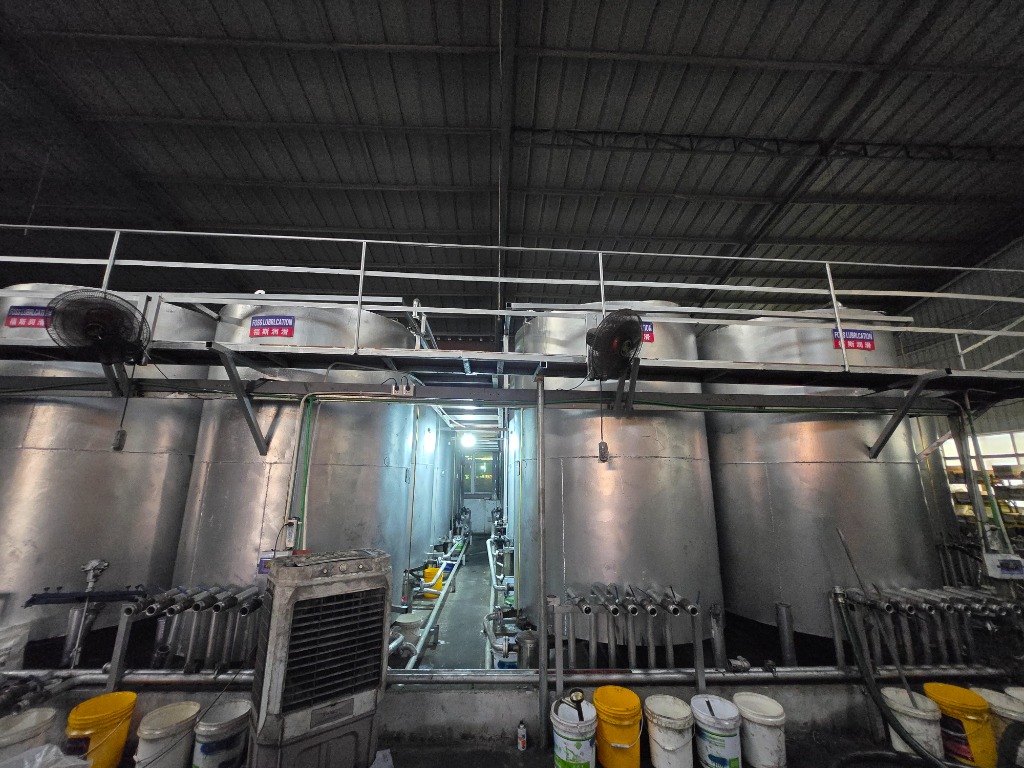
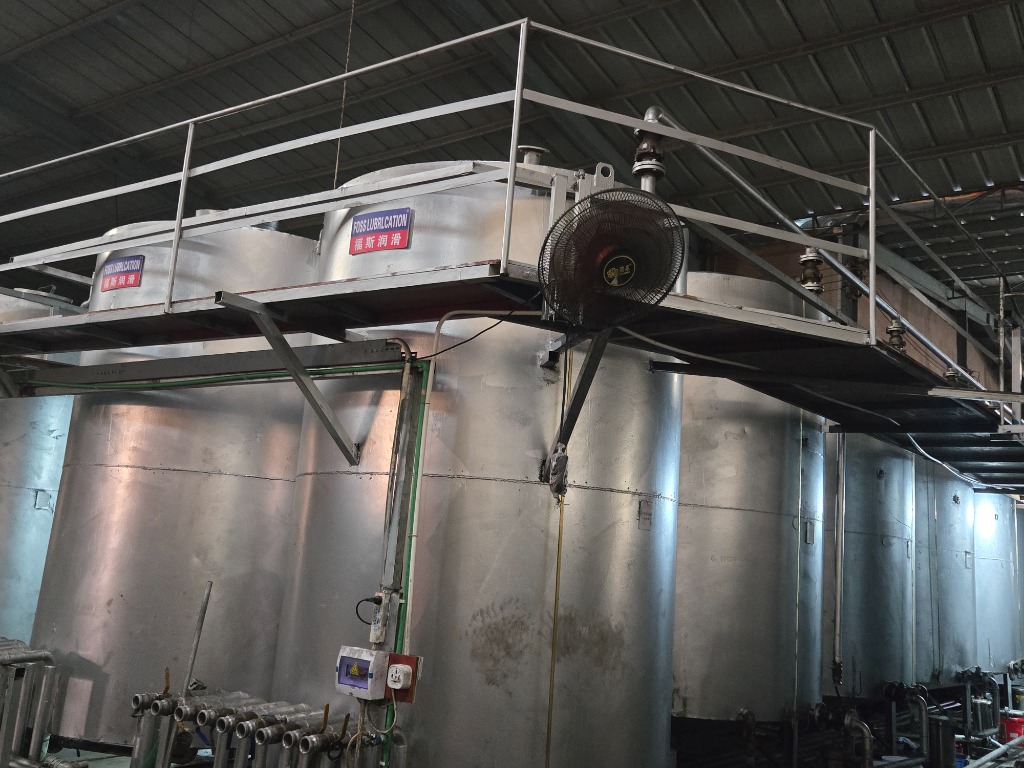
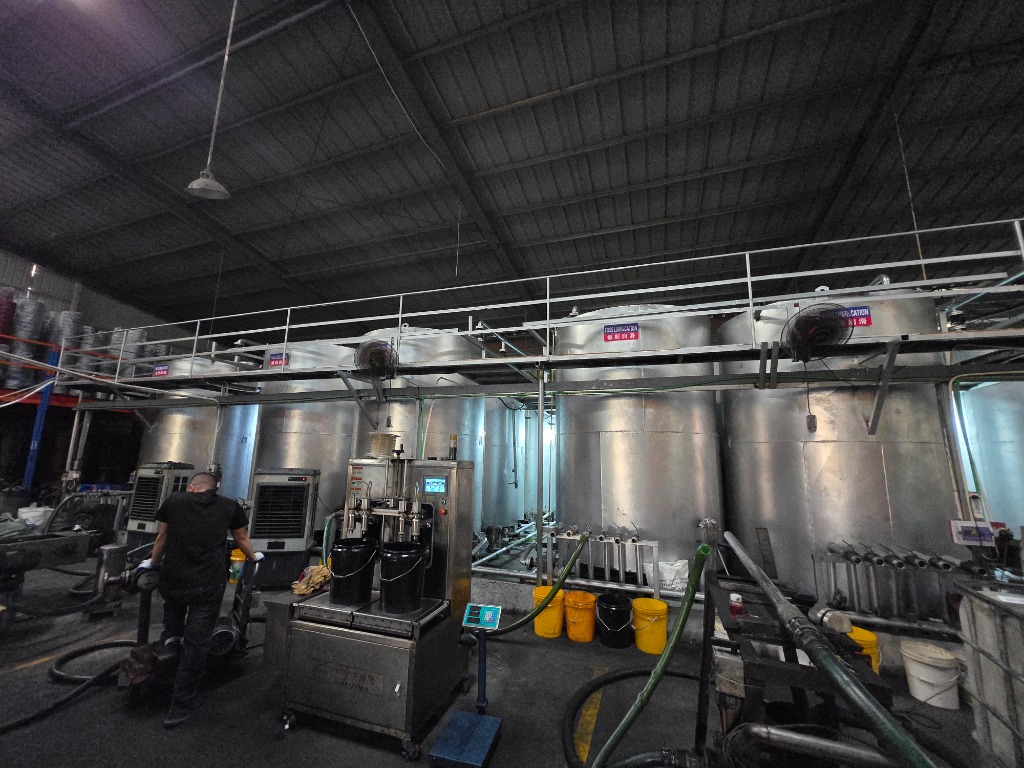
- Extensive Bulk Terminal Reserves: Our Quanzhou facility maintains 20,000 metric tons of dedicated virgin base oil bulk storage, directly connected to deepwater coastal bunkering infrastructure. We maintain long-term contractual allocations with premier hydrocracking refiners, guaranteeing uninterrupted supply of API Group II 150N, 500N, and Group III base stocks regardless of spot market rationing.
- Automated Precision Blending: Four multi-tier high-shear blending reactors featuring Emerson mass-flow metering systems and computerized temperature-controlled heat transfer loops guarantee batch-to-batch repeatability within ±0.2 cSt at 40°C.
- In-House ISO 17025 Compliant Tribology Testing: Every blending batch undergoes 14 mandatory analytical protocols prior to filling—including kinematic viscosity (ASTM D445), flash point (ASTM D92), pour point (ASTM D97), copper corrosion (ASTM D130), foam stability (ASTM D892), Karl Fischer water content (ASTM D6304), and ISO 4406 optical particle counter cleanliness verification (guaranteed NAS 1638 Class 6 / ISO 4406 17/15/12).
- Flexible Packaging Capabilities: Automated filling lines accommodating 208L steel drums, 1000L IBC totes, 18L/20L pails, and ISO tank flexibags, with daily packaging throughput exceeding 350 metric tons.
- Global OEM Toll-Blending & Private Labeling: Complete turnkey formulation, container customization, bilingual/multilingual silk-screen labeling, and international customs clearance documentation.
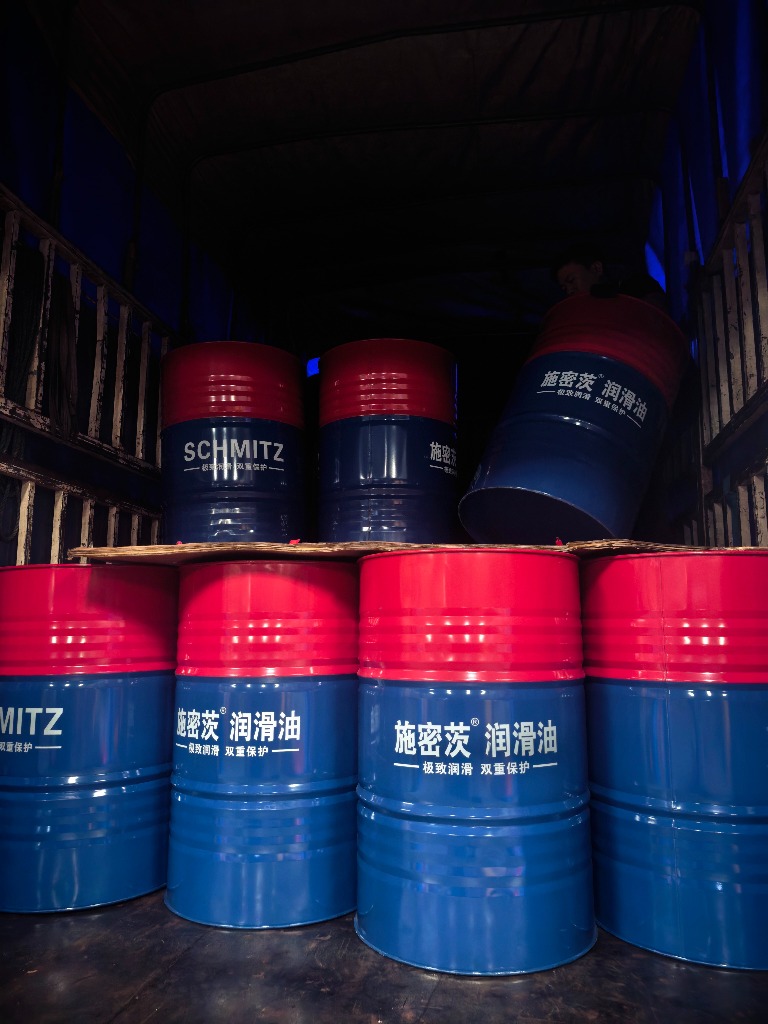
Given the extreme tightness in prompt API Group II 500N base stocks and extended ocean shipping timelines around the Cape of Good Hope, production schedules and vessel bookings for mid-to-late November and early-December departures are filling rapidly. International buyers are urged to submit baseline formulation specifications and volume reservations without delay.
Definitive 3-Day Lubricant & Base Oil Trend Forecast
Synthesized by the FOSS Quantitative Energy Modeling Desk based on active shipping line container bookings, regional tank farm draw-down rates, and prompt ICE Brent futures sentiment:
ICE Brent consolidates firmly above $107.00/bbl as Joint War Committee war-risk breach rates expand to 1.80%-2.05% ($520,000-$600,000/VLCC) following expanded naval standoff perimeters near the Tunb Islands; Asian coastal refiners advance prompt Group II 500N spot offers to $1,735-$1,750/MT as hydrocrackers divert VGO feed to capture $36.20/bbl gasoil crack spreads.
Prolonged Cape of Good Hope transit loops (38-44 days Asia-Europe) and Singapore VLSFO bunker escalations ($755/MT) solidify container ocean freight at $6,600-$6,950/FEU; cold-rolled SPCC steel drum price hikes ($36.80/drum) push baseline export quotations for DIN 51524-2 hydraulic oils to $244.50/drum FOB Xiamen.
Unprecedented $430/MT Group II 150N/500N spread and compounding chemical additive inflation (ZDDP +7.4%, EP SIB +8.2%) trigger widespread delivery rationing across regional compounding plants, driving multinational procurement teams in ASEAN, the Middle East, and Latin America to lock firm fourth-quarter production allocations directly in Quanzhou.
5. Strategic Sourcing & Hedging Directives for Overseas Importers
For overseas procurement directors, fleet operators, and industrial distributors, market volatility represents both operational risk and competitive opportunity. We recommend the following three concrete actions for managing Q4 procurement:
Lock 60-Day Container Requirements
Secure firm proforma invoices (PI) with 30-day price validity. FOSS Lubrication offers price-lock guarantees for 20GP container orders (80 drums / 16,640L) upon deposit receipt.
Audit Laboratory CoA Verification
Demand full pre-shipment ASTM test parameters: kinematic viscosity at 40°C / 100°C, viscosity index ≥ 100, flash point ≥ 220°C, pour point ≤ -15°C, and zero moisture contamination.
FOSS Lubrication: Factory-Direct Precision Engineering
Operating out of Quanzhou, China, FOSS blends over 20,000 MT annually of ISO VG 32/46/68 anti-wear hydraulic oils, CK-4 heavy-duty engine oils, and industrial gear lubricants. Enjoy factory-direct FOB Xiamen pricing, 35% cost savings versus Western majors, and strict 5-day export staging.