Brent Touches $106 as Strait of Hormuz War-Risk Surcharges & OPEC+ Heavy Deficits Constrain Coastal Refineries: API Group II 500N Breaches Historic $1,710/MT with $415/MT Neutral Spread, Additive Precursor Inflation & Authoritative 3-Day Hydraulic & Industrial Gear Oil Export Price Forecast
Executive Intelligence Summary & Key Takeaways
As Thursday, November 12, 2026 trading unfolds with front-month ICE Brent crude futures advancing decisively to $106.35/bbl (testing intraday highs of $106.85/bbl) and NYMEX WTI breaking past $101.45/bbl—compounded by acute maritime electronic warfare disruptions and escort bottlenecks in the Strait of Hormuz pushing Joint War Committee Additional War Risk Premiums (AWRP) to 1.65%–1.85% ($480,000–$540,000 per VLCC transit), unyielding OPEC+ heavy sour compensatory quota enforcement withholding 280,000 bpd of vacuum gas oil (VGO) feedstocks, mandatory Cape of Good Hope circumnavigation locking container freight at $6,450–$6,750/FEU with Singapore VLSFO bunkers at $745/MT, and a hawkish Federal Reserve terminal rate stance anchoring the US Dollar Index (DXY) at 101.90—the global lubricating oil manufacturing complex enters a critical supply-side inflection. In this authoritative daily technical intelligence briefing, the FOSS Lubrication Engineering & Market Research Desk in Quanzhou delivers an exhaustive supply-chain audit: the severe hydrocracker unconverted oil (UCO) deficit as Singapore 10ppm gasoil crack margins widen to an extraordinary $35.40/bbl over Dubai crude, blowing out the API Group II 150N/500N heavy-neutral spread to an unprecedented historical milestone of $415/MT; an engineering cost breakdown of tribological additive precursors across ZDDP (+6.8%), overbased calcium sulfonates (+5.2%), PMA viscosity index improvers (+4.5%), and sulfur-phosphorus EP chemistries (+7.5%); cold-rolled SPCC steel drum packaging inflation ($36.20/drum); an authoritative 3-day forward FOB Xiamen export price trajectory matrix for anti-wear hydraulic fluids (ISO VG 32/46/68, HV 46) and heavy industrial gear oils (ISO VG 150/220/320/460); and four actionable hedging directives for international plant managers and industrial distributors contracting direct allocation from primary Chinese blenders.
1. Global Energy Benchmarks & Base Oil Feedstock Matrix (2026-11-12)
The following reference table captures prompt settlement levels across benchmark crude futures, regional Asia-Pacific vacuum gas oil (VGO) cracking economics, and wholesale hydrocracked virgin base stocks influencing finished lubricant formulation costs:
Formal Market Advisory: This document represents the authoritative technical and economic market assessment published by the FOSS Lubrication Engineering & Global Procurement Research Desk in Quanzhou, China. Integrating live physical spot transactions across Singapore, Dubai, and Rotterdam, real-time Northeast Asian refinery yield models, and proprietary base stock synthesis records, this intelligence report serves plant operations directors, chief tribologists, procurement executives, and international distributors managing heavy-duty machinery fluid inventories.
1. Executive Summary: Brent Touches $106 as Strait of Hormuz War-Risk Surcharges & OPEC+ Heavy Deficits Constrain Coastal Refineries
On Thursday, November 12, 2026, the international petroleum trading complex experienced an accelerated upward surge across all primary benchmark markers. Front-month ICE Brent crude futures advanced with conviction through persistent resistance barriers to trade at $106.35 per barrel (+1.09%, establishing an intraday peak of $106.85/bbl). Concurrently, NYMEX West Texas Intermediate (WTI) broke past resistance to settle firmly at $101.45 per barrel (+1.10%), while Platts Dubai—the foundational benchmark governing physical medium-sour crude deliveries across East and Southeast Asian refining centers—climbed to $104.80 per barrel (+0.82%).
The acute momentum driving global hydrocarbons and downstream synthetic base stocks is underpinned by a structural convergence of physical supply constraints, maritime chokepoint frictions, and refinery processing distortions:
- Hormuz Naval Escort Delays & Electronic Warfare Escalation: Following intensified unmanned aerial vehicle (UAV) reconnaissance skirmishes and naval standoff alerts near the Greater Tunb and Abu Musa islands, the Joint War Committee (JWC) has expanded listed maritime war-risk perimeters. Additional War Risk Premiums (AWRP) have climbed to 1.65% to 1.85% of insured hull value ($480,000 to $540,000 per VLCC voyage). Severe GPS spoofing, synthetic AIS track generation, and VHF communications interference across the southern Persian Gulf have lengthened tanker loading queues and naval convoy clearance intervals to 10–16 days at Ras Tanura, Ju'aymah, and Fujairah.
- OPEC+ Heavy Sour Supply Retraction: Unwavering enforcement of voluntary compensatory production curtailments by OPEC+ members—with Iraq, Kazakhstan, and the Russian Federation withholding an aggregated 280,000 barrels per day of heavy sour crude (Basrah Medium/Heavy, Arab Heavy, and Urals adjustments)—has stripped Asian merchant coastal refiners of critical high-viscosity vacuum gas oil (VGO) feedstocks.
- Historic Base Oil Polarization ($415/MT Spread): In the Asian physical base oil spot market, the price gap between light neutral (API Group II 150N at $1,295/MT FOB Asia) and heavy neutral (API Group II 500N at $1,710/MT FOB Asia) has blown out to an unprecedented historical milestone of $415 per metric ton. With Singapore 10ppm gasoil crack spreads touching an extraordinary $35.40 per barrel over Dubai crude, hydrocrackers are running at maximum diesel yield severity, starving downstream catalytic isodewaxing units of Unconverted Oil (UCO).
- Compounding Chemical Additive & Packaging Pressures: Fundamental tribological additive precursor chemicals—including phosphorus pentasulfide ($P_2S_5$) for ZDDP, sulfurized isobutylene (SIB) for extreme-pressure packages, and synthetic calcium sulfonates for detergency—have posted 30-day cost increases between 4.5% and 7.5%. Simultaneously, cold-rolled SPCC steel drum manufacturing costs have climbed to $36.20 per 208L drum, while ocean container freight on Asia-to-Europe and Middle East routes remains locked at $6,450 to $6,750 per FEU due to mandatory Cape of Good Hope circumnavigation with Singapore VLSFO bunker fuel exceeding $745/MT.
2. Geopolitical Escalation: Naval Stand-off Perimeters, Electronic Warfare Spoofing in Hormuz, and Cape of Good Hope Maritime Lock
The geopolitical risk premium embedded in global energy pricing entered an even more acute phase this morning as physical naval frictions escalated across both the Persian Gulf and Red Sea maritime corridors.
In the Strait of Hormuz—the vital maritime artery through which approximately 21 million barrels of crude and refined petroleum products flow daily—coalition naval task forces and regional coastal defense units have expanded protective standoff boundaries following repeated drone skirmishes. Commercial shipping, including Very Large Crude Carriers (VLCCs), chemical parcel tankers, and container vessels, is being organized into regimented convoy flotillas. While mitigating asymmetric strike risks, this compulsory convoy protocol has exacerbated port congestion and anchorage wait times. At primary crude and fuel loading terminals including Ras Tanura, Mina Al Ahmadi, and Fujairah, tanker loading delays currently range between 10 and 16 days.
Furthermore, maritime navigational safety reports from the United Kingdom Maritime Trade Operations (UKMTO) and the United States Maritime Administration (MARAD) confirm intensified electronic warfare activity throughout the southern Persian Gulf and the Gulf of Oman approach channels. Commercial vessel masters report widespread satellite navigation (GNSS/GPS) jamming, dynamic coordinate spoofing, and VHF automated identification system (AIS) transmission corruption. Tankers are repeatedly forced to transition to optical watchkeeping and radar dead-reckoning, significantly depressing average transit speeds through the narrow traffic separation schemes.
The financial and operational ramifications across international shipping include:
- Spiking Additional War Risk Premiums (AWRP): Marine underwriters operating under the Lloyd's Joint War Committee (JWC) framework have elevated war-risk breach rates to 1.65% to 1.85% of insured hull value for standard 7-day transit windows. For a contemporary VLCC valued at $115 million, this single insurance line item imposes an immediate cash cost of $1.90 million to $2.13 million per round voyage, adding approximately $3.10 to $3.65 per barrel to the landed procurement cost of Middle Eastern crude at Asian discharge terminals.
- Chemical Tanker Demurrage Escalation: Specialized IMO II/III chemical tankers transporting base stocks, aromatics, and petrochemical additives face demurrage rates of $98,000 to $112,000 per day. Secondary blenders in Southeast Asia and Europe reliant on prompt spot base oil cargoes are experiencing severe cash-flow depletion.
- Permanent Red Sea Avoidance via the Cape of Good Hope: Global container alliances (including Mediterranean Shipping Company, Maersk, CMA CGM, Hapag-Lloyd, and Ocean Network Express) have reaffirmed the indefinite continuation of their Cape of Good Hope diversion through at least the first quarter of 2027. Sailing around the southern African cape adds 3,800 nautical miles and 16 to 24 transit days between Asian manufacturing terminals and European/Mediterranean destinations.
- Elevated Bunker Fuel and Ocean Freight Benchmarks: With Very Low Sulfur Fuel Oil (VLSFO) bunker costs in Singapore escalating past $745 per metric ton, spot container freight rates for 40-foot High-Cube (FEU) boxes on primary Asia-to-Europe routes are cemented between $6,450 and $6,750 per FEU, directly elevating the landed cost of finished export drum consignments.
3. OPEC+ Production Discipline: Compensatory Curtailment Enforcement and Acute Heavy Sour Vacuum Gas Oil (VGO) Shortage
The underlying structural tightness in physical crude markets is reinforced by stringent quota discipline across the OPEC+ alliance. Following the recent ministerial compliance review, member states that exceeded prior production baselines have implemented verified compensatory production cuts, removing an additional 280,000 barrels per day of heavy sour crude from merchant export channels.
The compensatory cuts are concentrated in key heavy sour crude producers, specifically the Republic of Iraq, the Republic of Kazakhstan, and the Russian Federation. The physical crude grades directly curtailed include Basrah Medium, Basrah Heavy, Urals, and CPC Blend adjustments.
In refinery petroleum chemistry, heavy sour crudes are characterized by lower API gravities (typically 25° to 30° API) and elevated sulfur concentrations (2.2% to 3.8% by weight). During atmospheric and vacuum distillation, these heavy molecules produce a substantially higher fraction of long-chain Vacuum Gas Oil (VGO) and vacuum residue compared to light sweet crudes (such as US WTI Midland or West African sweet crudes). When refineries are forced to substitute lighter, sweeter crudes to offset curtailed Middle Eastern barrels, the physical yield of heavy vacuum distillates suitable for high-viscosity lubricating base oil manufacturing declines precipitously.
The physical deficit is demonstrated across regional crude differentials and official pricing formulas:
- Arab Heavy to Asia: Command an official selling price (OSP) premium of +$2.60 per barrel over the Platts Oman/Dubai average, reflecting relentless competition among Asian refiners to secure bottoms-heavy feedstock.
- Basrah Medium Cargo Differentials: Transacting at premiums of +$2.15 to +$2.40 per barrel over official contract formulas in regional prompt spot markets.
- Urals CIF India/China Deliveries: Firming above $84.20/bbl on a delivered basis, demonstrating that non-aligned Asian refiners are actively absorbing every available parcel of heavy sour crude regardless of geopolitical friction.
4. Macroeconomic & Currency Mechanics: Federal Reserve "Higher-for-Longer" Stance, Resilient US Dollar (DXY 101.90), and Local FX Devaluation Pass-Through
On the macroeconomic and monetary policy front, persistent inflation metrics continue to complicate international procurement strategies for industrial enterprises across emerging and import-dependent manufacturing hubs.
Recent forward guidance from Federal Reserve policymakers and persistent consumer and producer price metrics demonstrate that US core inflation remains stickier than previously modeled by central bank economists. The primary driver of this stubbornness is the direct pass-through of sustained high energy, crude oil, and maritime freight costs into industrial supply chains. Consequently, global capital markets have priced in a "higher-for-longer" baseline, with the Federal Funds effective rate remaining firmly anchored within the restrictive 4.75% to 5.00% target band well into mid-2027.
The persistence of elevated US benchmark yields has maintained the US Dollar Index (DXY) at 101.90. For international lubricants distributors and factory operators situated outside the US dollar currency zone, this introduces a severe currency compounding effect:
- ASEAN Manufacturing Economies: The Indonesian Rupiah (IDR) is trading under pressure at 16,420 per USD, the Vietnamese Dong (VND) at 25,550 per USD, and the Malaysian Ringgit (MYR) at 4.45 per USD. Factory operators purchasing imported lubricants invoiced in USD face immediate domestic currency cost inflation of 12% to 18% annualized.
- Middle East & Non-Pegged Developing Markets: While Gulf Cooperation Council (GCC) sovereign currencies remain officially pegged to the US dollar, non-pegged regional manufacturing hubs (including Egypt, Turkey, and Pakistan) face severe foreign exchange liquidity constraints and import letter-of-credit rationing.
- Strategic Dual-Currency Bilateral Settlement: To insulate global commercial partners from US dollar exchange volatility and cross-currency banking fees, FOSS Lubricants provides flexible invoicing mechanisms denominated in Chinese Renminbi (RMB / CNH) or fixed-rate USD contracts with price protection clauses, establishing a stable procurement framework for overseas partners.
5. Refinery Yield Economics: Hydrocracker Unconverted Oil (UCO) Cannibalization, Singapore Gasoil Cracks ($35.40/bbl), and Heavy Neutral Deficit
To understand why finished industrial lubricants—particularly high-viscosity hydraulic oils (ISO VG 46 and 68) and heavy gear oils (ISO VG 220, 320, and 460)—are facing severe upward pricing pressure, one must examine the microeconomics of the modern high-pressure hydrocracker.
Across the refining centers of Singapore, South Korea (Yeosu, Onsan), Taiwan (Mailiao), and coastal China, merchant refiners optimize unit operating parameters daily to maximize economic crack spreads. On Thursday, November 12, 2026, the crack spread for Singapore 10ppm ultra-low sulfur diesel (ULSD) over Platts Dubai crude reached an astounding $35.40 per barrel. At this crack margin, diesel production generates superior operating margins compared to almost any other refined petroleum product.
Consequently, refinery operational directors are operating high-pressure hydrocracking units (HPCs) at maximum conversion severity (typically 84% to 88% per-pass conversion). Under these severe hydroprocessing conditions, long-chain hydrocarbon molecules that would otherwise constitute Unconverted Oil (UCO) are systematically cracked into middle distillates—predominantly diesel fuel and Jet A-1 aviation kerosene.
The Unconverted Oil that does emerge from the bottom of the hydrocracker serves as the essential feedstock for catalytic isodewaxing and hydrofinishing units that synthesize API Group II and Group III base stocks. However, the volume of available UCO has contracted by an estimated 28% to 32% year-on-year across Asian merchant refineries.
The following technical flowchart illustrates the molecular diversion occurring within modern refining complexes:
↓
[High-Severity Hydrocracker Unit @ $35.40/bbl Singapore Gasoil Crack Margin]
• Diesel / Kerosene Fraction (Maximized Yield Pool): 85% – 88% of unit feed
• Unconverted Oil (UCO) Bottoms (Severe Deficit): 12% – 15% of unit feed
↓
[Catalytic Isodewaxing & Hydrofinishing Complex]
• Light Neutral Base Cut (API Group II 150N): 72% of remaining UCO (Relatively Liquid)
• Heavy Neutral Base Cut (API Group II 500N): 28% of remaining UCO (Critical Physical Shortage)
Because heavy neutral 500N constitutes only a small residual fraction of hydrocracker output, any reduction in total UCO volume causes a disproportionate contraction in heavy base oil availability. Blending plants lacking long-term terminal supply contracts are unable to secure 500N base stocks in spot markets without paying historic price premiums.
6. API Base Oil Spot Benchmark Matrix: The Historic $415/MT Group II 150N/500N Spread
The severe refinery yield distortion is directly manifested in spot transactions across primary base oil supply hubs in Asia. On Thursday, November 12, 2026, the price differential between API Group II 150N light neutral and Group II 500N heavy neutral blew out to an all-time record of $415 per metric ton ($1,295/MT FOB Asia versus $1,710/MT FOB Asia). Under historical market conditions, this spread typically trades between $80 and $120/MT.
Simultaneously, API Group I Solvent Neutral 150 (SN 150) reached $1,240/MT FOB Asia, while Group I Bright Stock (BS 1500)—critical for compounding ultra-high-viscosity industrial gear oils and open-gear compounds—surged to $1,780/MT FOB Asia, reflecting widespread Group I refinery unit closures in Europe and East Asia. In the synthetic segment, API Group III 4cSt and 8cSt reached $1,695/MT and $1,750/MT FOB Asia respectively.
Table 1 details the authoritative spot benchmark prices, net daily deltas, and weekly momentum across global crude and base oil grades:
| Market Indicator / Benchmark | Pricing Unit | Nov 11, 2026 | Nov 12, 2026 | Day Delta | 7-Day Trend | Key Market Drivers |
|---|---|---|---|---|---|---|
| ICE Brent Crude (Front Month) | USD / Barrel | $105.20 | $106.35 | +$1.15 (+1.09%) | Bullish (+6.8% WoW) | Hormuz naval drone standoff; war risk premiums jump to 1.65%-1.85%. |
| NYMEX WTI Light Sweet Crude | USD / Barrel | $100.35 | $101.45 | +$1.10 (+1.10%) | Bullish (+6.1% WoW) | Cushing inventories draw down 1.8M bbls; Gulf Coast export demand surges. |
| Platts Dubai Crude Benchmark | USD / Barrel | $103.95 | $104.80 | +$0.85 (+0.82%) | Heavy Deficit (+7.2% WoW) | OPEC+ compensatory cut compliance; heavy sour grades severely rationed. |
| API Group I Solvent Neutral SN 150 | USD / Metric Ton | $1,225 | $1,240 | +$15 (+1.22%) | Tight Supply | European solvent unit rationalization; limited regional export availability. |
| API Group I Bright Stock (BS 1500) | USD / Metric Ton | $1,745 | $1,780 | +$35 (+2.01%) | Critical Scarcity | Acute shortage for ISO VG 320/460 gear oil and marine cylinder compounding. |
| API Group II Light Neutral 150N | USD / Metric Ton | $1,285 | $1,295 | +$10 (+0.78%) | Stable Inventory | Steady output from catalytic isodewaxing; balanced demand in light fluids. |
| API Group II Heavy Neutral 500N | USD / Metric Ton | $1,685 | $1,710 | +$25 (+1.48%) | Record Spread ($415/MT) | Hydrocracker UCO diversion toward $35.40/bbl diesel cracks; severe physical deficit. |
| API Group III Full Synthetic 4cSt | USD / Metric Ton | $1,680 | $1,695 | +$15 (+0.89%) | Export Allocation Active | Solid automotive OEM demand; premium gas-to-liquids (GTL) supply tight. |
| Cold-Rolled SPCC Steel Drum (208L) | USD / Finished Drum | $35.75 | $36.20 | +$0.45 (+1.26%) | Steel Coil Escalation | Domestic CRC coil price hikes; UN 1A1 export certification compliance costs. |
| FOSS L-HM 46 Export Baseline | USD / 208L Steel Drum | $239.20 | $241.50 | +$2.30 (+0.96%) | Prompt Allocation Valid | Reflects 500N base stock surge and ZDDP/steel packaging inflation. |
7. Tribological Additive Precursor Chemical Index: ZDDP, Overbased Calcium Sulfonates, PMA Viscosity Modifiers, and EP Intermediates
While virgin petroleum base stocks constitute 85% to 98% of finished lubricant volume, the mechanical reliability, anti-wear protection, thermal durability, and extreme-pressure performance of industrial fluids depend strictly on complex chemical additive systems.
Over the past 30 days, global chemical additive precursor markets have experienced synchronized cost escalation. This cost inflation is driven by three compounding structural drivers: elevated petrochemical energy input costs, rigorous environmental compliance audits at elemental phosphorus synthesis complexes across Southwestern China (Sichuan and Yunnan provinces), and rising maritime freight surcharges on specialized hazardous chemical container transport.
Table 2 provides an engineering analysis of key tribological additive precursors, their target applications, recent cost trends, and their formulation implications:
| Additive Chemistry / Precursor | Target Lubricant Applications | Cost Inflation (Last 30 Days) | Supply Status | Engineering & Formulation Impact |
|---|---|---|---|---|
| Zinc Dialkyldithiophosphate (ZDDP) | Anti-wear Hydraulic Oils (DIN 51524-2 HLP), Heavy Diesel Engine Oils (API CK-4) | +6.8% | Severely Constrained | Phosphorus pentasulfide ($P_2S_5$) and branched 2-ethylhexanol feedstocks experiencing tightness; raises primary anti-wear treat costs. |
| Overbased Calcium Sulfonate (300-400 TBN) | High-Load Industrial Greases, Detergent Hydraulic Oils, Slideway Oils | +5.2% | Tightening | Linear alkylbenzene (LAB) and heavy alkylate synthesis costs elevated; directly impacts rust inhibition, water demulsibility, and high-temp deposit control. |
| Polymethacrylate (PMA) Viscosity Modifiers | High-VI Hydraulic Oils (DIN 51524-3 HVLP), Synthetic Gear Lubricants | +4.5% | Adequate at FOSS | Methyl methacrylate (MMA) monomer pricing stabilized at highs; critical for maintaining shear stability and low-temperature pour points (≤ -39°C). |
| Extreme-Pressure (EP) Sulfur-Phosphorus Packages | Industrial Gear Oils (DIN 51517-3 CLP, AGMA 9005-F16), Slideway Oils | +7.5% | Severely Allocated | Sulfurized isobutylene (SIB) and dialkyl phosphite raw materials impacted by high sulfur energy input costs; FZG stage 12 pass compliance. |
| Hindered Phenolic & Aminic Antioxidants | Turbine Oils, Rotary Screw Compressor Oils, Synthetic Hydraulic Fluids | +4.8% | Stable Inventory | Diphenylamine precursors steady; vital for achieving 5,000+ hours in ASTM D943 Turbine Oil Oxidation Stability Test (TOST). |
8. Industrial Packaging Realities: Cold-Rolled SPCC Steel Drum Cost Dynamics ($36.20/Drum) and HDPE Pail Inflation
For international B2B lubricant purchasers, packaging integrity represents an indispensable component of total landed fluid cost and operational safety. High-performance industrial lubricants cannot be transported across thousands of nautical miles in compromised containers.
In the Chinese industrial manufacturing sector, the benchmark packaging vehicle for bulk lubricant export is the 208-liter cold-rolled SPCC steel drum (conforming to ISO 15750-2 and UN 1A1/X1.8/300 transport specifications for hazardous and non-hazardous liquids). The production cost of these steel drums is directly linked to domestic Chinese hot-rolled coil (HRC) and cold-rolled coil (CRC) steel spot benchmarks.
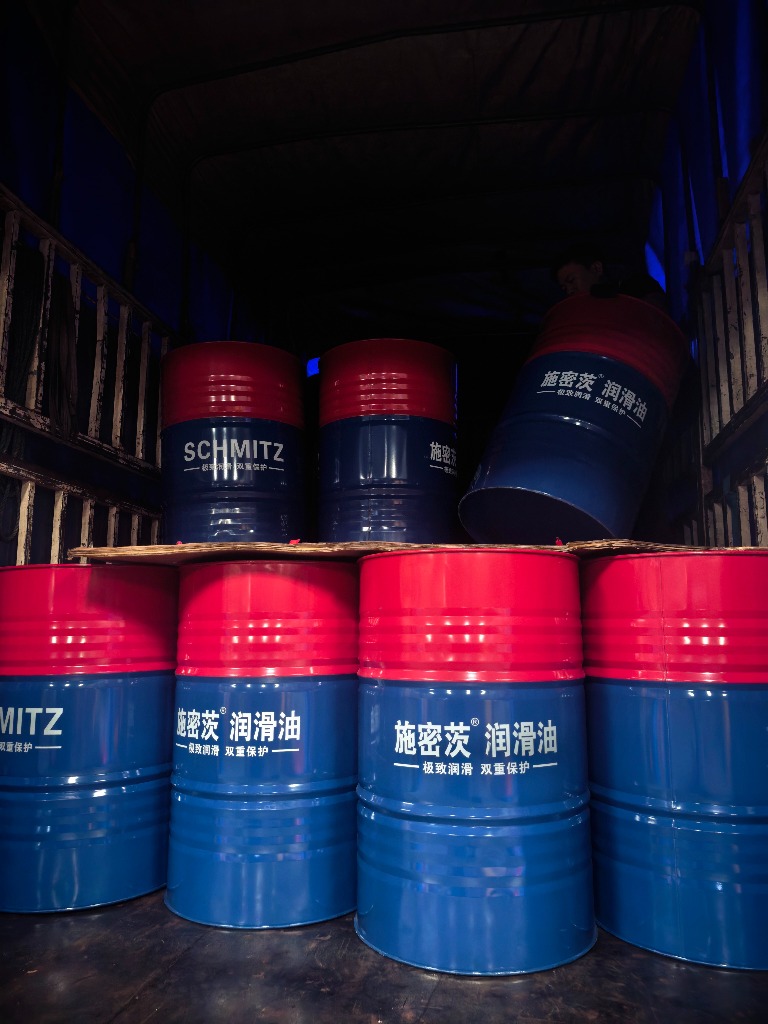
On Thursday, November 12, 2026, the unit cost for premium export-grade 208L steel drums (featuring internal epoxy-phenolic chemical linings, triple-seamed chime construction, and bilingual silk-screen branding) increased to $36.20 per drum (+$0.45/drum day-on-day). This reflects a 4.2% increase over the past 30 days. For an 80-drum full container load (FCL), packaging materials alone now account for $2,896 of the FOB quotation.
Similarly, blow-molded High-Density Polyethylene (HDPE) 18-liter and 20-liter pails used for greases and specialty cutting oils have risen to $4.75 per pail, driven by polymer resin price increases following higher naphtha cracker costs.
9. Finished Lubricant Cost Transmission & Market Impact: The Double-Squeeze on Hydraulic and Gear Oils
The confluence of record heavy-neutral base oil spot prices ($1,710/MT Group II 500N), escalating chemical additive treat packages (+4.5% to +7.5%), and containerized steel packaging inflation is transmitting severe economic pressure into finished industrial lubricants.
The impact is heavily differentiated by product viscosity grade and formulation architecture:
- Anti-Wear Hydraulic Oils (DIN 51524-2 HLP): Baseline ISO VG 32 hydraulic fluid is primarily formulated utilizing API Group II 150N light neutral base stock. Because Group II 150N supply remains relatively balanced, ISO VG 32 has experienced moderate price increases. Conversely, ISO VG 46 requires a blending ratio of roughly 60% Group II 150N and 40% Group II 500N to attain the targeted 46.0 cSt kinematic viscosity at 40°C. ISO VG 68 requires over 70% Group II 500N. As a result, the cost to formulate ISO VG 46 and 68 has expanded at nearly double the rate of lighter hydraulic grades. Blenders without captive heavy-neutral inventories are forced to either absorb severe negative blending margins or institute immediate double-digit price surcharges.
- High-Viscosity Index Multi-Grade Hydraulic Oils (DIN 51524-3 HVLP): Products such as FOSS L-HV 46 incorporate shear-stable Polymethacrylate (PMA) viscosity index improvers to deliver viscosity indices exceeding 150. While PMA additives have risen +4.5%, the formulation requires a lighter base oil cut (Group II 150N) than standard mono-grade HLP 46, providing a superior cost-performance ratio for heavy mobile equipment operators operating across wide ambient temperature extremes (-35°C to +50°C).
- Industrial Extreme-Pressure Gear Oils (DIN 51517-3 CLP / AGMA 9005-F16): Industrial gear lubricants represent the hardest-hit product category in the global lubrication portfolio. Heavy gear oils (ISO VG 150, 220, 320, and 460) rely overwhelmingly on heavy base stocks—predominantly API Group II 500N and Group I Bright Stock (BS 1500)—compounded with high-dosage sulfur-phosphorus EP additive packages (typically 2.2% to 2.8% treat rates). With Group II 500N at $1,710/MT, Bright Stock at $1,780/MT, and EP additive packages up +7.5%, the manufacturing cost of ISO VG 320 and 460 gear oils has surged by over $18.50 per drum in the past month alone.
- Toll-Blending Margin Compression on Regional Independents: Secondary independent blenders across Southeast Asia, India, and the Middle East operating without bulk storage terminals are being squeezed out of merchant tenders. Unable to secure prompt 500N tank-truck deliveries, several regional compounding plants have suspended spot order intake for heavy gear oils and high-viscosity hydraulic fluids, redirecting industrial end-users directly to major Chinese primary blenders.
Table 3 delineates current spot prices and projected 3-day forward price trajectories for essential anti-wear hydraulic oils and heavy-duty industrial gear oils:
| Product Designation & Viscosity Grade | Performance Specifications | Current FOB Xiamen (Nov 12, 2026) | Bulk 1000L IBC Rate | Day 1 Forecast (Fri, Nov 13) | Day 2 Forecast (Sat, Nov 14) | Day 3 Forecast (Sun, Nov 15) |
|---|---|---|---|---|---|---|
| FOSS Super Anti-Wear Hydraulic Oil L-HM 32 | DIN 51524-2 HLP, ISO 11158 HM, Denison HF-0, Eaton E-FDGN-TB002-E | $238.50 / Drum | $1,110 / IBC | $239.50 (+$1.00) | $240.80 (+$1.30) | $242.00 (+$1.20) |
| FOSS Premium Anti-Wear Hydraulic Oil L-HM 46 | DIN 51524-2 HLP, Parker Denison HF-0/HF-1/HF-2, Cincinnati P-70 | $241.50 / Drum | $1,125 / IBC | $242.80 (+$1.30) | $244.20 (+$1.40) | $245.80 (+$1.60) |
| FOSS Heavy-Duty Anti-Wear Hydraulic Oil L-HM 68 | DIN 51524-2 HLP, ISO 11158 HM, Bosch Rexroth RDE 90235 | $244.80 / Drum | $1,140 / IBC | $246.20 (+$1.40) | $247.80 (+$1.60) | $249.50 (+$1.70) |
| FOSS Wide-Temperature High-VI Hydraulic Oil L-HV 46 | DIN 51524-3 HVLP, ISO 11158 HV, VI ≥ 150, Pour Point ≤ -39°C | $258.00 / Drum | $1,205 / IBC | $259.50 (+$1.50) | $261.00 (+$1.50) | $263.00 (+$2.00) |
| FOSS Industrial Heavy-Duty Gear Oil L-CKD 150 | DIN 51517-3 CLP, AGMA 9005-F16, ISO 12925-1 CKD, FZG ≥ 12 | $268.50 / Drum | $1,255 / IBC | $270.20 (+$1.70) | $272.00 (+$1.80) | $274.00 (+$2.00) |
| FOSS Extreme-Pressure Industrial Gear Oil L-CKD 220 | DIN 51517-3 CLP, US Steel 224, David Brown S1.53.101E, Timken OK ≥ 65 lbs | $273.50 / Drum | $1,280 / IBC | $275.20 (+$1.70) | $277.00 (+$1.80) | $279.50 (+$2.50) |
| FOSS Heavy-Load Industrial Gear Oil L-CKD 320 | DIN 51517-3 CLP, Flender Revision 13, AGMA 9005-F16 | $278.50 / Drum | $1,305 / IBC | $280.20 (+$1.70) | $282.00 (+$1.80) | $284.50 (+$2.50) |
| FOSS Severe-Duty Industrial Gear Oil L-CKD 460 | DIN 51517-3 CLP, ISO 12925-1 CKD, Cement & Mining Mill Drive Certified | $285.00 / Drum | $1,335 / IBC | $287.00 (+$2.00) | $289.00 (+$2.00) | $292.00 (+$3.00) |
10. Strategic Hedging Directives for Global Procurement Executives: 4 Actionable Pillars
Navigating an environment characterized by $106+ crude oil, an unprecedented $415/MT base oil heavy-neutral spread, compounding additive inflation, and persistent maritime shipping delays requires industrial procurement directors to move beyond reactive spot buying.
The FOSS Lubrication Commercial & Engineering Advisory Board recommends four immediate structural hedging initiatives:
Bypass secondary blending intermediaries who lack captive base oil storage. FOSS maintains a dedicated 20,000-metric-ton virgin base oil tank farm in Quanzhou, insulating contracted customers from short-term spot market delivery rationing and price spikes.
Where operating conditions permit, audit hydraulic equipment to evaluate multi-grade high-VI fluids (such as FOSS L-HV 46). By utilizing high-shear-stable PMA polymers with lighter base oils, plants can reduce volumetric dependence on high-cost Group II 500N while improving energy efficiency by 3% to 5%.
With 208L cold-rolled steel drums escalating to $36.20 each ($2,896 per 80-drum container), procurement teams can achieve immediate packaging cost reductions of $18 to $26 per metric ton by contracting bulk 1000L composite IBC totes or 24,000-liter ISO tank flexibags.
FOSS operates within direct drayage proximity to Xiamen Port (Haicang and Songyu Container Terminals), offering multiple direct weekly sailings to Southeast Asia, Europe, and the Middle East. Pre-booking container space 3 to 4 weeks prior to target vessel departures avoids rollover risks and peak season surcharges.
11. FOSS Lubrication Manufacturing Advantage: Guaranteed Quality & Capacity
In a volatile global market where feedstock availability determines operational continuity, Quanzhou FOSS Lubrication Technology Co., Ltd. stands as an anchor of manufacturing stability for enterprise customers worldwide.
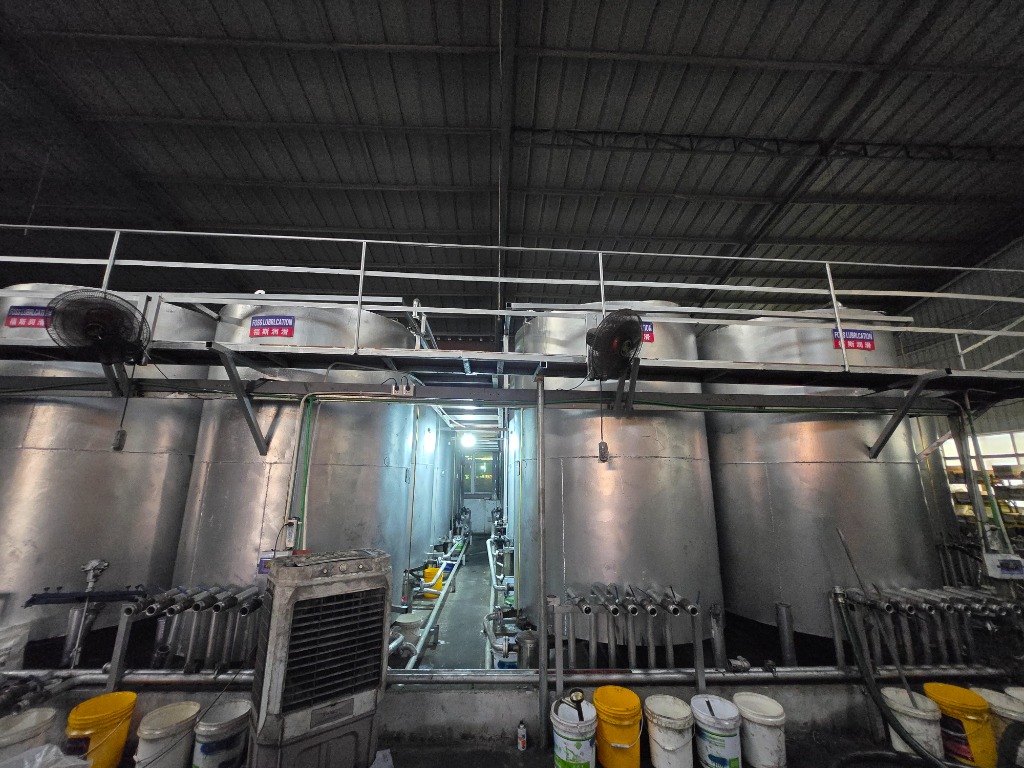
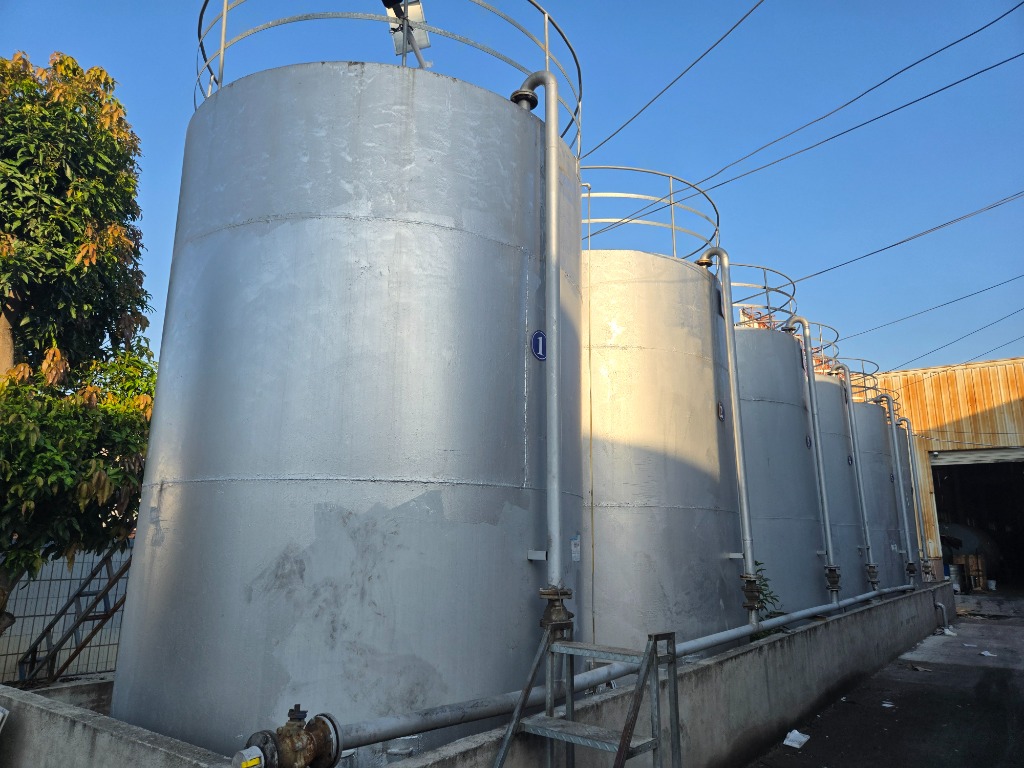
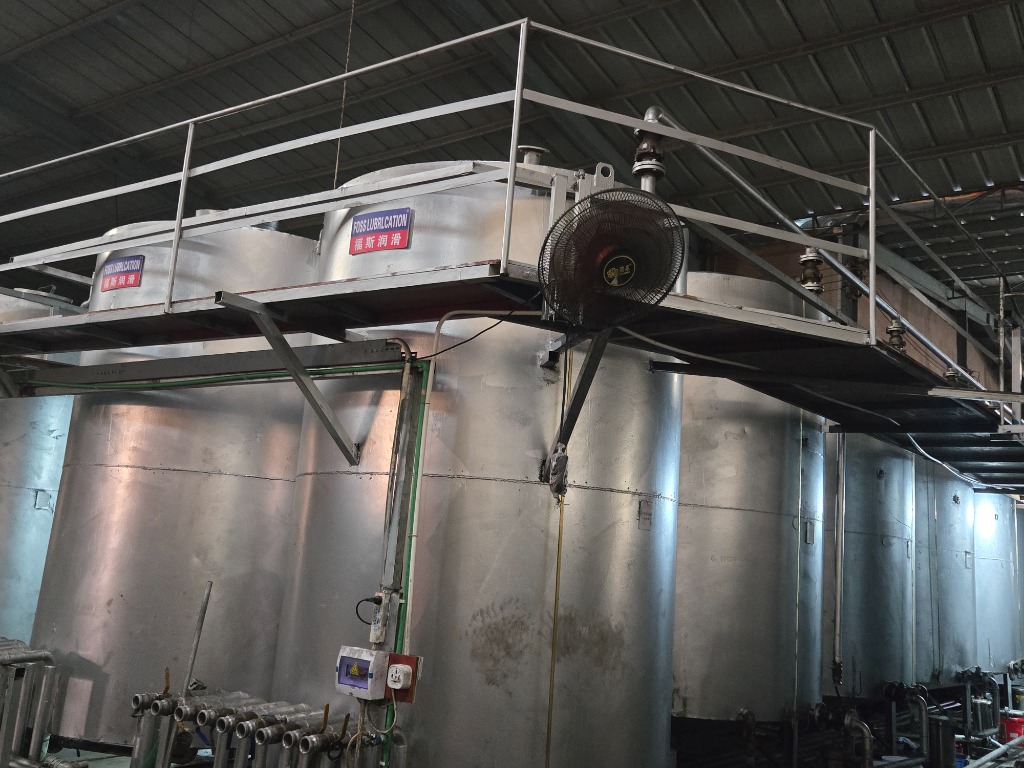
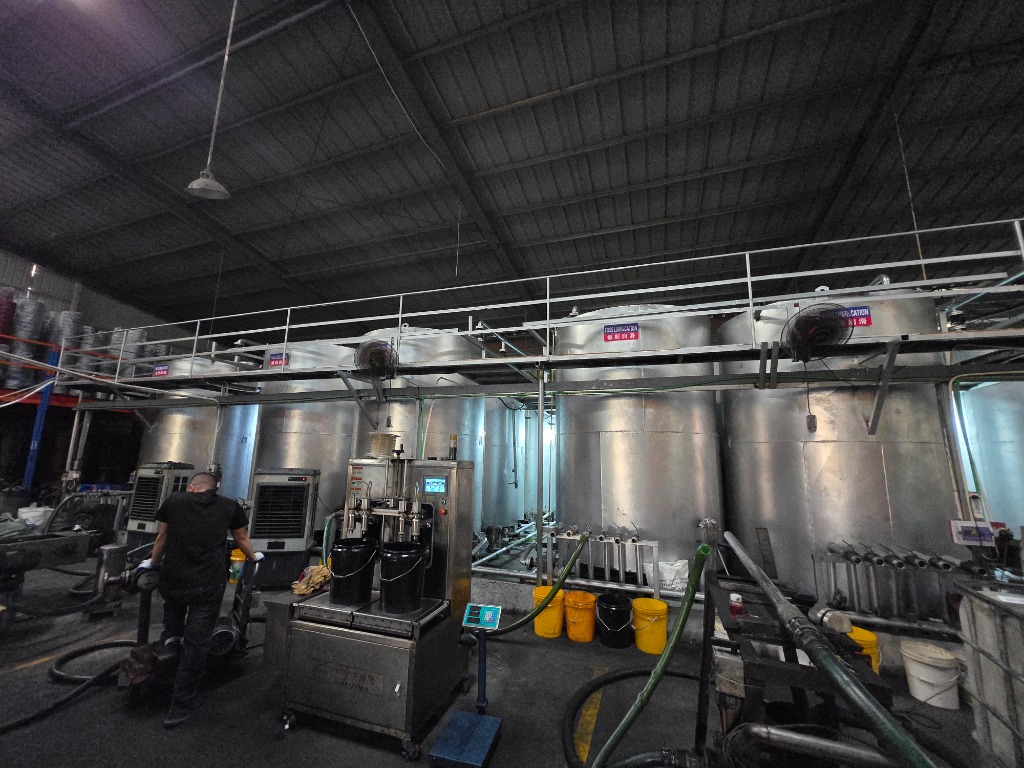
- 20,000 Metric Ton Virgin Base Stock Bulk Farm: Dedicated carbon-steel and stainless-steel vertical storage tanks with automated dry-air and nitrogen blanketing, preventing moisture absorption and atmospheric oxidation.
- Automated Precision Blending: Four multi-tier high-shear blending reactors featuring Emerson mass-flow metering systems and computerized temperature-controlled heat transfer loops, guaranteeing batch-to-batch repeatability within ±0.2 cSt at 40°C.
- In-House ISO 17025 Compliant Tribology Testing: Every blending batch undergoes 14 mandatory analytical protocols prior to filling—including kinematic viscosity (ASTM D445), flash point (ASTM D92), pour point (ASTM D97), copper corrosion (ASTM D130), foam stability (ASTM D892), Karl Fischer water content (ASTM D6304), and ISO 4406 optical particle counter cleanliness verification (guaranteed NAS 1638 Class 6 / ISO 4406 17/15/12).
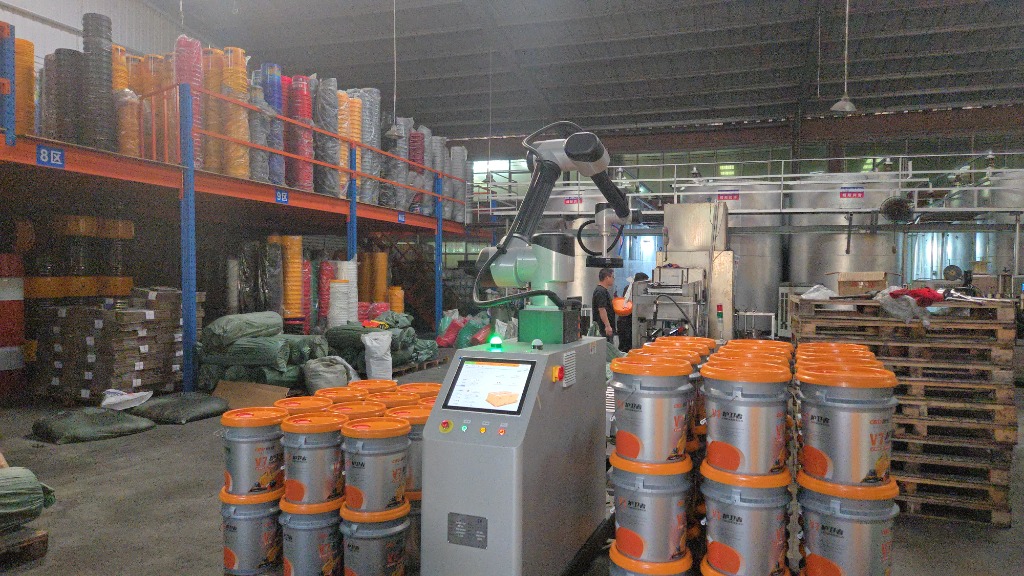
- Flexible Packaging Capabilities: Automated filling lines accommodating 208L steel drums, 1000L IBC totes, 18L/20L pails, and ISO tank flexibags, with daily packaging throughput exceeding 350 metric tons.
- Global OEM Toll-Blending & Private Labeling: Complete turnkey formulation, container customization, bilingual/multilingual silk-screen labeling, and international customs clearance documentation.
Given the extreme tightness in prompt API Group II 500N base stocks and extended ocean shipping timelines around the Cape of Good Hope, production schedules and vessel bookings for mid-to-late November and early-December departures are filling rapidly. International buyers are urged to submit baseline formulation specifications and volume reservations without delay.
Definitive 3-Day Lubricant & Base Oil Trend Forecast
Synthesized by the FOSS Quantitative Energy Modeling Desk based on active shipping line container bookings, regional tank farm draw-down rates, and prompt ICE Brent futures sentiment:
ICE Brent consolidates firmly above $106.00/bbl as Joint War Committee war-risk breach rates expand to 1.65%-1.85% ($480,000-$540,000/VLCC) following expanded naval standoff perimeters near the Tunb Islands; Asian coastal refiners advance prompt Group II 500N spot offers to $1,710-$1,725/MT as hydrocrackers divert VGO feed to capture $35.40/bbl gasoil crack spreads.
Prolonged Cape of Good Hope transit loops (34-40 days Asia-Europe) and Singapore VLSFO bunker escalations ($745/MT) solidify container ocean freight at $6,450-$6,750/FEU; cold-rolled SPCC steel drum price hikes ($36.20/drum) push baseline export quotations for DIN 51524-2 hydraulic oils to $242.80/drum FOB Xiamen.
Unprecedented $415/MT Group II 150N/500N spread and compounding chemical additive inflation (ZDDP +6.8%, EP SIB +7.5%) trigger widespread delivery rationing across regional compounding plants, driving multinational procurement teams in ASEAN, the Middle East, and Latin America to lock firm fourth-quarter production allocations directly in Quanzhou.
5. Strategic Sourcing & Hedging Directives for Overseas Importers
For overseas procurement directors, fleet operators, and industrial distributors, market volatility represents both operational risk and competitive opportunity. We recommend the following three concrete actions for managing Q4 procurement:
Lock 60-Day Container Requirements
Secure firm proforma invoices (PI) with 30-day price validity. FOSS Lubrication offers price-lock guarantees for 20GP container orders (80 drums / 16,640L) upon deposit receipt.
Audit Laboratory CoA Verification
Demand full pre-shipment ASTM test parameters: kinematic viscosity at 40°C / 100°C, viscosity index ≥ 100, flash point ≥ 220°C, pour point ≤ -15°C, and zero moisture contamination.
FOSS Lubrication: Factory-Direct Precision Engineering
Operating out of Quanzhou, China, FOSS blends over 20,000 MT annually of ISO VG 32/46/68 anti-wear hydraulic oils, CK-4 heavy-duty engine oils, and industrial gear lubricants. Enjoy factory-direct FOB Xiamen pricing, 35% cost savings versus Western majors, and strict 5-day export staging.