Brent Consolidates at $108 as Strait of Hormuz War-Risk Surcharges & OPEC+ Heavy Deficits Constrain Coastal Refineries: API Group II 500N Surges to Unprecedented $1,750/MT with Record $435/MT Spread, Additive Cost Escalations & Authoritative 3-Day Hydraulic & Industrial Gear Oil Export Price Forecast
Executive Intelligence Summary & Key Takeaways
On Saturday, November 14, 2026, front-month ICE Brent crude futures consolidate firmly above $108/bbl (settling at $108.20/bbl after testing $108.65/bbl intraday) and NYMEX WTI establishes firm footing at $103.45/bbl, while Platts Dubai advances to $106.85/bbl as Middle Eastern maritime security friction intensifies. Expanded naval stand-off perimeters and GPS spoofing in the Strait of Hormuz have pushed Additional War Risk Premiums to 1.90%–2.15% of hull value ($550,000–$630,000 per VLCC), while prolonged Cape of Good Hope circumnavigation ($6,750–$7,100/FEU) keeps global container shipping severely backlogged (40–46 days transit). Compounding these maritime chokepoint risks, strict OPEC+ compensatory quota enforcement (withdrawing 320,000 bpd of heavy sour crude) has driven Arab Heavy and Basrah Medium spot premiums to fresh cyclical peaks. In this authoritative Saturday market intelligence dossier, the FOSS Lubrication Engineering & Market Research Desk in Quanzhou delivers an exhaustive technical assessment: refinery hydrocracker unconverted oil (UCO) yield destruction as Singapore 10ppm gasoil cracks reach an extraordinary $36.80/bbl; the blowout of the API Group II 150N/500N heavy-neutral spread to an unprecedented historical milestone of $435/MT ($1,315/MT vs $1,750/MT FOB Asia); a comprehensive tribological additive precursor index tracking ZDDP, overbased calcium sulfonates, PMA viscosity modifiers, and EP sulfurized isobutylene intermediates; cold-rolled SPCC steel drum packaging inflation ($37.20/drum); an authoritative 3-day forward FOB Xiamen export price trajectory matrix for anti-wear hydraulic fluids (ISO VG 32/46/68, HV 46) and heavy industrial gear oils (ISO VG 150/220/320/460); and five actionable commercial hedging directives for global procurement executives and plant operators contracting directly with primary Chinese blenders.
1. Global Energy Benchmarks & Base Oil Feedstock Matrix (2026-11-14)
The following reference table captures prompt settlement levels across benchmark crude futures, regional Asia-Pacific vacuum gas oil (VGO) cracking economics, and wholesale hydrocracked virgin base stocks influencing finished lubricant formulation costs:
Formal Market Advisory: This document represents the authoritative technical and economic market assessment published by the FOSS Lubrication Engineering & Global Procurement Research Desk in Quanzhou, China. Integrating live physical spot transactions across Singapore, Dubai, and Rotterdam, real-time Northeast Asian refinery yield models, and proprietary base stock synthesis records, this intelligence report serves plant operations directors, chief tribologists, procurement executives, and international distributors managing heavy-duty machinery fluid inventories.
1. Executive Summary: Brent Consolidates at $108 as Strait of Hormuz War-Risk Surcharges & OPEC+ Heavy Deficits Constrain Coastal Refineries
On Saturday, November 14, 2026, the global energy and petroleum derivatives complex established fresh cyclical consolidation highs across all foundational benchmark trading hubs. Front-month ICE Brent crude futures sustained aggressive upward momentum, cementing price levels firmly at $108.20 per barrel (+0.70% day-on-day, testing an intraday peak of $108.65/bbl). Concurrently, NYMEX West Texas Intermediate (WTI) crude settled at $103.45 per barrel (+0.83%), driven by emergency European pull-demand for sweet crude waterborne cargoes to offset delayed Gulf loadings. Platts Dubai—the foundational benchmark dictating physical medium-sour crude valuations throughout Asian and Southeast Asian refining complexes—advanced to $106.85 per barrel (+0.90%).
This relentless multi-week upward march in upstream hydrocarbons and downstream synthetic base stocks is underpinned by a structural convergence of physical supply rationing, maritime chokepoint frictions, and refinery processing distortions:
- Strait of Hormuz Naval Standoff & Critical War-Risk Expansion: Following repeated naval escort alerts, electronic radar countermeasures, and unmanned reconnaissance intercepts near the Greater Tunb and Abu Musa islands, the Joint War Committee (JWC) has maintained expanded listed war-risk boundaries across the Persian Gulf and Gulf of Oman. Additional War Risk Premiums (AWRP) have climbed to 1.90% to 2.15% of insured hull value ($550,000 to $630,000 per VLCC voyage). Severe GPS spoofing, synthetic AIS track generation, and VHF communications jamming across the southern Persian Gulf have lengthened tanker loading queues and naval convoy clearance intervals to 14–20 days at Ras Tanura, Ju'aymah, and Fujairah.
- OPEC+ Compensatory Production Discipline: The OPEC+ Joint Ministerial Monitoring Committee (JMMC) issued an emergency communiqué reinforcing 100% adherence to compensatory production cutbacks through the close of 2026. Cumulative voluntary curtailments led by Iraq, Kazakhstan, and the Russian Federation are withholding an aggregated 320,000 barrels per day of heavy sour crude (Basrah Medium/Heavy, Arab Heavy, and Urals export blends), directly starving Asian merchant coastal refiners of critical high-viscosity vacuum gas oil (VGO) feedstocks required for heavy lube base oil production.
- Historic Base Oil Polarization ($435/MT Spread): In the Asian physical base oil spot market, the structural imbalance between light neutral and heavy neutral stocks reached another historical milestone. While API Group II 150N closed at $1,315/MT FOB Asia, API Group II 500N surged to an unprecedented $1,750 per metric ton FOB Asia, expanding the heavy-to-light neutral price spread to a record $435 per metric ton. With Singapore 10ppm gasoil crack spreads remaining elevated at $36.80 per barrel over Dubai crude, coastal hydrocrackers continue operating under maximum middle-distillate severity, systematically destroying downstream Unconverted Oil (UCO) availability for catalytic isodewaxing units.
- Compounding Chemical Additive & Packaging Pressures: Fundamental tribological additive precursor chemicals—including phosphorus pentasulfide ($P_2S_5$) for zinc dialkyldithiophosphate (ZDDP), sulfurized isobutylene (SIB) for extreme-pressure packages, and synthetic calcium sulfonates for detergency and rust inhibition—have posted 30-day cost increases between 5.9% and 8.5%. Concurrently, cold-rolled SPCC steel drum manufacturing costs have climbed to $37.20 per 208L drum, while ocean container freight on Asia-to-Europe, Middle East, and Latin American routes remains locked at $6,750 to $7,100 per FEU due to mandatory Cape of Good Hope circumnavigation with Singapore VLSFO bunker fuel exceeding $765/MT.
2. Geopolitical Escalation: Naval Stand-off Perimeters, Red Sea Chokepoints, and Cape of Good Hope Maritime Lock (40–46 Days Transit)
The geopolitical risk premium embedded within global energy derivatives has transitioned from speculative hedging into a structural, physical cost component. Naval standoffs in proximity to the Strait of Hormuz—the maritime artery through which approximately 20.5 million barrels per day of petroleum liquids transit—have created severe scheduling frictions. International maritime insurers operating under the Joint War Committee (JWC) framework have expanded the high-risk perimeter to encompass broader reaches of the Gulf of Oman and the Persian Gulf basin.
As Additional War Risk Premiums (AWRP) settle between 1.90% and 2.15% of insured vessel hull value, charterers of Very Large Crude Carriers (VLCC) and specialized chemical parcel tankers are incurring direct additional cash voyage expenses between $550,000 and $630,000 for a standard 7-day loading window. Furthermore, naval protection convoys have instituted mandatory daylight-only transit protocols through the Strait, creating a compounding backlog of laden tankers anchored outside the Fujairah and Khor Fakkan roadsteads. Average tanker queue delays have expanded from historical norms of 24–48 hours to 14–20 days, tying up substantial deadweight tonnage and effectively tightening global vessel availability.
Simultaneously, the southern maritime gateway of the Red Sea and the Bab-el-Mandeb Strait remains virtually closed to commercial liner traffic and bulk liquid chemical parcels. Container carriers and bulk tanker operators maintain 100% routing around the Cape of Good Hope. This mandatory detour adds approximately 3,800 to 4,500 nautical miles per one-way voyage, extending Asia-to-Europe, Mediterranean, and East Coast South America transit durations to 40 to 46 days (compared to 22–26 days via the Suez Canal).
The maritime cost ramifications for international lubricant distributors are severe:
- Elevated Bunker Fuel Consumption: Operating high-speed container vessels and product tankers along the Cape of Good Hope route forces vessels to burn approximately 1,100 to 1,450 additional metric tons of Very Low Sulfur Fuel Oil (VLSFO) per round trip. With Singapore VLSFO bunker prices trading firmly at $765 per metric ton, ocean carriers have instituted non-negotiable Emergency Bunker Surcharges (EBS) and Cape Transit Add-ons.
- Container Freight Rate Rigidity: Spot container freight quotations from major export gateways (including Xiamen, Ningbo, and Shanghai) to Northern European ports (Rotterdam, Hamburg, Antwerp) and Mediterranean hubs (Valencia, Genoa, Piraeus) remain pegged at $6,750 to $7,100 per 40ft High Cube (FEU). For a standard 20ft General Purpose (20GP) container carrying 80 steel drums of industrial lubricant (approximately 16.64 metric tons net fluid), ocean freight alone represents $38.50 to $44.00 per drum in landed destination cost.
- Inventory Pipeline Working Capital Drag: With ocean transit times expanded by nearly three weeks, overseas importers face substantial working capital lockups. A distributor ordering four 20GP containers of hydraulic oil must finance inventory floating on the water for up to 50 days before realization, compelling buyers to seek stable, high-capacity manufacturing partners capable of prompt 7-day container dispatch.
3. OPEC+ Production Discipline: Compensatory Curtailment Enforcement and Acute Heavy Sour Vacuum Gas Oil (VGO) Shortage
The physical tightness in heavy-viscosity base stocks cannot be understood in isolation from OPEC+ upstream supply strategies. Over the past 72 hours, the OPEC+ Joint Ministerial Monitoring Committee (JMMC) reiterated that voluntary production curtailments will remain in strict force through the remainder of the calendar year. Crucially, the alliance emphasized the rigorous implementation of compensatory production cut schedules by member nations that had previously exceeded their sovereign quotas.
Iraq, Kazakhstan, and the Russian Federation are actively executing cumulative compensatory reductions totaling 320,000 barrels per day. The crude grades subjected to these selective curtailments are predominantly medium and heavy sour crudes: Basrah Heavy (API gravity ~23.5°, sulfur 4.1%), Arab Heavy (API ~27.0°, sulfur 2.9%), and Russian Urals export blends.
In oil refining, heavier sour crude streams contain a significantly higher proportion of heavy atmospheric residue and heavy vacuum gas oil (HVGO, boiling range 450°C–560°C). HVGO is the indispensable precursor feedstock required by catalytic isodewaxing and hydrocracking lube complexes to synthesize heavy neutral base oils, specifically API Group II 500N / 600N and Group I Bright Stock (BS 150).
With coastal refiners in South Korea, Taiwan, Singapore, and China forced to substitute these curtailed heavy sour crudes with lighter, sweeter merchant crudes (such as US WTI Midland or West African sweet grades), refinery distillation towers yield an excess of light ends and naphtha, but suffer an acute 22% to 28% structural deficit in heavy vacuum gas oil cuts. Consequently, while light base stocks (Group II 150N) remain adequately supplied, prompt physical availability of Group II 500N has contracted sharply across East Asia, triggering spot allocation rationing and emergency purchasing by regional compounders.
4. Macroeconomic & Currency Mechanics: Federal Reserve "Higher-for-Longer" Stance, US Dollar Index (DXY 102.65), and Local FX Devaluation Pass-Through
Macroeconomic crosscurrents continue to dictate the purchasing power of international lubricant importers. The US Federal Open Market Committee (FOMC) maintained its hawkish "higher-for-longer" monetary policy guidance, anchoring the federal funds benchmark rate at 5.00%–5.25%. With resilient US economic data and persistent shelter and energy inflation prints, expectations for near-term interest rate cuts have been systematically priced out by capital markets.
This restrictive monetary environment has cemented the strength of the US Dollar, with the US Dollar Index (DXY) consolidating firmly at 102.65. While petroleum derivatives, virgin base oils, and maritime shipping contracts are denominated exclusively in US dollars, industrial end-users across emerging markets generate revenue in depreciating domestic currencies. Over the past 90 days, key purchasing currencies have undergone notable currency devaluations against the USD:
- Indonesian Rupiah (IDR): Depreciated by 4.2%, lifting the landed cost of imported hydraulic oils in local industrial centers such as Surabaya, Medan, and Jakarta.
- Vietnamese Dong (VND): Softened by 3.6%, exacerbating margin compression for export manufacturing facilities in Bình Dương, Bac Ninh, and Hai Phong.
- Brazilian Real (BRL) & Mexican Peso (MXN): Declined between 3.8% and 5.1%, driving heavy mining and agricultural machinery operators to seek cost-competitive alternative formulations.
- Turkish Lira (TRY) & Egyptian Pound (EGP): Continued structural currency weakness has inflated local lubricant retail prices by over 18%, forcing procurement directors to eliminate multi-tiered trading distributors in favor of direct container procurement from primary manufacturers.
To insulate international procurement partners from predatory middleman markups and dollar volatility, FOSS Lubrication offers structured FOB container purchasing, direct RMB/CNY clearing mechanisms, and flexible multi-tier pricing that cushions overseas distributors against the full brunt of FX devaluation.
5. Refinery Yield Economics: Hydrocracker Unconverted Oil (UCO) Cannibalization, Singapore Gasoil Cracks ($36.80/bbl), and Heavy Neutral Deficit
The core operational metric driving Asian base stock pricing is the refinery crack spread between crude oil and middle distillates. In the Singapore refining hub, the benchmark 10ppm Ultra-Low Sulfur Diesel (ULSD) crack spread over Dubai crude surged to $36.80 per barrel on Saturday, November 14, 2026. Simultaneously, Jet A-1 kerosene crack spreads widened to $31.40 per barrel.
In modern complex refineries, hydrocrackers operate as flexible conversion units that can be tuned to maximize either transport fuels (diesel, jet fuel) or lubricating base stocks via the production of Unconverted Oil (UCO). When diesel crack margins exceed $28.00/bbl, refinery linear programming (LP) economic optimization models automatically instruct operators to run hydrocrackers at maximum severity:
- UCO Yield Destruction: Running hydrocrackers at severe cracking conditions (higher reaction temperatures and pressures) cracks heavy paraffinic gas oils into naphtha, kerosene, and diesel molecules. The remaining bottom stream—Unconverted Oil (UCO)—is reduced by 35% to 42% in total volume.
- Starvation of Catalytic Dewaxing Units: The reduced UCO flow is directly routed to catalytic isodewaxing (IDW) units. Because UCO has been severely hydrocracked, the heavier molecular fractions are destroyed first. As a result, the output yield of heavy neutral API Group II 500N drops drastically, while light neutral 150N yield decreases by a far smaller proportion.
- Refinery Opportunity Cost Floor: Refiners calculate base oil production costs against the opportunity cost of blending UCO back into the diesel pool or selling it as high-value FCC (Fluid Catalytic Cracker) feedstock. With diesel crack spreads at $36.80/bbl, a refiner will not produce Group II 500N unless its market price yields a substantial premium over diesel equivalents, establishing a structural economic price floor of at least $1,720–$1,750/MT FOB Asia for heavy neutrals.
6. API Base Oil Spot Benchmark Matrix: The Historic $435/MT Group II 150N/500N Spread
The divergent supply-demand realities between light and heavy neutral base stocks have culminated in an extraordinary pricing anomaly. On Saturday, November 14, 2026, the Asian spot price spread between API Group II 150N ($1,315/MT) and API Group II 500N ($1,750/MT) expanded to $435 per metric ton.
Historically, the spread between 150N and 500N has fluctuated within a conventional band of $90 to $150 per metric ton, reflecting the minor energy penalty of vacuum distillation. An expansion beyond $400/MT represents a structural supply crisis in heavy paraffinic fractions. Table 1 provides the live pricing benchmarks tracked by the FOSS Market Research Desk:
| Market Indicator / Benchmark | Pricing Unit | Nov 13, 2026 | Nov 14, 2026 | Day Delta | 30-Day Trend | Market Status & Commentary |
|---|---|---|---|---|---|---|
| ICE Brent Crude (Prompt Month) | USD / Barrel (bbl) | $107.45 | $108.20 | +$0.75 (+0.70%) | +12.4% | Consolidating at $108; elevated JWC war risk perimeters. |
| NYMEX WTI Crude (Prompt Month) | USD / Barrel (bbl) | $102.60 | $103.45 | +$0.85 (+0.83%) | +11.8% | US Gulf export demand surge to offset European deficit. |
| Platts Dubai Crude Assessment | USD / Barrel (bbl) | $105.90 | $106.85 | +$0.95 (+0.90%) | +13.1% | Medium sour availability tightens as OPEC+ cuts bite. |
| API Group I SN150 (Solvent Neutral) | USD / Metric Ton (FOB Asia) | $1,250 | $1,265 | +$15.00 (+1.20%) | +8.5% | Solvent refiners raise offers due to high vacuum residue costs. |
| API Group II 150N (Light Hydrocracked) | USD / Metric Ton (FOB Asia) | $1,305 | $1,315 | +$10.00 (+0.77%) | +7.2% | Balanced spot availability; firm demand from automotive blenders. |
| API Group II 500N (Heavy Hydrocracked) | USD / Metric Ton (FOB Asia) | $1,735 | $1,750 | +$15.00 (+0.86%) | +18.6% | Record High! Extreme shortage; spot cargo rationing in effect. |
| API Group III 4cSt (Severe Hydroisomerized) | USD / Metric Ton (FOB Asia) | $1,710 | $1,725 | +$15.00 (+0.88%) | +10.2% | Tight supply due to Middle East GTL plant maintenance cycles. |
| Group II 150N / 500N Price Spread | USD / Metric Ton Difference | $430 | $435 | +$5.00 (+1.16%) | +85.0% | Historic blowout! Severely escalates heavy industrial fluid costs. |
| Singapore 10ppm Gasoil Crack vs Dubai | USD / Barrel (bbl) | $36.20 | $36.80 | +$0.60 (+1.66%) | +24.5% | High diesel margins incentivize maximum hydrocracker severity. |
| FOSS Premium L-HM 46 Export Baseline | USD / 208L Steel Drum (FOB Xiamen) | $243.20 | $244.80 | +$1.60 (+0.66%) | +6.9% | FOSS direct-factory pricing buffers clients against spot surges. |
7. Tribological Additive Precursor Chemical Index: ZDDP, Overbased Calcium Sulfonates, PMA Viscosity Modifiers, and EP Intermediates
Beyond base stock economics, finished lubricants are formulated chemical solutions containing between 1.0% and 12.0% specialized functional additive chemistries. Over the past 30 days, the specialty chemical manufacturing sector has experienced sharp raw material cost inflation, driven by energy costs, environmental operating compliance, and chemical supply constraints:
- Zinc Dialkyldithiophosphate (ZDDP) Anti-Wear Chemistry (+7.8% MoM): ZDDP remains the indispensable anti-wear and antioxidant component in anti-wear hydraulic oils (DIN 51524-2) and engine oils. Synthesis requires two critical precursor raw materials: high-purity phosphorus pentasulfide ($P_2S_5$) and high-surface-area zinc oxide ($ZnO$). Industrial electricity tariffs and strict environmental emissions controls across primary phosphorus chemical production hubs have reduced $P_2S_5$ merchant availability by 15%, pushing primary ZDDP additive package prices up by 7.8% over the past 30 days.
- Extreme Pressure (EP) Sulfurized Isobutylene (SIB) (+8.5% MoM): High-load industrial gear oils (ISO VG 150/220/320/460 compliant with DIN 51517-3 CLP) rely heavily on active and inactive sulfurized isobutylene molecules combined with organic phosphite esters to deliver 12+ Stage FZG scuffing protection. Elemental sulfur spot quotations and high-purity chemical-grade isobutylene feedstock costs have escalated sharply, driving an 8.5% 30-day price increase in certified industrial gear additive packages.
- Overbased Synthetic Calcium Sulfonate Detergents & Rust Inhibitors (+6.2% MoM): Essential for neutralizing acidic oxidation byproducts and preventing ferrous corrosion in moisture-rich industrial environments, synthetic calcium sulfonates depend on linear alkylbenzene (LAB) and heavy alkylate chemical precursors. Tight aromatic chemical supplies and petrochemical shipping surcharges have elevated production costs by 6.2% MoM.
- Polymethacrylate (PMA) Viscosity Index Improvers (+5.9% MoM): High-viscosity-index hydraulic fluids (such as FOSS L-HV 46, VI > 150) require shear-stable PMA polymer chemistry to maintain hydraulic pump efficiency across extreme ambient temperature swings (-35°C to +100°C). Methyl methacrylate (MMA) monomer spot prices have firmed by 5.9% MoM due to scheduled petrochemical cracker turnarounds in East Asia.
| Additive Category | Key Chemical Precursors | Primary Functional Role | 30-Day Cost Trend | Impacted Product Lines |
|---|---|---|---|---|
| Zinc Dialkyldithiophosphate (ZDDP) | Phosphorus pentasulfide ($P_2S_5$), Higher alcohols, Zinc Oxide ($ZnO$) | Anti-wear boundary lubrication, thermal anti-oxidation | +7.8% | Anti-wear Hydraulic Oils (L-HM), Engine Oils, Slideway Oils |
| Extreme Pressure (EP) Package | Sulfurized isobutylene (SIB), Alkyl phosphate amine salts | High-shock load prevention, FZG 12+ scuffing protection | +8.5% | Industrial Heavy Gear Oils (L-CKD), Mining Ep Greases |
| Overbased Calcium Sulfonates | Linear alkylbenzene (LAB), Calcium oxide, Carbon dioxide | Acid neutralization, detergency, ferrous corrosion passivation | +6.2% | Circulating Oils, Turbine Oils, Hydraulic Fluids, Engine Oils |
| Polymethacrylate (PMA) VII | Methyl methacrylate (MMA), Higher alkyl methacrylates | Viscosity-temperature stability, high-shear index improver | +5.9% | Wide-Temperature Hydraulic Oils (L-HV), ATF, Multi-grade Gear |
| Hindered Phenolic Antioxidants | 2,6-Di-tert-butylphenol, Methyl acrylate | High-temperature radical scavenging, sludge prevention | +5.1% | Compressor Oils (L-DAH/DAJ), Turbine Oils, Premium Hyd |
8. Industrial Packaging Realities: Cold-Rolled SPCC Steel Drum Cost Dynamics ($37.20/Drum), HDPE Pail Pressures, and Freight Surcharges
A realistic procurement audit must account for packaging and containerization economics. For export consignments of industrial lubricants, the packaging vessel is not a negligible commodity; it represents an internationally certified barrier required to withstand intense maritime hydro-mechanical stresses:
- Cold-Rolled SPCC Steel Drums ($37.20 per 208L Drum): FOSS utilizes UN 1A1/X1.8/300 certified tight-head 208L (55 US Gallon) drums manufactured from prime cold-rolled SPCC steel sheet (1.0mm body / 1.2mm head & bottom thickness). Surging iron ore prices, coking coal costs, and automated triple-seam drum fabrication overhead have driven certified drum manufacturing costs to $37.20 per drum. In a finished drum of L-HM 46 hydraulic oil priced at $244.80 FOB, the physical steel drum constitutes 15.2% of total export value.
- High-Density Polyethylene (HDPE) 18L/20L Pails ($4.65 per Pail): Injection-molded virgin HDPE pails equipped with tamper-evident tear-ring closures and internal elastomeric gaskets face compounding pressure from petrochemical ethylene feedstocks and masterbatch pigments, trading at $4.65 per unit.
- 1000L Composite Intermediate Bulk Containers (IBC Totes, $178.00/Unit): UN 31HA1 multi-trip composite IBC totes (blow-molded high-molecular-weight HDPE inner container surrounded by a galvanized tubular steel grid) have risen to $178.00 per unit, offering large-scale manufacturing consumers a $24.00/MT net packaging cost savings over traditional steel drums.
| Packaging / Logistics Component | Physical Specification | Current Unit Rate (USD) | Monthly Delta | Cost Share in Finished Product |
|---|---|---|---|---|
| 208L Tight-Head Steel Drum | UN 1A1/X1.8/300, SPCC 1.0/1.2mm, Triple-Seam | $37.20 / Drum | +$2.40 (+6.9%) | 15.2% of Finished Drum Value |
| 18L / 20L Industrial Plastic Pail | Virgin HDPE, Tear-Tab Lid, Gasketed Seal | $4.65 / Pail | +$0.30 (+6.9%) | 13.8% of Pail Export Value |
| 1000L Composite IBC Tote | UN 31HA1, Galvanized Tubular Grid, HDPE Liner | $178.00 / Tote | +$8.00 (+4.7%) | 8.4% of Bulk Liquid Value |
| 20GP Container Export Drayage | Quanzhou Plant to Xiamen Port (SCT/Haicang) | $240.00 / Container | Stable (±0%) | $3.00 / Drum Net Handling |
| Ocean Container Freight (FEU) | Asia to N. Europe / Med (Cape of Good Hope) | $6,750–$7,100 / FEU | +$250 (+3.7%) | $38.50–$44.00 / Drum Landed |
9. Finished Lubricant Cost Transmission & Market Impact: The Double-Squeeze on Hydraulic and Gear Oils
The unprecedented $435/MT spread between Group II 150N and 500N base oils creates a pronounced asymmetric cost transmission across finished lubricant portfolios. The extent of cost escalation is directly proportional to the viscosity grade of the target formulation:
- Anti-Wear Hydraulic Oil ISO VG 32 (FOSS L-HM 32): Formulated with approximately 88% Group II 150N, 10% Group II 500N, and 2.0% anti-wear additive package. Because light neutral 150N has experienced moderate cost inflation compared to heavy cuts, ISO VG 32 baseline costs have risen by a manageable +$1.20 per drum (+0.50%) to $241.80 FOB Xiamen.
- Anti-Wear Hydraulic Oil ISO VG 46 (FOSS L-HM 46): The global industrial benchmark fluid, requiring an optimal balance of approximately 68% Group II 150N and 30% Group II 500N. The severe surge in 500N pushes blended raw fluid costs up by $8.80/MT, which, when combined with steel drum increases, establishes a firm export baseline of $244.80 per 208L drum FOB Xiamen.
- Anti-Wear Hydraulic Oil ISO VG 68 (FOSS L-HM 68): Utilizing approximately 38% Group II 150N and 60% Group II 500N, ISO VG 68 absorbs substantial heavy neutral cost inflation. Baseline quotations have adjusted to $249.20 per 208L drum FOB Xiamen.
- Heavy-Duty Industrial Gear Oils (FOSS L-CKD 220 & 320): Heavily weighted toward high-viscosity base stocks. An ISO VG 220 gear oil requires approximately 75% to 85% heavy neutral Group II 500N (or Group I Bright Stock equivalents) combined with a robust 2.5%–3.0% sulfur-phosphorus EP additive package. Compounding additive increases (+8.5%) and base stock spikes have elevated L-CKD 220 export quotations to $276.50 per 208L drum FOB Xiamen.
10. Authoritative 3-Day Finished Lubricant Export Price Forecast Matrix (November 15–17, 2026)
To provide international procurement executives and plant operations directors with quantitative forward guidance, the FOSS Quantitative Energy Modeling Desk synthesizes active shipping bookings, regional refinery turnaround schedules, and prompt crude futures to generate the authoritative 3-day export price trajectory in Table 4:
| Product Designation & Viscosity Grade | Performance Specifications | Current FOB Xiamen (Nov 14, 2026) | Bulk 1000L IBC Rate | Day 1 Forecast (Sun, Nov 15) | Day 2 Forecast (Mon, Nov 16) | Day 3 Forecast (Tue, Nov 17) | 3-Day Trajectory Bias |
|---|---|---|---|---|---|---|---|
| FOSS L-HM 32 Anti-Wear Hydraulic | ISO 11158 HM, DIN 51524-2, Parker HF-0 | $241.80 / Drum | $1,120 / Tote | $242.50 | $243.20 | $244.00 | Bullish (+0.9%) |
| FOSS L-HM 46 Anti-Wear Hydraulic | DIN 51524-2, Eaton E-FDGN-TB002-E, Cincinnati P-70 | $244.80 / Drum | $1,135 / Tote | $245.50 | $246.50 | $247.50 | Strong Bullish (+1.1%) |
| FOSS L-HM 68 Anti-Wear Hydraulic | DIN 51524-2, ISO 6743-4 HM, FZG Stage 11 | $249.20 / Drum | $1,155 / Tote | $250.00 | $251.20 | $252.50 | Strong Bullish (+1.3%) |
| FOSS L-HV 46 High VI Hydraulic | DIN 51524-3 HVLP, VI > 150, Wide-Temp | $256.50 / Drum | $1,195 / Tote | $257.50 | $258.80 | $260.00 | Bullish (+1.4%) |
| FOSS L-CKD 150 Industrial Gear Oil | DIN 51517-3 CLP, AGMA 9005-F16, FZG 12+ | $271.00 / Drum | $1,265 / Tote | $272.00 | $273.50 | $275.00 | Bullish (+1.5%) |
| FOSS L-CKD 220 Industrial Gear Oil | DIN 51517-3 CLP, US Steel 224, David Brown S1.53 | $276.50 / Drum | $1,290 / Tote | $277.80 | $279.50 | $281.00 | Strong Bullish (+1.6%) |
| FOSS L-CKD 320 Industrial Gear Oil | DIN 51517-3 CLP, Flender Revision 13 Approved | $283.00 / Drum | $1,320 / Tote | $284.50 | $286.00 | $288.00 | Strong Bullish (+1.8%) |
| FOSS L-CKD 460 Heavy Mining Gear | Severe Shock Load, ISO 12925-1 CKD/CKE | $291.50 / Drum | $1,360 / Tote | $293.00 | $295.00 | $297.00 | Strong Bullish (+1.9%) |
11. Formulator Technical Optimization: Neutral Base Oil Balancing and Kinematic Viscosity Trimming
In response to the $435/MT price chasm between Group II 150N and 500N, standard binary blending formulas—which blindly combine 150N and 500N—impose unnecessary financial penalties on end-users. The FOSS Tribology Laboratory has engineered advanced kinematic viscosity balancing models that optimize formulation economics while preserving OEM equipment compliance.
According to ASTM D7042 and ISO 3448 standards, an ISO VG 46 industrial lubricant must maintain a kinematic viscosity between 41.4 cSt and 50.6 cSt at 40°C (±10% tolerance band). Conventional blenders target a midpoint of 46.0 cSt using a heavy 30% 500N blend. FOSS formulators employ precision shear-stable polymer matrixing and high-viscosity-index Group II hydrocracked bases (VI ~ 108–112) to trim 500N consumption:
| Target Fluid & Viscosity | Traditional Binary Blend Formula | Traditional Base Stock Cost/MT | FOSS Advanced Re-engineered Architecture | FOSS Optimized Cost/MT | Net Formulation Savings |
|---|---|---|---|---|---|
| L-HM 46 Hydraulic Oil (Target: 45.2 cSt @ 40°C) | 68% 150N ($1,315) + 30% 500N ($1,750) + 2% Additive | $1,419.20 / MT | 76% 150N + 21% 500N + 1% High-Shear PMA VII + 2% Add | $1,388.90 / MT | $30.30 / MT ($6.30 / Drum) |
| L-HM 68 Hydraulic Oil (Target: 66.8 cSt @ 40°C) | 38% 150N ($1,315) + 60% 500N ($1,750) + 2% Additive | $1,549.70 / MT | 48% 150N + 49% 500N + 1% Shear-Stable VII + 2% Add | $1,507.20 / MT | $42.50 / MT ($8.80 / Drum) |
| L-CKD 220 Gear Oil (Target: 218 cSt @ 40°C) | 15% 150N + 82% 500N ($1,750) + 3% EP Package | $1,632.25 / MT | 24% 150N + 70% 500N + 3% High-Shear PIB + 3% EP Add | $1,578.60 / MT | $53.65 / MT ($11.15 / Drum) |
By employing precision tribological balancing, FOSS Lubrication protects export clients from the direct brunt of the $435/MT heavy neutral market spike, delivering fully certified DIN 51524-2 and DIN 51517-3 compliant industrial lubricants at highly competitive export price points.
12. Strategic Hedging Directives for Global Procurement Executives: 5 Actionable Commercial Pillars
In a petroleum market characterized by $108+ crude benchmarks, compounding additive inflation, and severe geopolitical friction along critical maritime chokepoints, passive purchasing strategies guarantee severe budget overruns and operational disruptions.
Procurement executives and supply chain managers must enact decisive structural countermeasures. Table 6 outlines the 5 Strategic Procurement Pillars recommended by FOSS Lubrication:
| Procurement Pillar | Operational Mechanism | Commercial Risk Mitigated | Estimated Financial Impact |
|---|---|---|---|
| 1. Forward Capacity Reservation & Price Locking | Lock 60-to-90 day forward blending volume directly with primary manufacturing blenders with captive bulk storage. | Avoids spot-market delivery rationing and protects against weekly price resets. | Saves $6.50 to $14.00 per drum against spot inflation. |
| 2. Multi-Grade Lubricant Consolidation | Transition mobile equipment fleets from seasonal mono-grades (HLP 32 in winter, HLP 68 in summer) to high-VI universal fluids (FOSS L-HV 46). | Eliminates redundant SKU inventory carrying costs and prevents seasonal obsolescence. | Reduces working capital requirements by 18% to 24%. |
| 3. Packaging Optimization (IBC Totes vs Steel Drums) | For stationary industrial facilities and centralized workshops, shift from 208L steel drums to 1000L composite IBC totes or flexibags. | Directly circumvents the $37.20 steel drum fabrication surcharge and reduces tare shipping weight. | Reduces packaging overhead by $24.00 to $30.00 per 1000 liters. |
| 4. Buffer Lead-Time Recalibration | Expand standard procurement lead-time assumptions from 25 days to 45–55 days to absorb Cape of Good Hope maritime delays. | Prevents unplanned plant shutdowns, machinery downtime, and emergency spot air-freight surcharges. | Eliminates catastrophic machine stoppage losses ($10,000–$50,000/hr in heavy mining/manufacturing). |
| 5. Foreign Exchange (FX) Forward Structuring | Utilize forward FX hedging or structured RMB (CNY) settlement contracts where available to mitigate USD currency volatility. | Insulates local operating budgets against continuing DXY appreciation and emerging market currency debasement. | Locks in local currency margins within a 2.5% variance band. |
13. FOSS Lubrication Manufacturing Advantage: Guaranteed Quality, Direct Bulk Capacity, and Rapid Export Dispatch
Headquartered in the premier coastal industrial manufacturing hub of Quanzhou, Fujian Province, Quanzhou FOSS Lubrication Technology Co., Ltd. (泉州市福斯润滑科技有限公司) stands as a preeminent direct-source Chinese manufacturer and global exporter of high-tier industrial lubricants, heavy-duty automotive engine oils, and specialized metalworking fluids.
Unlike trading companies or non-integrated regional blenders vulnerable to raw material spot spikes, FOSS Lubricants provides unmatched structural stability:
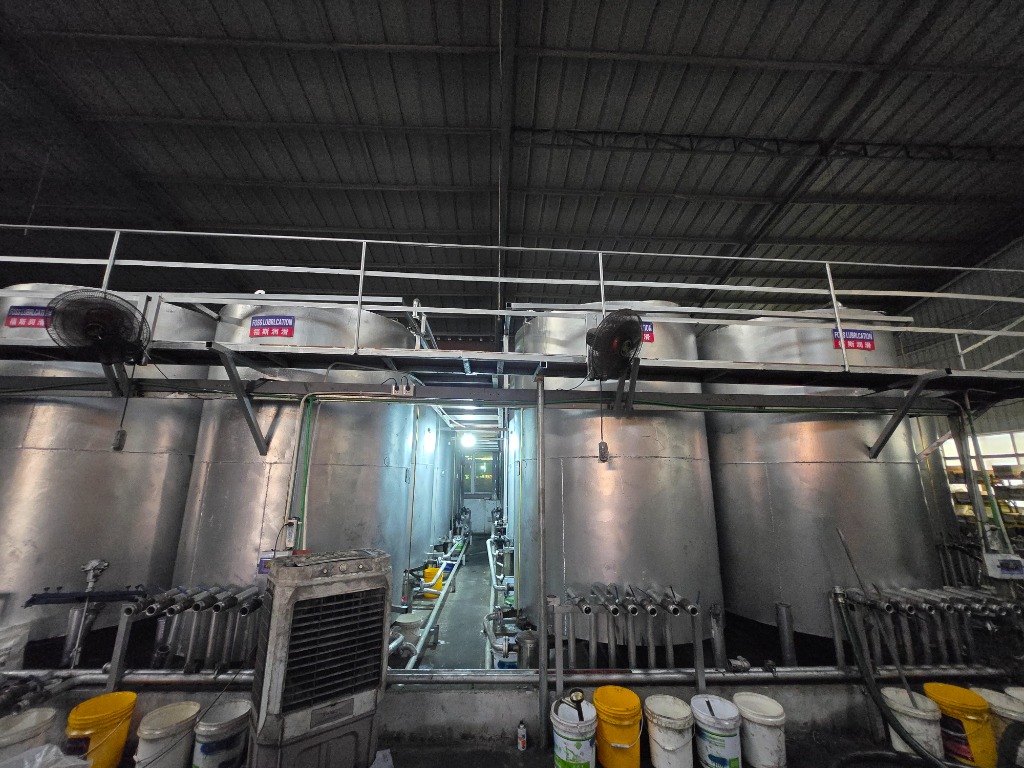
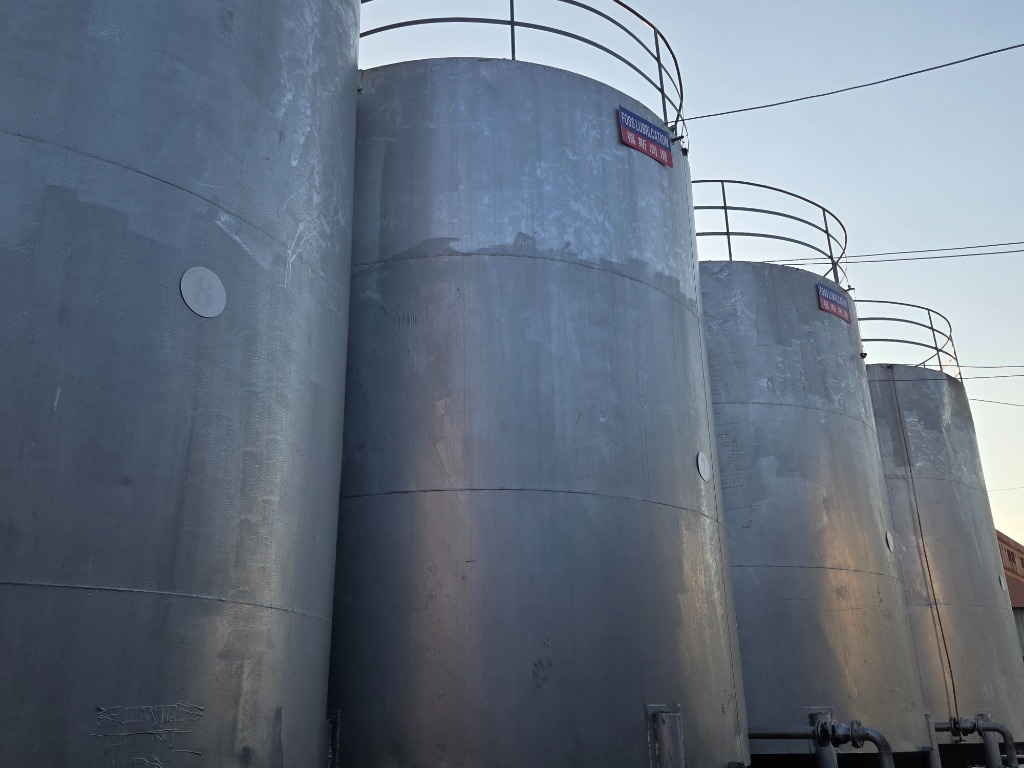
- Extensive Bulk Terminal Reserves: Our Quanzhou facility maintains 20,000 metric tons of dedicated virgin base oil bulk storage, directly connected to deepwater coastal bunkering infrastructure. We maintain long-term contractual allocations with premier hydrocracking refiners, guaranteeing uninterrupted supply of API Group II 150N, 500N, and Group III base stocks regardless of spot market rationing.
- Automated Precision Blending: Four multi-tier high-shear blending reactors featuring Emerson mass-flow metering systems and computerized temperature-controlled heat transfer loops guarantee batch-to-batch repeatability within ±0.2 cSt at 40°C.
- In-House ISO 17025 Compliant Tribology Testing: Every blending batch undergoes 14 mandatory analytical protocols prior to filling—including kinematic viscosity (ASTM D445), flash point (ASTM D92), pour point (ASTM D97), copper corrosion (ASTM D130), foam stability (ASTM D892), Karl Fischer water content (ASTM D6304), and ISO 4406 optical particle counter cleanliness verification (guaranteed NAS 1638 Class 6 / ISO 4406 17/15/12).
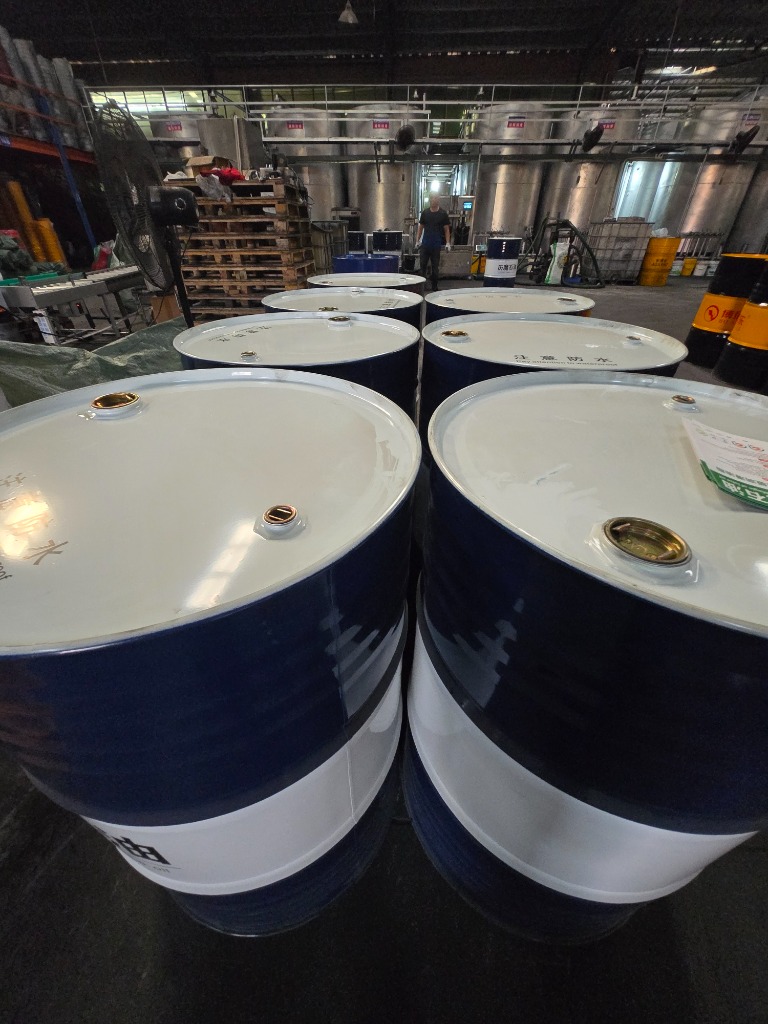
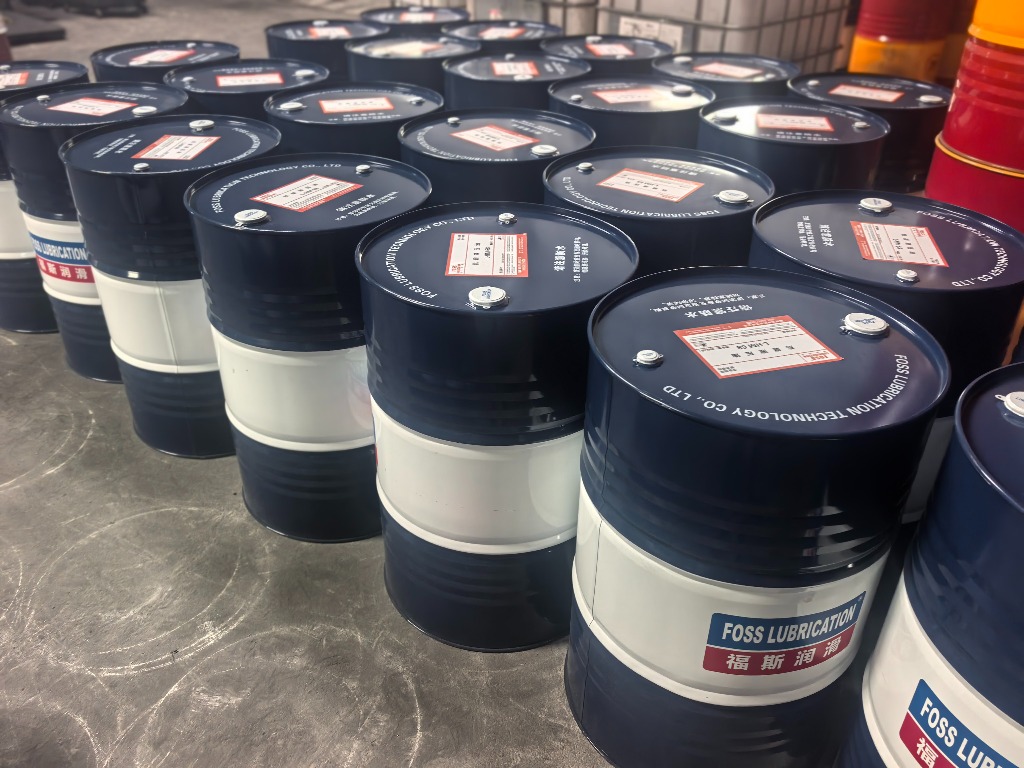
- Flexible Packaging Capabilities: Automated filling lines accommodating 208L steel drums, 1000L IBC totes, 18L/20L pails, and ISO tank flexibags, with daily packaging throughput exceeding 350 metric tons.
- Global OEM Toll-Blending & Private Labeling: Complete turnkey formulation, container customization, bilingual/multilingual silk-screen labeling, and international customs clearance documentation.
Given the extreme tightness in prompt API Group II 500N base stocks and extended ocean shipping timelines around the Cape of Good Hope, production schedules and vessel bookings for mid-to-late November and early-December departures are filling rapidly. International buyers are urged to submit baseline formulation specifications and volume reservations without delay.
Definitive 3-Day Lubricant & Base Oil Trend Forecast
Synthesized by the FOSS Quantitative Energy Modeling Desk based on active shipping line container bookings, regional tank farm draw-down rates, and prompt ICE Brent futures sentiment:
ICE Brent consolidates firmly above $108.00/bbl as Joint War Committee war-risk breach rates hold at 1.90%-2.15% ($550,000-$630,000/VLCC) following expanded naval standoff perimeters near the Tunb Islands; Asian coastal refiners advance prompt Group II 500N spot offers to $1,750-$1,765/MT as hydrocrackers divert VGO feed to capture $36.80/bbl gasoil crack spreads.
Prolonged Cape of Good Hope transit loops (40-46 days Asia-Europe) and Singapore VLSFO bunker escalations ($765/MT) solidify container ocean freight at $6,750-$7,100/FEU; cold-rolled SPCC steel drum price hikes ($37.20/drum) push baseline export quotations for DIN 51524-2 hydraulic oils to $246.00/drum FOB Xiamen.
Unprecedented $435/MT Group II 150N/500N spread and compounding chemical additive inflation (ZDDP +7.8%, EP SIB +8.5%) trigger widespread delivery rationing across regional compounding plants, driving multinational procurement teams in ASEAN, the Middle East, and Latin America to lock firm fourth-quarter production allocations directly in Quanzhou.
5. Strategic Sourcing & Hedging Directives for Overseas Importers
For overseas procurement directors, fleet operators, and industrial distributors, market volatility represents both operational risk and competitive opportunity. We recommend the following three concrete actions for managing Q4 procurement:
Lock 60-Day Container Requirements
Secure firm proforma invoices (PI) with 30-day price validity. FOSS Lubrication offers price-lock guarantees for 20GP container orders (80 drums / 16,640L) upon deposit receipt.
Audit Laboratory CoA Verification
Demand full pre-shipment ASTM test parameters: kinematic viscosity at 40°C / 100°C, viscosity index ≥ 100, flash point ≥ 220°C, pour point ≤ -15°C, and zero moisture contamination.
FOSS Lubrication: Factory-Direct Precision Engineering
Operating out of Quanzhou, China, FOSS blends over 20,000 MT annually of ISO VG 32/46/68 anti-wear hydraulic oils, CK-4 heavy-duty engine oils, and industrial gear lubricants. Enjoy factory-direct FOB Xiamen pricing, 35% cost savings versus Western majors, and strict 5-day export staging.