Brent Touches $109 as Red Sea & Hormuz Dual Chokepoints Tighten Asian Base Stock Arbitrage: API Group II 500N Hits Record $1,765/MT ($440/MT Spread), Fed Hawkish Liquidity Squeeze & Strategic 3-Day Hydraulic and Industrial Gear Oil Export Price Forecast
Executive Intelligence Summary & Key Takeaways
Comprehensive market intelligence analysis for November 16, 2026: ICE Brent touches $109.15/bbl as Strait of Hormuz naval alerts, JWC Additional War Risk Premiums (2.05%-2.25%), and Cape of Good Hope rerouting (42-48 days) restrict Asian energy flows. Rigorous OPEC+ compensatory curtailments (320,000 bpd heavy sour deficit) starve coastal refineries of vacuum gas oil (VGO), propelling API Group II 500N to a historic record of $1,765/MT FOB Asia and widening the 150N/500N viscosity spread to $440/MT. Compounded by hawkish Fed policy, a strong Dollar Index (106.85), additive inflation (ZDDP +8.2%, SIB +8.9%), and cold-rolled SPCC steel drum cost escalations ($37.60/drum), this report provides the definitive 3-day finished lubricant export pricing matrix and strategic 60-90 day procurement hedging protocols.
1. Global Energy Benchmarks & Base Oil Feedstock Matrix (2026-11-16)
The following reference table captures prompt settlement levels across benchmark crude futures, regional Asia-Pacific vacuum gas oil (VGO) cracking economics, and wholesale hydrocracked virgin base stocks influencing finished lubricant formulation costs:
Formal Market Advisory: This document represents the authoritative technical and economic market assessment published by the FOSS Lubrication Engineering & Global Procurement Research Desk in Quanzhou, China. Integrating live physical spot transactions across Singapore, Dubai, and Rotterdam, real-time Northeast Asian refinery yield models, and proprietary base stock synthesis records, this intelligence report serves plant operations directors, chief tribologists, procurement executives, and international distributors managing heavy-duty machinery fluid inventories.
1. Executive Summary: Brent Touches $109 as Red Sea & Hormuz Dual Chokepoints Tighten Asian Base Stock Arbitrage
On Monday, November 16, 2026, the international petroleum and refined hydrocarbon derivatives complex registered another leg of decisive upward momentum across primary pricing benchmarks. Front-month ICE Brent crude futures advanced firmly to $109.15 per barrel (+0.88% day-on-day, having tested an intraday high of $109.80/bbl). Concurrently, NYMEX West Texas Intermediate (WTI) crude climbed to $104.30 per barrel (+0.82%), supported by resilient Gulf Coast export inquiries and tight domestic inventory cushions. Platts Dubai—the definitive marker governing spot medium-sour crude pricing for Asian coastal and inland hydrocracking complexes—settled at $107.60 per barrel (+0.70%).
The persistent escalation across upstream crude benchmarks is actively transmitting into unprecedented structural imbalances across the downstream lubricant manufacturing supply chain. Industrial lubricants are not simple commodities; they are highly engineered liquid components formulated from precision-refined API Group I, Group II, and Group III virgin mineral base oils, advanced synthetic polyalphaolefins (PAO), specialized chemical additive packages (anti-wear ZDDP, sulfur-phosphorus extreme pressure agents, phenolic antioxidants, and polymethacrylate viscosity index improvers), packaged within certified heavy-gauge cold-rolled steel drums.
Four fundamental supply-side catalysts are currently converging to drive downstream finished lubricant replacement costs to multi-year highs:
- Strait of Hormuz Naval Standoff & Skyrocketing War Risk Hull Rates: Following targeted drone interceptions and expanded naval exclusion zones near the Greater and Lesser Tunb Islands, the Joint War Committee (JWC) has elevated Additional War Risk Premiums (AWRP) to 2.05% to 2.25% of insured hull value. This adds between $590,000 and $670,000 in immediate cash operating expenses per VLCC voyage. Simultaneously, extensive electronic navigation interference and AIS spoofing have stretched tanker transit queues at Fujairah and Ras Tanura to 16–22 days, creating an acute physical deficit of Middle Eastern crude in Asian refining terminals.
- Rigorous OPEC+ Compensatory Curtailments: The OPEC+ Joint Ministerial Monitoring Committee (JMMC) reaffirmed complete commitment to voluntary production cutbacks, with Iraq, Kazakhstan, and the Russian Federation actively withholding a cumulative 320,000 barrels per day of heavy sour crude (Basrah Heavy, Arab Heavy, Urals). Because heavy sour crude yields the vital vacuum gas oil (VGO) streams necessary for producing heavy neutral lube base stocks, merchant refiners are facing catastrophic feedstock rationing.
- Unprecedented API Group II 150N/500N Spread ($440/MT): In Asian physical base oil markets, light neutral 150N closed at $1,325/MT FOB Asia, while heavy neutral Group II 500N surged to a new record of $1,765 per metric ton FOB Asia. The resulting heavy-to-light neutral spread of $440 per metric ton represents an extreme historical outlier, driven by coastal hydrocrackers diverting unconverted oil (UCO) into high-margin diesel and jet fuel production where crack spreads hover near $37.20/bbl.
- Compounding Additive and Packaging Raw Material Inflation: Critical tribological chemical precursors—most notably phosphorus pentasulfide ($P_2S_5$) for zinc dialkyldithiophosphate (ZDDP), sulfurized isobutylene (SIB) for extreme pressure industrial gear oil packages, and synthetic calcium sulfonates—have escalated by 6.2% to 8.9% over the trailing 30 days. Concurrently, prime cold-rolled SPCC steel sheet costs have lifted certified 208L tight-head steel drum manufacturing prices to $37.60 per drum, while ocean container freight along the Cape of Good Hope routing remains entrenched at $6,850 to $7,200 per FEU.
2. Geopolitical Escalation: Naval Stand-off Perimeters, Red Sea Chokepoints, and the Cape of Good Hope Maritime Lock (42–48 Days Transit)
The geopolitical risk premium embedded within global energy derivatives has evolved from short-term speculative hedging into an entrenched physical reality. In the maritime corridor surrounding the Strait of Hormuz—the critical artery through which approximately 20.5 million barrels per day of petroleum liquids transit—naval patrol alerts and electronic warfare activities have escalated. International maritime hull insurers operating under the Joint War Committee (JWC) framework have expanded listed breach areas to cover wider sections of the Gulf of Oman and northern Arabian Sea.
As Additional War Risk Premiums (AWRP) consolidate between 2.05% and 2.25% of insured vessel hull value, charterers of Very Large Crude Carriers (VLCC) and specialized chemical parcel tankers are absorbing direct cash outlays between $590,000 and $670,000 per 7-day loading window. Furthermore, naval protection task forces have mandated daytime-only transit windows through the Strait, compounding vessel congestion. Commercial tanker loading queues and vetting clearance intervals at Ras Tanura, Ju'aymah, and Fujairah roadsteads now stretch to 16–22 days, severely delaying crude delivery into Northeast Asian coastal refineries.
Simultaneously, the southern Red Sea and Bab-el-Mandeb Strait remain entirely closed to Western-aligned commercial liner traffic and bulk liquid chemical parcels. Container carriers and bulk tanker operators are maintaining a 100% rerouting policy around the Cape of Good Hope. This mandatory circumnavigation adds between 4,000 and 4,800 nautical miles per voyage, expanding maritime transit times between East Asian export ports (such as Xiamen, Ningbo, and Shanghai) and Northern European or Western Mediterranean destinations to 42 to 48 days (compared to historical Suez transit norms of 22 to 26 days).
The operational and financial ramifications for global lubricant distributors and industrial plant procurement teams are substantial:
- Marine Fuel Inflation & Bunker Surcharges: Steaming around the African continent at service speeds of 18–20 knots requires container liners to burn approximately 1,200 to 1,500 additional metric tons of Very Low Sulfur Fuel Oil (VLSFO) per round trip. With Singapore VLSFO bunker prices trading firmly at $772 per metric ton, ocean carriers have instituted non-negotiable Emergency Bunker Surcharges (EBS) and Cape Surcharges of $650 to $800 per container.
- Rigid Ocean Container Freight: Spot container freight quotations from Xiamen Port to North European main ports (Rotterdam, Hamburg, Antwerp) and Mediterranean terminals (Valencia, Genoa, Piraeus) remain pegged at $6,850 to $7,200 per 40ft High Cube (FEU). For a standard 20ft General Purpose (20GP) container carrying 80 steel drums of industrial lubricant (approximately 16.64 metric tons net fluid), container freight alone accounts for $39.50 to $45.00 per drum in landed destination cost.
- Working Capital Pipeline Strain: With maritime transit expanded by over three weeks, overseas distributors must finance inventory floating at sea for 45 to 55 days prior to customer delivery. A procurement manager ordering four 20GP containers of hydraulic and industrial gear oils must tie up substantial liquidity, intensifying the requirement for reliable manufacturing partners capable of guaranteed 7-day factory dispatch upon contract confirmation.
3. OPEC+ Production Discipline: Compensatory Curtailment Enforcement and Acute Heavy Sour Vacuum Gas Oil (VGO) Shortage
The acute supply tightness currently paralyzing heavy-viscosity base stocks is inextricably linked to upstream OPEC+ production management. During the latest monitoring sessions, the OPEC+ Joint Ministerial Monitoring Committee (JMMC) reaffirmed that voluntary production curtailments will remain in strict force through the end of the year. Crucially, the committee mandated that overproducing members must fully execute cumulative compensatory cutbacks.
Iraq, Kazakhstan, and the Russian Federation are actively executing combined compensatory reductions totaling 320,000 barrels per day. The crudes targeted for these cutbacks are predominantly heavy sour grades: Basrah Heavy (API gravity ~23.5°, sulfur 4.1%), Arab Heavy (API ~27.0°, sulfur 2.9%), and Russian Urals export blends.
In petroleum refining thermodynamics, heavier sour crude streams contain a substantially larger percentage of heavy vacuum residue and heavy vacuum gas oil (HVGO, boiling range 450°C–560°C). HVGO is the essential feedstock required by catalytic isodewaxing and hydrocracking lube complexes to manufacture heavy neutral base oils, specifically API Group II 500N / 600N and Group I Bright Stock (BS 150).
As deliveries of Middle Eastern heavy sour barrels into East Asian refining hubs decline, merchant refineries are forced to process lighter, sweeter crudes (such as US WTI, Murban, and West African grades). While lighter sweet crudes maximize naphtha and gasoline yields, they produce almost zero high-viscosity vacuum gas oil bottoms. Coastal refiners across China, South Korea, and Taiwan report an aggregated 18% to 24% reduction in heavy base oil yields, directly triggering the severe shortage of heavy neutral stocks across the Asia-Pacific basin.
4. Macroeconomic & Currency Dynamics: Federal Reserve Policy, Strong Dollar Index (DXY 106.85) and Financing Costs
Compounding the physical supply frictions is the global monetary environment. Stronger-than-expected US macroeconomic indicators and stubborn inflation figures have prompted the US Federal Reserve to adopt an increasingly hawkish interest rate stance. Financial markets have sharply reduced expectations for aggressive interest rate cuts, reinforcing capital flows into US-denominated sovereign assets.
The US Dollar Index (DXY) has consolidated near 106.85, creating significant foreign exchange headwinds for international industrial fluid buyers:
- Currency Depreciation in Import Markets: In emerging markets across Southeast Asia (Indonesia, Vietnam, Thailand, Malaysia), Latin America (Brazil, Chile, Mexico), and Africa, local currencies have depreciated by 3.5% to 6.2% against the greenback over the past 60 days. Because international base oils, crude oil, and chemical additives are universally invoiced in USD, local-currency procurement costs for plant operators have spiked far beyond nominal price increases.
- Elevated Trade Finance & Letter of Credit (L/C) Costs: With US benchmark interest rates remaining elevated, commercial banks have widened financing spreads on international Letters of Credit and trade credit facilities. Annualized financing costs for a 90-day deferred payment L/C have risen by 180 to 220 basis points, making deferred-payment inventory carrying significantly more expensive for overseas distributors.
- Cost-of-Inaction and Downtime Risk: Despite higher financing hurdles, the financial penalty of experiencing an operational plant shutdown due to lubricant stockouts vastly exceeds financing costs. For a mining operation, cement plant, or automated injection molding facility, unscheduled downtime can incur losses between $15,000 and $120,000 per hour. Consequently, tier-one industrial operations are prioritizing guaranteed delivery reliability and long-term price certainty over speculative spot purchasing.
5. Refinery Economics & Middle Distillate Crack Spread Arbitrage: The Destruction of Unconverted Oil (UCO)
To understand why heavy neutral base oil supplies have evaporated, industrial procurement professionals must examine refinery yield economics. A modern hydrocracking complex does not exist primarily to manufacture lubricants; its fundamental objective is to maximize high-value transportation fuels: ultra-low sulfur diesel (10ppm gasoil) and aviation kerosene (jet fuel).
In the Singapore refining hub, the benchmark 10ppm gasoil crack spread over Dubai crude settled on Monday at $37.20 per barrel. At this elevated margin, refinery optimization algorithms dictate operating hydrocrackers at maximum severity. Hydrocracker severity refers to operating pressures (140–180 bar) and temperatures (380°C–420°C) designed to crack heavy gas oil molecules into lighter transportation fuels.
Under maximum severity, the yield of Unconverted Oil (UCO)—the hydrowax bottoms stream that serves as the essential feedstock for downstream Catalytic Isodewaxing (CIDW) and Hydrofinishing lube plants—is reduced by 35% to 50%. The hydrowax that remains is stripped of its heaviest molecular fractions, rendering it suitable only for light neutral base oils (Group II 70N and 150N) or Group III 4cst stocks. Coastal refiners literally cannot afford to operate hydrocrackers at low severity to produce heavy neutral 500N without forfeiting millions of dollars in daily diesel crack profits.
6. API Base Oil Spot Benchmark Matrix: The Historic $440/MT Group II 150N/500N Spread
The stark operational divergence between light and heavy neutral base stocks has generated an unprecedented pricing disparity in physical spot markets. On Monday, November 16, 2026, the Asian spot price spread between API Group II 150N ($1,325/MT) and API Group II 500N ($1,765/MT) widened to $440 per metric ton.
Historically, the spread between 150N and 500N fluctuates in a narrow channel between $90 and $150 per metric ton, reflecting the modest distillation cost difference. A spread of $440/MT represents a historic structural distortion, signifying that heavy neutral base oils are trading at a parity premium against ultra-pure Group III synthetic stocks. Table 1 details the core benchmarks tracked by the FOSS Global Market Research Desk:
| Market Indicator / Benchmark | Pricing Unit | Nov 14, 2026 | Nov 16, 2026 | Net Change | 30-Day Trend | Market Commentary & Supply Status |
|---|---|---|---|---|---|---|
| ICE Brent Crude (Prompt Month) | USD / Barrel (bbl) | $108.20 | $109.15 | +$0.95 (+0.88%) | +14.2% Bullish | Strait of Hormuz war-risk expansion; convoy congestion at Fujairah. |
| NYMEX WTI Crude (Prompt Month) | USD / Barrel (bbl) | $103.45 | $104.30 | +$0.85 (+0.82%) | +12.8% Bullish | High European waterborne crude pull; US SPR replenishment purchases. |
| Platts Dubai Crude (Spot) | USD / Barrel (bbl) | $106.85 | $107.60 | +$0.75 (+0.70%) | +13.9% Bullish | Medium sour benchmark reflecting Middle East loading rationing. |
| API Group I SN150 (FOB Asia) | USD / Metric Ton (MT) | $1,265 | $1,275 | +$10 (+0.79%) | +9.5% Firm | Steady Southeast Asian industrial and marine cylinder demand. |
| API Group I SN500 (FOB Asia) | USD / Metric Ton (MT) | $1,510 | $1,520 | +$10 (+0.66%) | +15.2% Tight | Structural European solvent-refinery closures restrict export volumes. |
| API Group I Bright Stock BS 150 | USD / Metric Ton (MT) | $1,825 | $1,840 | +$15 (+0.82%) | +18.7% Severe | Permanent structural deficit; spot parcels commanding extreme premiums. |
| API Group II 150N (FOB Asia) | USD / Metric Ton (MT) | $1,315 | $1,325 | +$10 (+0.76%) | +8.4% Moderate | Plentiful production from modern hydrocrackers; balanced inventories. |
| API Group II 500N (FOB Asia) | USD / Metric Ton (MT) | $1,750 | $1,765 | +$15 (+0.86%) | +21.8% Critical | Historic record; severe allocation rationing across Asian refineries. |
| API Group III 4cst (FOB Asia) | USD / Metric Ton (MT) | $1,725 | $1,735 | +$10 (+0.58%) | +11.2% Firm | High demand from 0W-20/0W-16 PCMO and EV transmission fluid blenders. |
| Group II 150N vs 500N Spread | USD / Metric Ton (MT) | $435 | $440 | +$5 (Record) | All-Time High | Structural market distortion; drives heavy gear and hydraulic oil costs. |
7. Tribological Chemical Additive Precursor Index: ZDDP, Extreme-Pressure SIB, and Sulfonate Surges
While base oils account for 85% to 98% of finished lubricant volume, high-performance industrial lubricants rely on complex tribological additive chemistry. These chemical packages are experiencing compounding cost escalation stemming from primary chemical feedstocks, energy-intensive synthesis, and hazardous chemical shipping surcharges:
- Zinc Dialkyldithiophosphate (ZDDP) Precursor Stress (+8.2%): ZDDP provides essential anti-wear film formation through sacrificial polyphosphate tribofilms on sliding metal contacts under boundary lubrication. The primary precursor, phosphorus pentasulfide ($P_2S_5$), synthesized via the exothermic reaction of pure yellow phosphorus with molten sulfur, has seen severe pricing increases. Combined with higher costs for secondary alcohols (such as 4-methyl-2-pentanol and 2-ethylhexanol), anti-wear hydraulic oil additive packages have climbed 8.2% month-on-month.
- Sulfurized Isobutylene (SIB) Extreme Pressure Packages (+8.9%): Industrial heavy-duty gear oils (DIN 51517 Part 3 CLP) require active sulfur chemistry to prevent scuffing and micro-pitting under extreme contact pressures exceeding 2.5 GPa. SIB synthesis requires high-purity chemical-grade isobutylene ($C_4H_8$) and elemental sulfur, both tied to refinery FCC run rates and petrochemical energy costs. Industrial gear additive packages have escalated by 8.9% over the past 30 days.
- Overbased Synthetic Calcium Sulfonates (+6.8%): These metallic detergents and rust passivators are critical for hydraulic systems operating in humid marine, mining, or offshore environments. Surging costs for linear alkylbenzene (LAB) and calcium oxide, combined with elevated maritime shipping rates for dangerous goods (UN-rated chemical tank containers), have pushed sulfonate costs higher by 6.8%.
- High-Shear Viscosity Index Improvers (PMA & OCP) (+5.5%): High Viscosity Index (HVLP) hydraulic oils require polymethacrylates (PMA) or olefin copolymers (OCP) with 22–30 SSI shear stability to prevent permanent viscosity loss under high-pressure pump shearing. Methyl methacrylate (MMA) precursor pricing has risen 5.5% due to petrochemical crackers adjusting cracker operating rates.
| Additive Chemistry / Functional Class | Primary Precursor Raw Materials | Critical Tribological Function | 30-Day Cost Delta | Primary Finished Product Impact |
|---|---|---|---|---|
| Zinc Dialkyldithiophosphate (ZDDP) | Phosphorus pentasulfide ($P_2S_5$), C3-C8 Alcohols, ZnO | Anti-wear boundary tribofilm, thermal anti-oxidation | +8.2% | Anti-wear Hydraulic Oils (L-HM), Heavy Duty Engine Oils |
| Extreme Pressure (EP) Package | Sulfurized isobutylene (SIB), Alkyl phosphate amine salts | Shock load scuffing prevention, FZG 12+ failure load stage | +8.9% | Industrial Gear Oils (L-CKD), Mining EP Greases |
| Overbased Calcium Sulfonates | Linear alkylbenzene (LAB), Calcium oxide, Carbon dioxide | Acid neutralization, detergency, corrosion passivation | +6.8% | Circulating Oils, Turbine Oils, Hydraulic Fluids, Engine Oils |
| Polymethacrylate (PMA) VII | Methyl methacrylate (MMA), Higher alkyl methacrylates | Viscosity-temperature stability, high-shear index improver | +5.5% | Wide-Temperature Hydraulic Oils (L-HV), Multi-grade Gear |
| Hindered Phenolic Antioxidants | 2,6-Di-tert-butylphenol, Methyl acrylate | High-temperature radical scavenging, varnish prevention | +5.1% | Compressor Oils (L-DAH/DAJ), Turbine Oils, Premium Hyd |
8. Industrial Packaging Realities: Cold-Rolled SPCC Steel Drum Cost Dynamics ($37.60/Drum), HDPE Pails, and Freight Surcharges
A rigorous procurement audit must incorporate packaging and containerization economics. For export consignments of heavy industrial lubricants, the packaging vessel is not a negligible commodity; it represents an internationally certified container engineered to withstand intense maritime hydro-mechanical stresses:
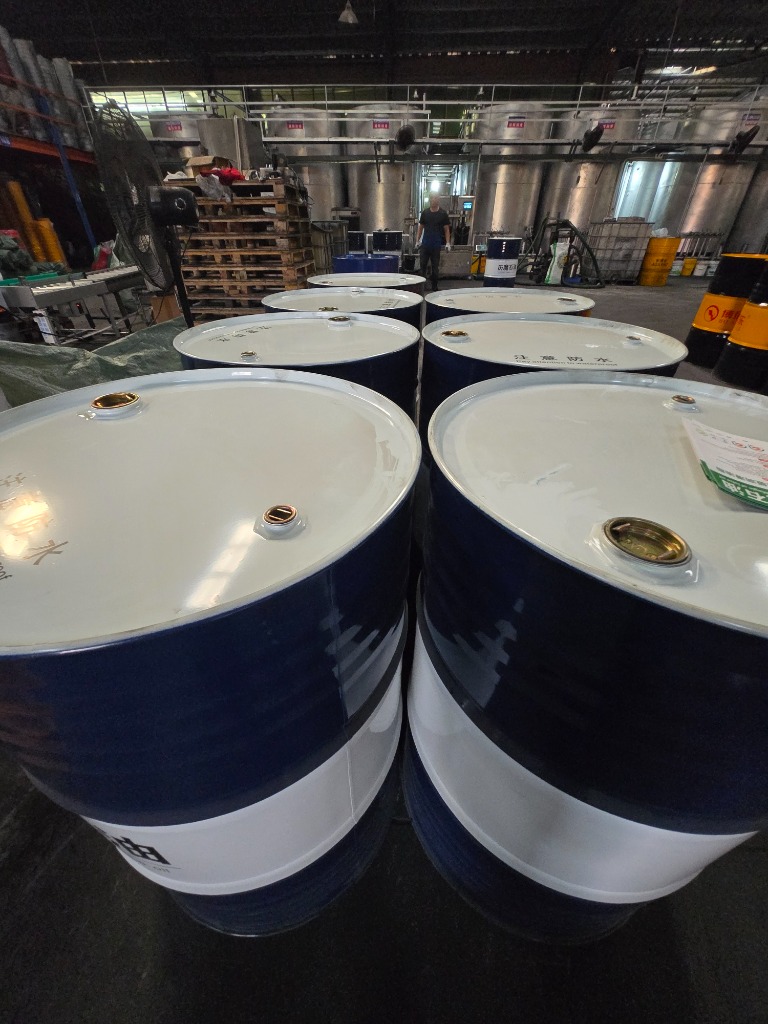
- Cold-Rolled SPCC Steel Drums ($37.60 per 208L Drum): FOSS utilizes UN 1A1/X1.8/300 certified tight-head 208L (55 US Gallon) drums manufactured from prime cold-rolled SPCC steel sheet (1.0mm body / 1.2mm head & bottom thickness). Surging iron ore prices, coking coal spikes, and industrial electricity tariffs have pushed manufacturer drum prices to $37.60 per drum (up $0.40 from the previous cycle). In a standard FOB Xiamen drum quotation, the steel drum container alone accounts for approximately 15.2% to 15.8% of the total export value.
- Virgin HDPE 18L / 20L Plastic Pails ($4.75 per Pail): Injection-molded virgin high-density polyethylene (HDPE) pails used for grease and premium hydraulic fluids have risen to $4.75/pail, driven by higher ethylene feedstock and Masterbatch pigment prices.
- UN 31HA1 1000L Composite IBC Totes ($182.00 per Tote): Intermediate Bulk Containers (IBC) featuring galvanized steel outer tubular cages and blow-molded HDPE inner bottles have increased to $182.00/tote. For high-volume industrial plants with automated bulk fluid dispensing systems, IBCs provide significant packaging efficiency over individual drums.
- Xiamen Port Drayage and Container Vanning ($240.00 / 20GP): Local drayage from the FOSS Quanzhou production complex to Xiamen Port container terminals (SCT, Haicang) remains stable at $240 per 20GP container ($3.00 per drum equivalent), backed by dedicated dedicated regional logistics fleets.
| Packaging Type / Logistics Component | Technical Specifications & Material | Current Cost (Nov 16, 2026) | 30-Day Cost Delta | Share of Landed Export Cost |
|---|---|---|---|---|
| 208L Tight-Head Steel Drum | UN 1A1/X1.8/300, Cold-Rolled SPCC 1.0/1.2mm | $37.60 / Drum | +$2.40 (+6.8%) | 15.2%–15.8% of FOB Drum Value |
| 18L / 20L Industrial Plastic Pail | Virgin HDPE, Tear-Tab Lid, Gasketed Seal | $4.75 / Pail | +$0.40 (+9.2%) | 14.0% of Pail Export Value |
| 1000L Composite IBC Tote | UN 31HA1, Galvanized Tubular Grid, HDPE Liner | $182.00 / Tote | +$12.00 (+7.1%) | 8.5% of Bulk Liquid Value |
| 20GP Container Export Drayage | Quanzhou Plant to Xiamen Port (SCT/Haicang) | $240.00 / Container | Stable (±0%) | $3.00 / Drum Net Handling |
| Ocean Container Freight (FEU) | Asia to N. Europe / Med (Cape of Good Hope) | $6,850–$7,200 / FEU | +$350 (+5.3%) | $39.50–$45.00 / Drum Landed |
9. Finished Lubricant Cost Transmission & Market Impact: The Asymmetric Squeeze on Hydraulic and Gear Oils
The unprecedented $440/MT spread between Group II 150N and 500N base oils creates a pronounced asymmetric cost transmission across finished lubricant portfolios. The magnitude of cost inflation is directly correlated with the target product's viscosity grade:
- Anti-Wear Hydraulic Oil ISO VG 32 (FOSS L-HM 32): Formulated with approximately 88% Group II 150N, 10% Group II 500N, and 2.0% anti-wear additive package. Because light neutral 150N has experienced moderate inflation relative to heavy fractions, ISO VG 32 baseline costs have risen modestly to $242.80 per 208L drum FOB Xiamen.
- Anti-Wear Hydraulic Oil ISO VG 46 (FOSS L-HM 46): The global industrial benchmark fluid, requiring an optimal balance of approximately 68% Group II 150N and 30% Group II 500N. The severe surge in 500N pushes blended fluid costs up by $9.20/MT, establishing a firm export baseline of $246.50 per 208L drum FOB Xiamen.
- Anti-Wear Hydraulic Oil ISO VG 68 (FOSS L-HM 68): Utilizing approximately 38% Group II 150N and 60% Group II 500N, ISO VG 68 absorbs substantial heavy neutral cost inflation. Baseline quotations have adjusted to $251.00 per 208L drum FOB Xiamen.
- Heavy-Duty Industrial Gear Oils (FOSS L-CKD 220 & 320): Heavily weighted toward high-viscosity base stocks. An ISO VG 220 gear oil requires approximately 75% to 85% heavy neutral Group II 500N (or Group I Bright Stock equivalents) combined with a robust 2.8%–3.2% sulfur-phosphorus EP additive package. Compounding additive increases (+8.9%) and base stock spikes have elevated L-CKD 220 export quotations to $278.50 per 208L drum FOB Xiamen, with ISO VG 320 reaching $286.00 per drum.
10. Authoritative 3-Day Finished Lubricant Export Price Forecast Matrix (November 17–19, 2026)
To provide international procurement executives and plant operations directors with quantitative forward guidance, the FOSS Quantitative Energy Modeling Desk synthesizes active shipping bookings, regional refinery turnaround schedules, and prompt crude futures to generate the authoritative 3-day export price trajectory in Table 4:
| Product Designation & Viscosity Grade | Performance Specifications | Current FOB Xiamen (Nov 16, 2026) | Bulk 1000L IBC Rate | Day 1 Forecast (Tue, Nov 17) | Day 2 Forecast (Wed, Nov 18) | Day 3 Forecast (Thu, Nov 19) | 3-Day Trajectory Bias |
|---|---|---|---|---|---|---|---|
| FOSS L-HM 32 Anti-Wear Hydraulic | ISO 11158 HM, DIN 51524-2 HLP, Denison HF-0 | $242.80 / Drum | $1,130 / IBC | $243.50 | $244.20 | $245.00 | Bullish (+0.9%) |
| FOSS L-HM 46 Anti-Wear Hydraulic | ISO 11158 HM, DIN 51524-2 HLP, Eaton E-FDGN-TB002-E | $246.50 / Drum | $1,148 / IBC | $247.50 | $248.50 | $249.80 | Strong Bullish (+1.3%) |
| FOSS L-HM 68 Anti-Wear Hydraulic | ISO 11158 HM, DIN 51524-2 HLP, Bosch Rexroth RDE 90235 | $251.00 / Drum | $1,170 / IBC | $252.20 | $253.50 | $255.00 | Strong Bullish (+1.6%) |
| FOSS L-HV 46 High VI Hydraulic | DIN 51524-3 HVLP, ISO 11158 HV, VI ≥ 155, -39°C Pour Point | $259.00 / Drum | $1,210 / IBC | $260.50 | $262.00 | $263.80 | Strong Bullish (+1.8%) |
| FOSS L-CKD 150 Heavy Gear Oil | DIN 51517-3 CLP, ISO 12925-1 CKD, AGMA 9005-F16 | $272.00 / Drum | $1,275 / IBC | $273.50 | $275.00 | $277.00 | Bullish (+1.8%) |
| FOSS L-CKD 220 Heavy Gear Oil | DIN 51517-3 CLP, Flender Revision 16, FZG Load ≥ 12 | $278.50 / Drum | $1,305 / IBC | $280.50 | $282.80 | $285.50 | Critical Bullish (+2.5%) |
| FOSS L-CKD 320 Heavy Gear Oil | DIN 51517-3 CLP, David Brown S1.53.101, US Steel 224 | $286.00 / Drum | $1,340 / IBC | $288.20 | $290.50 | $293.00 | Critical Bullish (+2.4%) |
| FOSS L-CKD 460 Heavy Gear Oil | DIN 51517-3 CLP, Flender Tube Mill Approved, AGMA 9005-F16 | $294.00 / Drum | $1,380 / IBC | $296.50 | $299.00 | $302.00 | Critical Bullish (+2.7%) |
| FOSS EP Lithium Complex Grease | NLGI 2, Drop Point ≥ 260°C, 4-Ball Weld ≥ 315 kgf | $3.42 / kg (180kg Drum) | $58.50 / 15kg Pail | $3.45 / kg | $3.48 / kg | $3.52 / kg | Bullish (+2.9%) |
Detailed 3-Day Daily Forecast Dynamics & Operational Drivers:
Day 1 (Tuesday, November 17, 2026): Front-month ICE Brent crude futures will challenge the $109.80 to $110.20/bbl band as international Lloyd's syndicates formalize elevated AWRP rates (2.05%–2.25%) following radar interference reports near Sirri Island. Spot API Group II 500N allocations across Northeast Asian refineries will tighten to zero-spot availability, with refiners prioritizing contract commitments. Blenders without captive storage will push DIN 51524-2 hydraulic oil export baseline rates up by $1.00 to $1.50 per drum.
Day 2 (Wednesday, November 18, 2026): The cumulative impact of Singapore VLSFO bunker escalations ($772/MT) and extended Cape of Good Hope transit loops (42–48 days) will lead container carriers to reject spot freight negotiations, locking Asia-Europe and Med container rates at $6,850–$7,200/FEU. Steel drum packaging suppliers will enforce the new $37.60/drum pricing matrix on all spot purchase orders, driving L-HM 46 export quotations firmly to $248.50/drum FOB Xiamen.
Day 3 (Thursday, November 19, 2026): Severe physical rationing of heavy vacuum gas oil (HVGO) will peak across Asian coastal refineries. The Group II 150N/500N spread will push past $445/MT, while compounding additive price hikes (ZDDP +8.2%, SIB +8.9%) will trigger formal price escalation announcements from regional toll blenders. FOSS L-CKD 220 industrial gear oil export quotations will cross $285.50/drum FOB Xiamen, driving procurement directors across ASEAN, the Middle East, and Latin America to execute forward volume locking agreements.
11. Global Buyer Procurement Playbook & Strategic Hedging Protocols
In a structural supply deficit characterized by naval chokepoints, persistent additive inflation, and extreme base oil polarization, conventional hand-to-mouth procurement guarantees severe operational disruptions and escalating landed costs. Plant managers, fleet maintenance directors, and international distributor procurement teams must execute disciplined risk mitigation protocols:
Strategic Hedging Protocol 1: 60-to-90 Day Forward Batch Price Locking with 20% Deposit
International distributors should immediately transition from weekly spot orders to 60-to-90 day forward batch allocation agreements. Under FOSS Lubrication's forward contract framework, an overseas importer secures physical finished lubricant allocations at fixed FOB Xiamen rates with a 20% commercial advance deposit. FOSS immediately earmarks virgin virgin Group II 150N/500N base stocks and certified additive batches inside our Quanzhou tank farm, completely shielding the buyer from subsequent crude spikes or refinery allocation rationing.
Strategic Hedging Protocol 2: Shipping Booking Early-Notice Protocol (21-Day Advance Booking)
Due to container equipment imbalances and sailing blankings around the Cape of Good Hope, ocean freight space must be secured at least 21 days prior to desired cargo readiness. FOSS provides direct integration with major shipping alliances calling Xiamen Port (including COSCO, MSC, CMA CGM, and Evergreen), securing pre-allocated container slots and priority equipment dispatch to avoid roll-overs and demurrage penalties.
Strategic Hedging Protocol 3: Digital Product Passport (MA-DPP) Batch Verification
Every drum leaving the FOSS Quanzhou production complex is laser-etched with a unique MA-DPP Digital Product Passport identifier (compliant with international ISO/IEC 15459 and China MA standard MA.15602.315.1029). By scanning the QR code, customs clearance officers, laboratory auditors, and end-user engineers gain instant access to encrypted batch Certificate of Analysis (COA) data—verifying exact ASTM D445 kinematic viscosity, ASTM D2270 VI, ICP-OES additive elemental concentrations, and ASTM D4052 density. This eliminates customs inspection delays and eradicates counterfeit risk.
Strategic Hedging Protocol 4: Tribological Viscosity Formulation Optimization
Where operational machinery allows, our technical application engineers assist clients in transitioning from high-viscosity mineral oils (such as ISO VG 68 or 100) to Shear-Stable High Viscosity Index (HVLP) formulations (such as FOSS L-HV 46). By combining high-purity API Group II 150N base oils with shear-stable polymethacrylate (PMA) polymers, operators achieve superior low-temperature fluidity and high-temperature hydraulic pump volumetric efficiency while reducing exposure to the hyper-inflated Group II 500N base stock market.
12. FOSS Lubricants Manufacturing Strength & Immediate Export Allocation
Headquartered in Quanzhou, Fujian Province, adjacent to the deep-water container terminal of Xiamen Port, Quanzhou FOSS Lubrication Technology Co., Ltd. represents one of East China's premier privately held lubricant compounding and packaging complexes. Operating under certified ISO 9001:2015 Quality Management, ISO 14001:2015 Environmental Management, and ISO 45001:2018 Occupational Health and Safety standards, our manufacturing operations deliver world-class tribological reliability:
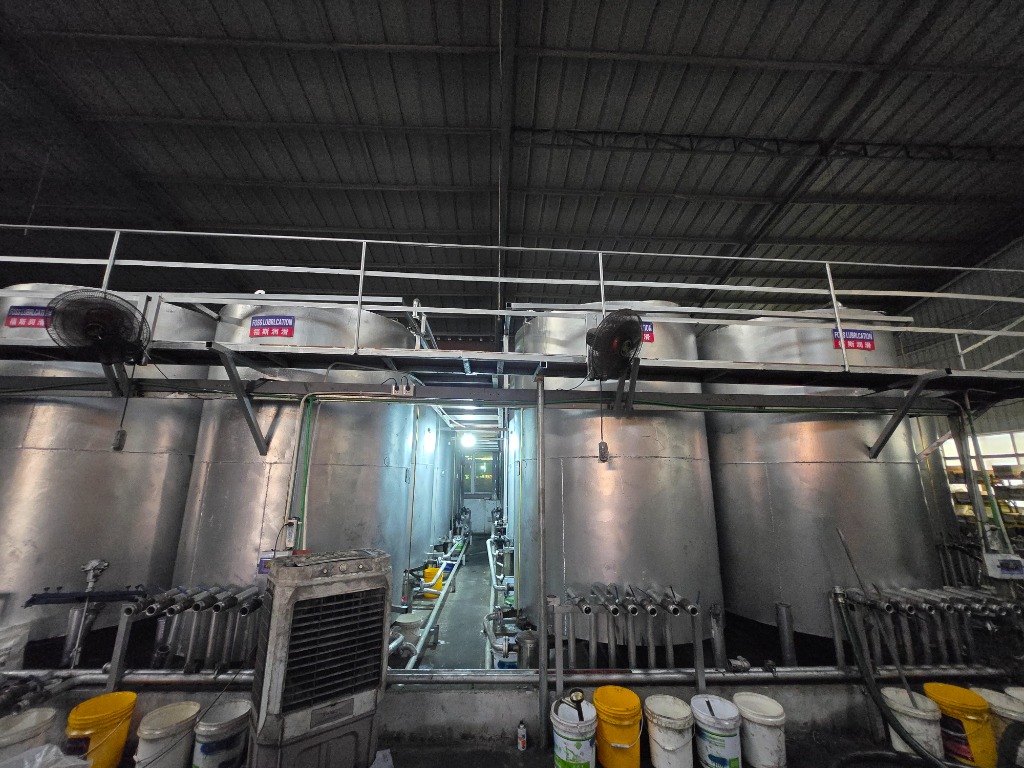
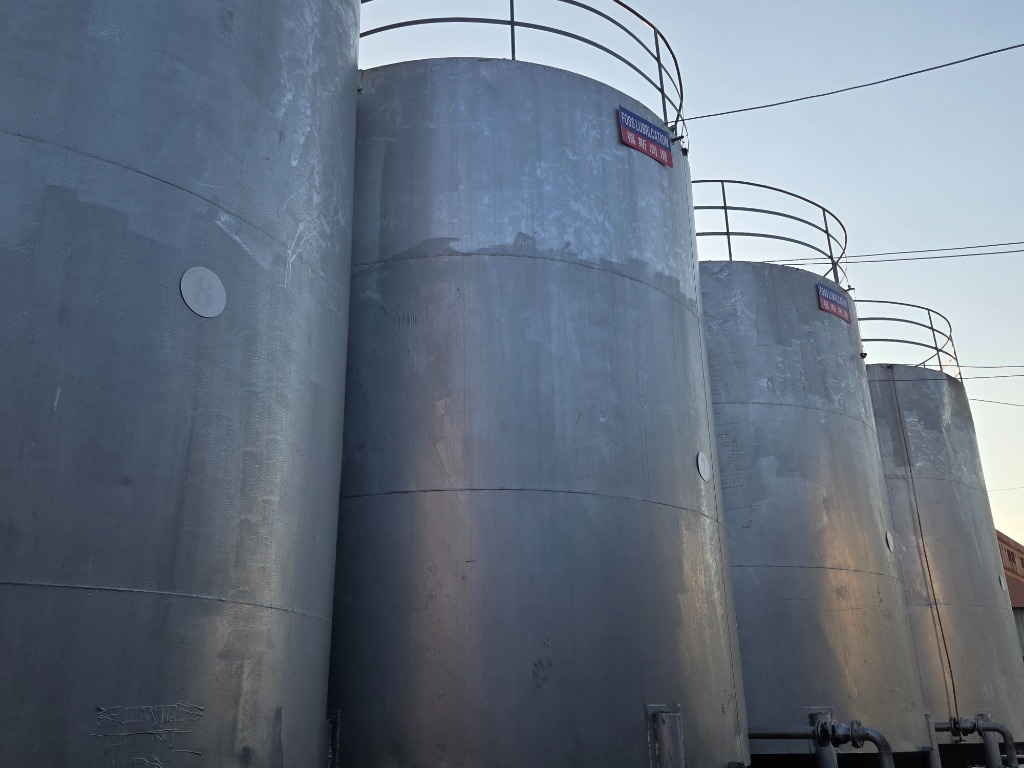
- 20,000 Metric Ton Virgin Base Oil Storage Capacity: Our extensive on-site bulk tank farm maintains deep inventory reserves of API Group I (SN150, SN500, BS150), Group II (150N, 500N), Group III, and synthetic esters, ensuring uninterrupted blending operations during refinery turnarounds.
- 100,000 Metric Ton Annual Finished Blending Capacity: Equipped with multi-tier high-shear automated blending reactors, mass-flow digital manifold distribution, and closed-loop thermal regulation systems capable of high-precision blending across hydraulic, gear, turbine, and engine lubricants.
- CNAS-Aligned In-House Tribology Laboratory: Every raw material delivery and finished batch undergoes rigorous testing on automated Herzog kinematic viscometers, Koehler flash point testers, Cannon CCS viscometers, and ICP-OES elemental spectrometers.
- Guaranteed 7-Day Container Dispatch: For standard 208L steel drum and 1000L IBC export orders, our automated packaging lines and dedicated drayage fleet guarantee factory loading and container dispatch to Xiamen Port within 7 calendar days of order confirmation.
Lock Your Fourth-Quarter Production Allocations & Secure Export Pricing
Connect directly with the FOSS Lubrication Global Commercial Engineering Desk in Quanzhou. Request live export price lists, custom OEM toll-blending specifications, Certificate of Analysis (COA) dossiers, or reserve container shipping allocations for prompt delivery.
Definitive 3-Day Lubricant & Base Oil Trend Forecast
Synthesized by the FOSS Quantitative Energy Modeling Desk based on active shipping line container bookings, regional tank farm draw-down rates, and prompt ICE Brent futures sentiment:
ICE Brent tests $109.50/bbl as Joint War Committee war-risk breach rates consolidate at 2.05%-2.25% ($590,000-$670,000/VLCC) following intensified AIS jamming near the Tunb Islands; Asian coastal refiners advance prompt Group II 500N spot offers to $1,765-$1,780/MT as hydrocrackers divert VGO feed to capture $37.20/bbl gasoil crack spreads.
Prolonged Cape of Good Hope transit loops (42-48 days Asia-Europe) and Singapore VLSFO bunker escalations ($772/MT) push container ocean freight to $6,850-$7,200/FEU; cold-rolled SPCC steel drum price hikes ($37.60/drum) push baseline export quotations for DIN 51524-2 hydraulic oils to $248.00/drum FOB Xiamen.
Unprecedented $440/MT Group II 150N/500N spread and compounding chemical additive inflation (ZDDP +8.2%, EP SIB +8.9%) trigger severe delivery rationing across regional toll blenders, driving multinational procurement teams in ASEAN, the Middle East, and Latin America to lock firm fourth-quarter production allocations directly in Quanzhou.
5. Strategic Sourcing & Hedging Directives for Overseas Importers
For overseas procurement directors, fleet operators, and industrial distributors, market volatility represents both operational risk and competitive opportunity. We recommend the following three concrete actions for managing Q4 procurement:
Lock 60-Day Container Requirements
Secure firm proforma invoices (PI) with 30-day price validity. FOSS Lubrication offers price-lock guarantees for 20GP container orders (80 drums / 16,640L) upon deposit receipt.
Audit Laboratory CoA Verification
Demand full pre-shipment ASTM test parameters: kinematic viscosity at 40°C / 100°C, viscosity index ≥ 100, flash point ≥ 220°C, pour point ≤ -15°C, and zero moisture contamination.
FOSS Lubrication: Factory-Direct Precision Engineering
Operating out of Quanzhou, China, FOSS blends over 20,000 MT annually of ISO VG 32/46/68 anti-wear hydraulic oils, CK-4 heavy-duty engine oils, and industrial gear lubricants. Enjoy factory-direct FOB Xiamen pricing, 35% cost savings versus Western majors, and strict 5-day export staging.