Brent Crosses $98 as Strait of Hormuz War-Risk Surcharges Mount & OPEC+ Enforces 2.2M bpd Quota Caps: Group II 500N Supply Deficit Hits Record $290/MT Spread, Additive Precursor Inflation & 3-Day Hydraulic Fluid Export Forecast
Executive Intelligence Summary & Key Takeaways
As Monday, November 2, 2026 trading opens with front-month ICE Brent crude futures surging past $97.85/bbl (intraday high $98.15/bbl) and NYMEX WTI testing $93.40/bbl—fueled by mounting Additional War Risk Premiums (AWRP) across the Strait of Hormuz, strict OPEC+ ministerial enforcement of the 2.2 million bpd production curtailments through year-end with zero compensation tolerance, persistent Cape of Good Hope maritime rerouting adding 14-16 days to Asia-Europe trade lanes, and a hawkish Federal Reserve rate pause pegging the US Dollar Index (DXY) at 100.45—the global lubricants and base oil manufacturing complex faces unprecedented fourth-quarter cost inflation. In this authoritative daily technical intelligence briefing, the FOSS Lubrication Engineering & Market Research Desk in Quanzhou delivers an exhaustive supply-chain audit: the intensifying hydrocracker unconverted oil (UCO) deficit as Singapore 10ppm gasoil crack margins hold at $29.20/bbl, driving the API Group II 150N/500N heavy-neutral spread to an all-time high of $290/MT; an engineering cost breakdown of tribological additive precursors across ZDDP, overbased calcium sulfonates, PMA viscosity index improvers, and sulfur-phosphorus EP chemistries; cold-rolled SPCC steel drum packaging inflation ($32.60/drum); an authoritative 3-day forward FOB Xiamen export price trajectory matrix for anti-wear hydraulic fluids (ISO VG 32/46/68, HV 46) and heavy industrial gear oils (ISO VG 150/220/320); and four actionable hedging directives for international plant managers and industrial distributors contracting direct allocation from primary Chinese blenders.
1. Global Energy Benchmarks & Base Oil Feedstock Matrix (2026-11-02)
The following reference table captures prompt settlement levels across benchmark crude futures, regional Asia-Pacific vacuum gas oil (VGO) cracking economics, and wholesale hydrocracked virgin base stocks influencing finished lubricant formulation costs:
Formal Market Advisory: This document represents the primary technical and economic market assessment published by the FOSS Lubrication Engineering & Global Procurement Research Desk in Quanzhou, China. Synthesizing live physical spot transactions across Singapore, Dubai, and Rotterdam, real-time Northeast Asian refinery yield models, and proprietary base stock synthesis records, this intelligence report serves plant operations directors, chief tribologists, procurement executives, and international distributors managing heavy-duty machinery fluid inventories.
1. Executive Summary: The $97.85 Brent Benchmark & Monday Opening Cost Realities
On Monday, November 2, 2026, the international energy commodities complex opened the trading week with aggressive upward momentum. Front-month ICE Brent crude futures surged to test $97.85 per barrel (+0.77%), with an intraday high touching $98.15/bbl. Concurrently, West Texas Intermediate (NYMEX WTI) rallied to $93.40 per barrel (+0.86%), and the physical Middle East sour marker (Platts Dubai) climbed to $96.35 per barrel (+0.78%). This synchronized rally across sweet and sour crudes reflects a confluence of escalating maritime risk in the Persian Gulf, unyielding OPEC+ production discipline, and soaring global middle-distillate crack margins.
For finished lubricant blenders and industrial consumers worldwide, crude's relentless march toward the psychological $100/bbl threshold is triggering immediate, compounding cost pressures. The cost transmission mechanism does not operate in a vacuum; it flows directly through refinery economics and cracking severities. As Singapore 10ppm gasoil crack spreads expand to $29.20 per barrel over Dubai crude, merchant refiners across South Korea, Taiwan, and Singapore are running hydrocrackers at maximum diesel yield, severely constricting the output of hydrocracker unconverted oil (UCO)—the indispensable virgin feedstock for severe catalytic hydrotreating into API Group II base oils.
Consequently, prompt supplies of API Group II base oils have entered an acute structural deficit. While Group II 150N has advanced to $1,205 per metric ton FOB Asia, Group II 500N has surged to an extraordinary $1,495 per metric ton FOB Asia. This widens the heavy-neutral spread to an all-time historical high of $290 per metric ton. Blenders formulating high-viscosity lubricants—such as ISO VG 68 anti-wear hydraulic oils, ISO VG 220/320 industrial gear oils, and heavy-duty grease matrices—are absorbing massive raw material cost increases that cannot be offset by conventional blending adjustments.
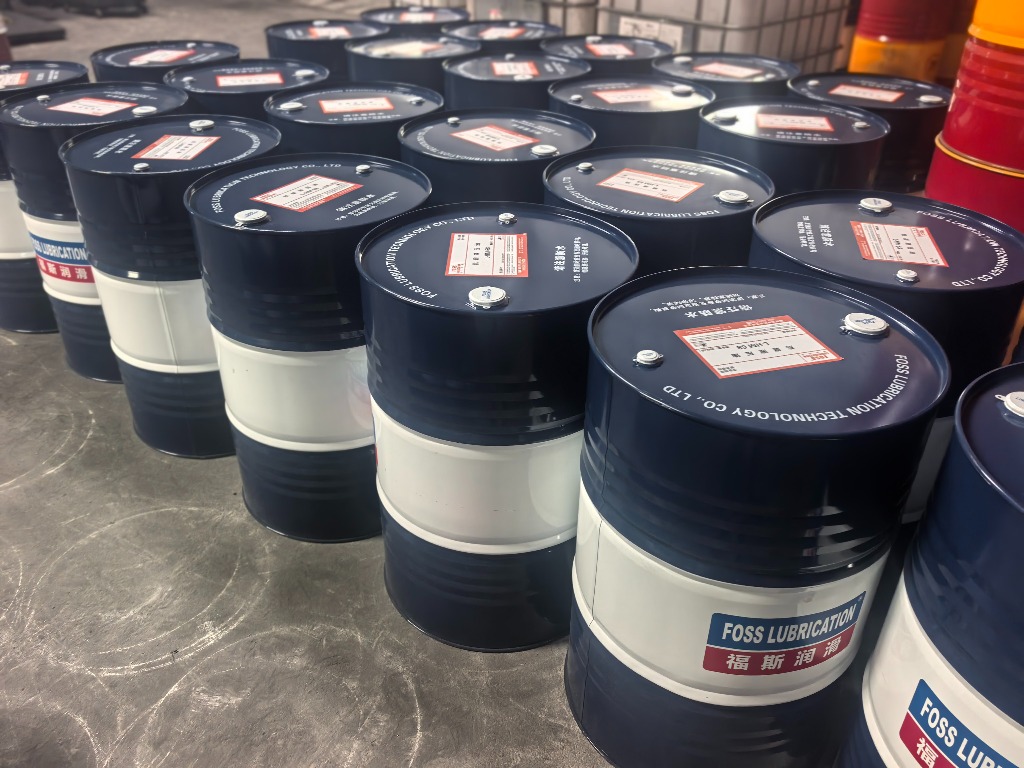
Simultaneously, packaging costs continue their upward trajectory. Cold-rolled SPCC steel drum packaging has reached $32.60 per 208L drum, while chemical additive precursors across zinc dialkyldithiophosphate (ZDDP), overbased calcium sulfonates, and extreme-pressure sulfur-phosphorus packages have jumped by +4.2% to +5.8% month-on-month. In response, FOSS Lubricants has adjusted its factory baseline export price for flagship DIN 51524-2 anti-wear hydraulic fluid (FOSS L-HM 46) to $222.50 per 208L steel drum FOB Xiamen. Overseas buyers are strongly advised to audit fluid requirements and lock fourth-quarter production slots immediately to safeguard operating margins.
2. Geopolitical Transmission Mechanism: Strait of Hormuz War-Risk Premiums & Naval Escorts
The primary catalyst propelling Brent crude toward $98/bbl this Monday morning originates in the Persian Gulf and the strategic maritime corridor of the Strait of Hormuz. Following fresh naval warnings issued over the weekend regarding military drone activity and aggressive vessel shadowing in the Gulf of Oman, London's Joint War Committee (JWC) has maintained elevated risk advisories across the region.
Maritime underwriters at Lloyd's of London have responded by elevating Additional War Risk Premiums (AWRP) for tankers and commercial container vessels transiting the Arabian Gulf. War risk premiums have jumped from an average of 0.70% of insured hull value in mid-October to between 0.85% and 1.10% as of November 2, 2026. For a standard Very Large Crude Carrier (VLCC) valued at $120 million, a single 7-day round-trip voyage through Hormuz now incurs an additional insurance overhead of $1.02 million to $1.32 million.
This financial surcharge is instantaneously transmitted down the petroleum supply chain:
- Crude Inbound Freight Premiums: The benchmark TD3C tanker route (Arabian Gulf to China) has strengthened to Worldscale 74.5, translating into freight costs exceeding $2.85 per barrel for Asian coastal refiners importing heavy sour feedstock.
- Marine Bunker Fuel Surcharges: Very Low Sulfur Fuel Oil (VLSFO) bunkering prices in Singapore and Fujairah have advanced to $692/MT, forcing ocean container carriers to adjust their Bunker Adjustment Factors (BAF) upward for all outgoing container voyages from Chinese ports.
- Refinery Thermal Cost Inflation: Refineries utilizing refinery fuel gas and residual fuel oils for catalytic cracking furnaces face higher thermal operating expenses, establishing a higher physical cost floor for downstream base oil synthesis.
3. Maritime Logistics & Suez Circumvention: The 14-Day Cape of Good Hope Transit Tax
In parallel with Strait of Hormuz friction, the enduring disruption of the southern Red Sea and Bab el-Mandeb strait continues to impose severe logistical frictions on the global movement of chemical additives, base oils, and packaged lubricants. Major ocean carriers—including Maersk, MSC, CMA CGM, COSCO, and Hapag-Lloyd—remain committed to circumnavigating Africa via the Cape of Good Hope for all vessels operating between East Asia, the Mediterranean, and Northern Europe.
This rerouting introduces three major operational bottlenecks:
Sailing around the African continent adds 4,000 to 4,500 nautical miles per voyage. A typical container ship sailing from Xiamen to Rotterdam or Hamburg now requires 42 to 46 days at sea compared to the pre-crisis Suez transit of 28 to 30 days. This delay ties up working capital and forces overseas buyers to maintain 60-day safety stocks.
Because container vessels spend nearly 35% more time on the water per round-trip cycle, empty container turnaround times have lengthened dramatically. Empty 20-foot general purpose (20GP) containers—the standard vehicle for dense, heavy steel drum shipments—are experiencing spot shortages at coastal Chinese ports, lifting local drayage and equipment rental fees.
FOSS Lubrication insulates its contract clients from these container shortages through our dedicated logistics desk in Quanzhou. Located within 45 kilometers of Xiamen Port (SCT and Haicang Terminals) and adjacent to Quanzhou Port (Shishi Jinjiang), FOSS maintains rolling carrier slot reservations and bonded container yard equipment allocations. This ensures that completed export orders of FOSS L-HM 46 and heavy gear oils are loaded, lashed, and dispatched onto scheduled liner departures without port dwell delays.
4. OPEC+ November Quota Discipline & Federal Reserve Monetary Policy Stance
The upstream crude supply landscape is anchored by uncompromising OPEC+ production governance. During their weekend ministerial consultations, Saudi Arabia, Russia, and key Gulf allies reaffirmed the continuation of the 2.2 million barrels per day voluntary production curtailments through December 31, 2026. The alliance dismissed market speculation regarding an early unwinding of quotas, emphasizing that crude inventories across OECD nations remain below 5-year seasonal averages.
Crucially, the Joint Ministerial Monitoring Committee (JMMC) issued an explicit compliance mandate to member states that had exceeded quotas during the summer months (principally Iraq and Kazakhstan). These nations are required to submit binding, third-party audited compensation schedules outlining retroactive production cutbacks totaling 480,000 bpd between November 2026 and March 2027. This regulatory enforcement effectively removes any prospect of incremental crude physical supply entering the market before year-end.
Simultaneously, global macroeconomic conditions are dominated by the US Federal Reserve's monetary stance. With the FOMC maintaining the federal funds target rate at 4.75%–5.00% and signaling that inflation remains sticky, the US Dollar Index (DXY) continues to trade firmly at 100.45. A strong US Dollar creates a dual economic headwind for overseas buyers of finished lubricants:
- Currency Depreciation Penalty: Importers in Southeast Asia (IDR, VND, THB), Latin America (BRL, CLP, COP), and the Middle East purchasing lubricants invoiced in USD face currency-driven inflation of 3% to 6% on top of physical product price hikes.
- Inventory Financing Carry Costs: Elevated global interest rates mean that financing container loads of lubricating oils (which typically invoice at $17,000 to $22,000 per 20GP container) incurs substantial interest expenses. Plant managers who order small, frequent LCL batches face disproportionate freight penalties, while those who wait to order face soaring replacement costs.
5. Upstream Refining Economics: Middle Distillate Crack Strength ($29.20/bbl) & The Hydrocracker UCO Deficit
To understand why API Group II base oils—and specifically Group II 500N—are experiencing historic shortages, one must examine the mass-balance economics of modern hydrocracking units. Hydrocrackers in Asian mega-refineries (such as GS Caltex in Yeosu, SK Enmove in Ulsan, Formosa Petrochemical in Mailiao, and Sinopec Zhenhai) process heavy vacuum gas oil (HVGO) under extreme pressure (150–200 bar) and temperature (380°C–430°C) over dual-function noble metal catalysts.
When middle distillate crack spreads are wide—as evidenced by today's Singapore 10ppm gasoil crack spread at $29.20 per barrel vs. Dubai crude and jet fuel crack at $26.80 per barrel—refinery controllers instruct hydrocracker operators to run at "Maximum Distillate Mode." In this operating regime, catalyst temperatures and hydrogen recycle rates are pushed higher to maximize the conversion of gas oil molecules into ultra-low sulfur diesel (ULSD) and kerosene.
The consequence for lubricant base oils is severe:
- UCO Yield Plunge: The yield of Hydrocracker Unconverted Oil (UCO, also known as hydrocracker bottoms)—which represents the raw feedstock routed to the isodewaxing and hydrofinishing lube base oil unit—drops precipitously from a typical 22%–24% down to just 13%–15% of total feed volume.
- Feedstock Diversion to FCC Units: Refineries lacking dedicated lube extraction units choose to route their remaining UCO directly into Fluid Catalytic Cracking (FCC) units to produce additional high-octane gasoline and propylene, bypassing lubricant base oil manufacturing entirely.
- Heavy Neutral Destruction: Under severe hydrocracking conditions, heavier hydrocarbon molecules (C30–C50 chains) are cracked into lighter fragments. Consequently, the output ratio of heavy neutral 500N relative to light neutral 150N drops from a balanced 40:60 down to an acute 18:82. This creates an immediate physical scarcity of 500N base stock across the Asia-Pacific basin.
6. API Base Oil Spot Benchmark Matrix: The Historic $290/MT Group II 150N/500N Heavy Spread
The disruption in refinery hydrocracker yields has driven the physical price spread between light neutral (Group II 150N) and heavy neutral (Group II 500N) base stocks to an unprecedented record of $290 per metric ton on Monday, November 2, 2026. Prior to 2026, the normal commercial spread between 150N and 500N fluctuated between $60/MT and $110/MT. At $290/MT, the market is pricing in a severe supply rationing of heavy viscosity base stocks.
Formulation Impact of the $290/MT Spread: In a standard anti-wear hydraulic oil formulation conforming to DIN 51524-2, achieving the target ISO VG 46 kinematic viscosity (41.4 to 50.6 mm²/s at 40°C) requires blending approximately 68% Group II 150N with 30% Group II 500N, alongside a 2% anti-wear additive package. However, for an ISO VG 68 fluid (61.2 to 74.8 mm²/s at 40°C), the required proportion of heavy neutral 500N surges to 72%–75%.
Consequently, while blenders can absorb modest cost increments on ISO VG 32 and 46 fluids, the manufacturing cost of ISO VG 68 hydraulic oil and ISO VG 150/220/320 industrial gear oils has risen at more than double the rate of light neutral oils. Blenders attempting to circumvent this cost by substituting inferior Group I SN 500 into Group II formulations face catastrophic oxidation failure, varnish formation, and premature filter clogging in high-pressure hydraulic equipment. FOSS Lubricants maintains strict adherence to 100% virgin hydrocracked Group II base stocks across all L-HM hydraulic grades, refusing to compromise formulation purity.
7. Chemical Additive Precursor Index: Tribological Package Cost Surcharges
Beyond base stock refining, the tribological performance of modern industrial lubricants is governed by synthetic additive packages manufactured by specialty chemical producers (such as Lubrizol, Afton Chemical, Infineum, and Chevron Oronite). As of November 2026, raw chemical precursor costs for these performance packages have escalated due to upstream energy costs, base metal rallies, and environmental compliance overheads.
Chemical Mechanism of ZDDP Boundary Tribofilm Formation: In anti-wear hydraulic applications, zinc dialkyldithiophosphate operates by decomposing under localized frictional flash temperatures (120°C–250°C) and extreme contact pressures at microscopic asperities. The molecule undergoes thermal cleavage, producing zinc polyphosphates, zinc sulfide (ZnS), and iron sulfide (FeS) glassy films that are 50 to 150 nanometers in thickness.
This sacrificial tribofilm shears under sliding friction, preventing direct metal-to-metal welding between steel piston rings, bronze slipper shoes, and swashplates in high-pressure axial piston pumps (such as Rexroth A4VSO and Parker Denison T6H20C). The recent rally in LME spot zinc metal prices (+2.4% over the past 10 trading days) and tightening environmental restrictions on phosphorus pentasulfide (P2S5) plants in Asia have directly driven up the synthesis cost of this irreplaceable anti-wear compound.
8. Packaging & Industrial Container Economics: Cold-Rolled SPCC Steel Drum Inflation ($32.60/Drum)
Industrial packaging constitutes a vital, non-negotiable cost element in export lubricant supply. High-density liquid lubricants cannot be transported in substandard packaging; marine transport mandates certified, impact-resistant containers capable of withstanding rough ocean transit, high ambient temperatures, and multi-tier container stacking.
As of November 2, 2026, the price of brand-new, UN 1A1 certified tight-head 208-liter steel drums has risen to $32.60 per drum (up from $31.90 in late October and $29.80 in early September). This cost surge is driven by two physical factors:
- SPCC Cold-Rolled Coil Steel Pricing: Domestic Chinese and international steel mills have raised prime cold-rolled steel coil benchmark prices, lifting the raw metal manufacturing cost of 1.0mm/1.2mm drum bodies.
- Internal Anti-Rust Phenolic Coatings: Strict environmental VOC regulations governing industrial drum coating lines in East China have driven up the application cost of internal epoxy-phenolic rust-inhibitive varnishes, which protect high-cleanliness hydraulic fluids from internal oxidation.
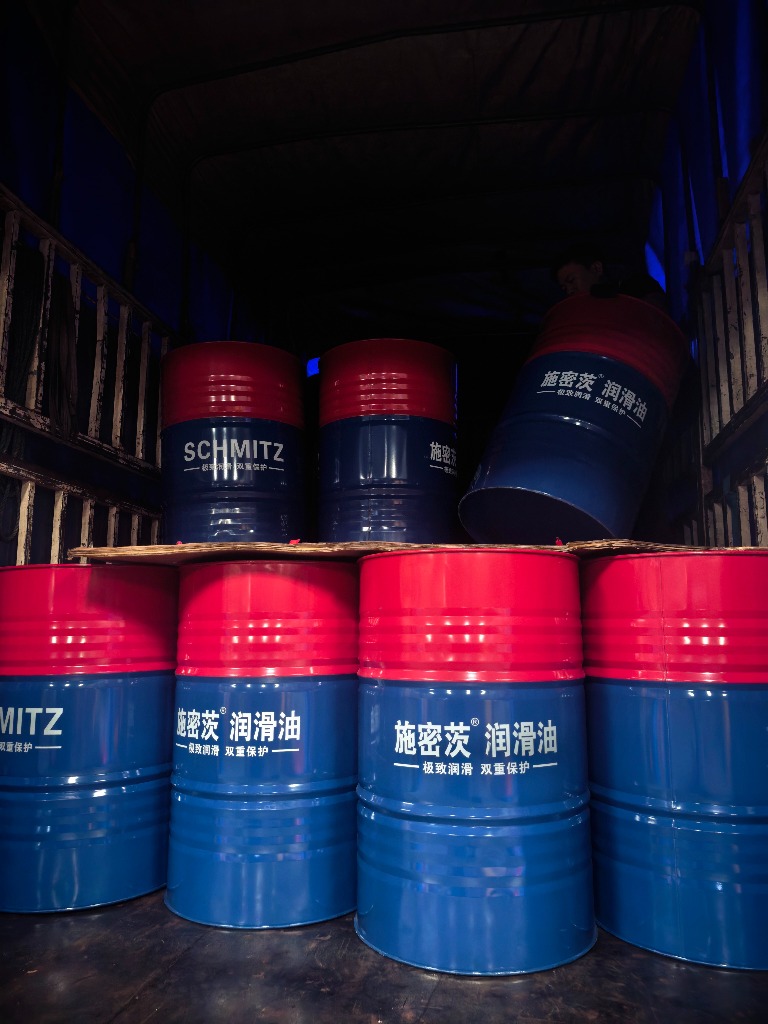
At $32.60 per drum, packaging accounts for nearly 15% of the total export value of an anti-wear hydraulic fluid drum. For 1,000-liter composite Intermediate Bulk Containers (IBCs), unit costs have reached $136.00 per unit, driven by high-density polyethylene (HDPE) polymer resin inflation and tubular galvanized steel cage fabrication expenses. FOSS Lubricants maintains strategic volume contracts with certified tier-1 drum manufacturers, locking in container reserves to guarantee uncompromised UN drop-test and pressure compliance for every export shipment.
9. Authoritative 3-Day Forward Export Price Trajectory (November 2 – November 4, 2026)
Based on our quantitative cost-transmission model—integrating front-month Brent at $97.85/bbl, the $290/MT Group II heavy neutral spread, chemical additive surcharges, and steel packaging inflation—the FOSS Lubrication Market Research Desk provides the following authoritative 3-day forward pricing trajectory across core industrial fluid classifications:
10. Technical Specification & Quality Compliance Audit: DIN 51524-2 & ISO 11158 Standards
In a rising cost environment, substandard blenders frequently compromise product quality by utilizing low-purity recycled oils, unverified base stocks, or depleted additive treats. At FOSS Lubrication, quality assurance is an absolute corporate imperative. Every batch of FOSS L-HM 46 anti-wear hydraulic fluid is manufactured under ISO 9001:2015 quality management protocols and certified with a comprehensive Certificate of Analysis (CoA) prior to dispatch.
11. Pragmatic Buyer Hedging & Procurement Directives for November & Q4 2026
Given the confluence of front-month Brent crude challenging $98/bbl, middle distillate crack strength ($29.20/bbl), an unprecedented $290/MT base oil spread, and marine freight surcharges, international industrial buyers must adopt an active hedging and inventory management posture. Passive procurement risks sudden price shocks and critical delivery delays. FOSS recommends four concrete strategic directives:
Directive 1: Secure 60-Day Fixed Allocations with Primary Blenders
Rather than purchasing on a spot-by-spot basis subject to daily refinery price revisions, industrial buyers should execute 60-day bilateral volume allocation contracts directly with primary manufacturers like FOSS. Locking firm factory allocation schedules insulates your operations from sudden upstream refinery allocations and container freight spikes.
Directive 2: Audit Operating Temperatures to Mitigate 500N Exposure
Because heavy neutral Group II 500N has widened to a record $290/MT premium over 150N, plants utilizing ISO VG 68 fluids in climate-controlled indoor environments should conduct a tribological viscosity audit. In many medium-pressure hydraulic circuits operating below 55°C, transitioning to a premium, high-VI ISO VG 46 fluid delivers equivalent hydrodynamic lubrication at a significantly lower per-drum cost.
Directive 3: Optimize 20GP Container Geometry (80 Drums / 16,640 Liters)
With Cape of Good Hope rerouting inflating container freight rates, every exported container must be loaded to maximum volume efficiency. A standard 20-foot GP container accommodates exactly 80 steel drums (four rows of 20 drums, two tiers with dunnage) totaling 16,640 liters. Consolidating hydraulic oils, gear lubricants, and slideway oils into full container loads dilutes fixed port documentation and clearance charges to the lowest per-liter landed cost.
Directive 4: Contract Direct Factory Supply Over Trading Intermediaries
Trading intermediaries in Singapore, Dubai, and Hong Kong typically add a 12% to 18% trading margin while passing upstream refinery surcharges immediately to end buyers. Contracting directly with a certified primary manufacturing facility like FOSS eliminates broker margins, ensures strict batch-to-batch quality traceability, provides customized OEM branding options, and guarantees certified CoAs with every dispatch.
12. Conclusion & Factory Contact for Direct Spot & Term Orders
The confluence of ICE Brent testing $97.85 per barrel, middle distillate crack margins holding at $29.20 per barrel, an all-time record $290/MT Group II base oil neutral spread, additive precursor inflation (+4.2%–5.8%), and extended Cape of Good Hope maritime loops establishes a uniquely challenging operating landscape for global industry. Waiting for a market retreat before securing fluid inventories entails substantial commercial risk; every fundamental indicator points toward sustained cost elevation throughout the fourth quarter of 2026.
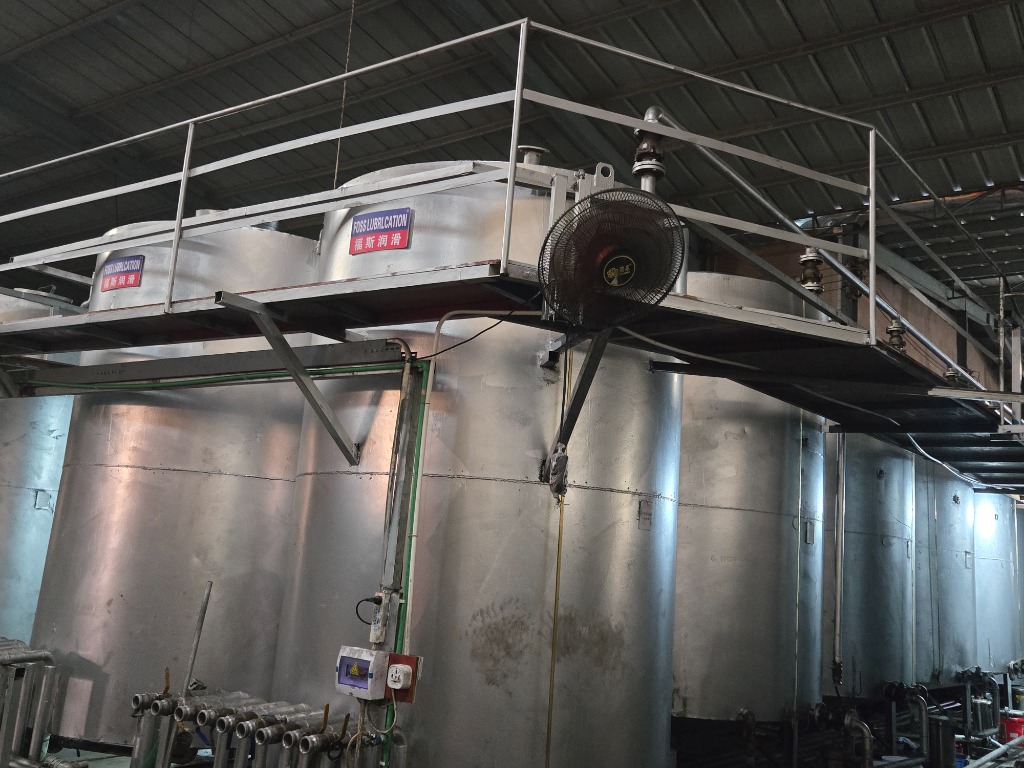
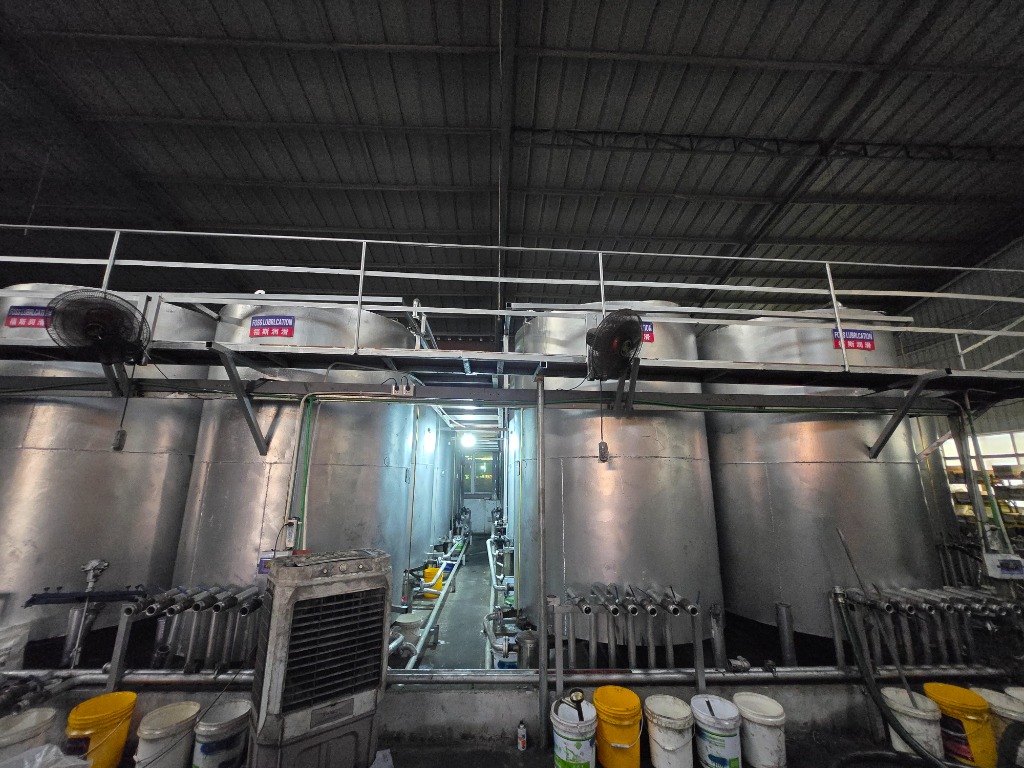
Quanzhou Foss Lubrication Technology Co., Ltd. remains fully prepared to support our international partners with dedicated bulk base oil reserves, automated mass-flow blending reactors, certified analytical laboratories, and priority container drayage agreements through Xiamen Port. We invite industrial procurement directors, fleet maintenance managers, and regional distributors to contact our technical sales desk directly for firm proforma quotations, laboratory test samples, and guaranteed fourth-quarter production slots.
Definitive 3-Day Lubricant & Base Oil Trend Forecast
Synthesized by the FOSS Quantitative Energy Modeling Desk based on active shipping line container bookings, regional tank farm draw-down rates, and prompt ICE Brent futures sentiment:
ICE Brent crude futures breach $97.80–$98.15/bbl as Strait of Hormuz naval security advisories prompt precautionary positioning; Northeast Asian merchant refiners elevate prompt Group II 500N spot offers toward $1,495–$1,510/MT as Singapore middle-distillate crack margins sustain $29.20/bbl.
Persistent Cape of Good Hope maritime transit circumnavigation and high-sulfur/low-sulfur marine bunker adjustments keep Asia-Europe/Middle East container freight firm; rising cold-rolled SPCC steel drum packaging costs ($32.60/drum) anchor baseline export offers for DIN 51524-2 hydraulic fluids at $222.50/drum FOB Xiamen.
Widening $290/MT Group II 150N/500N neutral spread and severe hydrocracker unconverted oil (UCO) diversion compel global heavy industry and mining operators to lock in mid-November export allocations directly with primary Chinese blenders.
5. Strategic Sourcing & Hedging Directives for Overseas Importers
For overseas procurement directors, fleet operators, and industrial distributors, market volatility represents both operational risk and competitive opportunity. We recommend the following three concrete actions for managing Q4 procurement:
Lock 60-Day Container Requirements
Secure firm proforma invoices (PI) with 30-day price validity. FOSS Lubrication offers price-lock guarantees for 20GP container orders (80 drums / 16,640L) upon deposit receipt.
Audit Laboratory CoA Verification
Demand full pre-shipment ASTM test parameters: kinematic viscosity at 40°C / 100°C, viscosity index ≥ 100, flash point ≥ 220°C, pour point ≤ -15°C, and zero moisture contamination.
FOSS Lubrication: Factory-Direct Precision Engineering
Operating out of Quanzhou, China, FOSS blends over 20,000 MT annually of ISO VG 32/46/68 anti-wear hydraulic oils, CK-4 heavy-duty engine oils, and industrial gear lubricants. Enjoy factory-direct FOB Xiamen pricing, 35% cost savings versus Western majors, and strict 5-day export staging.