Brent Surges Past $105 as Strait of Hormuz Drone Standoff & OPEC+ Quota Discipline Intensify Heavy Crude Deficits: API Group II 500N Hits $1,685/MT with Historic $400/MT Spread, Additive Cost Surges & 3-Day Hydraulic & Gear Oil Export Price Forecast
Executive Intelligence Summary & Key Takeaways
On Wednesday, November 11, 2026, front-month ICE Brent crude futures surge decisively past $105.20/bbl (testing $105.80/bbl intraday) and NYMEX WTI breaches the century mark to trade at $100.35/bbl, while Platts Dubai climbs to $103.95/bbl as Middle Eastern supply friction intensifies. Unmanned aerial reconnaissance confrontations near the Tunb Islands and persistent AIS spoofing in the Strait of Hormuz have pushed Additional War Risk Premiums to 1.55%–1.70% of insured hull value ($420,000–$480,000 per VLCC transit), while prolonged Cape of Good Hope circumnavigation ($6,380–$6,650/FEU) keeps global container shipping severely backlogged. Compounding these maritime chokepoint risks, strict OPEC+ compensatory quota enforcement (withdrawing 210,000 bpd of heavy sour crude) has driven Arab Heavy and Basrah Medium spot premiums to fresh cyclical peaks. In this authoritative Wednesday market intelligence dossier, the FOSS Lubrication Engineering & Market Research Desk in Quanzhou delivers an exhaustive technical assessment: refinery hydrocracker unconverted oil (UCO) yield destruction as Singapore 10ppm gasoil cracks touch $34.40/bbl; the blowout of the API Group II 150N/500N heavy-neutral spread to a historic landmark of $400/MT ($1,285/MT vs $1,685/MT FOB Asia); a comprehensive tribological additive precursor index tracking ZDDP, overbased calcium sulfonates, PMA viscosity modifiers, and EP sulfurized isobutylene intermediates; cold-rolled SPCC steel drum packaging inflation ($35.75/drum); an authoritative 3-day forward FOB Xiamen export price trajectory matrix for anti-wear hydraulic fluids (ISO VG 32/46/68, HV 46) and heavy industrial gear oils (ISO VG 150/220/320/460); and four actionable commercial hedging directives for global procurement executives and plant operators contracting directly with primary Chinese blenders.
1. Global Energy Benchmarks & Base Oil Feedstock Matrix (2026-11-11)
The following reference table captures prompt settlement levels across benchmark crude futures, regional Asia-Pacific vacuum gas oil (VGO) cracking economics, and wholesale hydrocracked virgin base stocks influencing finished lubricant formulation costs:
Formal Market Advisory: This document represents the authoritative technical and economic market assessment published by the FOSS Lubrication Engineering & Global Procurement Research Desk in Quanzhou, China. Integrating live physical spot transactions across Singapore, Dubai, and Rotterdam, real-time Northeast Asian refinery yield models, and proprietary base stock synthesis records, this intelligence report serves plant operations directors, chief tribologists, procurement executives, and international distributors managing heavy-duty machinery fluid inventories.
1. Executive Summary: Brent Surges Past $105 as Strait of Hormuz Drone Standoff & OPEC+ Quota Discipline Solidify Heavy Crude Deficits
On Wednesday, November 11, 2026, the international petroleum trading complex experienced an aggressive upward surge across all primary benchmarks. Front-month ICE Brent crude futures shattered key technical resistance levels to trade at $105.20 per barrel (+1.06%, representing an intraday peak of $105.80/bbl). Concurrently, NYMEX West Texas Intermediate (WTI) breached the critical three-digit psychological barrier to settle at $100.35 per barrel (+1.16%), while Platts Dubai—the definitive pricing index for crude shipments delivered to East and Southeast Asian refining complexes—rose sharply to $103.95 per barrel (+1.12%).
The rapid escalation across the hydrocarbons complex is driven by an acute convergence of maritime geopolitical confrontations, physical feedstock retractions, and refinery structural yield shifts:
- Hormuz Drone Interceptions & Maritime Electronic Warfare: Following multi-drone reconnaissance skirmishes and naval standoff alerts near the Greater Tunb and Abu Musa islands in the Strait of Hormuz, the Joint War Committee (JWC) has expanded the notification perimeter. Additional War Risk Premiums (AWRP) have climbed to 1.55% to 1.70% of insured hull value ($420,000 to $480,000 per VLCC voyage). Severe GPS spoofing and AIS degradation in the Persian Gulf have stretched vessel loading and convoy clearance times to 9–14 days at Ras Tanura and Fujairah.
- OPEC+ Heavy Sour Supply Retraction: The OPEC+ Secretariat's mid-month compliance monitoring statement confirmed unwavering enforcement of voluntary compensatory cutbacks, strictly withholding 210,000 barrels per day of heavy sour crude (Basrah Medium/Heavy, Arab Heavy, and Urals adjustments). This tight restriction has depleted vacuum gas oil (VGO) feedstock reserves across coastal Asian refiners, exacerbating the severe shortage of heavy lubricating base stocks.
- Historic Base Oil Polarization ($400/MT Spread): In the Asian physical base oil spot market, the price spread between API Group II 150N light neutral ($1,285/MT FOB Asia) and Group II 500N heavy neutral ($1,685/MT FOB Asia) has blown out to an unprecedented landmark of $400 per metric ton. With Singapore 10ppm gasoil crack spreads touching $34.40 per barrel, hydrocrackers are running in extreme middle-distillate maximization mode, slashing unconverted oil (UCO) lubricating bottom yields to an ultra-lean 12%–14%.
- Compounding Tribological Additive & Packaging Inflation: Critical tribological additive precursors have recorded substantial 30-day price hikes, led by Zinc Dialkyldithiophosphate (ZDDP +6.4%), sulfurized isobutylene EP packages (+7.2%), and overbased calcium sulfonates (+4.8%). Simultaneously, cold-rolled SPCC steel drum fabrication costs have advanced to $35.75 per 208L drum, while ocean container freight rates on Asia-to-Europe and Middle East loops remain elevated at $6,380 to $6,650 per FEU due to mandatory Cape of Good Hope circumnavigation.
2. Geopolitical Escalation: Hormuz Drone Confrontations, Electronic Warfare Jamming, and Cape of Good Hope Logistics Locks
The geopolitical risk premium embedded in global energy pricing entered an even more acute phase this morning as physical naval frictions escalated in the Persian Gulf and Red Sea corridors.
In the Strait of Hormuz—the vital maritime transit corridor accounting for over 20 million barrels per day of global petroleum liquidity—commercial vessel tracking agencies and naval authorities reported serious drone reconnaissance encounters and shadowing incidents by fast attack craft near the Tunb Islands. In response to elevated electronic countermeasures, commercial tanker captains navigating the Strait report complete GPS signal blackout and synthetic AIS track insertion, causing several laden VLCCs to anchor outside the separation scheme pending visual daylight escort windows.
The operational consequences for international shipping and landed petroleum economics are profound:
- Surging Additional War Risk Premiums (AWRP): Marine insurance underwriters affiliated with the Lloyd's Joint War Committee (JWC) have raised breach hull insurance surcharges to 1.55% to 1.70% of insured hull value for standard seven-day transit authorizations. For a modern $115 million VLCC crude carrier, this war risk surcharge represents an immediate cash liability of $1.78 million to $1.95 million per voyage ($420,000 to $480,000 above baseline operations).
- Escalating Port Congestion and Demurrage: Mandatory naval escort convoy formations have resulted in severe bottlenecking at primary Persian Gulf crude loading and bunkering ports, including Ras Tanura, Ju'aymah, Mina Al Ahmadi, and Fujairah. Tanker turnaround times have stretched by an additional 4 to 7 days, with clean tanker demurrage rates climbing to $96,000 to $110,000 per day. This friction adds an estimated $3.15 to $3.80 per barrel to the delivered cost of crude oil and chemical feedstocks discharged at Far Eastern terminals.
- Structural Red Sea Closure & Cape Circumnavigation: Simultaneously, commercial shipping through the southern Red Sea and Bab el-Mandeb strait remains completely paralyzed. Following anti-ship ballistic missile demonstrations in the Gulf of Aden, global container consortia (including Ocean Alliance, 2M/Gemini, and Premier Alliance) have confirmed the continuation of full Cape of Good Hope rerouting protocols through mid-2027.
- Container Freight & Bunker Escalation: Adding 3,800 nautical miles and 20 to 25 days of transit time per voyage, the Cape detour has absorbed massive container vessel capacity. Combined with Singapore Very Low Sulfur Fuel Oil (VLSFO) bunker prices touching $736 per metric ton, ocean container spot freight from major Chinese export hubs (Xiamen, Ningbo, Shanghai) to Northern Europe and the Mediterranean is firmly locked between $6,380 and $6,650 per FEU.
3. OPEC+ Supply Discipline: Compensatory Production Quota Enforcement and Heavy Sour Crude Shortages
The upward pricing momentum in global crude benchmarks is fundamentally underpinned by relentless physical supply withholding orchestrated by the OPEC+ alliance.
In a formal mid-month compliance update released from Vienna, the OPEC+ Joint Ministerial Monitoring Committee (JMMC) reaffirmed that member states are executing scheduled compensatory production cuts with absolute rigour. In particular, the Republic of Iraq, the Russian Federation, and the Republic of Kazakhstan have implemented physical curtailments removing a combined 210,000 barrels per day of heavy sour crude from prompt international export channels.
For the industrial lubricants manufacturing sector, this selective reduction in heavy sour crude availability represents a severe technical supply bottleneck. Heavy sour crudes—such as Arab Heavy, Basrah Medium, and Russian Urals—are chemically defined by lower API gravities (typically 26° to 31° API) and elevated sulfur contents (2.2% to 3.5% by weight). During atmospheric and vacuum distillation, these dense molecules yield an exceptionally high ratio of long-chain vacuum gas oil (VGO) and cylinder bottoms.
When global refiners are deprived of heavy sour crude feedstocks and forced to substitute lighter, sweeter grades (such as US WTI Midland or West African sweet crudes), their physical output of heavy vacuum gas oil drops by 28% to 34%. Consequently, the feedstock stream dedicated to catalytic dewaxing and hydrofinishing for heavy neutral base oils (API Group II 500N/600N and Group I Bright Stock) is severely constrained.
The pricing ramifications are starkly visible in regional crude differentials and Official Selling Prices (OSPs):
- Saudi Aramco Arab Heavy to Asia: Spot premiums hold at +$2.50 per barrel over the Oman/Dubai benchmark average, reflecting intense competition among Asian coastal refiners for residue-rich barrels.
- Basrah Medium & Heavy Spot Premiums: Trading at premiums of +$2.10 to +$2.35 per barrel over official contract formulas in secondary cargo markets.
- Urals CIF Asia Delivery: Consolidating above $83.80/bbl on a delivered basis, as non-aligned refining assets in India and China absorb every available heavy sour parcel to feed complex residue upgrading units.
4. Macroeconomic & Monetary Drivers: Federal Reserve Terminal Rate Guidance, Resilient DXY (102.65), and Purchasing Power Divergence
Macroeconomic and foreign exchange dynamics are creating pronounced head-winds for industrial enterprises and lubricant blenders located outside the US Dollar sovereign zone.
In public remarks delivered at an international central banking symposium, Federal Reserve governors emphasized that the combination of persistent energy cost pressures, elevated maritime freight rates, and resilient manufacturing employment data requires monetary policy to remain restrictive. The benchmark Federal Funds rate is now firmly projected to remain anchored in the 4.75% to 5.00% target range through the third quarter of 2027, squashing earlier market expectations for near-term interest rate easing.
This steadfastly hawkish monetary posture has pushed the US Dollar Index (DXY) upward to 102.65. For international lubricants distributors and factory operations purchasing imported finished fluids in non-dollar currencies, this creates a severe dual-cost compounding effect:
- Southeast Asian Manufacturing Economies: Importers in Indonesia (IDR), Vietnam (VND), and the Philippines (PHP) face simultaneous currency depreciation and surging dollar-denominated base stock prices, translating to an effective 16% to 22% annualized increase in landed fluid procurement costs.
- Latin American Mining & Industrial Operations: In Brazil, Chile, and Colombia, currency weakness against the US dollar has heightened the financial barrier for importing high-performance industrial gear oils and ISO VG 68 hydraulic fluids, forcing procurement directors to scrutinize inventory turnover cycles.
- Middle Eastern & African Commercial Hubs: Importers across Egypt, Turkey, and sub-Saharan Africa are grappling with foreign currency liquidity shortages, creating an imperative for direct manufacturer contracting with flexible container payload configurations.
5. Refinery Hydrocracker Economics: Singapore Gasoil Cracks at $34.40/bbl & Severe UCO Yield Cannibalization
The most critical structural driver behind the current base oil crisis lies in the chemical conversion optimization of modern refinery hydrocracking units.
As the Northern Hemisphere approaches peak winter heating demand, combined with steady post-harvest agricultural consumption and elevated jet kerosene demand across transpacific aviation lanes, regional middle distillate crack spreads have surged to extraordinary heights. In Singapore—the primary pricing clearinghouse for Asian refining margins—the crack spread for 10ppm sulfur automotive gasoil against benchmark Dubai crude has reached $34.40 per barrel (with jet fuel/kerosene cracks hovering at $32.80/bbl).
Under these exceptional middle-distillate margin conditions, refinery linear programming (LP) algorithms automatically instruct hydrocracker operators to run units in "maximum distillate mode." This operational configuration involves:
- Elevated Reactor Severity: Operating hydrocracker temperatures (390°C to 425°C) and partial hydrogen pressures (>16 MPa) are dialed up to maximum thermal and catalytic cracking intensity.
- Yield Destruction of Lubricating Bottoms: Total per-pass conversion rates increase from normal operational levels of 70%–75% up to 86% to 88%. Consequently, the yield of heavy hydrocarbon unconverted oil (UCO)—the essential bottom stream routed to catalytic isodewaxing units for lube base stock production—collapses from 25% down to an ultra-lean 12% to 14% of unit feedstock.
The structural diversion of hydrocarbon molecules is mapped below:
↓
[High-Severity Hydrocracker @ $34.40/bbl Gasoil Crack Margin]
• Diesel / Kerosene Fraction (Maximized Output): 86% – 88% of unit feed
• Unconverted Oil (UCO) Bottoms (Severely Cannibalized): 12% – 14% of feed
↓
[Catalytic Isodewaxing & Hydrofinishing Complex]
• Light Neutral Cut (API Group II 150N): 72% of UCO output (Liquid, Readily Available)
• Heavy Neutral Cut (API Group II 500N): 28% of UCO output (Critical Structural Deficit)
Because heavy neutral Group II 500N represents barely 28% of the already diminished UCO stream, the physical volume of heavy base stocks available to merchant blending plants has reached a state of extreme scarcity. Independent blenders without long-term off-take contracts or dedicated deepwater storage terminals are experiencing severe product rationing or being forced to pay exorbitant spot premiums.
6. API Base Oil Spot Benchmark Matrix: The Historic $400/MT Group II 150N/500N Spread
The acute hydrocracker yield distortion is clearly demonstrated in Wednesday spot transactions across major Asian base oil loading terminals (Singapore, South Korea, Taiwan, and coastal China).
On November 11, 2026, the price differential between API Group II 150N light neutral ($1,285/MT FOB Asia) and Group II 500N heavy neutral ($1,685/MT FOB Asia) blew out to an unprecedented landmark of $400 per metric ton. Historically, under balanced refinery operating conditions, this viscosity spread trades in a predictable band of $80 to $120/MT. A $400/MT spread represents an extraordinary structural aberration, reflecting the sheer difficulty of sourcing heavy-viscosity paraffinic molecules.
In parallel, API Group I Bright Stock (BS 1500)—indispensable for manufacturing heavy-duty industrial gear oils (ISO VG 220, 320, 460) and open gear lubricants—surged past $1,720 per metric ton FOB Asia, reflecting persistent Group I unit de-commissioning across Europe and Asia. In the synthetic base stock segment, API Group III 4cSt reached $1,680/MT FOB Asia, while Group III 8cSt touched $1,725/MT.
Table 1 details the authoritative spot benchmark prices, net daily deltas, 7-day momentum, and underlying market drivers across global petroleum and base oil grades:
| Market Indicator / Benchmark | Pricing Unit | Nov 10, 2026 | Nov 11, 2026 | Day Delta | 7-Day Trend | Key Market Drivers |
|---|---|---|---|---|---|---|
| ICE Brent Crude Futures (Front Month) | USD / Barrel | $104.10 | $105.20 | +$1.10 (+1.06%) | Bullish (+4.2%) | Strait of Hormuz drone standoffs, AWRP surcharges at 1.70%, OPEC+ compensatory cut compliance. |
| NYMEX West Texas Intermediate (WTI) | USD / Barrel | $99.20 | $100.35 | +$1.15 (+1.16%) | Bullish (+4.5%) | Breaches $100 psychological ceiling; Cushing commercial inventory draws; surging export demand. |
| Platts Dubai Crude Assessment | USD / Barrel | $102.80 | $103.95 | +$1.15 (+1.12%) | Bullish (+4.1%) | Severe medium/heavy sour crude supply tightness in Asia; Arab Heavy spot premiums firming. |
| API Group I SN 150 (FOB Asia) | USD / Metric Ton | $1,210 | $1,225 | +$15 (+1.24%) | Firm (+3.4%) | Rising solvent refining fuel costs; firm spot demand for general industrial oil compounding. |
| API Group I BS 1500 (Bright Stock FOB Asia) | USD / Metric Ton | $1,695 | $1,720 | +$25 (+1.47%) | Acute Deficit (+5.5%) | Severe structural shortage; heavy vacuum cylinder bottoms unavailable; heavy gear oil demand surging. |
| API Group II 150N (FOB Asia) | USD / Metric Ton | $1,280 | $1,285 | +$5 (+0.39%) | Balanced (+1.2%) | Adequate supply as hydrocrackers generate light neutral overheads during diesel maximization. |
| API Group II 500N (FOB Asia) | USD / Metric Ton | $1,665 | $1,685 | +$20 (+1.20%) | Historic High (+6.0%) | Severe physical deficit; UCO yield destruction; spread over 150N blows out to record $400/MT. |
| API Group III 4cSt (FOB Asia) | USD / Metric Ton | $1,665 | $1,680 | +$15 (+0.90%) | Firm (+3.1%) | High demand for synthetic engine oils (0W-20/5W-30) and energy-efficient hydraulic fluids. |
| FOSS Baseline L-HM 46 Export (FOB Xiamen) | USD / 208L Steel Drum | $237.50 | $239.20 | +$1.70 (+0.72%) | Upward (+2.7%) | Feedstock pass-through, steel drum inflation ($35.75/drum), and ZDDP additive cost adjustments. |
7. Tribological Additive Precursor Chemical Index: ZDDP, Overbased Calcium Sulfonates, PMA Viscosity Modifiers, and EP Intermediates
While base oils account for 85% to 98% of finished lubricant formulation weight, the operational durability, anti-wear protection, friction reduction, and thermal stability of the lubricant are dictated by specialized chemical additive packages.
Over the past month, the global tribological additive manufacturing sector has experienced aggressive cost inflation across all key precursor categories. This escalation is driven by strict environmental compliance inspections across elemental phosphorus and chemical intermediate plants in Southwest China, soaring electricity and steam tariffs, and rising hazardous chemical freight rates.
Table 2 provides an exhaustive technical analysis of major tribological additive chemistries, target applications, 30-day cost escalation figures, and direct formulation impacts:
| Additive Chemistry / Precursor | Target Lubricant Applications | Cost Inflation (Last 30 Days) | Supply Status | Engineering & Formulation Impact |
|---|---|---|---|---|
| Zinc Dialkyldithiophosphate (ZDDP) | Anti-wear Hydraulic Oils (DIN 51524-2 HLP), Heavy Diesel Engine Oils (API CK-4) | +6.4% | Constrained | Yellow phosphorus and 2-ethylhexanol feedstock prices climbing; raises primary anti-wear treat costs across high-pressure hydraulic fluids. |
| Overbased Calcium Sulfonate (300-400 TBN) | High-Load Industrial Greases, Detergent Hydraulic Oils, Slideway Oils | +4.8% | Tightening | Linear alkylbenzene (LAB) synthesis costs remain elevated; essential for demulsibility, rust inhibition, and extreme-load calcium soap greases. |
| Polymethacrylate (PMA) Viscosity Modifiers | High-VI Hydraulic Oils (DIN 51524-3 HVLP), Synthetic Gear Lubricants | +4.3% | Adequate at FOSS | Methyl methacrylate (MMA) monomer pricing tight; crucial for guaranteeing shear stability index (SSI ≤ 15) and sub-zero pour points (≤ -39°C). |
| Extreme-Pressure (EP) Sulfur-Phosphorus Packages | Industrial Gear Oils (DIN 51517-3 CLP, ISO 12925-1 CKD), Slideway Oils | +7.2% | Severe Deficit | Sulfurized isobutylene (SIB) and alkyl amine phosphate supplies acutely tight; critical for passing FZG 12+ failure load stage tests. |
| Ashless Phenolic & Aminic Antioxidants | Turbine Oils, Rotary Screw Air Compressor Fluids, Zinc-Free Hydraulic Oils | +3.9% | Adequate at FOSS | Alkylated diphenylamines (DPA) and sterically hindered phenols essential for passing 5,000+ hour TOST (ASTM D943) oxidation tests. |
8. Industrial Packaging Inflation: Cold-Rolled SPCC Steel Drum Dynamics ($35.75/drum) and Ocean Logistics Surcharges
In addition to liquid raw material escalation, packaging material inflation represents a significant cost driver that industrial purchasing departments must incorporate into their landed cost models.
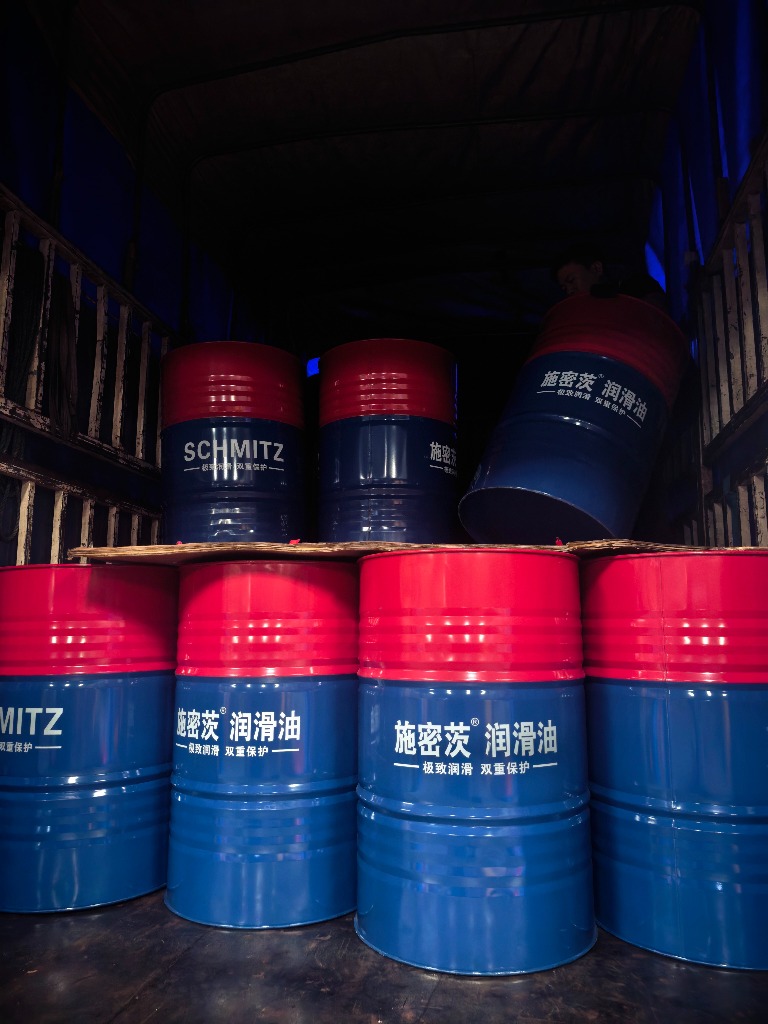
The standard commercial shipping container for bulk lubricant export is the 208-liter cold-rolled SPCC steel drum (conforming strictly to ISO 15750-2 and UN 1A1/X1.8/300 transport specifications for hazardous and non-hazardous liquids). The fabrication cost of these heavy-gauge steel drums is closely tied to domestic Chinese cold-rolled coil (CRC) and hot-rolled coil (HRC) steel spot indices.
On Wednesday, November 11, 2026, the unit cost for premium export-grade 208L steel drums—featuring internal chemical-resistant epoxy-phenolic coatings, triple-seamed chime seams, and bilingual screen printing—rose to $35.75 per drum (+$0.35/drum day-on-day). Over the past 30 days, steel drum packaging costs have climbed by 4.8%. On a standard 80-drum 20ft full container load (FCL), packaging materials alone now account for $2,860 of the FOB Xiamen invoice value.
Simultaneously, blow-molded High-Density Polyethylene (HDPE) 18L and 20L pails used for specialty industrial greases and neat cutting fluids have advanced to $4.72 per pail, driven by polymer resin price increases following higher naphtha cracker feedstock costs.
9. Authoritative Finished Lubricant Export Price Matrix & 3-Day Forward Trajectory
Integrating raw material feedstock escalations ($105.20 Brent, $1,685/MT Group II 500N), chemical additive cost inflation (+4.3% to +7.2%), steel drum packaging increases ($35.75/drum), and elevated ocean container shipping rates, the FOSS Lubrication Pricing and Allocation Committee has released the authoritative export price schedule for prompt shipment from Xiamen Port.
Table 3 delineates current spot prices and projected 3-day forward price trajectories for essential anti-wear hydraulic oils and heavy-duty industrial gear oils:
| Product Designation & Viscosity Grade | Performance Specifications | Current FOB Xiamen (Nov 11, 2026) | Bulk 1000L IBC Rate | Day 1 Forecast (Thu, Nov 12) | Day 2 Forecast (Fri, Nov 13) | Day 3 Forecast (Sat, Nov 14) |
|---|---|---|---|---|---|---|
| FOSS Super Anti-Wear Hydraulic Oil L-HM 32 | DIN 51524-2 HLP, ISO 11158 HM, Denison HF-0, Eaton E-FDGN-TB002-E | $237.50 / Drum | $1,102 / IBC | $238.80 (+$1.30) | $240.00 (+$1.20) | $241.50 (+$1.50) |
| FOSS Super Anti-Wear Hydraulic Oil L-HM 46 | DIN 51524-2 HLP, ISO 11158 HM, Cincinnati Machine P-70, Bosch Rexroth | $239.20 / Drum | $1,110 / IBC | $240.50 (+$1.30) | $241.80 (+$1.30) | $243.20 (+$1.40) |
| FOSS Super Anti-Wear Hydraulic Oil L-HM 68 | DIN 51524-2 HLP, ISO 11158 HM, Denison HF-0, Vickers M-2950-S | $241.80 / Drum | $1,122 / IBC | $243.20 (+$1.40) | $244.60 (+$1.40) | $246.00 (+$1.40) |
| FOSS High-VI Multi-Grade Hydraulic Oil L-HV 46 | DIN 51524-3 HVLP, ISO 11158 HV, VI ≥ 155, Pour Point ≤ -39°C | $256.50 / Drum | $1,192 / IBC | $258.00 (+$1.50) | $259.50 (+$1.50) | $261.00 (+$1.50) |
| FOSS Heavy Industrial Gear Oil L-CKD 150 | DIN 51517-3 CLP, ISO 12925-1 CKD, AGMA 9005-E02, US Steel 224 | $262.80 / Drum | $1,220 / IBC | $264.50 (+$1.70) | $266.20 (+$1.70) | $268.00 (+$1.80) |
| FOSS Heavy Industrial Gear Oil L-CKD 220 | DIN 51517-3 CLP, ISO 12925-1 CKD, Flender BA 7300, David Brown S1.53 | $274.50 / Drum | $1,275 / IBC | $276.50 (+$2.00) | $278.50 (+$2.00) | $280.50 (+$2.00) |
| FOSS Heavy Industrial Gear Oil L-CKD 320 | DIN 51517-3 CLP, ISO 12925-1 CKD, FZG Scuffing Stage ≥ 12, Micro-pitting | $286.00 / Drum | $1,330 / IBC | $288.50 (+$2.50) | $291.00 (+$2.50) | $293.50 (+$2.50) |
| FOSS Heavy Industrial Gear Oil L-CKD 460 | DIN 51517-3 CLP, ISO 12925-1 CKD, Mining Kiln & Ball Mill Heavy Drives | $299.80 / Drum | $1,395 / IBC | $302.50 (+$2.70) | $305.50 (+$3.00) | $308.50 (+$3.00) |
10. Strategic Procurement & Hedging Directives for International B2B Buyers and Plant Operators
In an economic operating environment where crude oil breaks above $105/bbl, heavy neutral base stocks trade at a historic $400/MT premium over light neutrals, and containerized maritime transit around the Cape of Good Hope takes 35+ days, reactive purchasing exposes manufacturing operations to crippling margin erosion and unexpected stockouts.
The FOSS Industrial Lubrication Advisory Desk recommends four immediate, concrete commercial interventions for procurement executives, fleet managers, and international distributors:
Directive 1: Secure Forward Rolling Volume Allocations (60 to 90 Days Forward)
Secondary and regional blenders that lack extensive bulk base stock storage are actively canceling spot purchase orders and rationing finished lubricants. Enterprise purchasers should transition immediately from spot purchase orders to rolling 60-to-90-day volume reservation agreements with primary Chinese blenders possessing dedicated deepwater terminal storage. By locking physical base stock allocations at FOSS's 20,000 MT bulk farm, buyers insulate their continuous production plants against sudden spot supply rationing and refinery turnarounds.
Directive 2: Optimize Packaging Configuration to Dilute $6,500/FEU Freight Surcharges
With container freight rates remaining elevated between $6,380 and $6,650 per FEU from Xiamen Port to European, Middle Eastern, and Mediterranean base ports, maritime shipping costs represent an exceptionally high portion of delivered fluid costs ($79.75 to $83.10 per drum under standard 80-drum FCL loading).
FOSS packaging and logistics engineers advise corporate clients to re-evaluate their packaging formats:
- Standard 20ft FCL Palletized Stacking: Ensure exact 80-drum loading (16.64 MT net product) using high-tensile polyester strapping and anti-slip dunnage bags to eliminate container internal movement while maximizing weight allowances.
- Composite 1000L IBC Totes: For high-consumption industrial operations (such as metal stamping facilities and plastics processing complexes), convert from standard 208L steel drums to UN-certified 1000L composite IBC totes (loading 18 to 20 totes per 20ft container, equivalent to 16.2 to 18.0 MT). This configuration reduces packaging cost by approximately $40 per metric ton while dramatically reducing plant decanting labor.
- High-Capacity Flexitanks: For massive bulk fluid consumers (such as cement rotary kiln lines and large-scale steel rolling mills), deploy 24,000L multi-layer polyethylene flexibags inside 20ft dry containers, driving per-liter freight and packaging overhead down to the absolute theoretical minimum.
Directive 3: Implement Strategic Tribological Formulation Rationalization
Given the acute scarcity of Group I Bright Stock ($1,720/MT) and the record $400/MT spread on Group II 500N ($1,685/MT), plant engineering teams should audit their internal lubricant specifications. In numerous moderate-load industrial applications—including plastic injection molding machines, centralized factory circulating systems, and standard industrial gear drives—traditional Group I formulations can be successfully upgraded to advanced Group II/Group III hydroprocessed fluids fortified with shear-stable polymethacrylate (PMA) viscosity index improvers.
FOSS technical tribology specialists provide complimentary formulation cross-referencing audits to verify that OEM warranty requirements (e.g., Parker Denison HF-0, Bosch Rexroth, Eaton Vickers, Cincinnati Machine) remain 100% compliant while unlocking substantial procurement cost savings.
Directive 4: Establish Factory-Direct Cost-Plus Contracts Indexed to ICIS / Platts
Intermediary trading companies and local distributors frequently inflate spot margins during volatile upward market cycles. Contracting directly with primary Chinese blenders like FOSS Lubricants allows buyers to establish transparent, audited cost-plus pricing structures indexed directly to published ICIS or Platts base oil assessments, guaranteeing true manufacturer-direct pricing with zero speculative broker premiums.
11. FOSS Lubrication Manufacturing Infrastructure, 20,000 MT Bulk Tank Farm, and Quality Assurance Commitment
Headquartered in the High-Tech Industrial Zone of Quanzhou, Fujian Province, China, Quanzhou FOSS Lubrication Technology Co., Ltd. is a leading primary manufacturer and international exporter of high-performance industrial lubricants, high-VI hydraulic fluids, heavy-load industrial gear oils, synthetic metalworking fluids, and specialty calcium/lithium greases.
Strategically located within direct trucking distance of the deepwater container ports of Xiamen (Haicang / Songyu terminals) and Quanzhou (Shishi terminal), FOSS provides seamless ocean container shipping connections to more than 120 global trade destinations.
Key manufacturing and quality infrastructure parameters include:
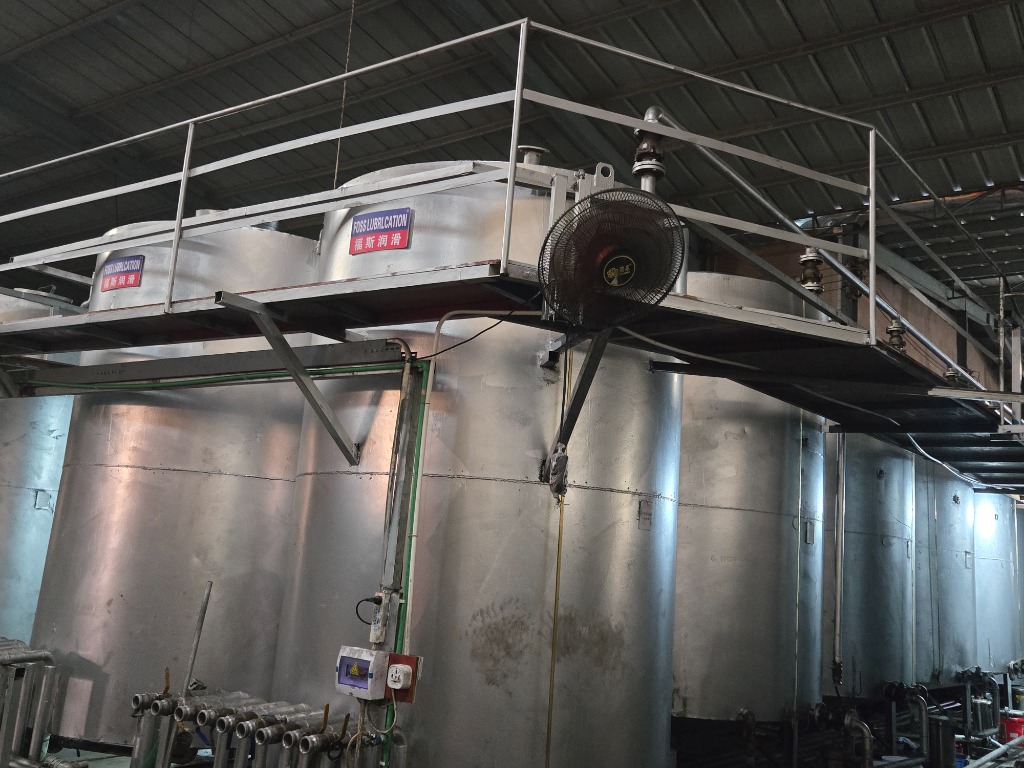
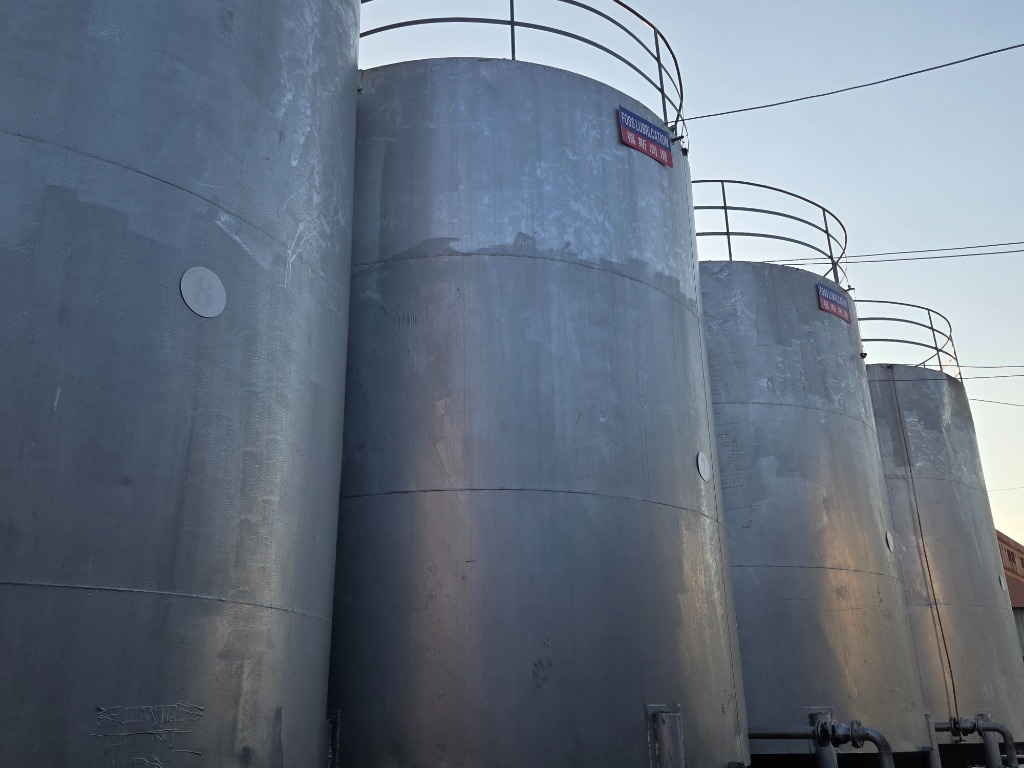
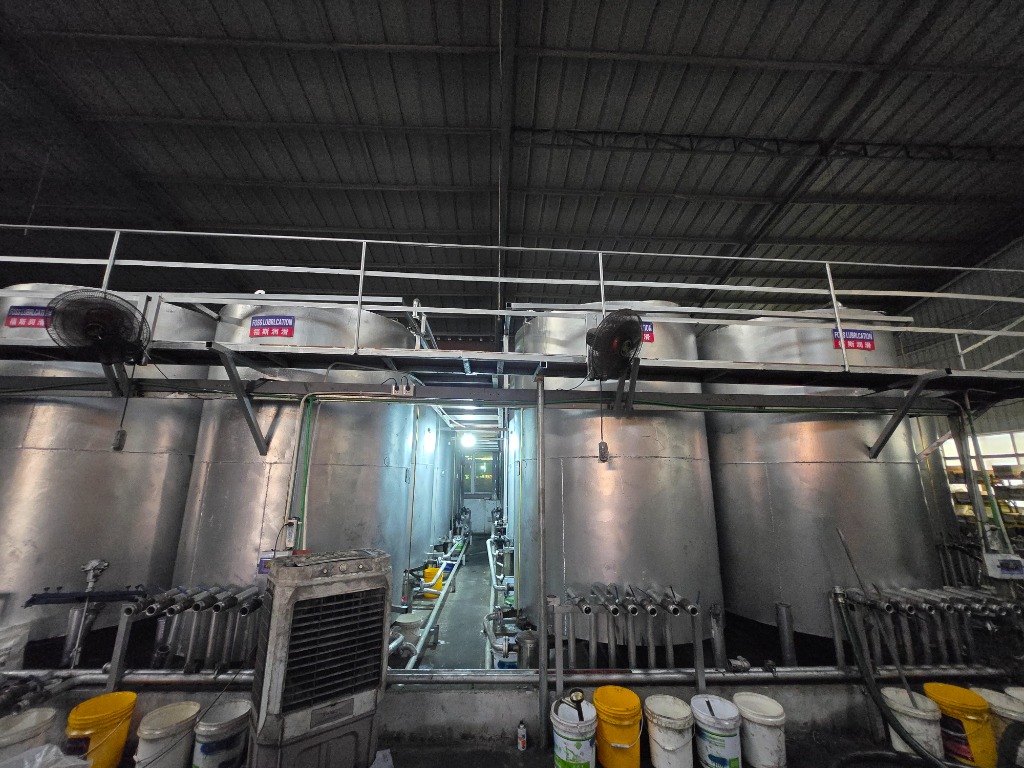
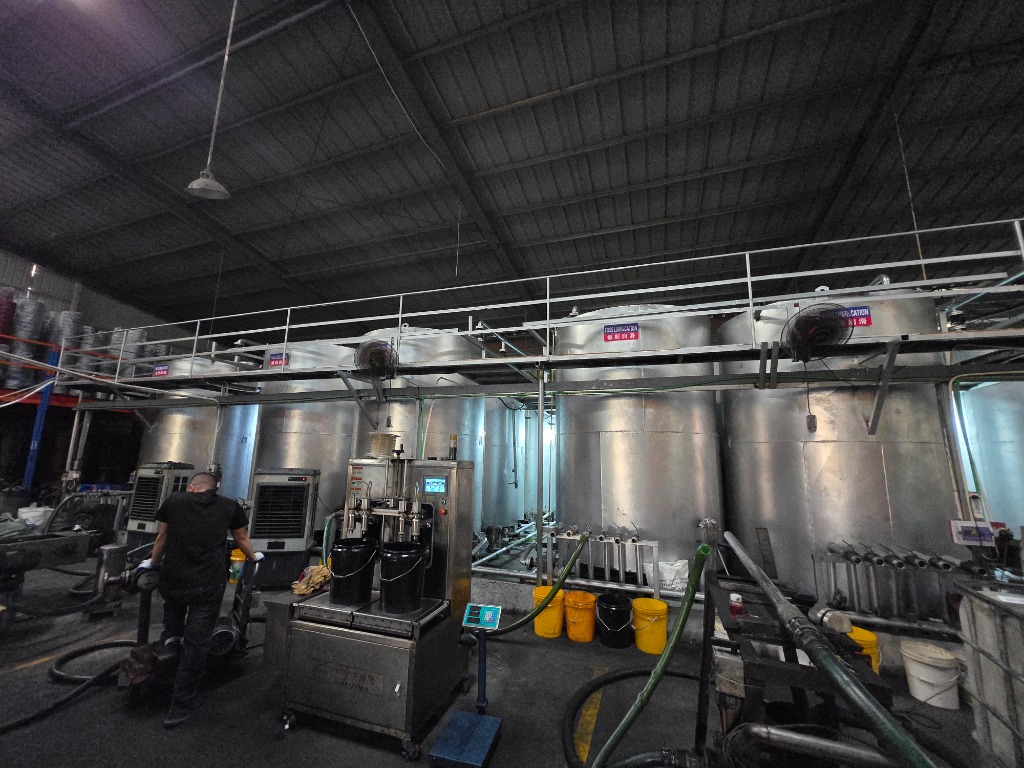
- 20,000 Metric Ton Virgin Base Stock Bulk Farm: Dedicated carbon-steel and stainless-steel vertical storage tanks with automated dry-air and nitrogen blanketing, preventing moisture absorption and atmospheric oxidation.
- Automated Precision Blending: Four multi-tier high-shear blending reactors featuring Emerson mass-flow metering systems and computerized temperature-controlled heat transfer loops, guaranteeing batch-to-batch repeatability within ±0.2 cSt at 40°C.
- In-House ISO 17025 Compliant Tribology Testing: Every blending batch undergoes 14 mandatory analytical protocols prior to filling—including kinematic viscosity (ASTM D445), flash point (ASTM D92), pour point (ASTM D97), copper corrosion (ASTM D130), foam stability (ASTM D892), Karl Fischer water content (ASTM D6304), and ISO 4406 optical particle counter cleanliness verification (guaranteed NAS 1638 Class 6 / ISO 4406 17/15/12).
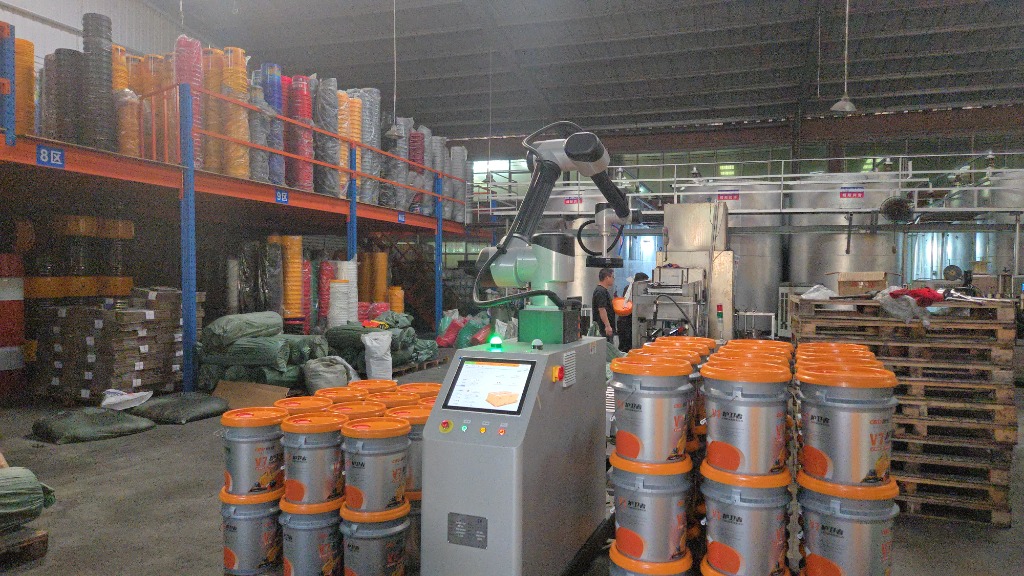
- Flexible Packaging Capabilities: Automated filling lines accommodating 208L steel drums, 1000L IBC totes, 18L/20L pails, and ISO tank flexibags, with daily packaging throughput exceeding 350 metric tons.
- Global OEM Toll-Blending & Private Labeling: Complete turnkey formulation, container customization, bilingual/multilingual silk-screen labeling, and international customs clearance documentation.
Given the extreme tightness in prompt API Group II 500N base stocks and extended ocean shipping timelines around the Cape of Good Hope, production schedules and vessel bookings for mid-to-late November and early-December departures are filling rapidly. International buyers are urged to submit baseline formulation specifications and volume reservations without delay.
Definitive 3-Day Lubricant & Base Oil Trend Forecast
Synthesized by the FOSS Quantitative Energy Modeling Desk based on active shipping line container bookings, regional tank farm draw-down rates, and prompt ICE Brent futures sentiment:
ICE Brent consolidates firmly above $105.00/bbl as Joint War Committee war-risk breach rates expand to 1.55%-1.70% ($420,000-$480,000/VLCC) following drone skirmishes near Tunb Islands; Asian coastal refiners advance prompt Group II 500N spot offers to $1,685-$1,700/MT as hydrocrackers divert VGO feed to capture $34.40/bbl gasoil crack spreads.
Prolonged Cape of Good Hope transit loops (34-40 days Asia-Europe) and Singapore VLSFO bunker escalations ($736/MT) solidify container ocean freight at $6,380-$6,650/FEU; cold-rolled SPCC steel drum price hikes ($35.75/drum) push baseline export quotations for DIN 51524-2 hydraulic oils to $240.50/drum FOB Xiamen.
Unprecedented $400/MT Group II 150N/500N spread and compounding chemical additive inflation (ZDDP +6.4%, EP SIB +7.2%) trigger widespread delivery rationing across regional compounding plants, driving multinational procurement teams in ASEAN, the Middle East, and Latin America to lock firm fourth-quarter production allocations directly in Quanzhou.
5. Strategic Sourcing & Hedging Directives for Overseas Importers
For overseas procurement directors, fleet operators, and industrial distributors, market volatility represents both operational risk and competitive opportunity. We recommend the following three concrete actions for managing Q4 procurement:
Lock 60-Day Container Requirements
Secure firm proforma invoices (PI) with 30-day price validity. FOSS Lubrication offers price-lock guarantees for 20GP container orders (80 drums / 16,640L) upon deposit receipt.
Audit Laboratory CoA Verification
Demand full pre-shipment ASTM test parameters: kinematic viscosity at 40°C / 100°C, viscosity index ≥ 100, flash point ≥ 220°C, pour point ≤ -15°C, and zero moisture contamination.
FOSS Lubrication: Factory-Direct Precision Engineering
Operating out of Quanzhou, China, FOSS blends over 20,000 MT annually of ISO VG 32/46/68 anti-wear hydraulic oils, CK-4 heavy-duty engine oils, and industrial gear lubricants. Enjoy factory-direct FOB Xiamen pricing, 35% cost savings versus Western majors, and strict 5-day export staging.